


The San Francisco-based power electronics innovator Optivolt has successfully closed a $32 million Series A funding round, marking a significant milestone in the quest to transition solar energy from a passive hardware industry into an intelligent, adaptive digital ecosystem. This latest infusion of capital brings the company’s total funding to $42 million and is earmarked for the aggressive scaling of manufacturing and the global deployment of its proprietary "intelligence layer" for solar panels. Led by VXI Capital, a prominent hard tech fund, the round also saw participation from RA Capital, Valo Ventures, and Atlas Innovate, signaling deep institutional confidence in Optivolt’s potential to redefine the fundamental architecture of renewable energy.
The core of Optivolt’s value proposition lies in its ability to transform standard solar panels—which have remained largely unchanged in their basic functional logic for decades—into "thinking" systems. By embedding aerospace-grade power electronics directly into the solar module, Optivolt addresses one of the most persistent and costly problems in the industry: energy loss due to real-world environmental conditions such as shade, dust, and cell degradation.
Rebuilding the Solar Architecture from First Principles
Founded in 2017 by CEO Rohit Kalyanpur, Optivolt has spent nearly a decade in a research and development phase characterized by what Kalyanpur describes as a "first principles" approach. Traditional solar installations rely on a series of panels connected to a central inverter or, in more modern configurations, utilize "bolted-on" power optimizers or microinverters. However, these systems often suffer from the "Christmas light effect"—if a single cell or a small portion of a panel is obstructed by a shadow, a fallen leaf, or bird droppings, the output of the entire panel, or even the entire string, can drop precipitously.
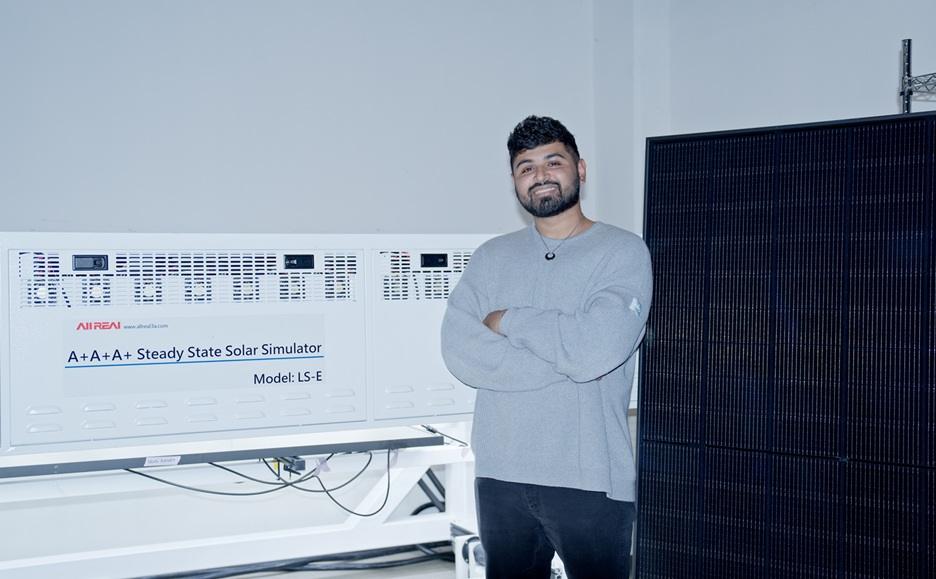
Optivolt’s solution, known as the "Power Balancer" technology, replaces traditional bypass diodes and external optimizers with an integrated system that manages energy at the cellular level. By redistributing energy among groups of cells in real time, the Power Balancer ensures that underperforming sections do not bottleneck the entire system. According to Optivolt’s internal testing, panels equipped with this technology can produce up to six times more power than those using standard industry optimizers when subjected to specific shading scenarios. This level of efficiency is particularly critical as solar installations move into increasingly complex urban environments and regions with variable weather patterns.
Strategic Shift Toward Intelligent Energy Infrastructure
The timing of this Series A round coincides with a massive surge in demand for reliable, high-yield renewable energy, driven largely by the exponential growth of artificial intelligence and the massive data centers required to support it. AI data centers are notorious for their immense power consumption, often requiring gigawatt-scale energy solutions that are both carbon-neutral and highly resilient.
Optivolt has identified the utility-scale and data center markets as primary targets for its expanded deployment. By making solar panels "smarter," the company provides energy developers with a more predictable and higher-density power source. This is vital for AI infrastructure, where even minor fluctuations in power supply can lead to significant operational challenges. The ability of Optivolt-enabled panels to adapt to weather, dirt, and degradation in real time makes them an ideal candidate for the "backbone" of the next generation of global power systems.
Orin Hoffman, Managing Director at VXI Capital and former CTO of the U.S. Military’s Defense Innovation Unit, emphasized the strategic importance of this technology. According to Hoffman, the next era of energy will not be defined by the quantity of panels installed, but by the intelligence of those panels. He noted that Optivolt has spent nine years building the architecture necessary to make solar a primary, stable component of the global grid, rather than just a supplementary one.
The Economic and Environmental Case for Intelligent Solar
The broader economic implications of Optivolt’s technology center on the Levelized Cost of Energy (LCOE). In the solar industry, LCOE is the primary metric used to determine the cost-effectiveness of a project over its lifetime. By significantly increasing the energy yield from the same physical footprint, Optivolt lowers the LCOE, making solar more competitive with fossil fuels and other renewable sources like wind or hydro.
Furthermore, the integration of monitoring and safety functions directly into the panel reduces "soft costs"—the expenses associated with labor, additional hardware, and complex installation procedures. Optivolt’s systems include built-in rapid shutdown capabilities, a safety requirement mandated by modern electrical codes to protect first responders during fires. By eliminating the need for separate, third-party shutdown devices and optimizers, Optivolt simplifies the supply chain and reduces the number of potential failure points in a solar array.

From an environmental perspective, the ability to extract more power from less land is a critical factor in the global energy transition. As land use for large-scale solar farms becomes a point of contention in various regions, increasing the efficiency of existing and new sites through intelligent power management allows for greater decarbonization without requiring more acreage.
Investor Sentiment and the "Hard Tech" Renaissance
The success of Optivolt’s funding round reflects a broader trend in the venture capital landscape known as the "hard tech" or "deep tech" renaissance. Investors are increasingly moving away from purely software-based solutions in favor of companies that combine advanced software with physical hardware breakthroughs to solve systemic global problems.
The participation of RA Capital and Valo Ventures underscores this shift. These firms typically look for technologies that have moved past the theoretical stage and are ready for commercial "liftoff." With $42 million in total capital, Optivolt is positioned to transition from a technical breakthrough into a platform company. The "platform" aspect is crucial; Optivolt does not just intend to sell panels, but to provide the underlying intelligence layer that other manufacturers and developers can utilize to optimize their assets.
A Chronology of Innovation
Optivolt’s journey from a 2017 startup to a Series A-funded industry disruptor provides a roadmap for the evolution of the solar sector:
- 2017-2020: The early years were focused on fundamental R&D, moving away from standard silicon logic to develop aerospace-grade electronics capable of surviving the harsh thermal environments of a solar rooftop for 25 years.
- 2021-2023: The company refined its Power Balancer technology, conducting extensive field tests and internal simulations to prove the 6x power recovery claim in shaded conditions.
- 2024-2025: Strategic partnerships were formed within the utility and residential sectors to pilot the integrated panel technology.
- October 2026: The announcement of the $32 million Series A round, signaling the start of mass manufacturing and a focus on high-growth sectors like AI data centers.
Future Outlook: The Smart Grid Integration
Looking ahead, Optivolt’s technology is expected to play a pivotal role in the development of "smart grids." As the world moves toward decentralized energy production—where homes, businesses, and data centers both consume and produce power—the need for real-time data and adaptive hardware becomes paramount.

Optivolt’s panels provide granular data on energy production and hardware health at the cell level. This data can be fed into grid management software to better predict energy surges or deficits, allowing for more efficient load balancing across the entire electrical network. In the context of a utility-scale project, this means operators can identify specific panels that need cleaning or maintenance without having to inspect thousands of modules manually.
In his closing remarks regarding the funding, CEO Rohit Kalyanpur reiterated that the goal was never to simply build a better solar panel, but to rebuild the system so it can "respond to Earth as it actually is." This vision of a solar infrastructure that accounts for the imperfections of the real world—clouds, dust, shadows, and time—is what sets Optivolt apart in a crowded market.
As the $32 million is deployed, the industry will be watching closely to see how Optivolt’s intelligent layers perform in large-scale commercial applications. If the company can deliver on its promise of significantly higher yields and reduced hardware complexity, the "passive" solar panel may soon become a relic of the past, replaced by an era of active, intelligent, and highly efficient energy harvesting.
