

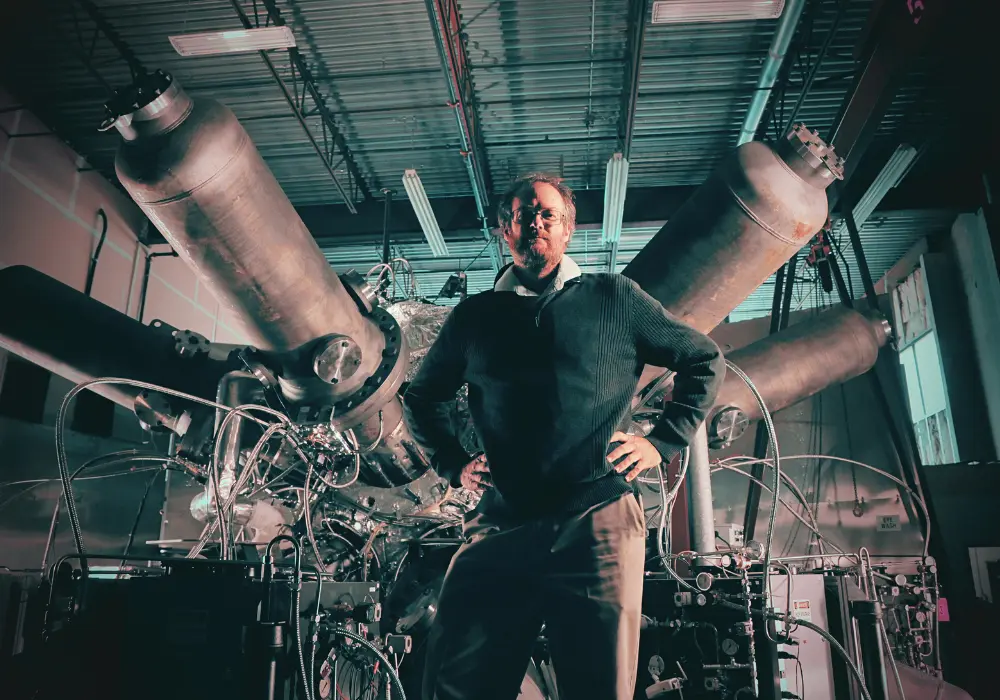
In a move that signals a profound shift in the trajectory of the quantum computing industry, Nvidia and IonQ have officially entered into a partnership to deploy the first-ever quantum processing unit (QPU) within an Nvidia-accelerated quantum research center. This collaboration represents a significant reversal in market sentiment following a period of intense skepticism regarding the near-term viability of quantum technology. Less than two years ago, in January 2025, the quantum sector faced a major valuation crisis after Nvidia CEO Jensen Huang publicly estimated that a "very useful" quantum computer remained at least 30 years away. That prediction triggered a massive sell-off across the industry, with IonQ’s shares suffering a historic 40% single-day decline. However, the current deployment suggests that the timeline for integrating quantum hardware into mainstream high-performance computing (HPC) environments has accelerated far beyond previous expectations.
The partnership integrates IonQ’s trapped-ion quantum hardware with Nvidia’s advanced classical computing infrastructure, aiming to create a hybrid environment where quantum and classical processors work in tandem. This development places Nvidia alongside other technology titans such as Google, Amazon Web Services (AWS), and IBM, all of whom are racing to establish dominance in the nascent quantum era. The move comes at a critical juncture as the global technology sector grapples with the staggering resource demands of artificial intelligence. As data centers expand at an unprecedented rate to support large language models and generative AI, the industry is searching for computational breakthroughs that can provide exponential increases in processing power without a linear increase in energy and water consumption.
A Chronology of Volatility and Innovation
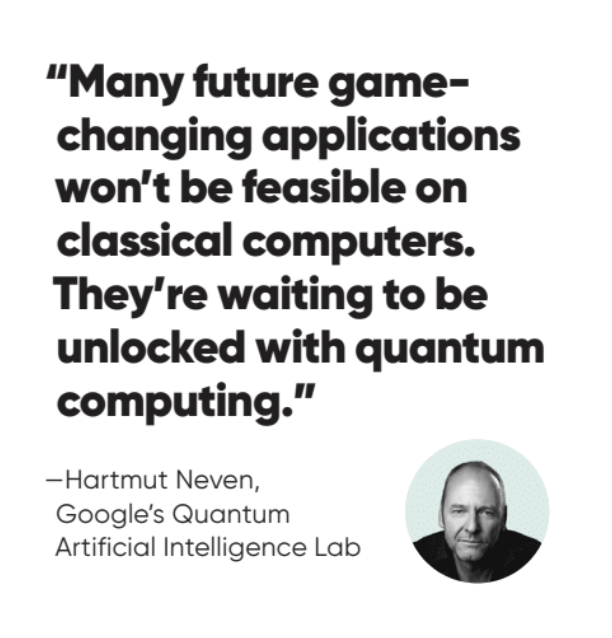
The journey to this partnership has been marked by both technological breakthroughs and market instability. To understand the significance of the Nvidia-IonQ alliance, one must look at the timeline of the last 24 months. In late 2024, the quantum industry was buoyed by Google’s announcement of its "Willow" chip. Hartmut Neven, lead of Google’s Quantum Artificial Intelligence Lab, demonstrated that Willow could complete a standard benchmark operation in five minutes—a task that would require 10 septillion years for the world’s fastest classical supercomputers to finish.
Despite such scientific milestones, the industry faced a "reality check" in early 2025. Jensen Huang’s 30-year forecast served as a sobering reminder of the engineering hurdles remaining, specifically regarding error correction and qubit stability. The resulting market correction saw billions of dollars in market capitalization evaporated. IonQ, which utilizes a unique "trapped-ion" approach—using individual atoms suspended in a vacuum as qubits—was particularly hard hit. Unlike the superconducting qubits used by Google and IBM, which require temperatures colder than deep space, IonQ’s technology offers the potential for higher connectivity between qubits and more manageable cooling requirements, though it still faces significant scaling challenges.
By mid-2026, the narrative began to shift again. As AI energy consumption became a geopolitical and environmental flashpoint, the "quantum advantage" was reframed not just as a matter of speed, but as a potential solution to the sustainability crisis facing modern data centers. The current partnership reflects Nvidia’s recognition that its own GPU-centric architecture, while dominant in the AI space, may eventually require quantum augmentation to maintain its lead in the next generation of scientific computing.
The Sustainability Paradox: AI vs. Quantum
The expansion of AI infrastructure has introduced a severe environmental paradox. Nvidia’s H100 and Blackwell GPUs have become the backbone of the global economy, yet the facilities required to house them are consuming resources at an alarming rate. Reports indicate that OpenAI, one of Nvidia’s primary clients, is on a trajectory to consume as much electricity as the nation of India. Furthermore, the ecological footprint of these data centers extends beyond power; the cooling systems required to prevent hardware failure demand millions of gallons of water. Some analyses suggest that the carbon emissions associated with the current AI build-out could soon rival or exceed those of the world’s largest oil and gas conglomerates.
Quantum computing is often touted as the "green" alternative because of the way it processes information. In traditional binary computing, every task is a series of 1s and 0s. To solve a complex problem, a classical computer must check every possible solution one by one, or in parallel across thousands of GPUs. This "brute force" method is energy-intensive. A quantum computer, utilizing the principles of superposition and entanglement, can represent multiple states simultaneously.
Using the "tennis ball in a closet" analogy popularized by Google’s Neven, a human (or classical computer) searching for a ball in a closet with a million drawers would need to open 500,000 drawers on average to find it. A quantum computer, through quantum algorithms, could theoretically locate the ball in just 1,000 steps. This exponential efficiency suggests that tasks requiring weeks of GPU cluster time could be completed in minutes on a quantum machine, theoretically slashing the total energy "burn" for specific high-value computations.
Engineering Hurdles and the Energy Debate
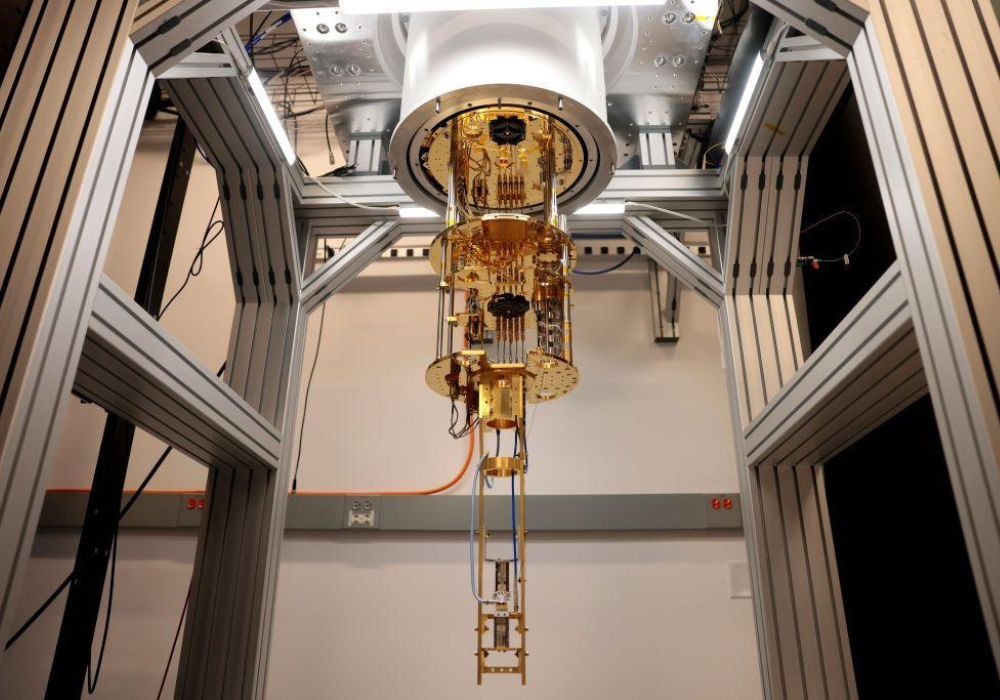
However, the transition to energy-efficient quantum computing is not guaranteed. Julian Fletcher, chair of the BCS Quantum Computing specialist group, has noted that while quantum computers are theoretically more efficient, the "overhead" required to maintain them is substantial. Most current quantum processors, like Google’s Willow, are housed in complex dilution refrigerators that resemble futuristic chandeliers. These devices must cool superconducting alloys to near-absolute zero to prevent "decoherence"—the loss of quantum information due to environmental interference.
Fletcher’s research suggests that for large-scale, fault-tolerant quantum computers, the energy required for error correction could be up to 35 times higher than that of a classical computer for certain operations. This creates a high-stakes engineering race: can the industry develop error-correction protocols that don’t negate the inherent energy savings of the quantum processor?
IonQ’s trapped-ion technology may offer an advantage here. Because its qubits are naturally occurring atoms rather than man-made superconducting loops, they are inherently more stable and can operate at higher temperatures than their superconducting counterparts, potentially reducing the cooling "tax" on the total energy budget. By integrating these QPUs into Nvidia’s research centers, engineers hope to find the "sweet spot" where quantum speed and classical reliability intersect.
Broader Implications for Science and Industry
The potential impact of a "very useful" quantum computer, as sought by the Nvidia-IonQ partnership, extends far beyond faster search algorithms. Experts believe the most significant breakthroughs will occur in the field of molecular simulation. Classical computers struggle to simulate the behavior of atoms and molecules because the complexity of the interactions scales exponentially with the number of particles. Quantum computers, which operate on the same physical laws as the molecules they simulate, do not face this limitation.
This capability could revolutionize several key sectors:
- Battery Technology: Quantum simulations could lead to the discovery of new chemical compositions for solid-state batteries, allowing electric vehicles to charge in minutes and hold significantly more energy.
- Carbon Capture: Researchers hope to use quantum computing to design more efficient catalysts that can strip carbon dioxide from the atmosphere at a fraction of the current cost and energy requirements.
- Fertilizer Production: The Haber-Bosch process, used to create synthetic fertilizer, consumes roughly 1% of the world’s total energy. Quantum computers could help scientists understand the biological nitrogen fixation process, leading to "cold" fertilizer production methods.
- Fusion Energy: Simulating the high-heat, high-pressure environments of a fusion reactor is a task currently at the limit of classical supercomputers. Quantum acceleration could provide the insights necessary to make fusion a viable, limitless clean energy source.
Market and Strategic Outlook
For Nvidia, this partnership is a strategic hedge. While the company currently enjoys a near-monopoly on the hardware required for the AI revolution, the long-term sustainability of the GPU-only model is being questioned by environmental regulators and resource-constrained utilities. By embedding IonQ’s QPUs into its ecosystem, Nvidia is positioning itself to lead the transition to "Accelerated Quantum Computing."
For the broader market, the Nvidia-IonQ deal serves as a signal that the "Quantum Winter" predicted in early 2025 may be shorter than expected. While we may still be years away from a quantum computer that can crack modern encryption or manage global logistics in real-time, the integration of these machines into existing supercomputing clusters marks the beginning of the "hybrid era."
As Tristan Bronca and other industry observers have noted, the computations these machines perform today are highly specialized and often lack immediate commercial utility. However, the move by the world’s most valuable company to incorporate quantum hardware into its research pipeline suggests that the "30-year" wait may have been an overestimation. The race to unlock the "tennis ball in the closet" is no longer a purely academic pursuit; it is now a core component of the global technological and environmental strategy for the late 2020s and beyond.
