

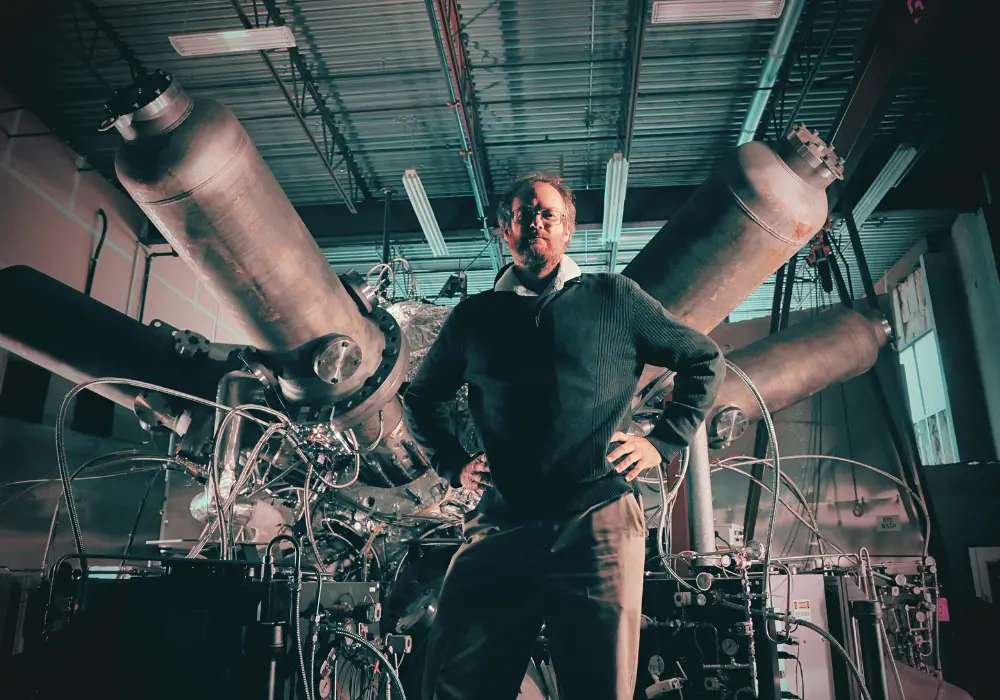
The global landscape of high-performance computing underwent a seismic shift this week as IonQ, a leader in the quantum computing sector, announced a landmark partnership with Nvidia to deploy the semiconductor giant’s first-ever quantum processing unit (QPU). This collaboration marks a significant pivot for Nvidia, the world’s most valuable company, which has spent the last several years dominating the artificial intelligence (AI) market through its graphics processing units (GPUs). By integrating IonQ’s trapped-ion quantum technology into its new Nvidia-accelerated quantum research center, the company is signaling its intent to lead not just in classical AI acceleration, but in the next frontier of subatomic computation.
This announcement serves as a dramatic reversal of the market sentiment established in early 2025. In January of that year, the quantum computing industry suffered a devastating blow when Nvidia CEO Jensen Huang offered a sobering assessment of the technology’s maturity. Huang predicted that it would be another 30 years before the world witnessed a "very useful" quantum computer capable of broad commercial application. The comment triggered a massive sell-off across the sector; IonQ, a primary player in the space, saw its shares plummet by 40% in a single day, marking its largest one-day drop in history. However, the new partnership suggests that the timeline for "usefulness" may have accelerated, or at the very least, that Nvidia cannot afford to remain on the sidelines while competitors like Google, IBM, and Amazon Web Services (AWS) deepen their quantum footprints.
A Chronology of the Quantum Ascent
The path to this partnership has been defined by rapid technical milestones and intense capital investment. To understand the significance of the Nvidia-IonQ deal, one must look at the timeline of quantum breakthroughs that have occurred over the past 24 months.
In late 2024, the industry was galvanized by Google’s announcement of its "Willow" quantum chip. Led by Hartmut Neven at the Quantum Artificial Intelligence Lab, Google demonstrated that Willow could complete a benchmark computation in five minutes that would take the world’s most powerful classical supercomputer—such as the Frontier system at Oak Ridge National Laboratory—approximately 10 septillion years to finish. This "quantum supremacy" milestone proved that for specific, albeit narrow, mathematical tasks, quantum architecture is trillions of times more efficient than binary systems.
Following Google’s lead, IBM expanded its "Quantum System Two" infrastructure, focusing on modularity and error correction. Meanwhile, AWS began integrating quantum hardware from various providers into its Braket service, allowing developers to experiment with different quantum modalities, including superconducting loops and trapped ions. Nvidia’s entry into the hardware space via IonQ represents the final piece of the puzzle, as the company seeks to marry its CUDA software ecosystem with quantum hardware to create "hybrid" systems that can handle the massive datasets required by modern AI.
The Mechanics of the Quantum Advantage
The fundamental difference between the classical computers that power our current world and the quantum machines being developed by IonQ lies in the basic unit of information. Traditional computing relies on bits, which function like a light switch—they are either on (1) or off (0). Every digital interaction, from a simple text message to complex climate modeling, is a massive string of these binary states.
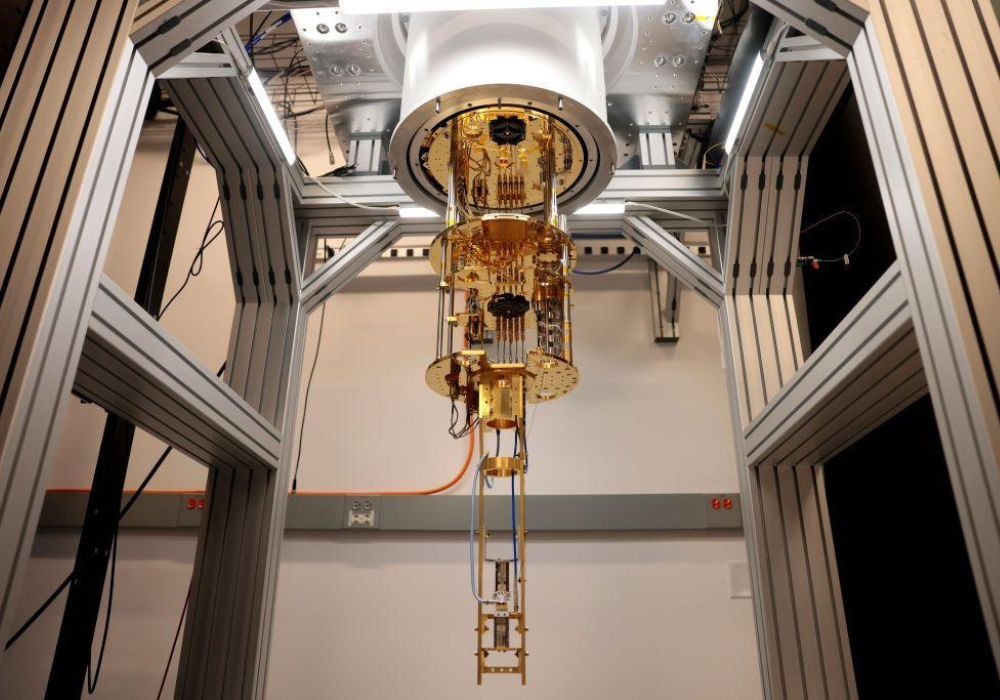
Quantum computing utilizes qubits, which leverage the principles of quantum mechanics to exist in a state of "superposition." This allows a qubit to represent both a 1 and a 0 simultaneously. When multiple qubits are "entangled"—a phenomenon where the state of one particle is inextricably linked to another, regardless of distance—the computational power grows exponentially rather than linearly.
To illustrate this efficiency, Hartmut Neven frequently employs the "tennis ball" analogy. If a human were searching for a tennis ball hidden in one of a million drawers, they would, on average, need to open 500,000 drawers to find it. A classical computer would perform the task similarly, checking each possibility one by one. A quantum computer, utilizing Grover’s Algorithm, could locate the ball in approximately 1,000 steps. This capacity to process massive combinatorial possibilities simultaneously is what makes quantum computing the "holy grail" for industries ranging from cryptography to logistics.
The Sustainability Paradox: AI vs. Quantum Efficiency
The partnership comes at a critical juncture for the technology industry, which is currently grappling with the environmental toll of the AI boom. The construction of massive data centers to support generative AI models has led to a staggering increase in energy and water consumption. According to recent environmental impact reports, OpenAI—a major Nvidia client—is projected to eventually consume as much electricity as the entire nation of India. Furthermore, some ecological analyses suggest that the carbon footprint of the largest AI-focused data centers could soon double the emissions of the world’s largest oil companies.
Nvidia’s move into quantum computing is, in part, a response to this sustainability crisis. While current quantum computers are experimental and require significant "overhead" energy to operate, their theoretical efficiency could eventually alleviate the pressure on the global power grid. Classical supercomputers require miles of cabling and massive cooling pumps capable of filling an Olympic-sized swimming pool in minutes to dissipate the heat generated by millions of silicon chips.
In contrast, a fully realized, fault-tolerant quantum computer could potentially replace thousands of energy-hungry GPUs. However, the transition is not without its own environmental hurdles. Most quantum systems, including the superconducting chips used by Google and IBM, must be kept at temperatures near absolute zero—colder than outer space—to maintain the stability of the qubits.
Julian Fletcher, chair of the BCS Quantum Computing specialist group, has noted that while quantum algorithms are more efficient, the physical infrastructure required to run them is currently highly energy-intensive. Fletcher’s research suggests that for certain complex equations, the energy required for error correction in a quantum system could be 35 times higher than that of a classical system in the short term. However, as the technology matures, firms like McKinsey & Company predict that quantum systems will eventually "rebalance the sustainability equation" by solving problems that are currently too resource-heavy for classical machines.
Industry Implications and Market Reactions
The market reaction to the Nvidia-IonQ partnership has been one of cautious optimism. Analysts suggest that Nvidia is positioning itself as the "operating system" for the quantum era. By providing the software layer that allows classical AI models to communicate with quantum QPUs, Nvidia ensures its continued relevance even if classical GPUs eventually hit a performance ceiling.
For IonQ, the partnership provides a much-needed stamp of institutional approval. After the volatility of 2025, the company has focused on its "trapped ion" approach, which uses individual atoms suspended in electromagnetic fields. This method is praised for having longer "coherence times"—the duration a qubit stays in superposition—compared to the superconducting methods favored by Google.
Major stakeholders in the energy and pharmaceutical sectors have expressed keen interest in the development. The ability of quantum computers to simulate molecular interactions at a subatomic level could lead to breakthroughs that are currently impossible. For example, quantum systems could design new battery chemistries that hold ten times the charge of current lithium-ion cells, or discover catalysts that make carbon-capture technology economically viable at scale.
The Road to Fault Tolerance
Despite the excitement surrounding the Nvidia-IonQ deal, engineering challenges remain. The primary obstacle to the widespread adoption of quantum computing is "noise." Qubits are incredibly sensitive to their environment; even a slight vibration or change in temperature can cause "decoherence," leading to computational errors.
The next five to ten years will likely be defined by the race for "fault tolerance"—the ability of a quantum computer to detect and correct its own errors in real-time. Until this is achieved, quantum computers will remain specialized tools used alongside classical supercomputers in a hybrid model.
Nvidia’s involvement suggests that the industry is moving away from the "30-year" timeline suggested by Jensen Huang just two years ago. While the "Quantum Winter" of 2025 saw a retreat in capital, the current "Quantum Spring" is being driven by the realization that the limitations of classical silicon may be closer than previously thought. As data centers continue to expand at an unsustainable rate, the push for the exponential efficiency of the qubit has moved from a scientific curiosity to a commercial and environmental necessity.
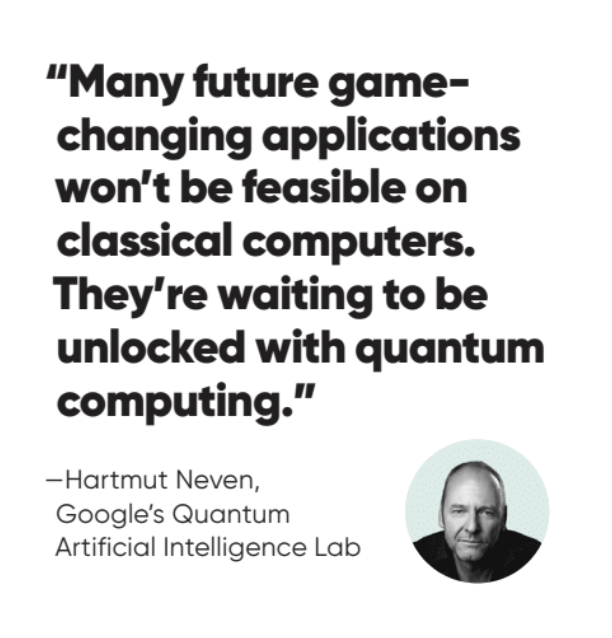
In the words of Hartmut Neven, the most impactful applications of this technology are "waiting to be unlocked." With the world’s most powerful semiconductor company now officially in the race, the key to that lock may be turned much sooner than the markets anticipated.
