

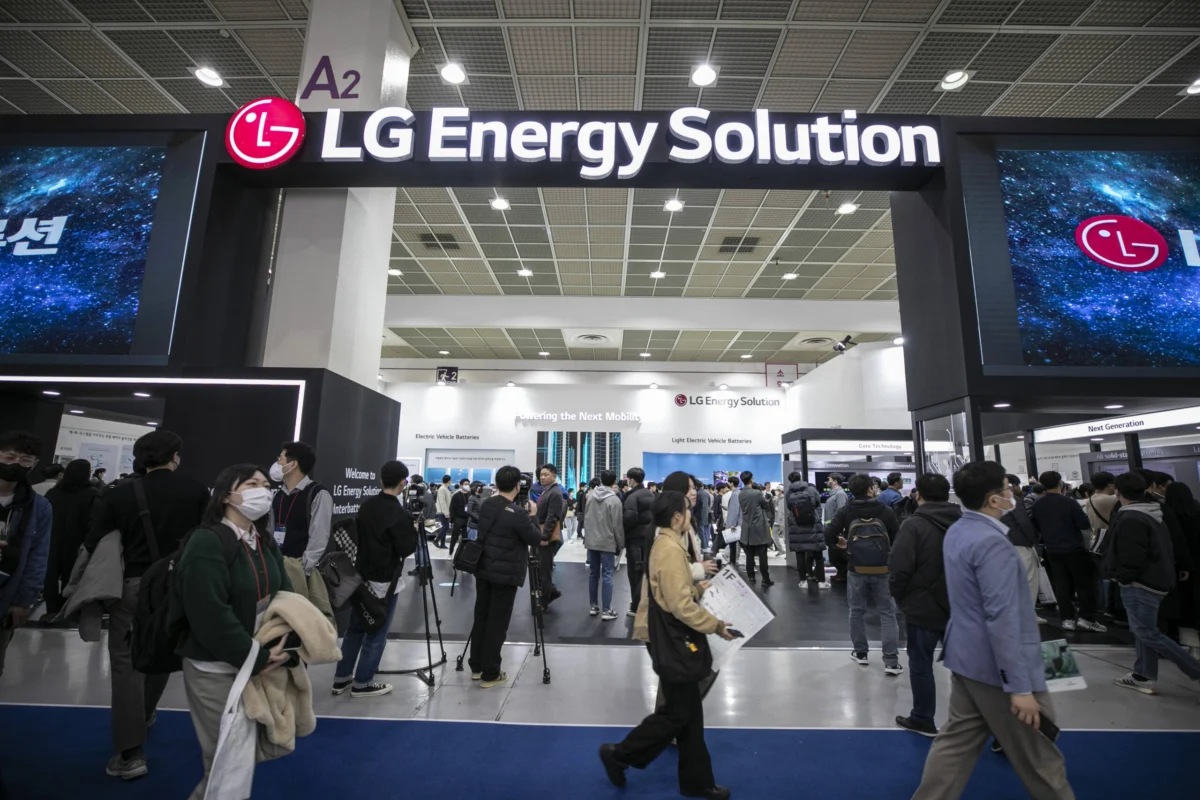
The global energy transition reached a significant milestone this week as LG Energy Solution (LGES), a titan in the lithium-ion battery manufacturing sector, announced a massive supply agreement that sent its stock price soaring. Shares of the South Korean company surged by as much as 16.56% during Thursday’s trading session in Seoul, a direct reaction to news that its United States-based subsidiary, LG Energy Solution Vertech, had finalized a multi-billion dollar contract with DTE Energy. The deal, which involves the deployment of massive battery energy storage systems (BESS) across Michigan, underscores the accelerating demand for grid-scale storage solutions as utility companies pivot away from fossil fuels toward renewable energy sources.
The agreement encompasses eight distinct energy storage projects designed to bolster Michigan’s power grid. Together, these installations will provide a staggering 1.5 gigawatts (GW) of capacity, equivalent to 6 gigawatt-hours (GWh) of total energy storage. According to reports from the Yonhap News Agency, the contract is valued at approximately $1.6 billion, representing one of the largest single procurement deals in the history of the North American energy storage sector. This partnership not only secures a significant revenue stream for LG Energy Solution but also cements its position as a dominant player in the American "Battery Belt."
Strategic Expansion in the Great Lakes State
The eight projects under this agreement are strategically located to support DTE Energy’s long-term integrated resource plan. By utilizing 6 gigawatt-hours of storage, DTE Energy will be able to capture excess electricity generated during periods of high renewable output—such as sunny or windy afternoons—and discharge that power during peak demand hours or when weather conditions are unfavorable for generation. This capability is essential for maintaining grid stability and preventing blackouts as intermittent energy sources like wind and solar become a larger percentage of the total energy mix.
Jaehong Park, the Chief Executive Officer and President of LG Energy Solution Vertech, emphasized the broader implications of the deal for the domestic workforce and national infrastructure. "As more US-made energy storage projects are added to the energy grid, we’re building opportunities for advanced roles in the state that support our national energy needs," Park stated in a press release. The emphasis on "US-made" is particularly relevant given the current regulatory environment, where federal incentives favor domestic manufacturing and supply chain localization.
Market Reaction and Financial Context
The 16.56% jump in LG Energy Solution’s share price reflects investor relief and optimism. For much of the past year, the global battery industry has grappled with a "plateau" in electric vehicle (EV) demand, leading to concerns about overcapacity in battery cell production. However, the pivot toward Energy Storage Systems (ESS) provides a robust secondary market that is currently experiencing a period of hyper-growth. Analysts suggest that the DTE Energy deal proves LGES can successfully diversify its portfolio beyond the automotive sector.
The $1.6 billion valuation of the deal is a significant figure for LGES’s ESS division. While the company’s primary revenue has historically come from partnerships with automakers like General Motors, Honda, and Stellantis, the stationary storage market offers higher margins in some contexts and a different demand cycle that can offset the volatility of the consumer vehicle market. The market’s aggressive response suggests that investors view ESS as the next major frontier for battery manufacturers, especially as utilities across the United States face legislative mandates to decarbonize their grids.
The Role of LG Energy Solution Vertech
LG Energy Solution Vertech is the specialized systems integration arm of the parent company. Formed after the acquisition of NEC Energy Solutions in 2022, Vertech provides end-to-end storage solutions, including hardware, software for energy management, and long-term maintenance services. This "one-stop-shop" approach is increasingly attractive to utility companies like DTE Energy, which require complex, integrated systems rather than just raw battery cells.
By managing the integration, LGES Vertech ensures that the hardware (the lithium-ion cells) communicates perfectly with the software (the algorithms that decide when to charge and discharge). This synergy is critical for the 1.5 GW Michigan project, which will require sophisticated load-balancing capabilities to serve millions of customers reliably.
Chronology of LG Energy Solution’s North American Growth
To understand the significance of the DTE Energy deal, one must look at the rapid timeline of LG Energy Solution’s expansion in North America:
- January 2022: LG Energy Solution completes its initial public offering (IPO) in South Korea, raising $10.7 billion to fund global expansion.
- February 2022: The company acquires NEC Energy Solutions to form LG Energy Solution Vertech, signaling a major move into the integration and software side of energy storage.
- 2023: LGES announces a series of joint ventures with major automakers, establishing a "Battery Belt" of factories across Ohio, Tennessee, Michigan, and Ontario, Canada.
- April 2024: The company announces a strategic pivot to "actively respond" to the growing demand for ESS batteries produced locally in the United States, citing a goal to reach 50GWh of annual ESS production capacity in the region by the end of 2025.
- March 2025: The DTE Energy deal is finalized, marking the largest ESS contract for the company to date and triggering a massive surge in market capitalization.
Supporting Data: The Scale of 6 Gigawatt-Hours
To put 6 gigawatt-hours into perspective, this amount of energy is sufficient to power approximately 500,000 to 600,000 average American homes for several hours during a peak demand event. In the context of Michigan’s energy landscape, these eight projects will represent a cornerstone of the state’s transition to a carbon-neutral grid.
The North American ESS market is projected to grow at a compound annual growth rate (CAGR) of over 20% through 2030. This growth is driven by the Inflation Reduction Act (IRA), which provides significant tax credits for standalone energy storage projects. LG Energy Solution is uniquely positioned to benefit from these credits because of its extensive manufacturing footprint within the United States. Currently, the company operates or is building three standalone facilities and two joint venture facilities in North America, ensuring that its products meet the "domestic content" requirements necessary for utilities to claim maximum federal incentives.
Official Responses and Regional Impact
The reaction from the energy sector has been overwhelmingly positive. Industry analysts note that Michigan is becoming a primary theater for the clean energy transition. Governor Gretchen Whitmer’s administration has set ambitious goals for the state, including a 100% clean energy standard by 2040. Large-scale projects like those commissioned by DTE Energy are the physical infrastructure required to meet those legal mandates.
While DTE Energy has not released an exhaustive list of the eight specific sites, the utility has indicated that these projects will be located near existing substations to minimize the need for new transmission lines. This "brownfield" approach to grid upgrades is seen as a more efficient and cost-effective way to modernize infrastructure.
For Michigan, the economic impact extends beyond grid reliability. The construction and maintenance of 1.5 GW of storage will create hundreds of specialized jobs in electrical engineering, software management, and high-voltage maintenance. It also solidifies Michigan’s reputation as a leader in battery technology, attracting further investment from the global supply chain.
Broader Implications and Future Outlook
The deal between LG Energy Solution and DTE Energy serves as a bellwether for the global battery industry. It highlights three critical trends:
First, the "Decoupling" from EV Volatility. As the automotive industry navigates the transition to electric vehicles, battery manufacturers are finding that the utility sector offers a massive and more predictable source of demand. Grid-scale storage is not subject to the same consumer sentiment shifts as the car market.
Second, the Importance of Domestic Manufacturing. The success of LGES in securing this contract is inextricably linked to its decision to build factories on U.S. soil. In an era of heightened geopolitical tensions and trade protectionism, the ability to produce "Made in America" batteries is a decisive competitive advantage over Chinese rivals like CATL and BYD, who currently face significant tariff barriers and regulatory scrutiny in the U.S. market.
Third, the Maturation of BESS Technology. Moving from megawatt-scale to gigawatt-scale projects indicates that battery technology has reached the level of maturity required to serve as a primary pillar of national infrastructure. These are no longer "pilot projects" or experiments; they are the new standard for modern utility operations.
Looking ahead, LG Energy Solution is on track to meet its ambitious target of 50GWh of ESS capacity in North America by the end of this year. If the company continues to secure contracts of this magnitude, it may need to accelerate its expansion plans even further. For now, the $1.6 billion Michigan deal stands as a testament to the company’s resilience and its pivotal role in the American energy landscape. As the eight projects move toward completion, the eyes of the global energy market will remain fixed on Michigan, watching as one of the world’s most advanced battery systems begins to power the future.
