

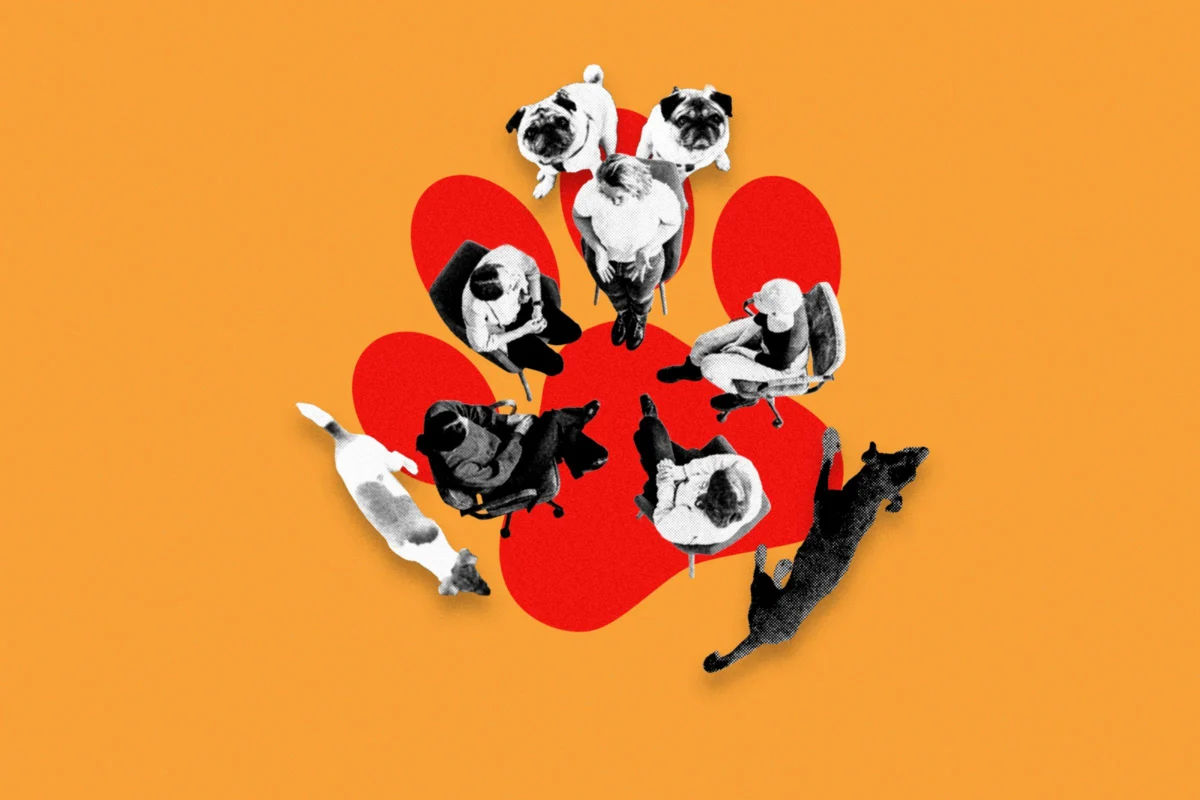
Just past 6 pm on a recent Wednesday night, half a dozen pet owners logged into a secure Zoom meeting to confess a reality they often feel forced to hide from the public: they are struggling, exhausted, and at times, resentful of their dogs. This gathering was not a traditional training seminar or a veterinary consultation, but a session hosted by Dogs Anonymous (DA), a burgeoning nonprofit organization dedicated to providing emotional sanctuary for those living with "reactive" or behaviorally challenged pets. The meeting began with a stark, collective admission led by Louise Crane, the organization’s president and cofounder. Clad in a T-shirt advocating for social justice, Crane recited the group’s "seven acknowledgments," a set of foundational principles that participants must accept before the floor opens for discussion. The first and perhaps most heavy of these truths is a simple sentence that cuts through the curated perfection of modern pet ownership: "I admit that life with my dog is not what I imagined."
As the session commenced, the digital room filled with stories of domestic upheaval. One attendee, seeking what she described as being "talked off a ledge," detailed the emotional toll of her boxer’s sudden behavioral shift. Following the death of a second family dog and the introduction of a foster animal, the boxer had become "unsettled" and "grumpy," escalating to persistent demand barking that disrupted the household’s peace. Other participants shared accounts of "resource guarding"—an aggressive behavior where a dog perceives a threat to a valued object or food source. One owner described a frightening altercation between her shepherd mix and her sister’s dachshund over fallen food scraps. Another woman, living in the high-density environment of an urban apartment complex, sought guidance on managing her dachshund’s incessant barking at neighbors, a situation that had turned her home into a source of constant anxiety.
The Psychological Weight of the Reactive Dog
The primary catalyst for these meetings is not the dogs’ behavior itself, but the profound sense of shame felt by the owners. According to Crane, the embarrassment of having a dog that is "losing its shit" is a heavy burden, particularly for women who often feel a societal pressure to maintain domestic order and "nurturing" control over their environments. This emotional weight is increasingly recognized by the scientific community. A study published in the peer-reviewed journal Pets in June 2025 examined the intersection of guilt, burden, and wellbeing among owners of dogs with behavioral problems. The findings were stark: 53 percent of respondents reported feeling isolated and alone in their struggle, while 78 percent reported "elevated caregiver burden." This term, traditionally used in the context of nursing or caring for elderly relatives, refers to the significant emotional, physical, and financial strain associated with long-term caregiving.
For many owners, the shame is compounded by a perceived loss of social status and neighborhood belonging. During a session in August, participants discussed how a dog’s aggressive outbursts in public spaces felt like a direct indictment of their capabilities as owners. Crane notes that many Gen X and millennial owners grew up with the cultural archetype of "Lassie"—the fictional, preternaturally obedient collie who represented the "perfect" companion. When their real-world pets fail to meet this impossible standard, the resulting cognitive dissonance leads to a grieving process for the relationship they thought they would have.
A Chronology of Support: From Recovery to Canine Care
Dogs Anonymous was launched in early 2025 by Crane and her cofounders, Daphne Mendoza-Tervanis and Jerri Scherff. The timing of the organization’s founding coincides with a post-pandemic realization in the pet industry: while millions of dogs were adopted during global lockdowns, the subsequent return to "normal" life—including the end of remote work and the reopening of social spaces—triggered a wave of separation anxiety and reactivity in pets that had not been properly socialized.
The structure of Dogs Anonymous is intentionally modeled after Alcoholics Anonymous (AA). Jerri Scherff, who has 13 years of sobriety, brought her first-hand experience with 12-step recovery programs to the table. The founders wanted to create a system that was repeatable, sustainable, and, crucially, anonymous. The "sharing of experience, strength, and hope" is a core tenet, encouraging members to analyze their struggles in a way that fosters communal healing rather than individual failure. This approach shifts the focus from "fixing" the dog to supporting the human.
Since its inception, the group has grown from a local initiative to an international network. While the majority of participants are based in the United States, sessions have attracted dog owners from as far as Singapore and Costa Rica. The demographic is diverse, ranging from first-time owners and seasoned foster caregivers to professional trainers who occasionally attend to seek advice on particularly difficult aggression cases.
The Science of Reactivity and the Social Media Gap
The challenges faced by DA members are backed by emerging behavioral research. A 2026 study conducted by researchers at the University of Lincoln categorized canine reactive behaviors into three primary groups: oral attacks, frustration, and posturing. The study identified lunging and barking as the most frequent symptoms reported by owners. For many, managing these behaviors requires a level of hyper-vigilance that is physically and mentally draining. One owner from New Orleans shared her experience on the social media platform Threads, describing a breakdown she had after a training session. She noted that her life had become a constant cycle of anticipating "human volatility" and "canine triggers," a state of existence she found utterly exhausting.
This exhaustion is often exacerbated by the "petfluencer" culture prevalent on platforms like Instagram and TikTok. Accounts featuring perfectly trained, aesthetically pleasing dogs—such as the famous Husky @_violasnow or the fashion-forward Italian Greyhound @tikatheiggy—create a distorted reality. These curated images of canine perfection can make owners of reactive dogs feel like they are uniquely failing, despite the fact that many "petfluencers" are professional trainers or owners who do not show the hours of struggle behind each ten-second clip.
Economic Barriers to Behavioral Health
One of the driving forces behind the popularity of Dogs Anonymous is the increasing financial inaccessibility of professional dog training. Daphne Mendoza-Tervanis, who has worked in the pet care industry for 15 years, points out that the cost of private behaviorists has skyrocketed. In major metropolitan areas like Los Angeles, hourly rates for specialized training can reach $300. For many families, this is an impossible expense, especially when multiple sessions are required to see even minor improvements.
According to the American Society for the Prevention of Cruelty to Animals (ASPCA), approximately 2 million dogs were adopted from shelters in 2025. However, Mendoza-Tervanis argues that the infrastructure for supporting these adoptions is fundamentally flawed. "Why we’re in the problem that we are right now is because we are putting dogs before people," she says. By prioritizing the emotional health of the owner, DA aims to prevent "rehoming" or "behavioral euthanasia"—the practice of putting a dog down due to dangerous or unmanageable behavior—by giving owners the resilience to continue their care.
Implications and the Future of the Human-Canine Bond
The rise of organizations like Dogs Anonymous suggests a paradigm shift in how society views pet ownership. The traditional view of the dog as a subservient accessory is being replaced by a more complex understanding of dogs as sentient beings with their own traumas, genetic predispositions, and behavioral limitations. This shift requires a corresponding evolution in human support systems.
The impact of the group extends beyond mere advice. For cofounder Jerri Scherff, the group became a lifeline following the death of her American bulldog in March. Despite having nearly 300,000 followers on Instagram, Scherff found that she could only truly process her grief and the complexities of her dog’s life within the anonymous confines of the Wednesday night meetings. The "magic of the internet," as one participant from Puerto Rico described it, has allowed for the creation of a space where the "toxic outside noise" of judgment is replaced by radical empathy.
As pet ownership continues to evolve in a post-pandemic, high-inflation, and social-media-driven world, the need for human-centric support in the animal care space is likely to grow. Dogs Anonymous provides a blueprint for a more compassionate approach to the "caregiver burden," acknowledging that sometimes, the best way to help a dog is to first help the person at the other end of the leash. The organization’s message is clear: it is acceptable to find the journey difficult, it is normal to feel overwhelmed, and, most importantly, no owner has to face the "grumpy" boxers or "resource-guarding" shepherds of the world alone.
