

Tehran has issued a stark warning to the United States, indicating it possesses intelligence suggesting potential new American military strikes in the region and vowing "retaliation without limitations" should such actions materialize. This escalation comes amidst intensifying conflict in Yemen, where Houthi forces continue to engage in hostilities, and as Qatar actively mediates talks to de-escalate the volatile situation between the two geopolitical adversaries. The declaration from Iran underscores a perilous moment in the Middle East, threatening to unravel fragile regional stability and potentially draw more international actors into a broader confrontation.
Immediate Context: Escalating Tensions and a Clear Warning
The Iranian government’s explicit warning, conveyed through official channels, signifies a critical juncture in the long-standing animosity between Washington and Tehran. While the specifics of the alleged US strike plans remain undisclosed by Iranian authorities, the threat of "retaliation without limitations" suggests a readiness to respond across various domains and potentially beyond immediate regional boundaries. This posture reflects a strategic shift towards a more assertive deterrence policy, aimed at dissuading perceived American aggression. The timing of this warning is particularly significant, occurring against a backdrop of recent US military actions in the Red Sea and against Iran-backed groups in Iraq and Syria, which Washington asserts are necessary to protect its personnel and maritime shipping lanes. The rhetoric from Tehran is consistent with its established doctrine of asymmetric warfare and its capability to leverage a network of proxy forces throughout the Middle East.
The Yemen Front: A Hotbed of Conflict and Global Implications
Simultaneously, the conflict in Yemen continues to rage, serving as a significant flashpoint in the broader regional power struggle. Houthi forces, officially known as Ansar Allah, have intensified their attacks on international shipping in the Red Sea and Gulf of Aden, citing solidarity with Palestinians and demanding an end to the conflict in Gaza. These attacks, often involving drones and anti-ship missiles, have severely disrupted global trade, forcing major shipping companies to reroute vessels around the Cape of Good Hope, adding significant time and cost to voyages. In response, the United States, supported by allies like the United Kingdom, has launched multiple rounds of strikes against Houthi military targets within Yemen, including missile launchers, drone storage facilities, and command and control centers. These operations, part of a multinational effort dubbed Operation Prosperity Guardian, aim to degrade the Houthis’ capabilities and restore freedom of navigation.
The humanitarian crisis in Yemen, already one of the world’s worst, risks further deterioration due to the escalating conflict. Years of civil war, exacerbated by external intervention, have left millions facing food insecurity, displacement, and a lack of essential services. The continued fighting not only threatens regional security but also deepens the suffering of the Yemeni populace, a grim reality that often gets overshadowed by the geopolitical maneuvering. The involvement of various international actors, either directly or indirectly, in the Yemeni conflict highlights its intricate nature and its potential to ignite wider regional conflagrations.
Qatar’s Diplomatic Tightrope: Mediating a Perilous Stalemate
In this highly charged atmosphere, Qatar has emerged as a crucial mediator, working behind the scenes to de-escalate tensions. The small but influential Gulf nation has a proven track record of facilitating dialogue between adversaries, leveraging its unique diplomatic position and relationships with both Western powers and regional actors, including Iran. Qatar’s capital, Doha, has frequently hosted talks aimed at bridging divides, from negotiations with the Taliban to efforts in resolving disputes within the Gulf Cooperation Council. In the current crisis, Qatar’s role is particularly vital, as it seeks to prevent a direct military confrontation between the US and Iran, an outcome that would have catastrophic consequences for the entire region and global economy.
Qatari officials have reportedly been engaged in shuttle diplomacy, conveying messages between Washington and Tehran and exploring avenues for de-escalation. Their efforts likely focus on establishing clear communication channels, clarifying intentions, and identifying potential off-ramps from the current trajectory of escalation. The success of such mediation hinges on the willingness of both the US and Iran to engage constructively and to prioritize long-term stability over short-term gains or retaliatory impulses. However, the deep-seated mistrust and conflicting strategic objectives between the two nations present formidable challenges to any diplomatic breakthrough.
A Chronology of Recent Escalation: A Path to the Brink
The current heightened state of alert is not an isolated incident but rather the culmination of a series of escalating events over recent months.
- Late 2025 – Early 2026: A significant increase in attacks by Iran-backed militias on US forces and bases in Iraq and Syria, often utilizing drones and rockets. These attacks frequently resulted in injuries to US personnel and minor infrastructural damage.
- January 2026: The US conducts retaliatory strikes against facilities used by Iran-backed groups in Iraq and Syria, emphasizing a policy of deterrence against attacks on American personnel. These strikes are typically described as "defensive" and "proportional."
- February 2026: Houthi forces in Yemen significantly ramp up their attacks on commercial shipping in the Red Sea, prompting the US and UK to launch joint military operations (Operation Prosperity Guardian) to degrade Houthi capabilities. Multiple rounds of strikes target Houthi missile and drone sites.
- March 2026: Iran issues stronger condemnations of US and UK actions in Yemen, warning of regional instability. Concurrently, reports emerge of increased Iranian naval activity in the Persian Gulf and Strait of Hormuz.
- April 2026: The US designates certain Iran-backed groups as terrorist organizations and imposes additional sanctions, further intensifying economic pressure on Tehran.
- May 2026: A critical incident occurs, perhaps a near-miss or a direct confrontation in the Red Sea or Persian Gulf, raising alarms about miscalculation. Iran conducts large-scale military exercises, showcasing new drone and missile capabilities.
- June 2026: Tehran publicly states it has acquired intelligence on potential new US strikes and issues its "retaliation without limitations" warning, setting the stage for the current crisis. Qatar intensifies its diplomatic efforts, recognizing the immediate danger.
This sequence of events illustrates a dangerous feedback loop where actions and reactions from both sides continually push the region closer to a broader, more devastating conflict.
Historical Context: A Legacy of Distrust and Proxy Wars
The current tensions are deeply rooted in decades of animosity between the United States and Iran, dating back to the 1979 Islamic Revolution and the subsequent hostage crisis. The relationship has been characterized by mutual suspicion, proxy conflicts, and a cycle of sanctions and military posturing. Key historical junctures include:
- Withdrawal from the JCPOA: The US withdrawal from the Joint Comprehensive Plan of Action (JCPOA), or Iran nuclear deal, in 2018 under the Trump administration, and the subsequent re-imposition of crippling sanctions, significantly exacerbated tensions. Iran responded by gradually reducing its compliance with the nuclear deal’s terms, accelerating its uranium enrichment program.
- "Maximum Pressure" Campaign: The US "maximum pressure" campaign aimed to cripple Iran’s economy and force it to renegotiate a more comprehensive deal, but it was perceived by Tehran as an act of economic warfare, leading to increased regional assertiveness.
- Targeted Killings: The US assassination of IRGC Quds Force commander Qassem Soleimani in January 2020 sparked a direct Iranian missile attack on US bases in Iraq, bringing the two nations to the brink of war. This event solidified Iran’s resolve to retaliate against perceived American aggression.
- Regional Proxy Network: Iran has cultivated a network of proxy forces across the Middle East—including Hezbollah in Lebanon, various Shiite militias in Iraq and Syria, and the Houthis in Yemen—to project its influence and counter what it perceives as US-Israeli hegemony. These groups often act as extensions of Iran’s foreign policy, capable of asymmetric warfare and deniable operations.
This complex history fuels the current standoff, making de-escalation difficult as both sides view each other through a lens of past grievances and strategic mistrust.
Statements and Official Stances: Unwavering Resolve and Calls for Caution
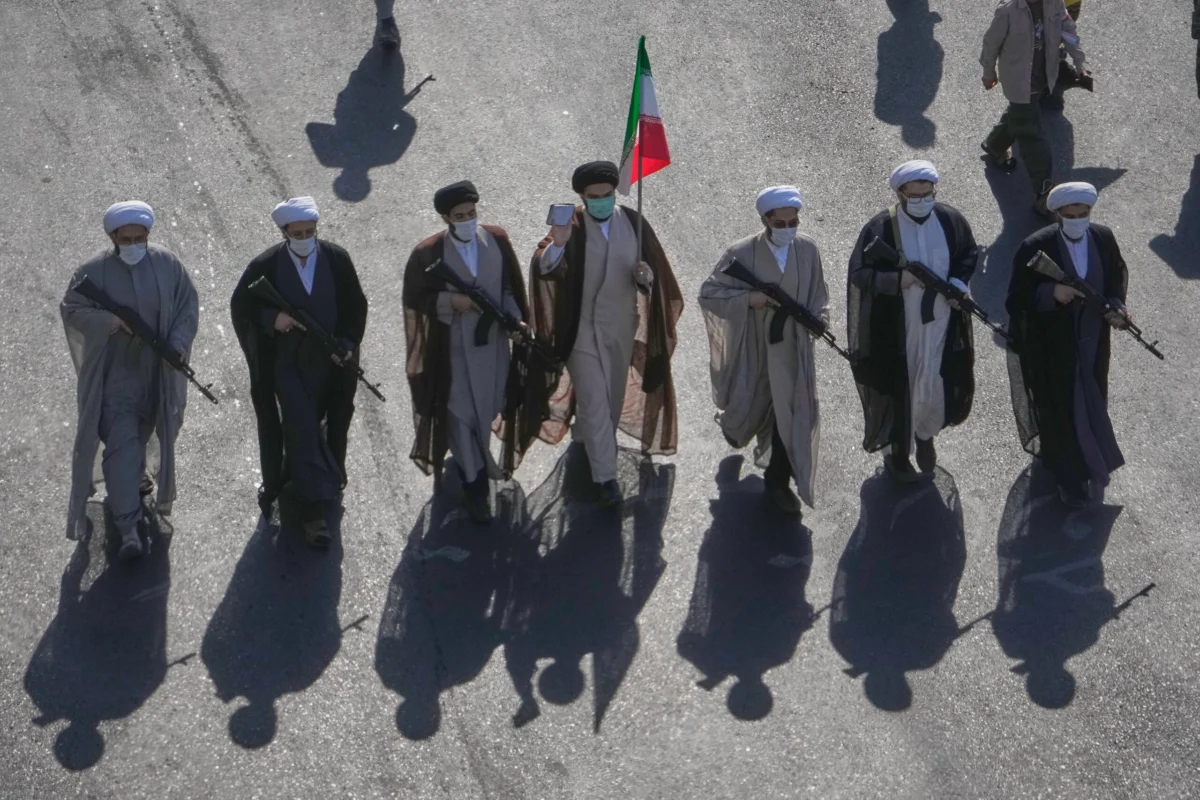
Iranian officials have been unequivocal in their messaging. The warning of "retaliation without limitations" was reportedly delivered by a high-ranking official, potentially from the Islamic Revolutionary Guard Corps (IRGC) or the Foreign Ministry, underscoring the seriousness of the threat. State media channels have amplified this message, portraying Iran as prepared to defend its interests and sovereignty against any external aggression. The image of "Shiite clerics carrying rifles marching during the state-organized ‘Janfada,’ or ‘Sacrifice for Iran,’ military-style parade at Revolution Square in Tehran" on September 18, 2026, as depicted in accompanying media, further reinforces this message of national unity, military readiness, and unwavering resolve in the face of perceived threats. Such public displays are often intended for both domestic consumption, rallying support, and international audiences, signaling strength.
From the US perspective, statements from the Pentagon and State Department have consistently emphasized the right to self-defense and the protection of American personnel and interests in the region. Any potential strikes would likely be framed as defensive measures aimed at deterring further attacks or degrading capabilities that pose a threat. US officials have also reiterated their commitment to freedom of navigation and the safety of international shipping. While acknowledging the risks of escalation, Washington has maintained that it will not hesitate to act when its red lines are crossed.
Qatar, on the other hand, has maintained a neutral but concerned tone. Qatari Foreign Ministry statements have consistently called for restraint, de-escalation, and diplomatic solutions to regional crises. Their emphasis is on preventing a wider conflict that would destabilize the entire Gulf region, jeopardizing economic prosperity and human lives.
Broader Regional Implications: A House of Cards
A direct military confrontation between the US and Iran would have devastating regional and global implications.
- Economic Fallout: The Strait of Hormuz, a critical chokepoint for global oil and gas shipments, could be disrupted, leading to a massive surge in energy prices and a potential global recession. Supply chains would be severely impacted, and investment in the region would plummet.
- Humanitarian Catastrophe: A full-scale conflict would undoubtedly result in a massive loss of life, widespread displacement, and a humanitarian crisis far exceeding current challenges.
- Wider Regional Conflict: Iran’s proxy network could be activated across the region, igniting multiple fronts in Iraq, Syria, Lebanon, and beyond, drawing in other regional powers like Saudi Arabia and Israel. This could lead to an unprecedented regional war, reshaping geopolitical alignments.
- Global Security: The focus on the Middle East could divert international attention and resources from other pressing global issues, potentially empowering other destabilizing actors worldwide.
The intricate web of alliances and rivalries in the Middle East means that any major escalation could quickly spiral out of control, making the current warnings from Tehran a matter of profound international concern.
International Reactions and Calls for De-escalation
Beyond Qatar, numerous international bodies and nations have voiced concerns over the escalating tensions. The United Nations Secretary-General has repeatedly called on all parties to exercise maximum restraint and pursue diplomatic avenues. European Union foreign policy chief has urged both Washington and Tehran to avoid actions that could further destabilize the region, emphasizing the need to preserve international maritime security and the existing diplomatic frameworks, however fragile. Major global powers like China and Russia, while having their own geopolitical interests, generally advocate for de-escalation to prevent disruptions to global energy markets and trade. These calls underscore the universal recognition of the severe consequences of a direct US-Iran confrontation.
Outlook: The Perilous Path Ahead
The current situation represents a precarious balance, with both the US and Iran engaging in a high-stakes game of deterrence. Iran’s explicit warning, coupled with the ongoing conflict in Yemen and the persistent regional proxy skirmishes, signals that the threshold for miscalculation is dangerously low. While Qatar’s mediation efforts offer a glimmer of hope for dialogue, the deep-seated mistrust and the formidable challenges posed by the conflicting strategic imperatives of Washington and Tehran mean that the path to de-escalation remains fraught with peril. The international community watches anxiously, hoping that diplomacy can avert a catastrophic war in a region already scarred by decades of conflict. The coming weeks will be crucial in determining whether the current warnings lead to a catastrophic escalation or a reluctant return to the negotiating table.
