

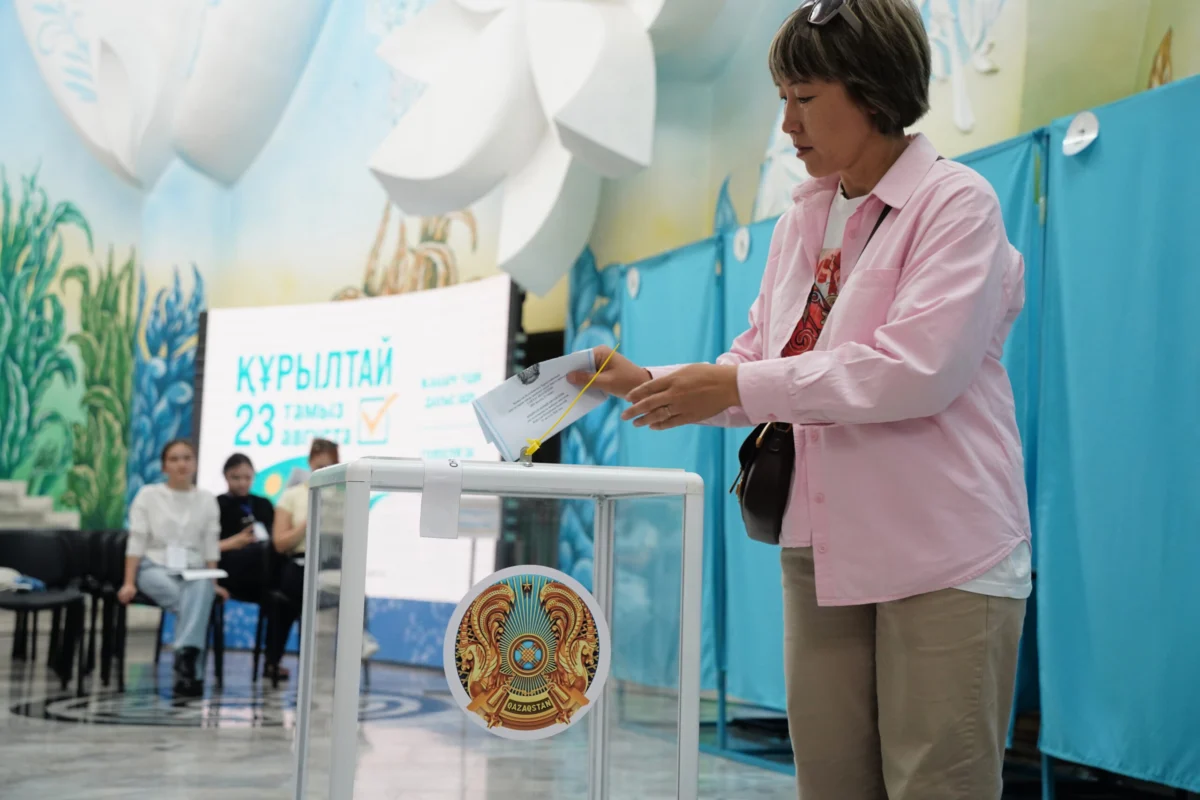
Kazakhstan is poised for a pivotal snap parliamentary election this week, a vote widely anticipated to significantly consolidate President Kassym-Jomart Tokayev’s authority over the sprawling Central Asian nation. Scheduled for August 23, the elections for the 145 seats of the newly formed Kurultai mark a critical juncture in the country’s ongoing political transformation. This electoral event follows closely on the heels of profound constitutional changes, including a shift from a dual-chamber to a single-chamber parliament, signaling Astana’s concerted effort to project itself as a burgeoning democratic power within Central Asia. The previous parliamentary elections were held in 2023, making this a remarkably swift return to the polls.
A New Chapter: The Road to the Kurultai
The decision to hold snap elections emerged just weeks after Kazakhstan, a nation of 21 million strategically positioned between Russia and China, fundamentally restructured its legislative framework. On July 1, the nation officially implemented a package of constitutional amendments, the culmination of President Tokayev’s "New Kazakhstan" reform agenda initiated in 2022. This comprehensive overhaul, approved by a national referendum in June 2022, aimed to decentralize power, strengthen parliamentary oversight, enhance human rights protections, and reduce the extensive presidential prerogatives that characterized the previous era.
Under the new constitutional system, the parliament transitions from a bicameral structure, comprising the Mazhilis (lower house) and Senate (upper house), to a unicameral body known as the Kurultai. This consolidation, according to the national media outlet Astana Times, streamlines the legislative process: "Under the previous system, legislation passed through the Mazhilis before moving to the Senate. Under the new model, the Kurultai concentrates legislative consideration, and adopted laws are then sent directly to the President." This change is intended to improve efficiency and accountability, though critics question whether it truly fosters greater checks and balances or merely centralizes power within a different institutional framework.
Immediately following the enactment of the new system on July 1, President Tokayev signed a decree calling for these snap elections. This move is seen by many analysts as a strategic maneuver to populate the new legislature with deputies aligned with his reform agenda, thereby removing any lingering influence from the political figures associated with his predecessor. To gain representation in the Kurultai, political parties must secure at least 5 percent of the national vote, a threshold that could prove challenging for smaller or nascent political groups.
One of the most significant constitutional changes pertains to the presidential term limit. While the new system stipulates that presidents may serve only a single, seven-year term, a crucial clause allows President Tokayev to run for a third seven-year term once his current second term concludes. This is because the introduction of the new legislature is deemed to "reset" his time in office, effectively sidestepping the spirit of the reform aimed at preventing long-term leadership. Tokayev secured his current term in the 2022 presidential election, winning with an overwhelming 81.3 percent of the vote, largely unchallenged by a field of relatively unknown competitors.
The Shadow of the Past: Nazarbayev’s Legacy and the Rise of Adilet
The upcoming elections are inextricably linked to Kazakhstan’s political history, particularly the towering figure of Nursultan Nazarbayev, who led the country from its independence in 1991 until his resignation in 2019. Nazarbayev, once considered Tokayev’s mentor, presided over a period of significant economic modernization, leveraging the country’s vast oil and gas reserves to transform it into Central Asia’s largest economy. However, his rule was also characterized by widespread corruption, limited political freedoms, and a highly centralized, authoritarian system. He was re-elected president five times in elections that consistently drew international criticism for lacking genuine competition and transparency.
Even after stepping down in 2019, Nazarbayev retained significant influence, holding the title of "Elbasy" (Leader of the Nation) and chairing the powerful Security Council. This dual power structure began to unravel following the widespread civil unrest in January 2022, known as the "Qantar" (January) events, which saw deadly clashes across the country. President Tokayev swiftly consolidated power, removed Nazarbayev from his Security Council post, and initiated investigations into alleged corruption networks linked to the former president’s inner circle. This period marked a decisive break from the Nazarbayev era and paved the way for Tokayev’s "New Kazakhstan" reforms.
A critical development preceding this election is the dissolution of Amanat, the party that had dominated Kazakh politics under various names since the 1990s and was closely associated with Nazarbayev. In June of this year, Amanat officially voted to merge into a newly formed entity named Adilet, which translates to "Justice." This new party is led by top aides to President Tokayev and is largely seen as a strategic rebranding effort to distance itself from the tarnished legacy of Nazarbayev and his perceived authoritarian excesses.
Adilet has adopted the campaign slogan "Just Kazakhstan," echoing the broader themes of Tokayev’s reform agenda. Its platform pledges to address pressing social and economic concerns, including raising household incomes, strengthening the national economy, and improving public services, infrastructure, and digitalization. Reports from Almaty, Kazakhstan’s largest city, indicate a ubiquitous presence of election posters, predominantly in support of Adilet, signaling a well-resourced and dominant campaign. Opinion polls suggest that Adilet is poised to secure a substantial majority in the Kurultai, with several smaller, broadly Tokayev-loyal opposition parties also expected to gain seats.
The Contenders and Their Platforms
Seven political parties are fielding candidates in this year’s elections, offering a veneer of multi-party competition. Beyond the dominant Adilet party, the lineup includes:
- Auyl (Rural People’s Democratic Patriotic Party): Focuses on strengthening rural communities, supporting agriculture, and addressing the needs of the country’s significant rural population.
- Aq Jol (Democratic Party of Kazakhstan): Advocates for entrepreneurship, economic liberalization, and support for small and medium-sized businesses, reflecting a pro-business stance.
- People’s Party of Kazakhstan: Historically aligned with socialist principles, it typically emphasizes social welfare, workers’ rights, and a more equitable distribution of wealth.
- Nationwide Social Democratic Party: Often positioned as a more genuine opposition force, though its effectiveness has varied. It typically champions democratic reforms, human rights, and social justice.
- Baytaq (Green Party): Campaigns on environmental protection, sustainable development, and climate action, addressing growing concerns about ecological issues in the resource-rich nation.
- Respublica: A relatively new party, often seen as representing a younger, reform-minded segment of the political spectrum, advocating for modernization and good governance.
While the presence of multiple parties suggests a vibrant political landscape, analysts like Rustam Burnashev, a Kazakh political analyst, remain cautious. Burnashev told Reuters that while this snap election provides Tokayev with an opportunity to remove figures associated with his predecessor, Nazarbayev, from the political stage, significant, transformative reform of the political system is unlikely. "All the parliamentary candidates are known," Burnashev remarked, adding, "Nor can one say that the parliament itself will be a transformative one." This sentiment reflects a prevailing skepticism among some observers that while faces may change, the underlying power structures and the degree of genuine political pluralism may remain largely intact.

Public Sentiment and Economic Realities
Despite Kazakhstan’s impressive economic growth in recent years, driven primarily by its vast natural resources, the benefits have not been evenly distributed. Tax rises and persistent inflation have impacted the living standards of ordinary citizens, leading to a degree of public disillusionment. Atapsha, a fruit seller in Almaty, whose full name was not provided, encapsulated this sentiment, telling Reuters, "I am 73 years old. I’ve been waiting for things to get better for 73 years, but so far, nothing has really worked out. Still, I hope that this year things will finally improve." This reflects a deep-seated hope for change juxtaposed with a history of unmet expectations.
The Bureau of National Statistics reported that Kazakhstan’s gross domestic product (GDP) increased by 6.5 percent to approximately US$335 billion in 2025 compared with the previous year, using the consumption method of calculations. This robust economic performance positions Kazakhstan as the largest economy in Central Asia. However, the nation faces challenges in diversifying its economy away from its heavy reliance on oil and gas, addressing regional disparities, and ensuring that economic growth translates into tangible improvements for all citizens.
International Scrutiny and Geopolitical Ambitions
The integrity and fairness of the election process will be closely watched by the international community. The OSCE Parliamentary Assembly announced its deployment of nearly 80 parliamentarians and staff from approximately 30 countries to observe the election on Sunday. This international oversight is crucial for assessing the transparency and democratic credentials of the vote, especially given Kazakhstan’s stated ambition to assert itself as a major democratic power in Central Asia. Past elections in Kazakhstan have often fallen short of international democratic standards, making the current observation mission particularly significant for Tokayev’s reform narrative.
Beyond its domestic political reforms, Kazakhstan is actively pursuing a "multi-vector" foreign policy aimed at balancing its relationships with major global powers. As Nargis Kassenova of the Belfer Center for Science and International Affairs at Harvard Kennedy School noted in an April article, "Kazakhstan has begun positioning itself as a middle power." Its geostrategic location at the heart of Eurasia makes it "both an important connector and buffer between Europe, Russia, the Middle East, South Asia, and East Asia," and it stands as a regional leader in Central Asia.
Astana has been diligent in strengthening its economic and diplomatic ties with both China and the European Union. In recent years, it has also actively bolstered relations with the United States. A notable example is the $4.2 billion agreement signed last November with the US locomotive parts maker Wabtec. This deal, which will provide Kazakhstan with 300 kits to build locomotives for its national rail company, Kazakhstan Temir Zholy, was even trumpeted by former US President Donald Trump on Truth Social as "the largest Railroad Equipment Purchase in History." Such deals underscore Kazakhstan’s commitment to diversifying its economic partnerships and modernizing its infrastructure with Western technology.
In the context of Russia’s war in Ukraine, Kazakhstan has maintained a delicate balancing act. Traditionally a close ally of Moscow, Astana has preferred to adopt a neutral stance, calling for peace and refraining from openly supporting the invasion. This position has, at times, strained relations with Russia but has allowed Kazakhstan to preserve its standing with Western partners. Furthermore, Kazakhstan has sought to play a constructive role in regional and international diplomacy, even offering itself as a venue for potential peace talks in the US-Iran conflict, showcasing its ambition as a responsible global actor.
Kazakhstan’s energy resources remain a cornerstone of its global importance. The country accounts for approximately 2 percent of the daily world oil supply. The bulk of its oil exports are shipped to European countries via the Caspian Pipeline Consortium (CPC) pipeline to Russia’s port of Novorossiysk. This critical energy artery, however, has faced periodic disruptions, with segments of the pipeline and tankers serving it coming under attack by Ukrainian drones, highlighting the geopolitical vulnerabilities inherent in its export routes and the broader impact of regional conflicts.
Looking Ahead: Implications for Governance and Stability
The upcoming elections are more than just a procedural formality; they are a crucial test of President Tokayev’s "New Kazakhstan" reform package and his ability to steer the country towards a more transparent and resilient future. Analysts suggest the elections will determine whether the country’s new leadership can effectively adhere to the renewed unicameral legislature and uphold its carefully crafted multi-vector foreign policy.
Domestically, the consolidation of power under Adilet and President Tokayev is expected to bring a period of increased stability, at least in the short term, allowing for the continued implementation of his reform agenda. However, the challenge will be to translate constitutional changes and political reconfigurations into tangible improvements in the daily lives of citizens, addressing the underlying economic grievances and social inequalities that fuel public discontent. The true measure of reform will lie in the extent to which the new Kurultai genuinely exercises its legislative oversight and fosters greater accountability, rather than serving as a rubber stamp for presidential decrees.
Regionally, a strengthened Kazakhstan under Tokayev is likely to continue asserting its leadership role in Central Asia, advocating for regional cooperation and stability. Its balancing act between major powers will remain a defining feature of its foreign policy, influencing regional security dynamics and economic integration efforts.
Internationally, the elections offer Kazakhstan an opportunity to bolster its image as a reform-minded nation committed to democratic principles, albeit with its own unique Central Asian flavor. The success of these reforms, both political and economic, will be critical for attracting continued foreign investment and maintaining robust partnerships with key global players. As Kazakhstan navigates the complex interplay of domestic expectations and international pressures, the August 23 election will undoubtedly cast a long shadow over its trajectory in the coming years.
