

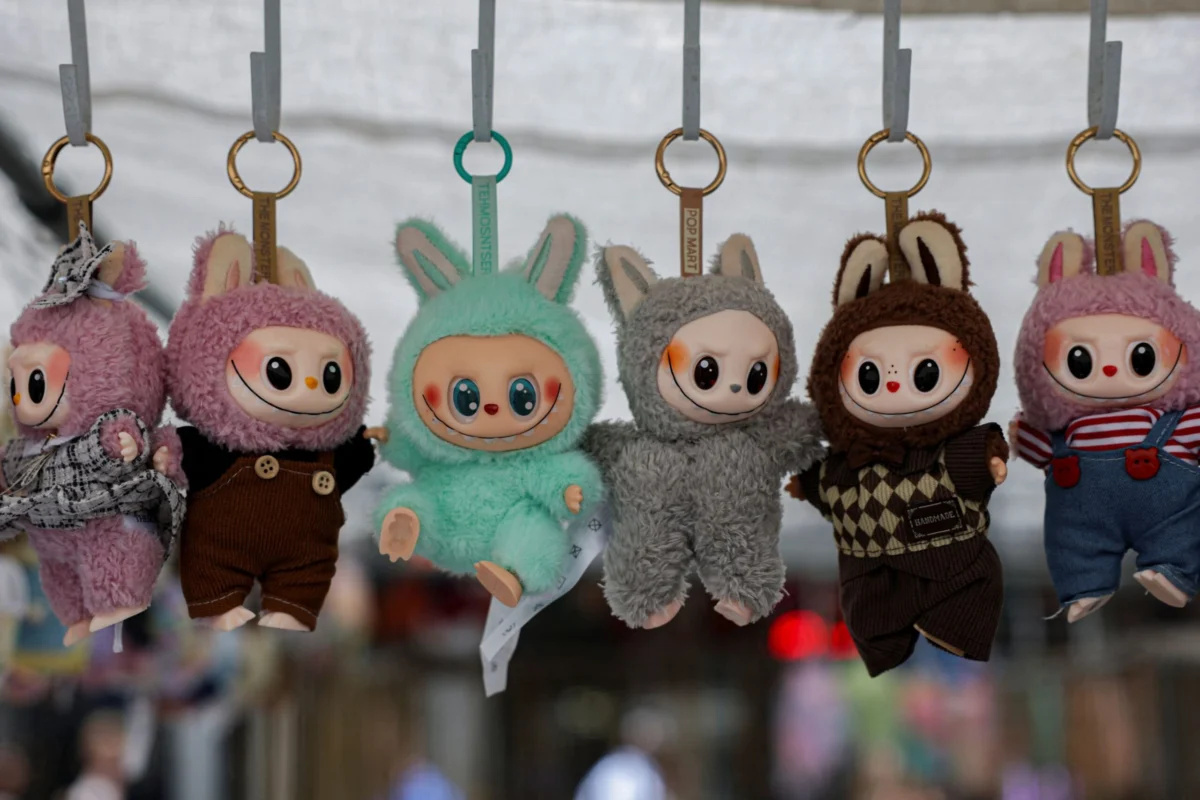
Hong Kong – Shares of Pop Mart International Group, the innovative Chinese designer toy giant known for its popular blind box collectibles, experienced a significant downturn in Hong Kong trading on Friday, shedding over 4% of their value. The sharp decline followed the release of the company’s first-half financial results for the period ended June 30, which revealed a troubling contraction in sales across its crucial Asia-Pacific (excluding China) and Americas markets, casting a shadow over its ambitious global expansion plans.
The toy maker reported an overall 23.8% year-over-year rise in first-half revenue, reaching 17.17 billion yuan (approximately $2.55 billion USD). While this headline figure might suggest robust growth, a deeper dive into the geographical breakdown unveiled a stark disparity. Revenue in mainland China surged by an impressive 47.3%, underscoring the brand’s enduring strength and market penetration in its home territory. However, this domestic success was significantly offset by considerable declines in international markets: sales in Asia Pacific ex-China fell by 9.7%, and even more concerning, revenue in the Americas plummeted by 16.5%. The uneven growth trajectory immediately triggered alarm bells among investors and analysts alike, with Citi noting that the results fell "below expectations" due to persistent pressure in overseas markets, where overall sales declined by 11% year-over-year.
Dissecting Pop Mart’s First-Half Financials
The reported 23.8% increase in total revenue to 17.17 billion yuan represents a substantial top-line expansion, indicative of Pop Mart’s continued ability to generate sales, primarily driven by its dominant presence in China. The company’s unique "blind box" model, which offers collectors the thrill of surprise with each purchase of a collectible figurine from series like Labubu, Molly, Skullpanda, and Dimoo, has cultivated a fiercely loyal fanbase. This model, combined with strategic collaborations and a strong retail footprint, has allowed Pop Mart to capitalize on the burgeoning collectible toy market within China. The 47.3% jump in domestic revenue highlights the efficacy of its marketing, distribution, and product development strategies in its core market, where cultural trends and consumer spending habits align favorably with its offerings.
However, the international landscape presents a starkly different picture. The 9.7% decline in Asia Pacific ex-China and the more severe 16.5% drop in the Americas indicate significant headwinds. These regions are critical to Pop Mart’s long-term vision of becoming a global entertainment brand. The challenges cited by Citi are multi-faceted, ranging from inventory management and supply chain disruptions to warehousing, logistics, and store operational complexities. These issues are particularly acute for a company dealing with high-volume, relatively low-cost collectible items that require efficient and cost-effective distribution channels to maintain profitability and market competitiveness in diverse international markets. The inability to seamlessly replicate its domestic operational efficiencies on a global scale appears to be a major impediment.
Background and Evolution of the Blind Box Phenomenon
Pop Mart, founded in 2010 by Wang Ning, initially started as a retailer of trendy lifestyle products before pivoting to its now-famous "blind box" model in 2016. The concept, popularized in Japan with gashapon toys, involves purchasing a sealed box containing one random figurine from a specific series. The element of surprise, coupled with the desire to collect entire sets, including rare "secret" editions, creates a highly addictive and engaging consumer experience. This innovative approach resonated deeply with younger demographics, particularly millennials and Gen Z, who value unique collectibles and shared cultural experiences.
The company’s meteoric rise culminated in its highly anticipated initial public offering (IPO) on the Hong Kong Stock Exchange in December 2020, raising approximately HK$5.2 billion (US$670 million). At its peak, Pop Mart’s market capitalization soared, reflecting investor confidence in its disruptive business model and vast potential for global expansion. Its success propelled it to become a household name in China, often hailed as the "Disney of collectible toys," with dedicated physical stores, robotic vending machines (Roboshops), and a robust online presence.
Pop Mart’s international expansion began earnestly in the years following its domestic success, driven by a vision to introduce its unique brand of art toys to a global audience. This strategy involved opening flagship stores in major international cities, participating in global toy conventions, and forging partnerships with e-commerce platforms. For instance, the original article mentions a PopMart Labubu The Monsters Big into Energy Series Vinyl Plush dolls event during a press preview at an AliExpress pop-up store in London, Britain, on November 11, 2025. This specific event underscores Pop Mart’s ongoing efforts to leverage partnerships and physical activations to boost brand visibility and sales in key overseas markets, even as the recent financial results paint a challenging picture of these endeavors. These efforts demonstrate a commitment to global outreach that contrasts with the current performance metrics.
Chronology of Expansion and Emerging Challenges
Pop Mart’s journey from a niche retailer to a global contender has been marked by several key phases:
- 2010: Founding of Pop Mart as a general trendy product retailer.
- 2016: Pivots to the "blind box" model, focusing on designer toys, which quickly becomes its core business.
- 2017-2019: Rapid domestic expansion in China, establishing a strong brand presence through retail stores, Roboshops, and online channels. Introduces popular IP series like Molly, Dimoo, and Skullpanda.
- December 2020: Successful IPO on the Hong Kong Stock Exchange, signaling strong investor confidence in its growth prospects and global ambitions.
- 2021-2022: Intensified international expansion. Opens first overseas stores in key Asian markets (e.g., Singapore, South Korea) and explores Western markets. Establishes online presence through various international e-commerce platforms.
- 2023-2024: Continued investment in global logistics and supply chain infrastructure. Faces initial challenges in adapting product lines and marketing strategies to diverse cultural preferences. Reports show mixed international results, with some markets showing promise while others lag.
- November 2025: Engages in promotional events like the AliExpress pop-up in London, indicating ongoing efforts to penetrate and solidify its presence in Western markets, particularly Europe. These tactical initiatives highlight the company’s continuous investment in international brand building and direct consumer engagement, despite the broader strategic hurdles.
- H1 2026 (Period Ended June 30): Reports show significant declines in Asia Pacific ex-China and Americas, leading to a substantial drop in share price and revised analyst forecasts. This period marks a critical inflection point, highlighting the difficulties of scaling a highly localized, culturally specific product across vastly different consumer landscapes and logistical environments.
The challenges in overseas markets are not unique to Pop Mart. Many Chinese brands venturing abroad encounter difficulties in navigating complex regulatory environments, establishing efficient supply chains, understanding local consumer tastes, and competing with established local players. For Pop Mart, the high frequency of new product launches and the reliance on physical collectibles exacerbate issues related to inventory management and timely distribution, particularly across long distances and diverse customs regulations.
Analyst Reactions and Revised Outlook
Citi’s revised outlook paints a more conservative picture for Pop Mart’s near future. The investment bank now anticipates Pop Mart’s group revenue to decline by 8% year-over-year in 2026, a significant downgrade from earlier projections. Correspondingly, Citi has lowered its price target for Pop Mart shares to HK$198, signaling a reduced valuation expectation. This adjustment reflects a sobering assessment of the company’s capacity to overcome its current international hurdles swiftly.
Crucially, Citi noted that Pop Mart’s management has acknowledged the severity of the situation, admitting that its initial 20% revenue growth target for 2026 is now "difficult to achieve." This candid admission underscores the unexpected depth of the challenges faced, including "more challenges than expected and competitive pressure." This indicates that the problems extend beyond mere operational glitches, encompassing broader market dynamics and intensifying competition from both global toy manufacturers and emerging local collectible brands.
The competitive landscape in the collectible toy market is fierce. While Pop Mart pioneered the blind box trend in China, similar concepts and direct competitors exist globally. Companies like Funko (known for its Pop! Vinyl figures) have a strong established presence in Western markets, with extensive distribution networks and brand recognition. Additionally, smaller, independent designer toy artists and regional brands constantly emerge, catering to niche tastes and fragmenting the market. Pop Mart’s strategy of bringing a "Chinese-centric" aesthetic and blind box model to these diverse markets requires substantial localization and a nuanced understanding of consumer preferences, which appears to be a work in progress.
Broader Impact and Implications
The performance of Pop Mart’s shares and its latest financial results have broader implications for both the company itself and the wider market for consumer discretionary goods. For Pop Mart, the immediate impact is a dent in investor confidence, which could affect its ability to raise capital for future expansion or acquisitions. The company will likely need to re-evaluate its international strategy, potentially shifting focus from aggressive store openings to optimizing existing channels, enhancing e-commerce capabilities, and investing in more localized product development and marketing. This could mean a slowdown in its global footprint expansion in the short to medium term as it consolidates and refines its approach.
The challenges in inventory management, supply chains, and logistics are particularly critical in an era marked by global supply chain disruptions and inflationary pressures. These operational inefficiencies directly impact profitability and customer satisfaction. To mitigate these, Pop Mart may need to explore diversifying its manufacturing bases, investing in advanced inventory tracking systems, and forming stronger partnerships with local logistics providers in its overseas markets.
From an industry perspective, Pop Mart’s experience serves as a cautionary tale for other fast-growing brands from emerging markets aiming for global dominance. While domestic success can provide a strong foundation, replicating that success internationally requires a fundamentally different approach, deep cultural understanding, and robust operational resilience. The current economic climate, characterized by high inflation and potential recessionary pressures in many Western markets, further complicates matters, as consumers tend to cut back on discretionary spending, which includes collectible toys.
Looking ahead, Pop Mart’s management will be under immense pressure to articulate a clear and actionable strategy for rejuvenating its overseas growth. This might involve:
- Strategic Market Prioritization: Focusing resources on markets with the highest potential and lowest operational barriers, rather than a broad-brush approach.
- Product Localization: Developing series and characters that resonate more strongly with local cultural sensibilities and preferences, moving beyond its current core IP.
- E-commerce Optimization: Enhancing its online presence and partnerships with platforms like AliExpress, ensuring seamless user experience, localized payment options, and efficient delivery.
- Supply Chain Resilience: Investing in localized warehousing and distribution networks to reduce lead times, manage inventory more effectively, and mitigate external disruptions.
- Cost Control: Implementing measures to improve operational efficiency and reduce costs associated with international expansion, thereby improving profitability margins.
While Pop Mart’s domestic market remains a powerhouse, its true test lies in its ability to translate that success into sustainable, profitable growth on the global stage. The recent financial results are a stark reminder that the path to becoming a global brand is fraught with challenges, requiring constant adaptation, strategic recalibration, and an unwavering commitment to operational excellence across diverse and complex international landscapes. The company’s response to these setbacks in the coming quarters will be closely watched by investors and industry observers alike, as it seeks to regain momentum and solidify its position as a truly global leader in the designer toy market.
