

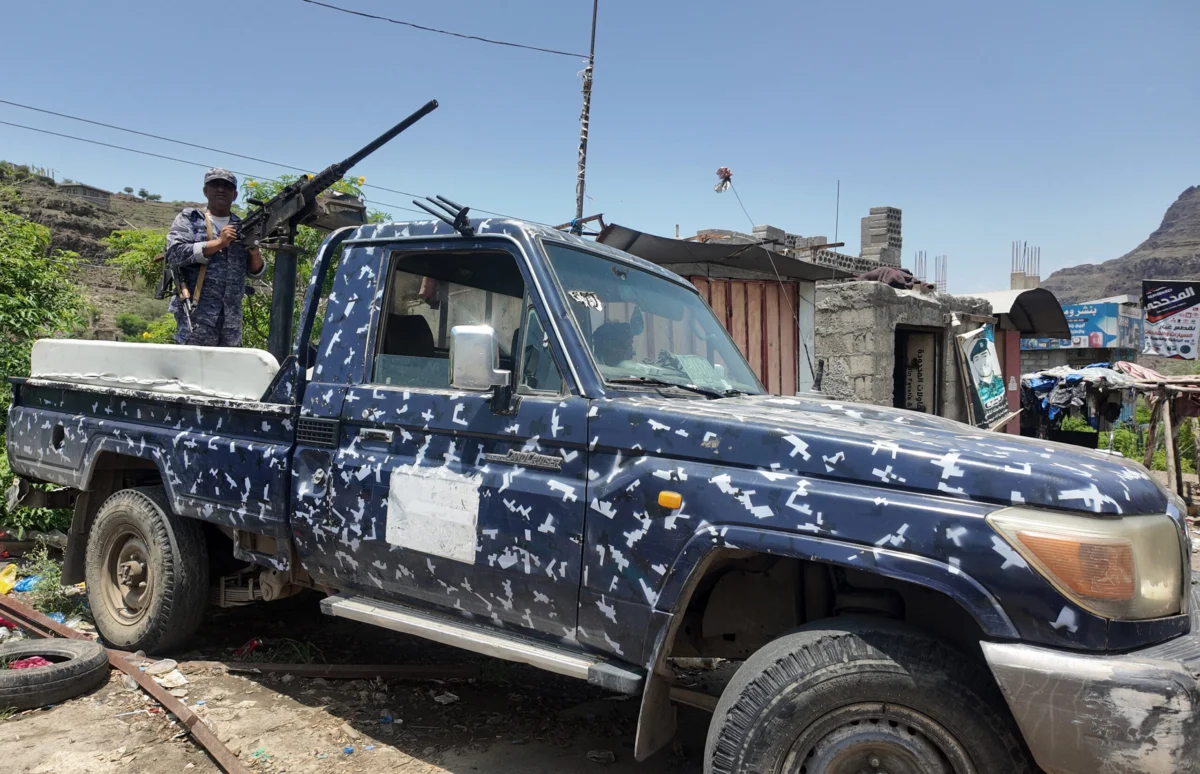
Escalating Conflict: Key Battlegrounds
The focus of the renewed fighting has sharply shifted to the region of Marib, the internationally recognized government’s last remaining stronghold in the northern half of the country and a critical oil and gas hub. Military analysts warn that should the Houthis gain full control of Marib, it could decisively turn the tide of the war in their favor, providing them with significant leverage and resources. This strategic pivot highlights the critical juncture at which the conflict now stands, with both sides committing substantial resources to what many perceive as a decisive battle.
Simultaneously, heated battles are also raging in western Taiz, a strategically vital governorate stretching towards Yemen’s western coast. Reports indicate that government forces, bolstered by support from the Saudi Arabia-led coalition, are now on the counteroffensive in Taiz after experiencing territorial losses last week. A video circulated on Monday by the Yemeni army purportedly showed Houthi positions and vehicles being targeted by aerial bombardment in the area, signaling a determined effort by government forces to reclaim lost ground and disrupt Houthi supply lines. The dual fronts in Marib and Taiz represent the current epicenters of a conflict that has seen periods of relative calm punctuated by brutal resurgences of violence.
The human cost of this escalation is immediate and devastating. The International Organization for Migration (IOM) has reported a dramatic surge in displacement, with more than 85,000 people forced to flee their homes since the beginning of September alone. This recent wave of displacement adds to the millions already uprooted by the conflict. A particularly stark indicator of the desperate situation is the exodus across the Gulf of Aden, with over 2,000 Yemenis reportedly having fled to Djibouti’s northern shores within a short period, seeking refuge from the relentless violence and deteriorating conditions.
Marib: The Strategic Northern Jewel
The significance of Marib transcends its geographical location; it is a multi-faceted prize coveted by all parties in the Yemeni conflict.
Firstly, Marib stands as the last remaining bastion of anti-Houthi forces in northern Yemen. Its fall would effectively consolidate Houthi control over the entire northern and central highlands, severely undermining the government’s presence and weakening its leverage in any future peace negotiations. This makes the battle for Marib an existential one for the internationally recognized government, whose political and military credibility is heavily tied to holding this vital territory.
Secondly, Marib is home to Yemen’s largest gas and oil fields, including the Safir gas field and the Marib oil refinery. Control over these energy assets would grant the Houthis access to a crucial source of revenue, significantly boosting their financial capacity and potentially easing their reliance on external support. This economic prize has been a long-standing objective for the Houthis. Saddam al-Huraibi, a Yemeni political commentator, noted to Al Jazeera that "Dominating Marib’s oil and gas resources has been a Houthi goal for more than a decade. Without facing a crushing defeat in Marib, they would keep fighting to achieve that goal." Such control would also provide the group with immense leverage in any future mediation efforts, allowing them to dictate terms from a position of economic strength.
Thirdly, Marib holds significant geographical importance. It lies on the easiest road network connecting northern Yemen to the southern governorates of Shabwa and al-Mahra. Shabwa, with its seafront on the Gulf of Aden and the Arabian Sea, and al-Mahra, bordering Oman, are critical for trade, logistics, and access to external supply routes. Control of Marib would therefore open up strategic corridors for the Houthis, facilitating movements and extending their influence towards the southern and eastern parts of the country.
Moreover, a Houthi victory in Marib would be a "watershed moment" in terms of Yemen’s internal dynamics, according to Adam Baron, a fellow at the Future Security Program of the New America think tank. He emphasized the sheer determination of government forces in this battle, viewing it as an existential struggle. "Losing Marib would be an absolute crushing defeat" for the forces aligned with Yemen’s internationally recognized government, he stated, highlighting the high stakes involved.
From a propaganda perspective, a win in Marib would serve as a powerful tool for the Houthis. Nabil Hetari, a Yemeni writer and human rights activist, explained that it would help them convince many Yemenis that the group is militarily ascendant and poised for even greater victories, potentially eroding morale among their adversaries and galvanizing their own supporters.
Finally, there is a profound humanitarian dimension to the battle for Marib. Over the years, the city has become a sanctuary for internally displaced persons (IDPs) fleeing areas that have fallen under Houthi control since the capital Sanaa’s capture in 2014. According to IOM figures from 2023, Yemen recorded nearly 2.8 million internally displaced people, with more than half of them (58 percent) – approximately 1.6 million individuals – residing in Marib governorate. The concentration of such a large IDP population makes any large-scale military offensive a humanitarian catastrophe waiting to happen, threatening mass casualties and a renewed wave of displacement for an already vulnerable population. "All the parties involved in the battle are focused on Marib as a potential decider in the nature of their exit from this war," Hetari concluded, underscoring its pivotal role in the conflict’s trajectory.
Taiz: A Gateway to the Red Sea
The strategic importance of Taiz, another focal point of the recent escalation, is rooted deeply in its geography and demographic weight.
Firstly, the governorate of Taiz forms a crucial bridge between the Houthi-held north and the government-held south, as well as a gateway to the Red Sea coast. Control over Taiz therefore grants significant tactical advantages in the movement of weapons, supplies, and personnel between the interior and the southern port city of Aden, which serves as the interim capital for the internationally recognized government.
Secondly, Taiz carries considerable political and symbolic weight. As one of Yemen’s largest population centers, the city became an important center of popular resistance against the Houthis after their seizure of Sanaa in 2014. It has endured years of siege-like conditions, intense fighting, and severe restrictions on access, making it a symbol of resilience for many anti-Houthi factions. A major Houthi breakthrough there would thus carry symbolic significance far beyond the territory captured, representing a blow to government morale and a win for the Houthis’ narrative of dominance.
Thirdly, the western coast of Taiz stretches towards Mocha, a historic port town recently captured by the Houthis, and further towards the Bab al-Mandeb strait. This strait is a critical choke point connecting the Red Sea to the Gulf of Aden, and by extension, the Mediterranean Sea to the Indian Ocean. Bab al-Mandeb is one of the world’s most important shipping routes, a 20-kilometer (12-mile) wide waterway situated between Yemen and Djibouti, through which approximately 12 percent of global trade passed before the latest resurgence of fighting. The Houthis have recently made significant gains along Yemen’s Red Sea coast, including reportedly capturing Mayyun (Perim) Island, which is strategically located within the strait itself.
Fuad Mussed, a Yemeni analyst and author, explained the broader implications: "The Houthis seek to move closer to this vital waterway to threaten maritime traffic. Such a move aims to keep the Strait of Hormuz and Bab al-Mandeb under the influence of Iran and use them as leverage against regional and international powers. This is a strategy Tehran has been pursuing for years." This objective raises serious concerns for Saudi Arabia and other global powers, particularly given that Saudi Arabia has been increasingly relying on the Red Sea route to export its oil, bypassing the more vulnerable Strait of Hormuz in the Persian Gulf. Any Houthi control or significant influence over Bab al-Mandeb could disrupt global shipping, impact oil prices, and escalate regional tensions.
A Decade of War: Background and Chronology
The current escalation is a grim reminder of a conflict rooted in a complex interplay of internal grievances, regional rivalries, and international interventions. The civil war in Yemen effectively began in late 2014 when the Houthi movement, a Zaidi Shia group from northern Yemen, capitalized on widespread discontent with the transitional government and seized the capital, Sanaa. This move led to the ouster of President Abdrabbuh Mansur Hadi and plunged the country into chaos.
In March 2015, a Saudi Arabia-led military coalition, including the United Arab Emirates and other Sunni Arab states, intervened in Yemen, aiming to restore Hadi’s government and counter what they perceived as growing Iranian influence through the Houthis. The coalition launched extensive air campaigns and supported pro-government forces on the ground, initiating what became a brutal proxy war.
- 2014: Houthis seize Sanaa, prompting President Hadi to flee.
- 2015: Saudi-led coalition intervenes, launching "Operation Decisive Storm." The conflict rapidly escalates, leading to widespread destruction and humanitarian crisis.
- 2016-2018: Intense fighting across multiple fronts; numerous failed peace talks (e.g., Kuwait, Geneva). The humanitarian situation deteriorates significantly, with widespread famine warnings.
- 2018: Stockholm Agreement reached between warring parties, leading to a fragile ceasefire in Hodeidah, a crucial port city. However, full implementation remains elusive.
- 2019-2020: Houthi missile and drone attacks on Saudi targets increase. The conflict around Marib intensifies, with repeated Houthi offensives.
- 2021-2022: Persistent Houthi push towards Marib, met with fierce resistance. UN-brokered truce in April 2022 offers a period of relative calm, lasting six months.
- 2023: Truce expires, but general de-escalation continues amidst regional diplomatic efforts (e.g., Saudi-Iran rapprochement). However, sporadic clashes persist.
- Late 2023/Early 2024: Renewed Houthi naval attacks in the Red Sea following the Israel-Hamas conflict, drawing international military responses. This creates a complex backdrop for the internal Yemeni conflict.
- Recent Weeks: Significant Houthi advances in government-held areas, particularly in Marib and Taiz, prompting the current government counter-offensives.
The Dire Humanitarian Toll
The protracted conflict has precipitated one of the world’s worst humanitarian crises. Supporting data from various international organizations paints a grim picture:
- Displacement: Beyond the 85,000 recently displaced, the UN estimates that over 4.5 million people have been internally displaced since the conflict began, with many living in overcrowded camps with inadequate access to basic services. Marib alone hosts nearly 1.6 million IDPs, straining its already fragile infrastructure.
- Food Insecurity: According to the World Food Programme (WFP), over 17 million Yemenis (more than half the population) are food insecure, with 6.1 million facing emergency levels of hunger. The conflict has severely disrupted agricultural production, supply chains, and access to markets.
- Healthcare Collapse: Years of war have decimated Yemen’s healthcare system. Over half of the country’s health facilities are non-functional, and there is a severe shortage of medical staff, equipment, and medicines. Preventable diseases like cholera and diphtheria continue to pose significant threats.
- Child Protection: UNICEF reports that hundreds of thousands of children are at risk of severe acute malnutrition. The conflict has also resulted in thousands of child casualties and widespread recruitment of child soldiers by various factions.
- Economic Devastation: Yemen’s economy has collapsed, with soaring inflation, a depreciating currency, and widespread unemployment. Public services, including water and sanitation, are barely functioning.
International humanitarian organizations, including the IOM, UNHCR, WFP, and UNICEF, are struggling to meet the immense needs due to funding shortfalls and access challenges. The recent intensification of fighting further exacerbates these difficulties, making aid delivery more perilous and increasing the number of people requiring urgent assistance.
Regional and International Implications
The renewed fighting in Yemen carries profound regional and international implications:
- Saudi Arabia’s Security: For Saudi Arabia, the Houthi advances, particularly towards the Red Sea coast and control of critical shipping lanes, represent a direct threat to its national security and economic interests. The Red Sea is a vital export route for Saudi oil, bypassing the Strait of Hormuz. Any Houthi capability to disrupt this route, or to launch further cross-border attacks, remains a primary concern for Riyadh. The Saudi-led coalition’s continued support for government forces underscores this strategic imperative.
- Iran’s Influence: The Houthis are widely seen as proxies for Iran, though the extent and nature of this relationship are debated. Nevertheless, Houthi gains are often interpreted as an expansion of Iranian influence in the Arabian Peninsula, a key strategic objective for Tehran. Analyst Fuad Mussed’s comments on the Houthis’ Red Sea strategy align with a broader Iranian ambition to project power and leverage key maritime chokepoints.
- Global Shipping and Energy Security: The Bab al-Mandeb strait’s importance to global trade cannot be overstated. Any instability or threat to shipping in this area has immediate repercussions for international commerce, oil prices, and supply chains. The recent Houthi attacks on commercial vessels in the Red Sea, ostensibly in solidarity with Palestinians, have already led to significant rerouting of shipping traffic, increasing costs and transit times, and drawing military responses from global powers like the US and UK. An emboldened Houthi movement with greater control over Yemen’s coastline could further complicate this already volatile situation.
- UN Peace Efforts: The United Nations has repeatedly called for a political solution to the conflict, and various envoys have tirelessly pursued peace negotiations. The current military escalation severely jeopardizes these efforts, as both sides appear intent on achieving battlefield victories to strengthen their negotiating positions. The UN and other international actors continue to urge de-escalation, adherence to international humanitarian law, and a return to the negotiating table.
The Road Ahead: Prospects for Peace and Escalation
The current military trajectory in Yemen suggests a prolonged and intensified conflict in the immediate future. The battles for Marib and Taiz are not merely territorial disputes but existential struggles that could redefine the power balance in Yemen. A Houthi victory in Marib would provide them with unmatched economic and strategic depth, potentially making them an unassailable force in the north and central regions. Conversely, a successful government defense, backed by the Saudi-led coalition, could push the Houthis back and force them to reconsider their maximalist demands.
The international community faces a complex challenge. While there is a consensus on the need for a political solution, the warring parties often prioritize military gains. Regional diplomatic efforts, particularly the Saudi-Iran rapprochement, offered a glimmer of hope for de-escalation in Yemen, but the recent resurgence of fighting indicates that these broader geopolitical shifts have not yet translated into a lasting peace on the ground.
Without sustained international pressure, robust diplomatic engagement, and a genuine commitment from all Yemeni factions to prioritize national reconciliation over military conquest, the cycle of violence, displacement, and humanitarian suffering is set to continue. The fate of millions of Yemenis, already bearing the brunt of nearly a decade of war, hangs precariously in the balance as the battles for Marib and Taiz unfold.
