

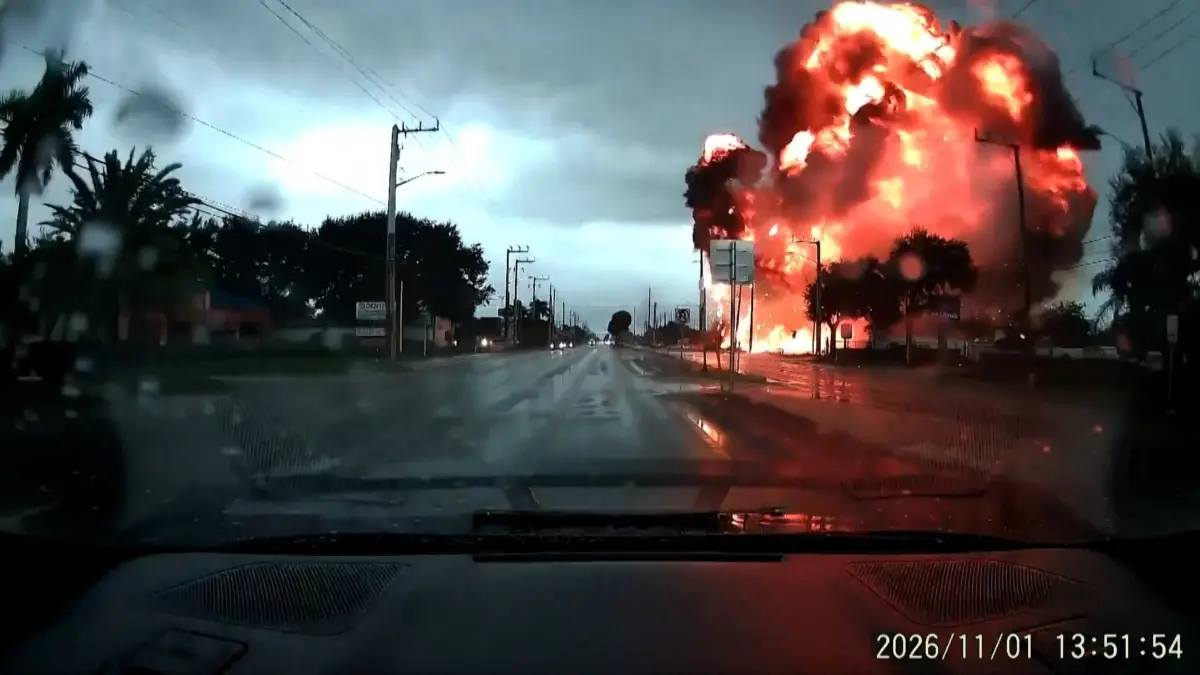
Newly released air traffic control recordings have cast a chilling light on the final moments of a Learjet 60 business jet that rapidly lost altitude before crashing in Greenacres, Florida, on October 30, 2026. The devastating incident claimed the lives of all nine individuals aboard, prompting a comprehensive investigation by federal authorities into reported factors including severe icing and extreme turbulence. The urgent "mayday" calls from the flight crew, struggling to maintain control, provide a harrowing audio testament to the unfolding tragedy, now a central piece of evidence in the complex inquiry.
The Catastrophic Descent: A Chronology of Events
The ill-fated flight, operated by "Executive AirLink," a charter service, departed from Fort Lauderdale Executive Airport (FXE) at approximately 2:15 PM EST, bound for Westchester County Airport (HPN) in White Plains, New York. On board were two experienced pilots, a flight attendant, and six passengers, reportedly corporate executives traveling for business. The Learjet 60, tail number N735LJ, was a well-maintained twin-engine business jet, known for its speed and efficiency in executive travel.
Initial reports indicated a routine departure and climb-out. Air Traffic Control (ATC) communications from the Miami Air Route Traffic Control Center (ARTCC) showed standard clearances and acknowledgments as the jet ascended through various flight levels. The crew’s voices were calm and professional during these initial exchanges, reflecting a normal operational phase. The flight plan routed them northwards along the Florida coastline, then inland over Georgia and the Carolinas.
However, at approximately 2:38 PM EST, as the aircraft was cruising at its assigned altitude of 35,000 feet, approximately 25 nautical miles west-northwest of Palm Beach International Airport (PBI), the first signs of distress emerged. ATC radar data, subsequently analyzed by investigators, showed an abrupt deviation from the planned flight path. The aircraft’s transponder data indicated an sudden, uncommanded descent rate, initially registering around 2,500 feet per minute, rapidly escalating.
The crew’s first communication indicating trouble, captured on the ATC recordings, came at 2:39 PM. A pilot, identified as Captain Eleanor Vance, stated with noticeable urgency, "Miami Center, Executive AirLink 735 Lima Juliet, we’re experiencing severe turbulence and structural icing. Requesting immediate lower altitude, priority descent." The tone in her voice, though controlled, conveyed a palpable sense of alarm. ATC immediately responded, clearing the aircraft for a descent to 20,000 feet and inquiring about the severity of the conditions.
Within seconds, the situation deteriorated dramatically. At 2:40 PM, the co-pilot, First Officer David Chen, interjected, "We’re losing control! Rapid altitude loss, uncommanded roll! Mayday, mayday, mayday! Executive AirLink 735 Lima Juliet, we are going down!" The urgency in his voice was unmistakable, punctuated by what sounded like strained grunts and the distinct blare of cockpit warning alarms, now audible on the recordings. Radar data confirmed a catastrophic descent rate exceeding 10,000 feet per minute, an uncontrolled fall far beyond normal operational parameters.
ATC controllers, recognizing the dire emergency, immediately issued frantic instructions for any available runway at Palm Beach International and initiated emergency protocols, including contacting local search and rescue. However, the rapidly unfolding crisis left little time for intervention. The final transmission from Executive AirLink 735LJ, barely discernible over the increasing cacophony of alarms and wind noise, was a fragmented plea for help before the signal was lost completely at approximately 2:41 PM. The aircraft vanished from radar screens at an altitude of approximately 3,500 feet.
Local residents in Greenacres, a suburban community west of Palm Beach, reported hearing a loud, piercing whine followed by a thunderous impact. Eyewitnesses described seeing the aircraft in a steep, uncontrolled dive, emitting smoke, before it crashed into an undeveloped parcel of land near a residential area, narrowly avoiding homes. The impact created a deep crater, scattering debris over a wide area and igniting a brief, intense fire. Emergency services, including Palm Beach County Fire-Rescue and Sheriff’s Office deputies, arrived on the scene within minutes, but there were no survivors.
The Aircraft: Learjet 60 Performance and Safety Profile
The Learjet 60 is a medium-range business jet manufactured by Bombardier Aerospace, first introduced in 1993. Known for its performance, particularly its rate of climb and cruise speed, it is a popular choice for corporate and charter operations. The aircraft typically accommodates 7-8 passengers and a crew of two. It is powered by two Pratt & Whitney Canada PW305A turbofan engines.
The Learjet 60, like all certified commercial aircraft, is designed to operate safely in a wide range of weather conditions, including encountering moderate turbulence and light to moderate icing, provided its anti-icing and de-icing systems are functioning correctly. These systems typically involve hot air bleed from the engines to heat critical surfaces such as wing leading edges, engine inlets, and horizontal stabilizers, preventing ice accumulation. Pitot tubes and static ports, essential for airspeed and altitude readings, also have heating elements.
While the Learjet 60 has a generally good safety record for its class, like any complex machine, it is not immune to incidents. Investigations into past aviation accidents have sometimes highlighted specific operational considerations related to high-altitude flight, adverse weather, and the intricate interplay of aerodynamic forces. This particular incident, with its rapid, uncontrolled descent, immediately drew comparisons to other high-profile crashes where environmental factors or sudden mechanical failures played a critical role.
Investigative Focus: Icing and Turbulence
The National Transportation Safety Board (NTSB) immediately dispatched a "Go-Team" to the crash site, led by senior investigator Sarah Jenkins. Their preliminary assessment quickly centered on the flight crew’s explicit reports of "severe turbulence and structural icing," factors that, if sufficiently extreme, can critically compromise an aircraft’s performance and structural integrity.
Structural Icing: Aircraft icing occurs when supercooled water droplets (liquid water below freezing temperatures) come into contact with an aircraft surface and freeze. This can happen in clouds or freezing rain. There are several types of ice:
- Rime ice: Brittle, opaque, milky ice formed by rapid freezing of small water droplets.
- Clear ice: Hard, clear, glossy ice formed by slow freezing of large water droplets, often more difficult to detect and more insidious as it can change the aerodynamic shape of the wing dramatically.
- Mixed ice: A combination of both.
Structural icing, particularly on the wings and control surfaces, alters the aerodynamic profile, increasing drag and decreasing lift. Even a thin layer of ice can reduce lift by 30% or more and increase drag by 40%, drastically affecting the aircraft’s ability to fly. Ice accumulation on engine inlets can also disrupt airflow, leading to engine performance degradation or even flameout. Ice on propellers or rotor blades (not applicable to the Learjet 60 but relevant to general aviation) can create severe vibrations. Crucially, ice on the tail surfaces (horizontal stabilizer) can lead to a phenomenon known as "tail stall," where the tail loses lift, causing the nose to pitch down uncontrollably.
The Learjet 60 is equipped with advanced anti-icing systems. The investigation will meticulously examine whether these systems were activated, functioning correctly, and if they were overwhelmed by the intensity of the icing conditions encountered. Maintenance records, pilot training on icing encounters, and the aircraft’s service history will be crucial in this aspect.
Extreme Turbulence: Turbulence refers to irregular atmospheric motion that causes an aircraft to be buffeted. It can be caused by various phenomena:
- Convective turbulence: Associated with thunderstorms and cumulus clouds, caused by rising and falling air currents.
- Mechanical turbulence: Caused by the friction of wind flowing over irregular terrain or obstacles.
- Clear-air turbulence (CAT): Occurs in clear skies, often near jet streams or mountain waves, and is notoriously difficult to detect with onboard radar.
- Wake turbulence: Generated by other aircraft.
Severe turbulence can impose extreme loads on an aircraft’s structure, potentially exceeding its design limits. It can also make it incredibly difficult for pilots to maintain control, leading to rapid changes in altitude and attitude. In extreme cases, severe turbulence can cause structural damage or even structural failure, though modern aircraft are built to withstand significant forces. The combination of severe turbulence and structural icing is particularly dangerous, as the turbulence can exacerbate the effects of ice accumulation, and the ice can, in turn, make the aircraft more susceptible to loss of control in turbulent air. The NTSB will analyze meteorological data, satellite imagery, and weather radar returns from the time of the incident to reconstruct the atmospheric conditions encountered by N735LJ. They will also seek reports from other aircraft operating in the same general area around the time of the crash.
The Role of Air Traffic Control Recordings
The release of the ATC recordings is a standard, yet profoundly impactful, part of any aviation accident investigation. These recordings capture every radio transmission between the flight crew and air traffic controllers, providing an invaluable real-time account of the cockpit’s perception of the crisis. For N735LJ, the recordings vividly detail the progression from routine flight to desperate struggle. The shift in the pilots’ voices, the specific terminology used, and the background alarms offer critical clues about what transpired inside the cockpit during those terrifying minutes.
NTSB investigators will synchronize the audio recordings with radar data, flight data recorder (FDR) information, and cockpit voice recorder (CVR) transcripts (if recoverable and decipherable). This synchronization allows for a precise reconstruction of the aircraft’s performance parameters (speed, altitude, attitude, engine settings) against the backdrop of pilot inputs and environmental conditions. The "mayday" calls themselves are a universal distress signal, indicating an immediate and grave threat to life and aircraft, demanding priority assistance from ATC. The urgency conveyed suggests the crew was facing an overwhelming situation that rapidly escalated beyond their ability to manage.
The NTSB Investigation: A Meticulous Process
The NTSB’s investigation into the Greenacres Learjet 60 crash is expected to be lengthy and thorough, adhering to the highest standards of aviation safety inquiry. Their process typically involves several key phases:
- Go-Team Deployment: Immediate dispatch of a multi-disciplinary team of experts to the accident site, including specialists in operations, air traffic control, powerplants, airframes, human factors, and weather.
- Site Documentation and Evidence Collection: Meticulous mapping of the debris field, recovery of wreckage for forensic examination, and documentation of the impact crater. This includes locating the flight recorders.
- Flight Recorder Analysis: The Cockpit Voice Recorder (CVR) captures all sounds in the cockpit, including pilot conversations, radio transmissions, and ambient noises. The Flight Data Recorder (FDR) records hundreds of parameters, such as altitude, airspeed, heading, engine performance, and control surface positions. These "black boxes" are paramount to understanding the sequence of events and crew actions.
- Witness Interviews: Gathering accounts from eyewitnesses on the ground, other pilots who flew in the area, and maintenance personnel.
- Meteorological Data Review: Comprehensive analysis of weather forecasts, actual weather observations, satellite imagery, and radar data for the flight path.
- Aircraft Systems and Maintenance Review: Examination of the aircraft’s maintenance records, component history, and the integrity of its systems (e.g., anti-icing, flight controls, engines).
- Human Factors Analysis: Assessment of pilot training, experience, fatigue, and crew resource management.
- Simulation and Reconstruction: Using data from the recorders and wreckage, investigators may conduct simulations to recreate the accident scenario.
The NTSB will issue a preliminary report within a few weeks of the crash, providing initial factual findings without drawing conclusions. A comprehensive final report, detailing the probable cause(s) and any contributing factors, along with safety recommendations, can take anywhere from 12 to 24 months, or even longer for particularly complex cases.
Official Responses and Community Impact
Following the crash, federal and local authorities rapidly mobilized. NTSB Chair Jennifer L. Homendy released a statement acknowledging the gravity of the incident and assuring the public of a transparent and exhaustive investigation. "Our primary mission is to determine precisely what happened to Executive AirLink 735LJ and why, so that we can prevent similar tragedies in the future," Homendy stated. "We extend our deepest condolences to the families of those lost."
The Federal Aviation Administration (FAA), responsible for aviation safety regulations and oversight, is cooperating fully with the NTSB. The FAA’s role will involve reviewing Executive AirLink’s operational procedures, pilot certifications, and compliance with federal aviation regulations.
Local authorities in Greenacres, particularly the Palm Beach County Sheriff’s Office and Fire-Rescue, managed the crash site, securing the area for investigators, assisting with victim recovery, and managing local traffic and community concerns. The incident sent shockwaves through the Greenacres community, with residents expressing profound sadness and concern, especially given the proximity of the crash site to residential areas. Local schools and businesses in the immediate vicinity experienced temporary closures during the initial emergency response.
Broader Implications for Aviation Safety
This tragic incident underscores the persistent challenges posed by adverse weather conditions in aviation, even with modern aircraft and advanced pilot training. While air travel remains overwhelmingly safe, accidents like the Greenacres Learjet 60 crash serve as stark reminders of the unforgiving nature of the aerospace environment.
The findings from this investigation could lead to several significant implications for aviation safety:
- Enhanced Weather Forecasting and Dissemination: Recommendations might emerge for improved real-time weather information, particularly regarding localized severe turbulence and icing conditions at various altitudes. This could involve better integration of ground-based radar, satellite data, and airborne sensor information.
- Aircraft System Improvements: Depending on the findings regarding the anti-icing systems, there could be calls for re-evaluation of current design standards for such systems, or recommendations for upgrades to older aircraft fleets to enhance their resilience against extreme icing.
- Pilot Training and Procedures: The NTSB might recommend modifications to pilot training programs, emphasizing recognition and recovery procedures for severe icing and turbulence encounters, particularly for high-performance business jets operating at altitude. This could include enhanced simulator training scenarios.
- Air Traffic Management: Review of ATC protocols for managing aircraft in rapidly deteriorating weather conditions, including procedures for issuing advisories and re-routing traffic.
- Data Sharing: Increased emphasis on sharing "PIREPs" (Pilot Reports) of weather conditions, especially turbulence and icing, among aircraft and with ATC, to provide a more comprehensive real-time picture of atmospheric hazards.
The business jet community, particularly charter operators, will be closely monitoring the investigation’s progress. Such incidents can lead to temporary downturns in passenger confidence and prompt internal reviews of safety protocols across the industry. Insurers and aircraft manufacturers will also keenly observe the NTSB’s conclusions for any implications regarding liability or future design modifications.
As the NTSB meticulously sifts through the wreckage, analyzes the recovered data, and reconstructs the final flight path of Executive AirLink 735LJ, the haunting urgency of the crew’s "mayday" calls will continue to resonate, serving as a powerful impetus for ensuring that every lesson from this tragedy is learned and applied to make the skies safer for all. The full story of what transpired in those critical minutes above Greenacres awaits the final determination of the federal investigators.
