

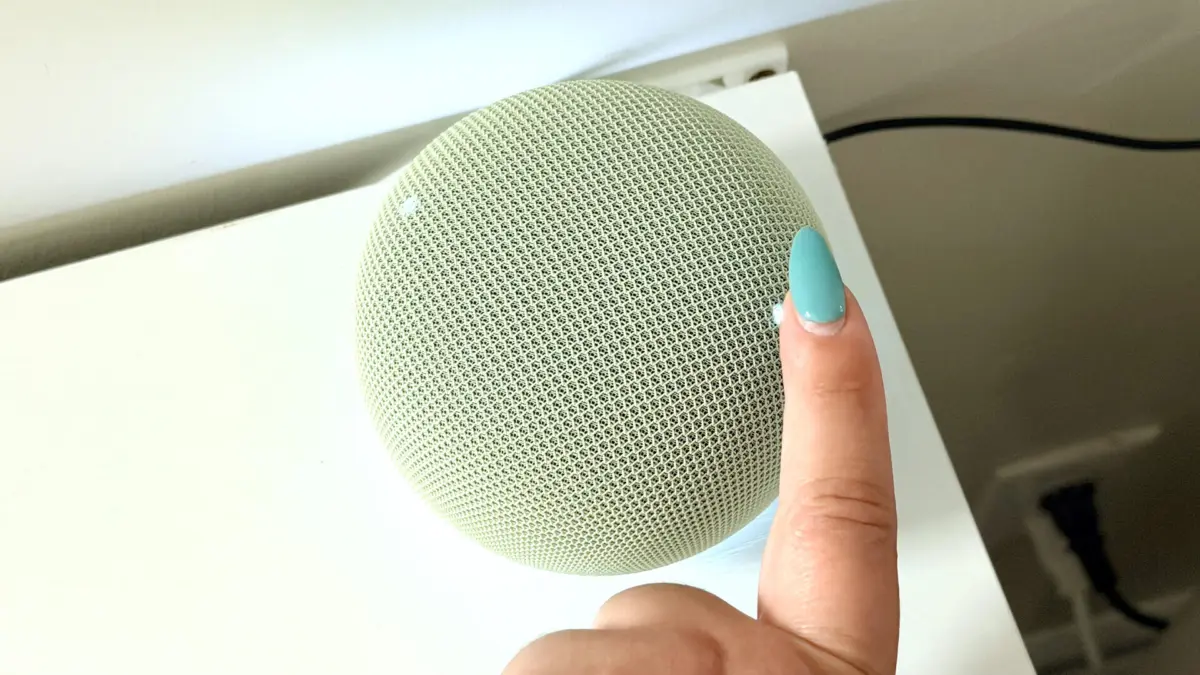
Google has officially released its latest set of comprehensive release notes detailing a significant wave of updates for the Google Home ecosystem, specifically targeting the integration of the Gemini AI model and addressing a wide array of persistent software bugs. The October update cycle represents a pivotal moment for the tech giant as it continues to transition its smart home infrastructure from the traditional Google Assistant framework toward the more sophisticated Gemini-driven "Gemini for Home" experience. These updates, which include early access features and general software patches, are designed to refine the performance of the Google Home app across various devices, including Nest cameras, doorbells, Wi-Fi systems, and the newly released Google TV Streamer.
The latest documentation from Google identifies 42 specific fixes aimed at improving the reliability and intelligence of the connected home. These range from broad stability enhancements to granular corrections for issues that have long frustrated users, such as AI misunderstandings of verbal commands and sluggish device reconnection protocols following network timeouts. As the smart home market becomes increasingly competitive, with rivals like Amazon and Apple also pushing generative AI into their respective ecosystems, Google’s latest move signals a commitment to resolving technical debt while simultaneously rolling out next-generation AI capabilities.
The Evolution of Gemini for Home and Spatial Awareness
A primary focus of the October update is the refinement of Gemini’s role as the central intelligence of the smart home. Google’s release notes highlight significant progress in Gemini’s ability to manage multi-room audio, a feature that has historically been a point of friction for users with extensive speaker setups. The update introduces deeper contextual awareness, allowing the AI to better understand spatial commands. For instance, users can now utilize more natural phrasing, such as "move the music here," with the system accurately identifying the user’s location and the target speaker based on room assignments within the app.
This improvement in spatial awareness also addresses a common "wrong device" response issue. Previously, users attempting to adjust the volume or issue commands to a speaker in a different room often found that the nearest device responded instead, leading to unintended adjustments. Google claims to have rectified this by improving the logic Gemini uses to prioritize target devices over proximity-based triggers. Furthermore, the update includes fixes for inconsistent timer and alarm volumes, unprompted responses from smart displays, and enhanced reliability for YouTube TV commands on Nest Hub devices.
The shift toward Gemini represents a broader strategy to move away from rigid, command-based interactions to more fluid, conversational AI. By integrating Gemini more deeply into the Home app, Google is attempting to provide a more intuitive interface that can handle complex queries and multi-step routines with higher success rates.

Addressing Critical Camera and Doorbell Vulnerabilities
Beyond the AI enhancements, a substantial portion of the update is dedicated to the hardware that forms the security backbone of many households: the Nest Cam and Nest Doorbell lineups. For years, users have reported intermittent issues with live view access and event history playback. The October patch specifically targets a bug affecting iOS users where scrolling to the end of a recorded event would trigger a "Video Not Available" error. On the Android side, the update fixes a display-related glitch for foldable devices, where the act of folding or unfolding the phone while viewing a live stream would cause the application to crash or display an error message.
Perhaps more significantly for long-term users, Google is continuing its aggressive migration of legacy hardware into the modern Google Home app. Software updates have been rolled out for the first-generation Nest Cam, Nest Cam Outdoor, Nest Doorbell (wired), and the Nest Cam IQ series (both Indoor and Outdoor). This migration is part of Google’s long-term plan to phase out the original Nest app, consolidating all controls into a single unified platform. While this transition has been met with some resistance from users who preferred the dedicated Nest interface, Google’s latest updates aim to ensure that the feature parity in the Home app is sufficient to satisfy power users.
Connectivity resilience has also been a major focus of this update cycle. Google has addressed a software flaw that caused cameras to stall or fail to reconnect after brief power outages or Wi-Fi interruptions. This "reconnection loop" often required users to manually power-cycle their devices or perform factory resets—a significant inconvenience for cameras mounted in hard-to-reach outdoor locations. The new firmware aims to streamline the handshake process between the device and the router, ensuring that security coverage resumes almost immediately after a network signal is restored.
Chronology of Google’s Smart Home Integration
To understand the significance of these updates, it is essential to look at the timeline of Google’s smart home evolution. The journey began in earnest with the $3.2 billion acquisition of Nest Labs in 2014. Since then, the trajectory has been marked by several key phases:
- The Silo Era (2014–2018): Google and Nest operated largely as separate entities, with the Google Home app and the Nest app serving different functions and hardware sets.
- The Rebranding Phase (2019): At Google I/O 2019, the company announced the "Google Nest" brand, signaling the beginning of a unified hardware and software strategy.
- The Migration Period (2020–2023): Google began the slow process of moving legacy Nest accounts to Google accounts and porting hardware controls from the Nest app to the Home app.
- The AI Integration Era (2024–Present): With the launch of Gemini, Google has begun replacing the legacy Assistant architecture with Large Language Models (LLMs) to power the smart home.
The October 2024 updates represent a culmination of these phases, where the stability of legacy hardware is being balanced against the cutting-edge requirements of generative AI.
Supporting Data and Technical Implications
The decision to implement 42 distinct fixes in a single update cycle underscores the complexity of modern smart home ecosystems. Industry data suggests that "reliability" remains the number one factor in consumer dissatisfaction with smart home products. According to recent market research, nearly 30% of smart home users report issues with device connectivity at least once a month. By focusing on the "Offline" status bug—specifically an iOS-related issue where Nest Thermostats and other devices inaccurately appeared as disconnected—Google is directly addressing the "ghost in the machine" problems that erode consumer trust.

Technical analysis of the update also reveals improvements in the audio/video synchronization for the first-generation wired Nest Doorbell. This is particularly important for the "Familiar Face" detection feature, which relies on high-quality, synchronized data packets to accurately identify visitors in real-time. Improvements in the detection algorithms ensure that the AI can process facial data more quickly, reducing the latency between a person appearing at the door and the user receiving a notification on their mobile device.
Official Responses and Industry Context
While Google typically lets its release notes speak for themselves, the company has previously stated that its goal is to create a "truly helpful home" that anticipates user needs rather than just reacting to commands. Industry analysts view these updates as a necessary step to maintain market share against Amazon’s Alexa, which has also undergone a massive AI-focused overhaul this year.
"The challenge for Google has always been the fragmentation of its ecosystem," says one industry analyst. "By fixing 42 bugs across multiple generations of hardware, they are trying to prove that their platform is stable enough to support the advanced AI features they are currently marketing. If the basic functions—like a camera staying online—don’t work, the advanced AI features like Gemini become irrelevant."
Broader Impact and Future Outlook
The implications of these updates extend beyond simple bug fixes. They signal a shift in how smart homes will be managed in the future. As Gemini becomes more integrated, the reliance on manual "routines" and "if-this-then-that" logic will likely decrease, replaced by an AI that understands the intent behind a user’s request. For example, the improved music transfer capabilities are a precursor to a home environment that can follow a user from room to room, adjusting lighting, temperature, and media based on presence and preference without explicit instruction.
However, this transition is not without its challenges. The migration of legacy devices continues to be a point of contention for users who fear that older hardware will eventually be rendered obsolete by the hardware requirements of modern AI. Google’s inclusion of first-generation Nest products in this update cycle suggests a reprieve for those users, but the long-term trend clearly favors newer, "Matter-compatible" hardware that is built for the high-bandwidth, low-latency demands of the Gemini era.
As the October updates roll out to the general public, the success of these 42 fixes will be measured by the stability of the user experience during the upcoming holiday season—a period typically characterized by high network load and increased device usage. For Google, the goal is clear: to move past the technical hurdles of the past decade and establish Gemini as the indispensable brain of the modern household. Through a combination of rigorous bug patching and ambitious AI deployment, the tech giant is attempting to turn the promise of a "smart" home into a reliable reality.
