

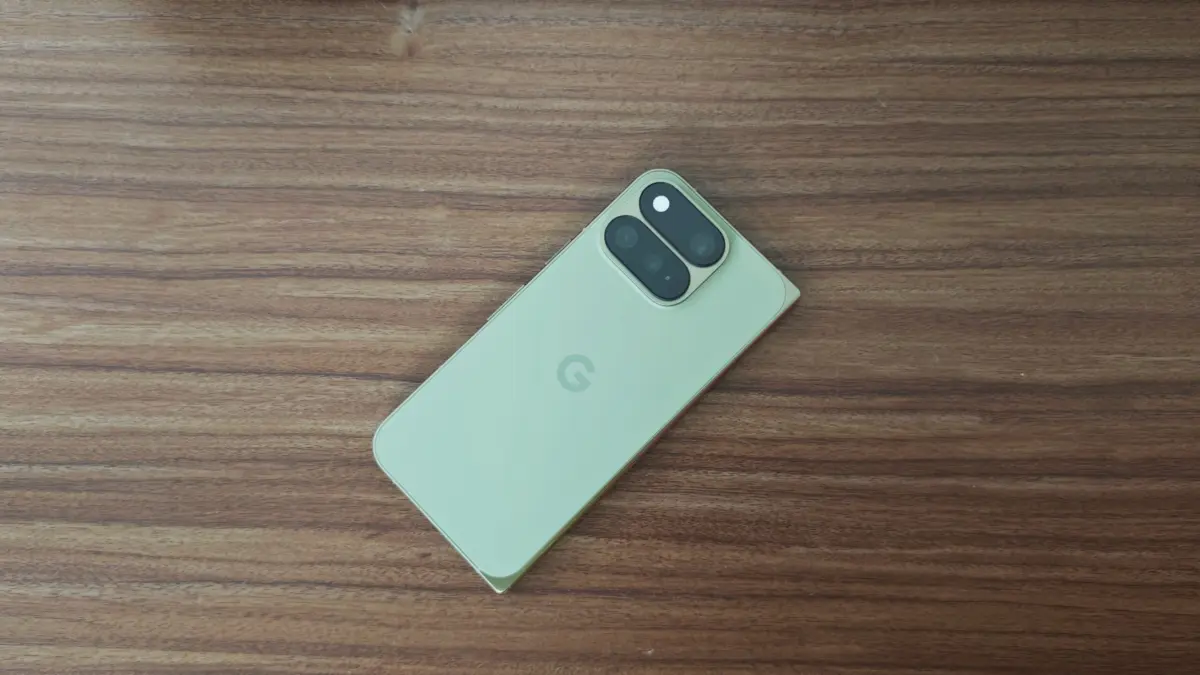
The release of the Google Pixel 11 Pro Fold arrives at a pivotal moment for the mobile industry, as the global market shifts its focus toward a new generation of high-end foldable devices. With the recent debut of the passport-sized iPhone Duo and a surge of wide-format foldables from prominent China-based manufacturers, Google has chosen a path of measured evolution rather than radical reinvention. The Pixel 11 Pro Fold serves as a testament to Google’s commitment to its established design language, offering a device that mirrors the silhouette of its predecessor while introducing critical hardware enhancements in weight, display luminosity, and camera technology. Despite these refinements, the device faces an uphill battle in a market increasingly crowded by competitors offering thinner profiles and more seamless screen integrations.

Hardware Evolution: Dimensions, Weight, and Durability
The engineering philosophy behind the Pixel 11 Pro Fold is one of marginal gains that culminate in a more ergonomic user experience. In terms of physical footprint, the device has undergone a subtle slimming process. When unfolded, the Pixel 11 Pro Fold measures 5mm in thickness, a slight reduction from the 5.2mm profile of the Pixel 10 Pro Fold. When closed, the device sits at 10.1mm, compared to the 10.8mm of the previous generation. While these changes are significant on a specification sheet, industry analysts note that the tactile difference is minimal compared to ultra-thin competitors like the Honor V6 Magic, which continues to push the boundaries of foldable thinness.

Perhaps the most impactful change to the device’s physical profile is the reduction in mass. The Pixel 11 Pro Fold is 19 grams lighter than the Pixel 10 Pro Fold. For long-term users of foldable technology, weight remains a primary barrier to adoption; Google’s ability to shave off nearly 20 grams without sacrificing structural integrity is a notable achievement. However, for those transitioning from traditional "candybar" smartphones, the device still carries the inherent heft of a dual-screen machine.

To justify the premium positioning of the device, Google has placed a heavy emphasis on structural resilience. The company claims that the Pixel 11 Pro Fold is three times more durable than the 2025 model. This increased robustness is attributed to a new material stack, including a glass-ceramic cover and a glass-fiber composite back cover designed to absorb high-velocity impacts. Early stress tests and real-world usage scenarios indicate that the device maintains its finish even after accidental drops from pocket heights, a testament to the success of the new composite materials. The hinge mechanism also remains intentionally stiff, a design choice that prevents one-handed unfolding but ensures the device remains securely in place at various angles during "tent mode" or tabletop use.

Display Technology and the Crease Conundrum
The Pixel 11 Pro Fold introduces one of the brightest panels currently available in the foldable segment. The peak brightness has been elevated to 3,600 nits, a substantial jump from the 3,000 nits found on the Pixel 10 Pro Fold. This enhancement is specifically targeted at improving outdoor legibility under direct sunlight, a traditional pain point for foldable screens which often suffer from glare due to their plastic-reinforced layers.

Despite the brilliance of the panel and the introduction of a sophisticated "Olive" colorway that has garnered praise for its subtle aesthetic, Google has yet to solve the "visible crease" issue. While competitors such as Oppo and Honor have pioneered "waterdrop" hinge designs that significantly reduce the indentation where the screen folds, the Pixel 11 Pro Fold retains a pronounced crease. This visual artifact is particularly noticeable in high-ambient light environments, as the screen lacks a specialized anti-reflective coating to mask the physical dip in the display.

On the exterior, the "HiLight" indicator provides a minimalist notification system. This rear-mounted light is programmed to activate only for specific interactions, such as incoming calls from "favorite" contacts or during hands-free sessions with Gemini, Google’s artificial intelligence assistant. While functional, the feature remains niche, serving more as a design flourish than a transformative utility.

Software Integration and the Gemini Ecosystem
The software experience on the Pixel 11 Pro Fold is defined by the integration of Gemini and a focus on large-screen productivity. Multitasking remains a cornerstone of the foldable value proposition, and Google’s implementation allows for two applications to run side-by-side. The utility of this feature varies significantly depending on third-party developer support. Google’s first-party suite, including Gmail, is fully optimized, allowing users to view their inbox on one pane while reading full messages on the other.

However, the broader Android ecosystem continues to struggle with foldable optimization. Major productivity tools like Slack have yet to implement a dedicated split-view interface for expanded screens, leading to a fragmented user experience. This "optimization gap" is increasingly scrutinized as Apple’s iPhone Duo enters the market; historical trends suggest that Apple’s developer base often moves faster to adopt new form factors, potentially leaving Android foldables at a disadvantage regarding polished, large-screen app experiences.

Artificial intelligence remains the primary differentiator for the Pixel lineup. The "Magic Cue" feature has been updated to provide context-aware suggestions across various applications. One of the standout additions in this cycle is "Rambler," an AI-driven productivity tool that allows users to dictate complex replies to emails and texts or generate detailed notes without the need for a physical or virtual keyboard. This feature is particularly useful on a foldable device, where the wide aspect ratio of the unfolded screen can sometimes make traditional thumb-typing cumbersome.

Camera Performance and the "Pro" Branding Debate
The photography suite of the Pixel 11 Pro Fold presents a paradox. While the device carries the "Pro" moniker, its hardware specifications do not match the flagship Pixel 11 Pro XL. This discrepancy has led to discussions regarding the transparency of Google’s naming conventions. Foldable devices have historically faced space constraints that limit the size of camera sensors, and the Pixel 11 Pro Fold is no exception.

The primary camera utilizes an updated 48-megapixel sensor designed to improve light intake and detail retention. Google has also leveraged its computational photography prowess to increase the "Super Res Zoom" capability from 20x to 30x. While these improvements are welcomed, the ultrawide and telephoto sensors remain largely unchanged from the previous year, resulting in a performance plateau for secondary focal lengths.

New software features aim to bridge the gap between hardware limitations and user expectations. "Looks" provides a variety of tonal presets to change the mood of an image instantly, while "Magic Capture" uses AI to analyze video frames and extract the highest-quality still images—a feature marketed toward parents and pet owners. Despite these innovations, the absence of the flagship-grade main sensor found in the Pixel 11 Pro XL suggests that for Google, the foldable form factor still requires a compromise in raw imaging power.

Market Context and Pricing Strategy
At a retail price of $1,899, the Pixel 11 Pro Fold is positioned as a luxury item for the Google loyalist. This pricing strategy places it in direct competition with the Samsung Galaxy Z Fold 8 and just $100 below the entry-point of the iPhone Duo. In the hyper-competitive European and Asian markets, the device faces additional pressure from Xiaomi and Honor, who often undercut Google on price while offering thinner hardware.

The following timeline illustrates the evolution of Google’s foldable strategy:

- 2023: Launch of the original Pixel Fold, establishing the "passport" aspect ratio.
- 2025: Release of the Pixel 10 Pro Fold, introducing the "Pro" branding and a slimmer hinge.
- 2026: Launch of the Pixel 11 Pro Fold, focusing on peak brightness (3,600 nits) and material durability (3x increase).
Industry Implications and Future Outlook
The Pixel 11 Pro Fold represents a "safety first" approach from Google. By focusing on durability and incremental display improvements, Google is targeting the "early majority" of foldable buyers who prioritize reliability over experimental features. However, as the market matures, the persistence of the screen crease and the hardware gap between the Fold and the standard Pro models may become more significant liabilities.

Tech analysts suggest that the success of the Pixel 11 Pro Fold will depend largely on Google’s ability to convince developers to treat foldable displays as a primary target rather than an afterthought. As the iPhone Duo begins to influence developer priorities, Google must leverage its control over the Android OS to ensure that the foldable experience feels cohesive.

For the consumer, the choice remains a matter of ecosystem preference. The Pixel 11 Pro Fold offers the most "Google-centric" vision of the future—one where AI like Gemini and Rambler handle the heavy lifting of digital life, housed within a frame that is finally sturdy enough to survive the rigors of daily use. While it may not be the thinnest or most revolutionary device on the market, it is undoubtedly the most refined version of Google’s vision to date.
