

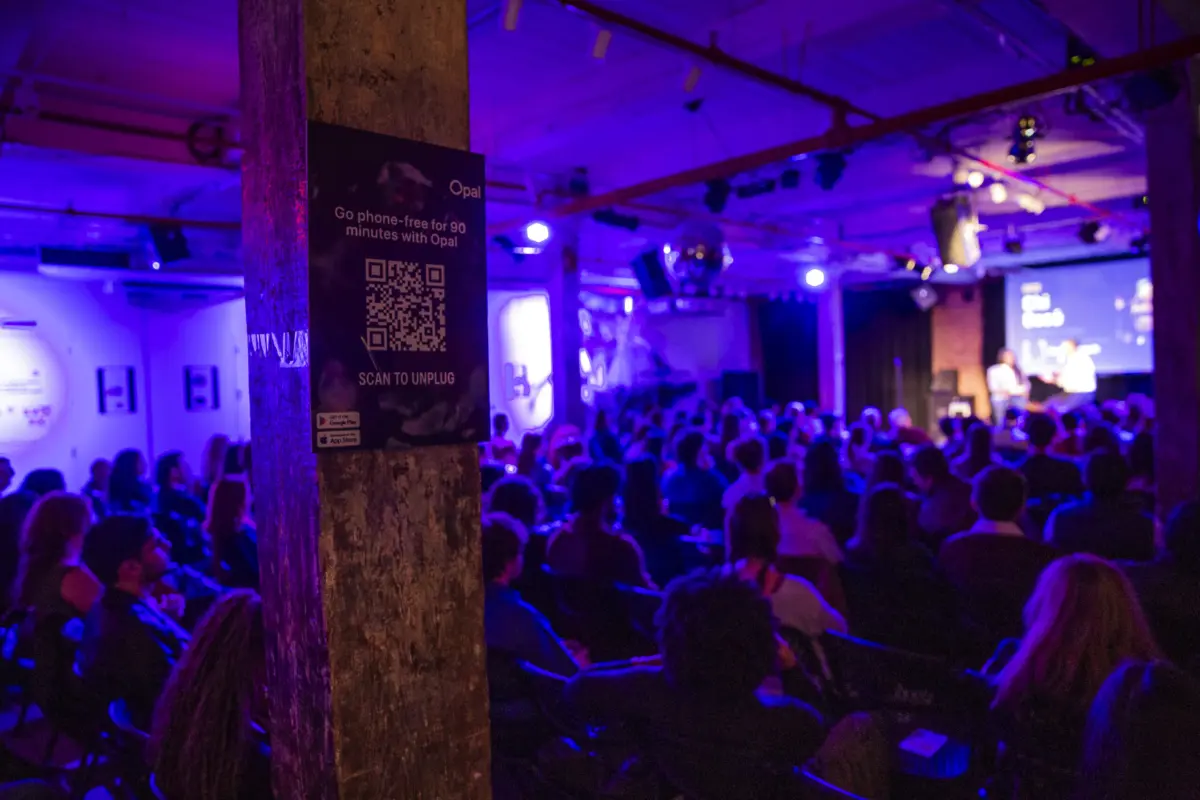
As the 2026 midterm elections approach, a significant shift in political discourse has emerged, moving beyond traditional campaign rhetoric to focus on the physical and economic footprint of the technology industry. This transition was notably visible on a recent Thursday evening in Brooklyn, where a media event hosted by Newsreel highlighted a growing friction between the rapid expansion of artificial intelligence (AI) and the communities tasked with hosting its infrastructure. The event, held in a repurposed warehouse, served as a microcosm for a national debate regarding the "state of attention," the rapid development of data centers, and a burgeoning backlash against what some participants described as a growing technocracy.
The gathering, organized by Jack Brewster, a former reporter for Forbes and Newsweek and founder of Newsreel, brought together a diverse group of media professionals, technology founders, and policy advocates. While the stated goal was to encourage participants to "put their phones away and talk to each other about the election," the resulting conversations were dominated by the environmental, social, and economic implications of the AI boom. The event featured a high-profile lineup, including Kenneth Schlenker, co-founder of the focus-oriented application Opal; Aryan Banjan, creator of the campaign management software Barza; and New York City Council Member Chi Ossé.
The Rising Political Salience of Data Centers
The expansion of data centers, once a niche concern for urban planners and utility companies, has evolved into a pivotal ballot-box issue. According to a report from Data Center Watch, nearly $200 billion in data center projects were delayed, stalled, or blocked during the first half of 2026. This stagnation is largely attributed to organized political and community opposition, as residents express concerns over the environmental impact and the perceived lack of transparency in the development process.

Legislative bodies in states such as Pennsylvania, Georgia, Texas, New York, and Virginia are currently evaluating new frameworks for transparency and oversight. Virginia, often referred to as the "data center capital of the world," is at the center of this storm, with hundreds of new facilities planned to meet the insatiable energy demands of generative AI models. The political stakes are high; analysts suggest that local resistance to these developments could sway several key midterm races on November 3, as candidates are forced to take stances on land use, energy consumption, and the "secret deals" often brokered between technology giants and local officials.
Chronology of the 2026 Tech Backlash
The current tension is the result of a rapid acceleration in technology deployment following the "AI gold rush" that began in late 2022. By 2024, the demand for computing power led to a massive surge in data center construction. However, by early 2026, the honeymoon period between big tech and local municipalities began to sour.
- Q1 2026: The Energy Crisis: Several states reported that data center energy consumption was threatening the stability of local power grids, leading to increased utility costs for residential consumers.
- Q2 2026: Legislative Pushback: Lawmakers in Virginia and Texas introduced bills requiring stricter environmental impact assessments and public disclosure of water usage by data centers.
- Q3 2026: Grassroots Mobilization: Community groups, such as those in Southern California and the Rust Belt, began utilizing digital and physical protests to block new zoning permits.
- October 2026: The Newsreel Event: The Brooklyn gathering confirmed that these local grievances had coalesced into a broader national sentiment of distrust toward the "tech class."
Accountability and the Technocratic Chasm
During a fireside chat at the Newsreel event, New York City Council Member Chi Ossé articulated the growing demand for accountability among tech executives. Describing himself as a "law and order" democratic socialist, Ossé emphasized that the era of unregulated tech expansion may be reaching its end. He argued that trillionaires and tech leaders should be held to higher standards of public scrutiny, particularly when discussing technologies that some executives have claimed could fundamentally alter human civilization.
"When CEOs talk about a technology that could deplete 10% of human civilization, they should be called to testify in front of Congress," Ossé stated. His comments reflect a broader sentiment that the benefits of AI are being concentrated among a small elite, while the costs—ranging from job displacement to environmental degradation—are being socialized. This "chasm" between the optimistic vision of tech builders and the "ugly" reality perceived by the public has become a central theme of the 2026 election cycle.

Economic Promises Versus Reality
A significant point of contention discussed at the event involved the economic impact of data centers on local communities. Batya Ungar-Sargon of NewsNation noted that while some labor unions support these projects due to the initial construction jobs they provide, the long-term benefits are often overstated. Research indicates that once construction is completed, data centers require very few permanent staff members to operate, leaving communities with massive, windowless structures that contribute little to the local social fabric.
This stands in stark contrast to the industrial era of the Rust Belt. Ungar-Sargon observed that in the past, large industrial buildings were sources of community pride because they represented stable, multi-generational employment and a tangible piece of the American Dream. Modern data centers, by comparison, are often viewed as "scraps" left behind by institutional powers that have already outsourced or automated many traditional working-class roles.
Morris Katz, a political strategist, echoed this skepticism, suggesting that the same entities that historically eroded union jobs are now returning to "finish the job" via AI and automation. This sentiment was further supported by Vox’s Astead Herndon, who pointed out that even in traditionally conservative areas like Ohio, Republican voters have expressed a "lack of consent" regarding the rapid transformation of their landscapes by tech infrastructure.
Environmental and Social Risks
The human rights and environmental dimensions of the tech expansion were highlighted during a panel moderated by a technology reporter. Maia Woluchem, a human rights researcher, and Hilary Flint, an environmental advocate, discussed the specific risks associated with billion-dollar data centers. Flint noted that many residents are no longer willing to accept "temporary checks" in exchange for the health and environmental risks posed by these facilities.

"What is a life worth?" Flint asked, challenging the narrative that economic development justifies the bypass of zoning rules and the use of non-disclosure agreements (NDAs) to keep projects hidden from the public eye. In some communities, residents have resorted to creative forms of protest, such as yard signs in Southern California depicting dragons "choking" data centers—an image that has been translated into multiple languages to unite diverse immigrant communities against development.
Cultural Shifts and the Rejection of "AI Slop"
The backlash against technology is not limited to physical infrastructure; it is also manifesting in cultural and consumer preferences. Conversations at the Newsreel event suggested that "AI art" and deepfakes are increasingly being perceived as markers of "cheapness" or lack of authenticity. This has led to a counter-movement among luxury brands. For instance, Prada’s recent holiday campaign opted for hand-drawn illustrations over AI-generated content, and Hermès has doubled down on showcasing handmade artistry.
This shift suggests that as AI becomes more ubiquitous, human-led craftsmanship is becoming a new status symbol. For the average voter, the "creepiness" of AI-generated content and the rise of deepfakes have added another layer of anxiety to an already tense political environment.
Broader Impact and Implications for the Future
The Newsreel event underscored that AI and data centers are no longer just "tech news"—they are "everything news." Jack Brewster noted that AI was the second most common topic in the questions submitted by attendees, even in New York, where the physical presence of data centers is less visible than in rural Virginia or Texas.

The implications for the future are clear:
- Political Alignment: Technology policy is likely to become a bipartisan issue, with both "law and order" progressives and "localist" conservatives finding common ground in opposing unregulated tech expansion.
- Regulatory Environment: The demand for "guardrails" will likely lead to a patchwork of state-level regulations that could significantly increase the cost and complexity of building AI infrastructure.
- Corporate Strategy: Tech companies may need to move away from "secret deals" and toward a model of radical transparency and community benefit-sharing if they hope to overcome the $200 billion backlog of stalled projects.
As the music began to play and the Brooklyn event wound down, the underlying tension remained. Whether in rural communities feeling "replaced" or in urban centers like Brooklyn where the concern is "who gets rich," the intersection of AI and politics has created a new landscape of conflict. For the voters heading to the polls on November 3, the "ugly" buildings on the horizon may well be the deciding factor in who leads the country into the next decade.
