

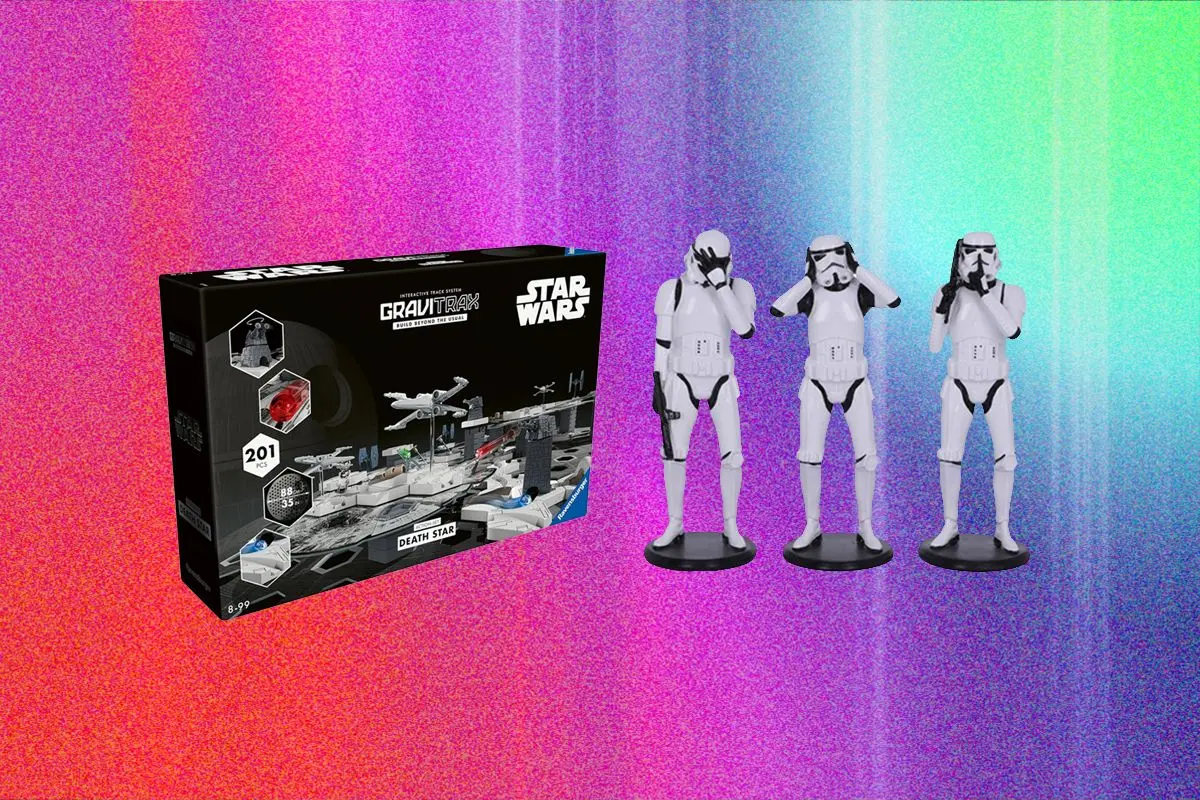
The Star Wars franchise continues to dominate the global consumer electronics and toy markets, maintaining its position as one of the most lucrative intellectual properties in history. Since the release of the original film in 1977, the brand has evolved from a series of cinematic releases into a perennial cultural phenomenon that bridges generational gaps. This enduring appeal is reflected in the current market for high-end collectibles, interactive sets, and lifestyle products, which cater to both long-time enthusiasts and a new generation of fans introduced to the galaxy through streaming platforms like Disney+. As the holiday season approaches, several key products from industry leaders such as Hasbro, Lego, and Target Darts have emerged as significant indicators of the "kidult" market trend—a demographic of adult consumers who purchase high-value toys and collectibles for personal enjoyment or investment.

The Evolution of Star Wars Merchandising and Market Dominance
The history of Star Wars merchandise is inextricably linked to the success of the film industry itself. When George Lucas famously retained the merchandising rights to his space opera in the mid-1970s, he fundamentally altered the business model of Hollywood. The initial "Early Bird Certificate Package" by Kenner in 1977 set the stage for a toy empire that has since generated tens of billions of dollars in revenue. Today, the landscape is more sophisticated, involving advanced electronics, high-fidelity replicas, and cross-industry collaborations that target a wide range of price points and interests.
Market data suggests that Star Wars remains a top-performing brand for the Walt Disney Company, which acquired Lucasfilm in 2012. According to industry reports, the global toy market saw a significant uptick in sales driven by adult collectors, often referred to as "AFOLs" (Adult Fans of Lego) or general "kidults." This segment now accounts for approximately 25% of all toy sales annually, with Star Wars being a primary driver of this growth. The release of premium items, such as the Hasbro Black Series helmets and intricate Lego dioramas, reflects a strategic shift toward products that serve as both playthings and home office decor.

Premium Electronics and the Rise of the "Kidult" Collector
A centerpiece of the current Star Wars collectible market is the Hasbro Black Series Boba Fett Premium Electronic Helmet. This item serves as a prime example of the "wearable collectible" category, which has seen increased demand following the success of live-action series such as The Mandalorian and The Book of Boba Fett. The helmet, which features a flip-down rangefinder with flashing LED lights and an illuminated heads-up display (HUD), is designed at a 1:1 full-scale ratio.
Current market pricing for this item highlights the volatility and competitive nature of the collectible sector. While some retailers like Amazon list the item at approximately $235, competitive pricing at Best Buy has seen the product offered for as low as $96. This discrepancy often points to the "re-armored" vs. "original" versions of character gear, where slight aesthetic variations based on specific television episodes or movies can dictate secondary market value. The technical sophistication of these items—incorporating sound effects and precision-molded plastics—marks a significant departure from the simple vacuum-formed masks of previous decades.

Structural Complexity in Construction Toys: The Lego Factor
Lego’s partnership with Star Wars, which began in 1999, remains one of the most successful licensing agreements in the history of the toy industry. The recent release of the Lego Star Wars Smart Play Throne Room Duel and A-Wing (Set 75427) exemplifies the brand’s focus on "dynamic display" sets. These products are designed to recreate iconic cinematic moments—in this case, the climactic confrontation in Return of the Jedi—while providing a complex building experience.
Priced at approximately $160, with promotional discounts bringing it closer to $125 at major retailers like Walmart and Amazon, this set targets the mid-to-high-tier consumer. The inclusion of an A-Wing starfighter alongside a throne room diorama provides a dual-value proposition: a vehicle for play and a scenery piece for display. Data from the construction toy sector indicates that sets featuring multiple "play patterns"—combining vehicles with stationary environments—tend to have higher retention rates and better resale value on the secondary market.

Lifestyle Integration and High-End Sporting Goods
The expansion of Star Wars branding into lifestyle and sporting categories is further evidenced by the Target Darts Darth Vader Darts Set. This product represents a niche but growing segment where pop culture meets professional-grade equipment. These are not standard toys; they are 90% tungsten darts designed for competitive play, featuring PVD coatings and intricate laser etchings of the Sith Lord.
With a retail price point of approximately $350 to $380, these sets are positioned as luxury gifts. The move into high-end sporting goods indicates that the Star Wars brand is no longer confined to the toy aisle but is increasingly found in the dens, "man caves," and professional gaming rooms of affluent fans. This cross-pollination of hobbies allows the franchise to maintain relevance as its original fanbase ages and enters higher income brackets.

Commemorative Art and Interior Design Trends
As the 20th anniversary of Star Wars: Episode III – Revenge of the Sith approaches in 2025, manufacturers are capitalizing on "prequel nostalgia." Displate, a leader in the metallic poster market, has released a 20th-anniversary print of the film. Unlike traditional paper posters, these are magnet-mounted metal plates that offer a more durable and "premium" feel for interior design.
Priced between $50 and $57, these prints reflect a broader trend in home decor where fans seek subtle, high-quality ways to display their interests. The shift toward metallic and high-definition prints suggests a move away from the "cluttered" aesthetic of traditional fandom toward a more curated, modern look. The anniversary of the prequels is particularly significant as the generation that grew up with those films now possesses the most significant purchasing power in the consumer market.

Chronology of Major Star Wars Merchandising Milestones
To understand the current market, it is essential to view the timeline of the franchise’s commercial evolution:
- 1977: Kenner releases the "Early Bird" kit, marking the birth of modern action figure marketing.
- 1985: The "Power of the Force" line ends, leading to a decade-long lull in production.
- 1995: "Power of the Force 2" launches, revitalizing the collector market ahead of the Special Editions.
- 1999: Lego Star Wars launches, coinciding with The Phantom Menace, changing construction toys forever.
- 2012: Disney acquires Lucasfilm for $4.05 billion, leading to a massive expansion of licensed goods.
- 2019: The Mandalorian premieres, creating a global shortage of "Baby Yoda" (Grogu) merchandise and shifting focus to high-end adult collectibles.
- 2024-2025: The market shifts toward "anniversary-centric" releases and luxury lifestyle integrations, such as professional darts and high-fidelity electronics.
Industry Reactions and Economic Implications
Industry analysts observe that the Star Wars brand acts as a "stabilizer" for the toy industry during economic fluctuations. While discretionary spending may dip in other areas, "evergreen" franchises like Star Wars tend to maintain steady sales due to their deep emotional resonance and collector-base loyalty.

Retailers have responded by creating dedicated "fan zones" both in-store and online. "We are seeing a convergence of technology and nostalgia," says one retail analyst. "Consumers are no longer satisfied with a plastic sword that lights up; they want a ‘Force FX’ lightsaber with accelerometer-controlled sound and haptic feedback. They are willing to pay a premium for authenticity."
This demand for authenticity has forced manufacturers to improve their quality control and detail. Hasbro’s use of "Photo Real" technology for action figure faces and Lego’s use of specialized molded elements are direct responses to a consumer base that compares toys to on-screen digital assets with forensic intensity.

Broader Impact on the Gift-Giving Economy
The diversification of Star Wars products into categories like advent calendars, marble runs, and high-end puzzles ensures that the brand remains a staple of the holiday shopping season. By offering products that range from $25 stocking stuffers to $400 professional dart sets, the franchise captures a total market share that few other IPs can rival.
Furthermore, the social aspect of these gifts cannot be understated. Star Wars remains one of the few properties where a grandparent, a parent, and a child can all find common ground. This multi-generational appeal ensures that the "Galaxy Far, Far Away" will remain a cornerstone of the global retail economy for the foreseeable future. As production for new films and series continues, the cycle of innovation in merchandise is expected to accelerate, further blurring the lines between toys, art, and professional-grade equipment.
