

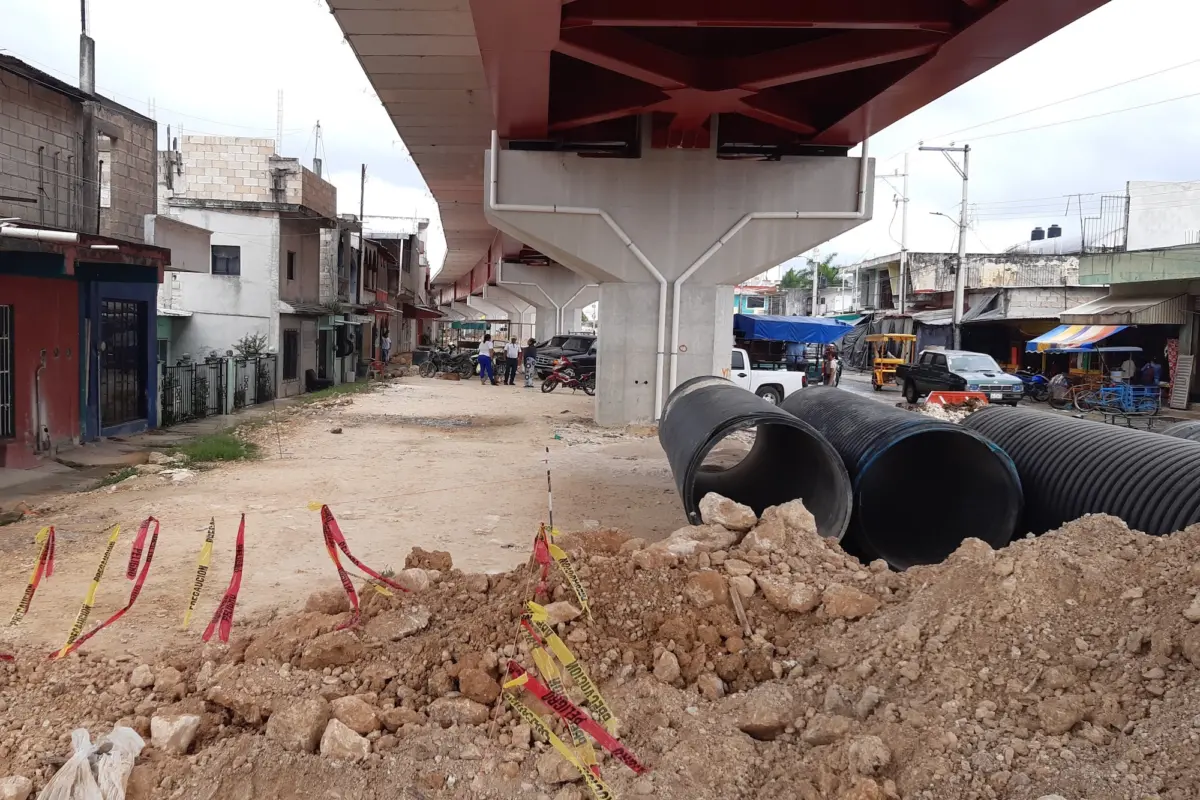
The Maya Train, a centerpiece of Mexico’s ambitious infrastructure strategy, was conceptualized as a transformative engine for the Yucatán Peninsula, designed to bridge the gap between world-class coastal resorts and the historically marginalized interior. Spanning nearly 1,000 miles of dense jungle, ancient archaeological sites, and coastal corridors, the railway was promised to be a catalyst for social justice and economic parity. However, nearly three years after its staggered inauguration began in late 2024, the project has become a lightning rod for criticism. Instead of the envisioned economic renaissance, the region is grappling with ballooning costs, an unexpected economic recession in key states, significant environmental degradation, and a surge in organized crime that locals link directly to the new infrastructure.
A Vision of Integration and the Path to Construction
The Maya Train, or Tren Maya, was first announced by former President Andrés Manuel López Obrador shortly after his landslide victory in 2018. The project was presented as the "project of a lifetime" for the Mexican southeast, a region that has long felt neglected by the federal government in Mexico City. The objective was clear: create a 1,554-kilometer (965-mile) loop connecting five states—Chiapas, Tabasco, Campeche, Yucatán, and Quintana Roo—to distribute the tourism wealth of Cancún and the Riviera Maya to inland communities.

The project’s timeline was characterized by an unprecedented sense of urgency. To bypass bureaucratic hurdles and legal challenges from environmental groups, the federal government designated the railway a matter of "national security." This allowed construction to proceed under the oversight of the Secretariat of National Defense (SEDENA), the Mexican military. By the time the first sections were inaugurated in December 2024, the project had become a symbol of the government’s "Fourth Transformation" (4T) agenda, which prioritized large-scale state-led infrastructure.
Financial Escalation and the Economic Disconnect
While the initial budget for the Maya Train was estimated at approximately US$8.5 billion, the final price tag has far exceeded those projections. According to data from the Mexican Institute for Competitiveness (IMCO) and various independent audits, the cost tripled, reaching nearly US$30 billion. This massive infusion of capital was expected to trigger a sustainable economic boom, yet recent data suggests the benefits were ephemeral.
During the peak construction phase in 2023, the state of Quintana Roo experienced a 13 percent spike in economic activity. However, this growth was largely driven by temporary construction jobs and the influx of external labor. By 2024, as the heavy lifting concluded, the state’s economy fell into a sharp recession. In the first half of 2025, government data indicated a decline of over 9 percent in economic activity.

Economists point to a "leakage" effect, where the wealth generated by the project failed to stay within the local communities. Javier Becerril, an economics professor at the Autonomous University of Yucatán, noted that the majority of the workforce was brought in from other parts of Mexico. "There was no economic spillover," Becerril explained. "People who came from outside received a paycheck and sent the money back to their places of origin. Instead of a benefit, local communities faced inflation, with the price of housing and basic goods doubling or tripling to accommodate the temporary influx of well-paid outsiders."
Operational Struggles and Low Ridership
The project’s long-term viability is currently under scrutiny due to significantly lower-than-expected ridership. Original government projections estimated that the train would handle approximately 74,000 passengers daily. However, figures from 2025 show an average of only 3,320 daily users—less than 5 percent of the target.
Several factors contribute to this shortfall. First is the issue of accessibility. Due to land disputes and logistical hurdles, many stations were built on the outskirts of cities rather than in downtown hubs. In Mérida, for instance, the station was moved to Teya, several miles from the city center, making it less convenient for daily commuters and tourists alike.

Second is the cost. For many local residents in rural Yucatán, the ticket prices are prohibitive. A trip between Mérida and Cancún costs roughly 489 pesos (approximately US$28), which exceeds the daily minimum wage in Mexico. Consequently, the train remains a luxury that the very people it was intended to serve cannot afford. "The train travels practically empty," said Hector Hernández, an engineer who worked on the project. "The few passengers who board don’t even cover the cost of the fuel, let alone the maintenance of the massive infrastructure."
Environmental Impact and the Perforation of the Aquifer
The environmental toll of the Maya Train has been one of the most contentious aspects of its development. Environmentalists and cave divers have documented what they describe as "ecocide" along the route, particularly in Section 5, which runs between Cancún and Tulum.
According to government data, at least 7 million trees were felled to clear the path for the tracks. More concerning to scientists is the impact on the Yucatán Peninsula’s unique subterranean geography. The region sits atop a massive limestone shelf housing one of the world’s largest underground river systems and thousands of cenotes (natural sinkholes).

To support the weight of the high-speed trains over this porous ground, engineers drove thousands of steel and concrete pylons directly into the cave systems. Guillermo Christy, a local industrial engineer and environmentalist, has warned that this process has contaminated the pristine freshwater aquifer—the region’s only source of drinking water. "A forest can recover in 15 years," Christy said. "But a cave formation that took millions of years to create is lost forever once it is fractured or filled with concrete." Furthermore, these caves are rich in archaeological remains, including prehistoric human skeletons and Pleistocene megafauna fossils, many of which may have been destroyed before they could be studied.
Social Unrest and the Rise of Insecurity
For the indigenous Maya communities, the train was marketed as a gateway to modern services like healthcare, electricity, and education. However, community leaders like Pedro Uc argue that these promises remain unfulfilled. Instead, the increased connectivity has brought a darker element to previously isolated hamlets: organized crime.
In the state of Yucatán, which has historically been one of Mexico’s safest regions, crime rates surged by 50 percent in 2026. Uc and other local advocates link this rise to the "opening" of the territory. "It seems that what arrived in the train cars is insecurity, gunfire, abductions, and fear," Uc said. The influx of tourism and new transit routes has attracted cartels looking to expand their influence in human trafficking, extortion, and the drug trade, fundamentally altering the social fabric of peaceful Mayan villages.

Human Rights and International Criticism
The project has also faced significant international backlash regarding human rights. In 2019, the United Nations (UN) criticized the Mexican government’s "popular vote" on the project, stating that the consultation process did not meet international standards for "free, prior, and informed consent" of indigenous peoples. The UN raised concerns again in 2022, highlighting that the "national security" designation was being used to bypass environmental impact assessments and silence dissent.
The lack of a "bottom-up" approach in planning is seen by many as the project’s original sin. By imposing a federal vision on local landscapes without adequate integration of local needs—such as basic water and power infrastructure—the government created a "top-down" monument that many locals feel alienated from.
Analysis of Implications and Lessons Learned
The Maya Train serves as a cautionary tale for large-scale infrastructure projects in ecologically and culturally sensitive regions. While the intent to decentralize tourism and promote regional equity was noble, the execution has highlighted the dangers of prioritizing speed and political symbolism over rigorous planning and environmental stewardship.

The project’s current status as a "white elephant"—an expensive asset that costs more to maintain than it generates in value—places a significant burden on the Mexican taxpayer. With the military now in charge of the train’s operation, the line between civil infrastructure and military administration has blurred, raising questions about transparency and future accountability.
Moving forward, experts suggest that the failure of the Maya Train to meet its economic goals underscores the necessity of "last-mile" connectivity. For a railway to be successful, it must be part of a broader, integrated transport network that includes affordable local transit to and from the stations. Additionally, the environmental damage serves as a reminder that "green" or "sustainable" tourism cannot be achieved if the infrastructure required to support it destroys the very natural beauty tourists come to see.
As the Yucatán Peninsula adjusts to its new reality, the Maya Train stands as a towering achievement of engineering and a sobering reminder of the complexities of modern development. Whether the project can eventually pivot to become the economic engine it was promised to be remains to be seen, but for now, the residents of the Yucatán are left to navigate the environmental and social costs of a train that, for many, is going nowhere.
