

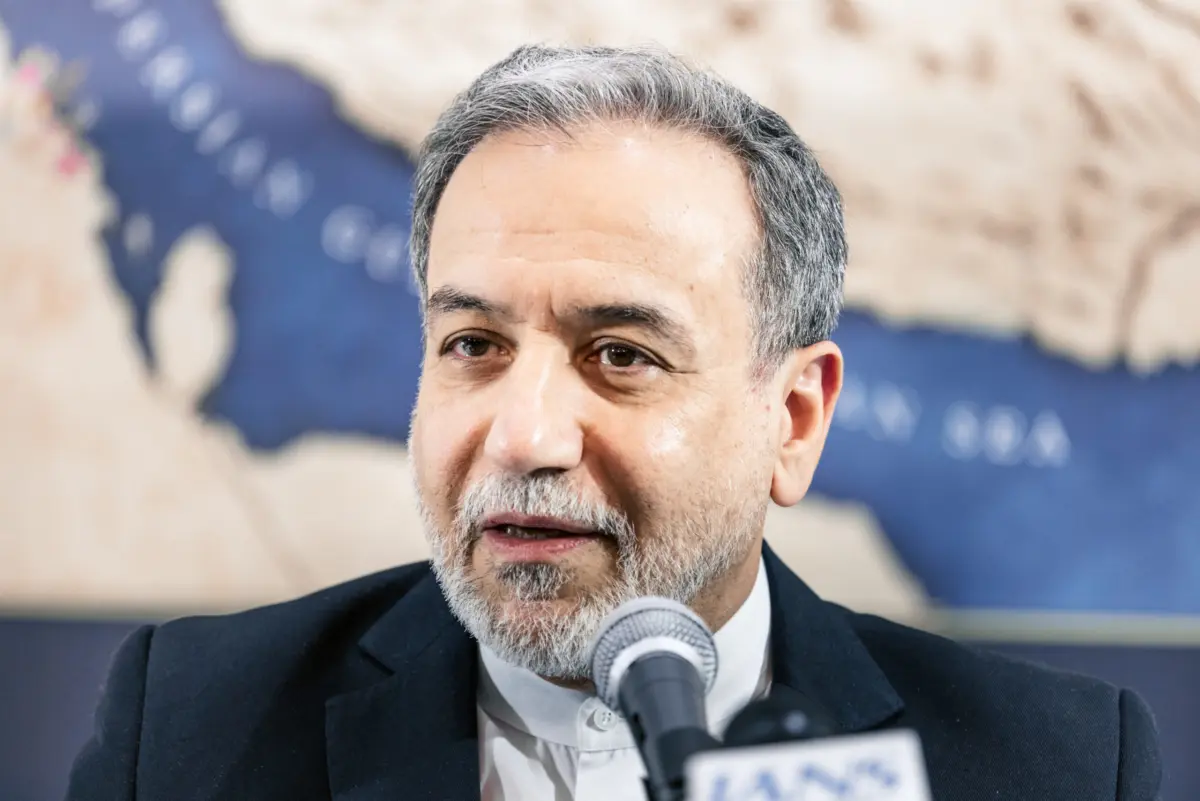
In a significant and exclusive interview with Al Jazeera, Iran’s Foreign Minister Abbas Araghchi declared Tehran’s readiness for all scenarios, including potential military confrontation, while simultaneously acknowledging a United States effort to open dialogue as a "positive step." This complex message, delivered on Saturday, underscores the delicate and highly volatile state of US-Iran relations, balancing the possibility of de-escalation through diplomacy with unwavering resolve to defend national interests. Araghchi’s remarks followed high-level deliberations in Tehran concerning a letter from US Vice President JD Vance, a communication that has injected a new, albeit cautious, dynamic into the long-standing standoff between the two adversaries. While welcoming the overture, the Iranian foreign minister was quick to temper expectations, asserting that no immediate plans for direct meetings with US officials were on the horizon, and any future engagement would hinge entirely on Washington’s willingness to meet Tehran’s explicit conditions.
The Diplomatic Overture: Vance’s Letter and Tehran’s Measured Response
The dispatch of a letter from US Vice President JD Vance to Tehran represents a notable shift in Washington’s approach, which for years has largely relied on a "maximum pressure" campaign of sanctions and military deterrence. Araghchi’s description of this outreach as a "positive step" indicates a potential crack in the wall of animosity that has defined bilateral relations, suggesting that Tehran is not entirely averse to re-engaging diplomatically. However, this cautious optimism is deeply rooted in skepticism, as evidenced by Araghchi’s immediate warning against any US attempt to "stir up discord," which he characterized as "yet another mistake to add to its previous ones." This caveat reflects Iran’s deep-seated distrust of US intentions, stemming from decades of geopolitical rivalry and, more recently, the unilateral withdrawal of the United States from the Joint Comprehensive Plan of Action (JCPOA), commonly known as the Iran nuclear deal, in 2018.
The letter from Vice President Vance reportedly underwent rigorous scrutiny in high-level meetings within Iran’s political establishment. Such internal consultations are standard practice for Tehran when faced with sensitive diplomatic communications from a principal adversary. The precise contents of Vance’s letter have not been publicly disclosed, but its timing and the subsequent Iranian response suggest it likely contained proposals aimed at de-escalation, perhaps regarding regional security or the revival of a ceasefire agreement, given the context of recent mediation efforts. The mere act of such a high-level communication, bypassing traditional diplomatic channels, signals an urgency from the US side to explore avenues for reducing tensions, which have repeatedly flared into near-conflict situations in recent years.
The Crucial Role of Mediators: Qatar and Pakistan
Central to the current, fragile diplomatic landscape are the persistent efforts of regional and international mediators, primarily Qatar and Pakistan. These nations, known for their diplomatic neutrality and established lines of communication with both Washington and Tehran, have been instrumental in bridging the vast chasm of distrust. Araghchi confirmed that an Iranian delegation had traveled to Doha, Qatar, for continued consultations, arriving just a day after Qatari officials had been in Tehran. This shuttle diplomacy highlights the intense, behind-the-scenes efforts to facilitate dialogue and potentially pave the way for a broader de-escalation.
Qatari mediators, in particular, have played a pivotal role in previous attempts to revive a US-Iran ceasefire and facilitate indirect talks. Their strategic location, significant energy resources, and relatively independent foreign policy allow them to maintain relationships with a wide array of regional and global powers, including both the United States and Iran. Pakistan, too, has historically offered its good offices in mediating disputes, leveraging its relationships in both the Islamic world and with Western powers. The ongoing consultations with both Qatari and Pakistani intermediaries underscore the complex, multi-layered approach required to navigate the intricacies of US-Iran relations, where direct communication is often fraught with political risks for both sides. These mediators are not merely couriers; they actively engage in presenting and refining proposals, particularly concerning the nuclear dossier, which Araghchi indicated Iran is currently reviewing as part of a "second phase" of discussions.
Iran’s Non-Negotiable Demands: The Strait of Hormuz and Beyond
A cornerstone of Iran’s current demands, and a crucial barometer for any future negotiations, revolves around the reopening of the Strait of Hormuz. Araghchi explicitly outlined Tehran’s conditions for easing its posture regarding this vital global chokepoint, through which approximately 20-30% of the world’s seaborne oil passes daily. The strait’s strategic importance cannot be overstated; any disruption can send shockwaves through global energy markets, making its security a paramount international concern.
Iran’s conditions for reopening the Strait of Hormuz, which Araghchi stated had been reduced to a two-day implementation period following Qatari mediation (down from an initial five days), are multifaceted and economically driven:
- Lifting Sanctions from the "Islamabad Memorandum": While the specific "Islamabad memorandum" referenced by Araghchi is not widely known in public discourse regarding US-Iran sanctions, it likely refers to a particular set of financial or trade restrictions imposed on Iran that Tehran deems illegitimate or particularly damaging. Iran views the comprehensive US sanctions regime, especially those reinstated after the JCPOA withdrawal, as economic warfare designed to cripple its economy. The lifting of these specific sanctions is presented as a prerequisite for any meaningful de-escalation.
- Reducing US Forces in the Region: Iran consistently views the substantial US military presence in the Persian Gulf as a source of instability and a direct threat to its national security. A reduction in US forces would be interpreted by Tehran as a tangible sign of de-escalation and a step towards recognizing Iran’s regional security concerns. This demand reflects Iran’s long-standing call for regional security arrangements to be managed by regional states, without external intervention.
- Restoration of Oil Waivers: The US "maximum pressure" campaign specifically targeted Iran’s oil exports, which are the lifeblood of its economy. The restoration of waivers that allowed certain countries to import Iranian oil without incurring US penalties would provide immediate economic relief and demonstrate Washington’s commitment to genuine de-escalation. The cessation of these waivers in 2019 severely impacted Iran’s ability to sell its crude, drastically reducing its revenue and contributing to a deepening economic crisis.
- Release of Frozen Funds: Iran demands the immediate release of its frozen assets held in various banks globally, including those explicitly mentioned in Qatar. Billions of dollars in Iranian funds have been frozen in foreign accounts due to US sanctions, effectively depriving Tehran of crucial financial resources needed for imports and economic development. The release of these funds, some of which are held in South Korea, Iraq, and other countries, is a critical economic and symbolic demand.
- Recognition of Iran-Oman Shipping Routes and Closure of Others: This condition pertains to maritime security and navigational control within the Strait of Hormuz. Iran seeks international recognition for specific shipping lanes it has discussed with neighboring Oman, a move that would enhance its perceived authority and control over its territorial waters. Simultaneously, it demands the closure of other routes, likely those it deems inconsistent with its security protocols or sovereign claims.
These conditions collectively underscore Iran’s demand for tangible economic relief and a reduction in what it perceives as an aggressive US military posture in its immediate vicinity. For Tehran, diplomacy cannot be divorced from economic justice and security assurances.
The Shadow of Conflict: Military Readiness and Deterrence
In a stark reminder of the underlying tensions, Araghchi delivered a potent warning that Iran "does not rule out the possibility of an attack against Iran" and is "prepared for all scenarios." This declaration is not mere rhetoric; it is a core component of Iran’s deterrent strategy, designed to signal to adversaries that any military action would be met with a robust response.
Araghchi elaborated on Iran’s defensive capabilities, stating, "We have upgraded our weaponry, addressed our vulnerabilities, and tested new arms. Our forces are at the highest level of readiness." This statement points to a continuous effort by Iran to enhance its military capabilities, particularly in areas like ballistic missiles, drones, and naval assets, which are crucial for projecting power in the Persian Gulf and defending its borders. Over the past decade, Iran has invested heavily in developing indigenous military technology, often in response to international arms embargoes and the perceived threat from superior US and allied forces in the region. The testing of new arms and the continuous readiness drills are intended to demonstrate Iran’s capacity for asymmetric warfare and its ability to inflict significant costs on any aggressor. This readiness posture serves as a critical counterbalance to the diplomatic overtures, ensuring that while dialogue is pursued, Iran’s security interests remain paramount and protected by credible military might.
Background: A Decades-Long Standoff
The current diplomatic tightrope walk between the US and Iran is set against a backdrop of over four decades of profound animosity and intermittent crises. The 1979 Islamic Revolution fundamentally altered the geopolitical landscape, transforming Iran from a US ally to an ideological adversary. The subsequent hostage crisis, the Iran-Iraq War (1980-1988) where the US often covertly supported Iraq, and a series of regional proxy conflicts solidified a deep-seated distrust.
The early 2010s saw a renewed focus on Iran’s nuclear program, culminating in the landmark Joint Comprehensive Plan of Action (JCPOA) in 2015. This agreement, which saw Iran limit its nuclear activities in exchange for sanctions relief, was hailed as a triumph of diplomacy. However, its unraveling began with the Trump administration’s unilateral withdrawal in 2018, followed by the implementation of a "maximum pressure" campaign designed to force Iran to renegotiate a more restrictive deal. This withdrawal was a critical turning point, leading to an escalation of tensions:
- Tanker Attacks: A series of attacks on oil tankers in the Strait of Hormuz and Gulf of Oman in 2019, which the US blamed on Iran.
- Drone Incidents: The downing of a US surveillance drone by Iran in June 2019, bringing the two nations to the brink of conflict.
- Airstrikes and Missile Attacks: The US assassination of Iranian General Qassem Soleimani in January 2020, followed by Iranian missile strikes on US bases in Iraq.
- Regional Proxy Conflicts: Ongoing involvement of both countries in proxy conflicts across the Middle East, particularly in Yemen, Syria, and Iraq, further fueling regional instability.
The economic impact of US sanctions has been severe, crippling Iran’s oil exports, restricting its access to international banking, and contributing to high inflation and unemployment within the country. This economic pressure is a primary driver behind Iran’s demands for the restoration of oil waivers and the release of frozen funds, making economic relief a non-negotiable component of any future diplomatic resolution.
International Reactions and Regional Implications
The renewed diplomatic activity, however cautious, carries significant implications for regional and global stability.
- United States: From Washington’s perspective, the outreach, even through a Vice President’s letter, signals a pragmatic desire to de-escalate tensions, especially in a region already grappling with multiple crises. While maintaining a strong stance on Iran’s nuclear program and regional activities, the US might be seeking an off-ramp from the continuous cycle of escalation, possibly influenced by domestic political considerations or a broader strategy to stabilize global energy markets. However, any concessions on sanctions or troop reductions would likely face considerable opposition from hardliners within the US political spectrum and regional allies.
- Gulf States: Nations like Saudi Arabia and the UAE, historical rivals of Iran and close US allies, watch these developments with a mix of apprehension and cautious optimism. While they generally welcome any steps towards regional de-escalation, they remain wary of Iran’s regional influence and missile capabilities. Their primary concern is regional stability and the security of maritime trade routes. Any deal perceived as too lenient on Iran could heighten their anxieties.
- European Allies: European powers, signatories to the original JCPOA, have consistently advocated for a return to diplomacy and the preservation of the nuclear deal. They would likely welcome any genuine dialogue that could prevent further nuclear proliferation and de-escalate regional tensions. They understand the critical importance of the Strait of Hormuz for global energy security and would support efforts to ensure its free navigation.
- Global Energy Markets: The potential for a diplomatic breakthrough, or conversely, a military confrontation, directly impacts global oil prices and shipping insurance costs, especially for vessels traversing the Strait of Hormuz. De-escalation could bring stability to these markets, while renewed tensions would inevitably lead to volatility and increased costs.
Analysis: A Precarious Path Forward
The current juncture in US-Iran relations is characterized by a delicate balance between strategic posturing and genuine diplomatic exploration. Araghchi’s statements reflect Iran’s consistent strategy: project strength and unwavering resolve while leaving a narrow door open for dialogue on its own terms.
The "positive step" acknowledgment from Tehran, coupled with the dispatch of a US Vice President’s letter, suggests that both sides, despite their deep-seated animosities, recognize the imperative of avoiding an outright military conflict that would have catastrophic regional and global consequences. However, the path forward is fraught with immense challenges. The trust deficit is profound, exacerbated by the US withdrawal from the JCPOA and Iran’s subsequent breaches of nuclear commitments. Both sides harbor maximalist demands: Iran seeks comprehensive sanctions relief and security assurances, while the US desires a more restrictive nuclear deal and an end to Iran’s regional "malign activities."
The role of third-party mediators like Qatar and Pakistan is critical in bridging this gap, providing a neutral space for proposals and counter-proposals. The "two-day" timeline for the Strait of Hormuz proposal, while seemingly ambitious, might be a tactic to inject urgency into the negotiations, forcing a rapid assessment of sincerity from Washington.
Ultimately, whether this nascent diplomatic flicker evolves into a sustained engagement or fizzles into renewed confrontation will depend on the willingness of both Washington and Tehran to move beyond entrenched positions. The stakes are extraordinarily high: regional war versus a potential diplomatic breakthrough that could stabilize the Middle East, secure global energy supplies, and prevent further nuclear proliferation. The current exchanges represent a critical test of diplomacy, where every statement, every condition, and every subtle shift in posture is meticulously scrutinized for clues about the true intentions lurking beneath the surface of official pronouncements.
