

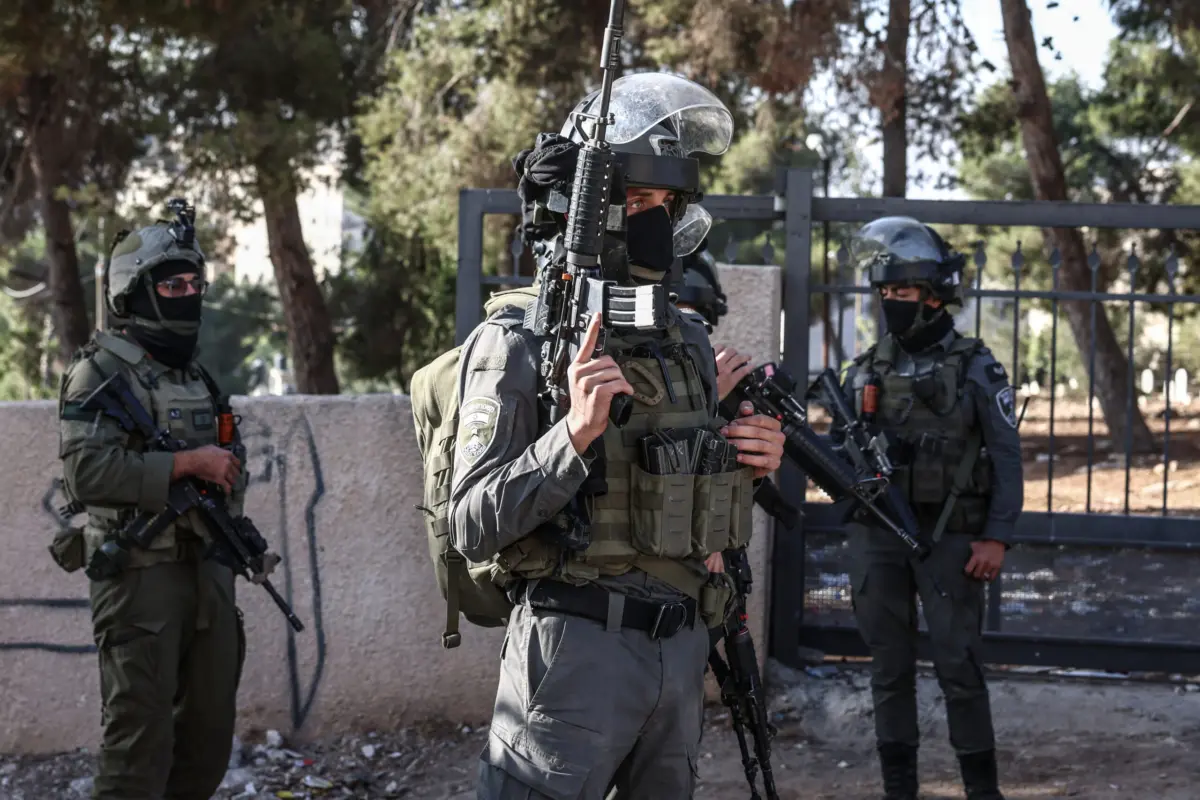
A Labour MP representing Norwich South, alongside two other British parliamentarians and an international observer delegation, reported being interrogated and detained for nearly eight hours by Israeli forces this week, ultimately preventing their entry into the illegally occupied West Bank. The incident has intensified calls within the UK for a more robust and expansive sanctions regime against Israel, advocating for measures that extend beyond individual settlers to target the state and its economic apparatus supporting the occupation.
The Incident: A First-Hand Account
The unnamed Labour MP for Norwich South detailed the experience, stating that the delegation was subjected to extensive interrogation and detention before being denied passage across the border. This direct encounter, while described as "unpleasant," was contextualized by the MP as paling in comparison to the "daily experience of Palestinians living under occupation." The delegation’s stated purpose was "to shed light on Israel’s crimes," including alleged "brutal attacks on olive harvesters" aimed at depriving Palestinians of their livelihoods.
This detention follows a pattern of restricted access for international observers and journalists. In the last 18 months, at least two other British parliamentary delegations have reportedly been turned away from the region. The MP’s account highlighted concerns over a systematic suppression of external witness, citing the killing of over 200 Palestinian journalists, with suggestions of direct targeting, and the use of tear gas on journalists attempting to film home demolitions in Hebron. This, the MP asserted, sends a clear message: "the world must not see what is happening here."
Broader Context: Life Under Occupation and Escalating Tensions
The incident underscores the deeply entrenched realities of the Israeli occupation of the West Bank, which began in 1967 following the Six-Day War. Since then, Israel has established numerous settlements, which are considered illegal under international law, particularly the Fourth Geneva Convention. These settlements fragment Palestinian land, restrict movement, and contribute to daily friction between settlers and Palestinian communities. The MP characterized the situation in the West Bank as a "slow-motion form of ethnic cleansing, perpetrated by Israeli forces and their settler militias."
This assessment resonates with reports from human rights organizations like B’Tselem and UN OCHA, which have documented a consistent pattern of settler violence against Palestinians, often occurring with the perceived or actual complicity of Israeli security forces. Such incidents include attacks on agricultural land, property destruction, and physical assaults, frequently leading to displacement and economic hardship for Palestinian families, particularly those reliant on agriculture such as olive harvesting.
The MP’s statement also drew a stark parallel with the situation in Gaza, describing it as a "genocide in its most brutal form." This characterization, while highly contentious and subject to ongoing international debate, reflects a perspective held by many critics of Israel’s military operations. The humanitarian crisis in Gaza has reached unprecedented levels, with the United Nations and numerous aid agencies warning of widespread starvation and disease due to severe restrictions on humanitarian aid, exacerbated by a prolonged blockade.
Further escalating concerns, the MP referenced a recent statement by Israeli Finance Minister Bezalel Smotrich, who reportedly called on Israel last month "to do the same in the occupied West Bank as ‘what we did in Gaza’." Such remarks from a senior Israeli official are perceived by critics as endorsing policies that could lead to further displacement and violence in the West Bank, intensifying fears among Palestinian communities and international observers.
A Pivotal Moment: Political Landscape and Diplomatic Shifts
The delegation’s visit, organized by Global Justice Now, occurred at a critical juncture, immediately preceding Israeli elections and shortly after the United Kingdom announced new sanctions targeting illegal Israeli settlements in the West Bank. The Israeli elections, which at the time of the MP’s statement had not produced a clear outcome, raised questions about the political future of Prime Minister Benjamin Netanyahu. The MP expressed hope for Netanyahu’s removal, holding him accountable for "the most heinous war crimes" and the "genocide he has perpetrated."
However, the MP cautioned against optimism that a change in leadership would inherently alter Israel’s policy towards Palestinians, noting, "Nothing offered by Israel’s opposition indicates a change of course on Palestine." This reflects a common sentiment among critics who argue that the core issues of occupation and settlement expansion are deeply embedded in Israel’s political consensus, extending beyond any single leader or party.
Against this backdrop, the MP welcomed a recent "change of direction" from the UK government, particularly referencing the actions of the UK Foreign Secretary. This acknowledgment comes as the UK, along with the United States and other international partners, has recently imposed sanctions on individuals and entities involved in settler violence and illegal settlement activity in the West Bank. The UK’s move, while welcomed, was presented by the MP as a foundational step requiring significantly more robust action.
UK’s Call to Action: Specific Demands
The Labour MP outlined three key priorities for the UK government to translate "warm words into action" and effect meaningful change in the Middle East:
1. Sanctions on the State and the Settlement Economy:
The MP argued that the UK’s announced sanctions, while important, must be enacted rapidly and in the broadest possible manner. The core issue, it was asserted, is not merely "fanatical settlers" but rather "state policy," as the Israeli government allegedly uses settler militias to carry out attacks on Palestinians. Therefore, the MP contended, the Israeli state itself must face sanctions.
Furthermore, the MP emphasized that merely stopping the construction of new settlements is insufficient. The objective, they argued, should be to render the "whole settlement economy unviable" and to "roll back decades of apartheid." The UK’s existing sanctions regulations provide an opportunity to target companies profiting from illegal settlements. The MP specifically called for sanctions against entities involved in the controversial E1 settlement project, as well as those providing finance, insurance, and surveillance technologies that facilitate the maintenance and expansion of existing illegal settlements and their associated infrastructure. This broad approach aims to dismantle the economic pillars supporting the occupation.
2. Cessation of All Arms Sales:
The second priority focused on the UK’s arms trade with Israel. While the government has reportedly confirmed its commitment to stopping all arms sales that materially contribute to the occupation, the MP highlighted existing "loopholes." Specifically, components for F-35 jets are still permitted to reach Israel, assisting in keeping these aircraft operational over Gaza and the West Bank. Additionally, arms licenses for aircraft used to train forces overseeing the occupation reportedly continue. The MP unequivocally called for these loopholes to be closed, stating, "we should not be selling weapons to a military which is perpetrating both a genocide and apartheid." This demand reflects a growing international movement urging states to cease arms transfers to Israel, citing concerns over human rights violations and potential complicity in international crimes.
3. Addressing the Gaza Crisis and Humanitarian Aid Blockade:
Finally, the MP stressed that Gaza must not be forgotten. The UK government’s recent changes to the Global Human Rights sanctions regime empower it to sanction actors involved in blocking humanitarian aid. With Palestinians in Gaza facing severe challenges including disease and starvation, the MP urged swift action. This issue was framed not merely as the actions of "individual fanatics blocking trucks," but as "state policy," for which Israeli ministers must face sanctions.
Beyond emergency aid, which the MP described as only keeping Palestinians "on the verge of starvation," the call extended to ending the siege of Gaza to enable its rebuilding. Until the siege is lifted, the MP advocated for a "full package of sanctions" to be applied. The long-standing blockade of Gaza, imposed by Israel and Egypt, has severely restricted the movement of goods and people, crippling the economy and exacerbating humanitarian conditions for its approximately 2.3 million residents.
International Law and Obligations
The MP underscored that an expanded and comprehensive sanctions package would be "fully in line with international law." In fact, it was argued to be a requirement of the UK. This assertion is rooted in the International Court of Justice (ICJ) rulings and advisory opinions, which have directed all countries to take steps to end assistance to Israel’s illegal occupation of Palestinian territory. This includes ceasing trade and investment that aid in the maintenance of the occupation, implying a positive obligation on states to ensure they are not contributing to violations of international law. The ICJ’s advisory opinion in 2004 on the legality of the wall built by Israel in the occupied Palestinian territory, for instance, affirmed the illegality of the occupation and the duty of third states not to recognize or render aid or assistance to the situation. More recently, the ICJ has heard cases regarding alleged genocide in Gaza, further emphasizing the international legal framework governing state conduct.
Implications and Future Outlook
The detention of British parliamentarians on Israeli-controlled territory carries significant diplomatic implications. While not unprecedented, it highlights the increasingly strained relationship between Israel and some of its traditional allies, particularly as international criticism mounts over its conduct in the Palestinian territories. Such incidents can lead to formal diplomatic protests and contribute to a deterioration of bilateral relations, potentially impacting cooperation on other fronts.
The proposed comprehensive sanctions package, if adopted by the UK, would represent a substantial shift in British foreign policy towards Israel. While current UK sanctions have primarily targeted individuals involved in extremist settler violence, the MP’s call for sanctions on the Israeli state and its broader economic apparatus would elevate the UK’s stance to a level of pressure rarely seen from a Western nation. This could trigger strong condemnation from Israel, potentially leading to retaliatory measures and a significant downturn in diplomatic ties.
The effectiveness of such sanctions, if implemented, would depend on their breadth, enforcement, and the willingness of other international actors to follow suit. While unilateral sanctions from the UK might exert some pressure, a coordinated international effort would be far more impactful in influencing Israeli policy. However, securing such broad consensus remains challenging given the complex geopolitical landscape and differing national interests.
For Palestinians, the calls for stronger international action offer a glimmer of hope amidst what is described as escalating suffering. The cessation of arms sales, the dismantling of the settlement economy, and an end to the Gaza siege are seen by many as essential steps towards achieving basic human rights and a viable future. The impetus for firmer, faster action is clear, the MP concluded, as "Israel is trying to cut off the Palestinian people from the rest of the world. But we must use all the tools in our power to force it to change course." The ongoing developments underscore the deep divisions and urgent need for diplomatic engagement to address the protracted conflict and its devastating human cost.
