

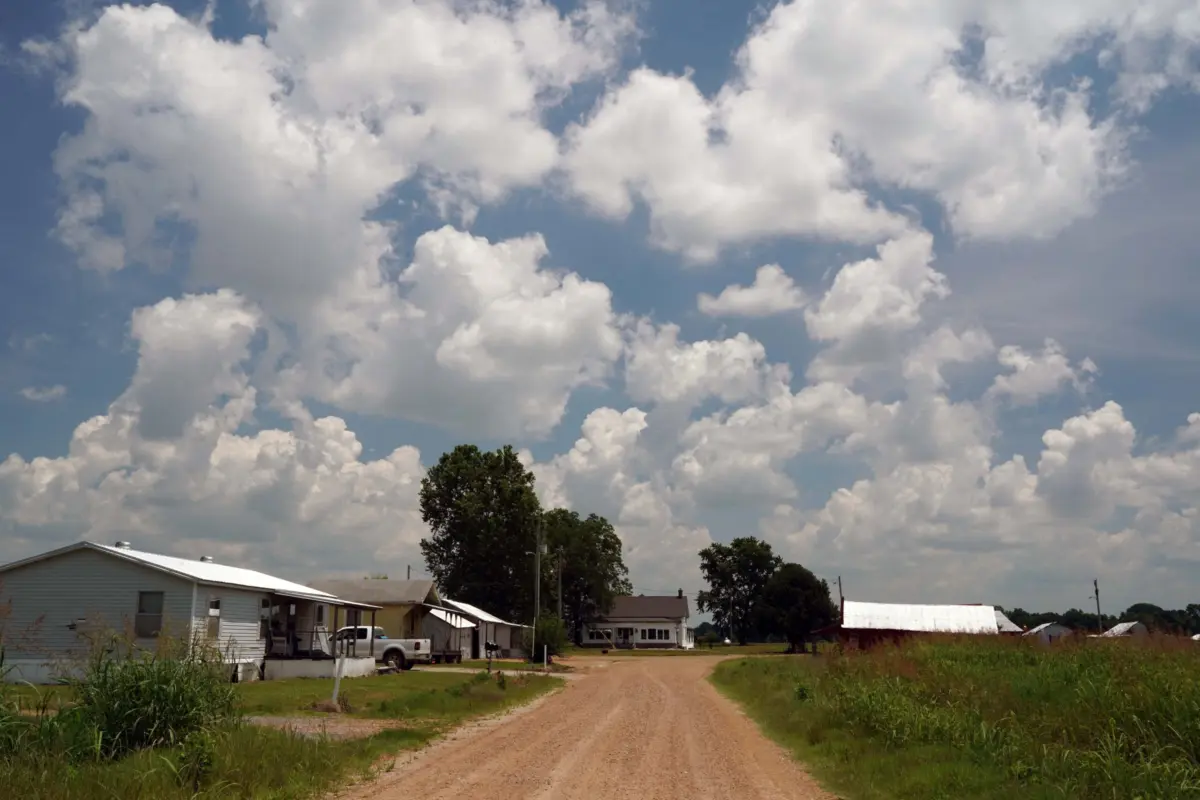
For Paul McKinney, a fourth-generation rice farmer in the fertile plains of northeast Arkansas, memories of his son’s childhood are intertwined with the vast, shimmering fields of their family farm. He vividly recalls a young boy’s delight, perceiving a flooded rice paddy as "like a giant, 40-acre swimming pool." Yet, the romantic ideal of agrarian life is now overshadowed by a stark economic reality. After generations dedicated to rice cultivation, the McKinney family farm plans a significant reduction in their rice acreage next year, pivoting instead to soybeans, a crop promising lower production costs. This pivotal decision mirrors the difficult choices confronting farmers nationwide, as skyrocketing fuel and fertilizer expenses, dramatically amplified by the recent "war on Iran," push agricultural operations to their breaking point.
This economic upheaval is casting a long shadow over the impending midterm elections, with observers closely monitoring the agricultural heartland. As voters grapple with economy-wide high prices, a shift in political allegiances or reduced turnout is anticipated, potentially bolstering Democratic gains. Key battleground states like Texas and Kansas could see Democrats elected to the Senate for the first time in decades. In the House of Representatives, two predominantly rural districts—Wisconsin’s Third and North Carolina’s First—have emerged as crucial tipping points that could determine Democratic control. However, deeply conservative rural areas such as Arkansas present an arduous challenge for Democratic contenders, underscoring the complex interplay between economic hardship and ingrained political loyalties.
The Intensifying Crisis in American Agriculture
The current crisis facing American farmers is not a sudden phenomenon but the culmination of years of mounting pressures. Even prior to the "US-Israel war on Iran," agricultural producers were contending with escalating input costs and volatile markets. Ryan Loy, an extension economist for the University of Arkansas’ Division of Agriculture, points to a confluence of factors that have steadily eroded farmers’ profit margins.
The timeline of strain dates back to 2018, when a protracted trade war with China significantly disrupted export markets for key American commodities like soybeans and pork. Farmers faced retaliatory tariffs, leading to depressed prices and an oversupply of goods. This period forced many to take on additional debt and adapt their planting strategies. The ongoing war in Ukraine, which erupted in 2022, further exacerbated global supply chain issues, particularly impacting the cost and availability of grains, energy, and chemical fertilizers. Ukraine and Russia are major global suppliers of these commodities, and their conflict sent shockwaves through international markets. Additionally, disruptions related to specific tariffs introduced in 2025 added another layer of complexity, creating unpredictable market conditions that made long-term planning exceedingly difficult for farmers.
Compounding these geopolitical and trade-related challenges is the pervasive impact of climate change. A severe drought gripping the US heartland has significantly reduced crop yields and increased the need for costly irrigation, placing immense strain on water resources and farmers’ budgets. This environmental factor, alongside economic pressures, has created a perfect storm for the agricultural sector.
The Iran War and the Fertilizer Shock
The situation reached a critical juncture in the spring of 2026 with the onset of the "war on Iran." The immediate and most devastating consequence for agriculture was the effective blocking of the Strait of Hormuz, a vital maritime chokepoint through which a significant portion of the world’s oil and natural gas—essential components for fertilizer production and shipping—transits. This disruption sent global energy and chemical prices soaring just as farmers across the United States were undertaking their crucial spring planting and fertilizing activities.

Economist Ryan Loy meticulously tracked these increases for Arkansas row crop farmers. His sample budget revealed that "Urea fertilizer specifically peaked about 39 percent over our budgeted amount." Urea, a nitrogen-rich fertilizer, is indispensable for crops like rice and corn, and its sudden price hike represented a substantial blow. Even more dramatic was the surge in diesel costs, which Loy found to be approximately "72 percent more than budget averaged across the planting, growing and harvesting seasons." Diesel powers tractors, irrigation pumps, harvesters, and transports goods to market, making it a non-negotiable expense for nearly all farming operations.
For Arkansas alone, these cost escalations translated into an "additional cost of about $343 million," Loy stated, underscoring the profound economic hit to the state’s agricultural sector. Historically the country’s leading rice producer, Arkansas has seen its rice acreage plummet to its lowest levels since the 1970s as farmers reluctantly shift to less input-intensive crops like soybeans, which Loy notes "perhaps can break even or have the shallowest loss." This strategic pivot, while necessary for survival, represents a significant cultural and economic shift for communities deeply rooted in rice farming.
Government Response and Farmer Skepticism
In response to the widespread economic distress, US President Donald Trump announced an $8 billion fuel relief program for farmers last week. This initiative followed a $12 billion aid package in 2025 designed to mitigate the adverse effects of tariffs. While Paul McKinney, a member of the influential Arkansas Farm Bureau, acknowledged the welcome nature of the announcement, he voiced a common sentiment among farmers: a yearning for "longer-term solutions that would prevent this constant battle for survival."
Indeed, a closer look at the figures reveals the inadequacy of such short-term relief. If the $8 billion fuel relief were distributed equally among the 50 states, it would cover less than half of the additional costs that Loy estimates Arkansas farmers alone incurred this year. This highlights a disconnect between the scale of the government’s intervention and the magnitude of the crisis on the ground. Farmers’ organizations and advocacy groups have consistently called for comprehensive strategies that address market stability, trade policy predictability, and infrastructure investments, rather than episodic relief payments that barely scratch the surface of their financial burdens.
The cumulative strain is starkly evident in the rising tide of farm bankruptcies. A recent analysis by the University of Arkansas’ National Agricultural Law Center revealed a grim picture: farm bankruptcies for the first three quarters of 2026 were up 19 percent compared to the same period last year, and a staggering 73 percent higher than in 2024. These figures paint a clear picture of an industry under severe duress, with many family farms facing the agonizing decision to cease operations, threatening the fabric of rural communities.
"We Can’t Keep Doing This": A Generational Crossroads
The McKinney family’s decision to scale back rice production is more than an economic calculation; it’s a profound generational reckoning. Paul’s son, who once reveled in the muddy rice fields, now works alongside his father, as does his nephew, currently driving a combine harvester. The desire to pass down their farming legacy is strong: "As has been done for us, we would love to be able to hand that down to the next generation," McKinney stated. "But you also have to think about what is going to be best for them." The sustainability of farming as a viable livelihood is a heavy question weighing on his mind.
For Hallie Shoffner, a sixth-generation Arkansas farmer, that difficult reckoning arrived last year. The convergence of soaring input costs, declining crop prices, and the relentless uncertainty of trade wars and tariffs ultimately "made the numbers stop working" for their 2,000-acre operation, as Shoffner recounted to Al Jazeera. "I know what it feels like to work hard, make every adjustment you can, and still have to sit down with your family and say, ‘We can’t keep doing this.’" To protect her parents’ land and retirement, Shoffner made the "heartbreaking" decision to close the family farm. This deeply personal experience ignited her resolve to run for the US Senate against incumbent Republican Tom Cotton.
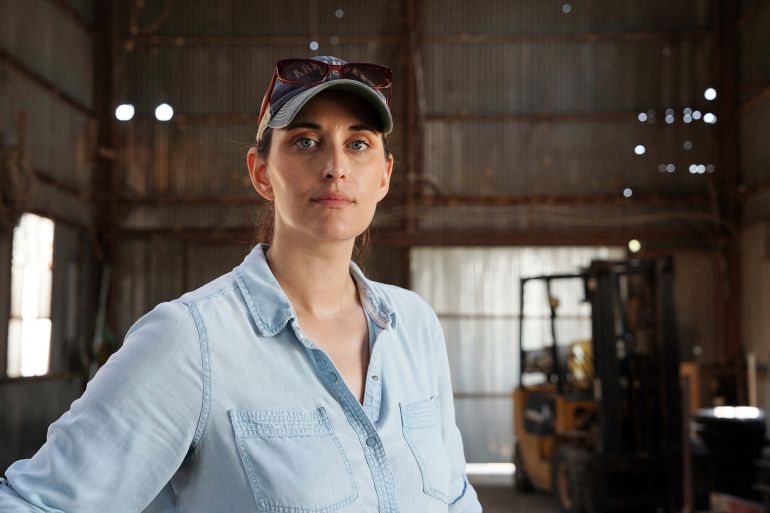
"I decided that if I can’t farm, I will fight," Shoffner declared, articulating a platform squarely focused on addressing the systemic issues plaguing farmers and rural economies. Her policy proposals include ending the "war on Iran" to stabilize global markets, establishing predictable trade policies that farmers "can actually plan around," investing in local processing and distribution infrastructure to reduce reliance on distant markets, and passing a robust Farm Bill that adequately supports producers. Shoffner’s core message is clear: "If we want rural communities to have a future, the people producing our food have to be able to make a living doing it." Senator Tom Cotton did not respond to a request for comment regarding Shoffner’s challenge or her policy positions.
The Political Landscape: Farmers at the Polls
Despite the undeniable economic pain, the question of how farmers will cast their votes remains complex. Michael Shepherd, a political scientist at the University of Michigan, observes that many farmers, like a significant portion of rural voters, are deeply committed Republicans. This partisan allegiance often shapes their perception of economic issues. "Their political behaviors, their voting choices, things like that, are not particularly responsive to changes in the agricultural economy," Shepherd explained, suggesting that deeply ingrained political identities can sometimes override immediate financial concerns.
However, recent polling indicates a potential for shifting sentiment. An April poll by the Farm Journal revealed that a significant minority of Republican-leaning farmers—35 percent of those who "usually" vote Republican and 15 percent of those who "always" vote Republican—were still considering their options for the upcoming elections. Further, September polling from Purdue University marked a notable turning point: for the first time in the current term, a majority of surveyed farmers expressed the belief that the country was "on the wrong track." While these polls suggest a crack in the traditionally solid Republican base, translating economic dissatisfaction into votes for the opposing party is far from guaranteed, especially in deeply conservative regions.
The challenge for candidates like Hallie Shoffner is further compounded by the stark realities of campaign finance. Shoffner’s campaign has been significantly outspent by Senator Cotton’s well-funded operation. Cotton, an established lawmaker, has received substantial financial backing from influential interest groups such as AIPAC and leaders at major technology companies like Anthropic and Palantir. This disparity in resources is a formidable hurdle. "If one side has a massive war chest, and the other side has very limited resources, then that game of tug of war can be won much easier than it should be," Shepherd noted, highlighting how financial muscle can dictate campaign reach, advertising saturation, and ground game effectiveness.
Furthermore, even if individual farmers do decide to change their votes, their collective impact on statewide or national elections might be limited. Paul McKinney, who is now farming one of the Shoffner family’s former fields, points out that farmers represent a shrinking percentage of the overall rural electorate. Their political strength increasingly lies in their ability to organize and advocate, rather than in sheer numbers at the ballot box.
Nonetheless, campaigns like Shoffner’s, even if unsuccessful in securing a Senate seat, serve a crucial purpose. They can signal to national funders and party strategists that traditionally safe Republican races may become competitive in the future. Moreover, they can energize the Democratic base and help boost down-ballot candidates. In Arkansas’s second congressional district, for instance, the Democratic Congressional Campaign Committee is actively supporting Democrat Chris Jones in what is considered a long-shot campaign. Yet, across the country, political scientists predict that some long-shot candidates will indeed prevail, reflecting a broader dissatisfaction with the status quo.
As Shepherd concludes, "All indications are that this is gonna be one of the biggest shifts away from the president’s party that we’ve observed." This upcoming election is poised to be a critical test of whether economic hardship can fundamentally alter the political landscape of rural America, or if deep-seated partisan loyalties will continue to hold sway amidst the most challenging agricultural conditions in decades. The future of American farming, and the communities it sustains, hangs in the balance.
