

In a move poised to intensify diplomatic complexities between the United States and Brazil, former President Donald Trump declared that Brazil’s recently defeated presidential candidate, Flavio Bolsonaro, could remain in the U.S. "as long as he wants." This pronouncement comes amidst swirling controversies surrounding Bolsonaro’s flight from Brazil following his election loss and ongoing investigations into alleged corruption, money laundering, and tax evasion. U.S. Secretary of State Marco Rubio, meanwhile, asserted that the Trump administration did not facilitate Bolsonaro’s departure from Brazil, despite the swift granting of U.S. visas to him and his family.
Flavio Bolsonaro, son of the outgoing Brazilian president, arrived in Miami, Florida, on Wednesday, October 28, a day after the U.S. Department of State confirmed that he and his family would be granted visas. His arrival followed a narrow but decisive loss in the October 25 run-off election to veteran leftist Luiz Inácio Lula da Silva, a result that marked a significant shift in Latin American politics, bucking a recent trend of conservative electoral victories in the region. Bolsonaro’s departure from Brazil was particularly contentious as he had been ordered to surrender his passport by Brazilian authorities, who deemed him a flight risk due to the active investigations against him.
The Aftermath of a Contentious Election and Bolsonaro’s Departure
The 2026 Brazilian presidential election was one of the most polarized in the nation’s recent history, a stark reflection of deep societal divisions. The campaign saw incumbent President Jair Bolsonaro, a far-right populist, repeatedly question the integrity of Brazil’s electronic voting system, echoing tactics employed by his political ally, Donald Trump, in the U.S. The narrative of a "rigged" election gained traction among his fervent base, despite robust assurances from Brazil’s Supreme Electoral Court and international observers regarding the system’s reliability. Flavio Bolsonaro, a prominent figure in his father’s administration and a federal deputy, played a significant role in this rhetoric, often amplifying claims of electoral fraud without presenting credible evidence.
The run-off election on October 25 ultimately saw Lula da Silva secure victory with 50.9% of the vote against Jair Bolsonaro’s 49.1%. The margin, though slim, was conclusive, and international bodies, including the Organization of American States (OAS), quickly recognized the legitimacy of the results. However, the Bolsonaro campaign initially hesitated to concede, further fueling tensions. Flavio Bolsonaro’s decision to leave Brazil shortly after the official results, bypassing a court order to surrender his passport, immediately raised questions about his intentions and the extent of any external assistance he might have received.
Reports from various U.S. media outlets, citing anonymous sources, suggested that parts of Flavio Bolsonaro’s intricate journey to the U.S. were arranged with the assistance of Jason Miller, a White House official close to President Trump. Bolsonaro’s route reportedly involved transit through Argentina and Ecuador before reaching Miami. This alleged involvement, even if informal, casts a shadow over the U.S. government’s official denial of direct assistance and highlights the intricate web of personal and political relationships at play.
U.S. Government’s Official Stance and Trump’s Intervention
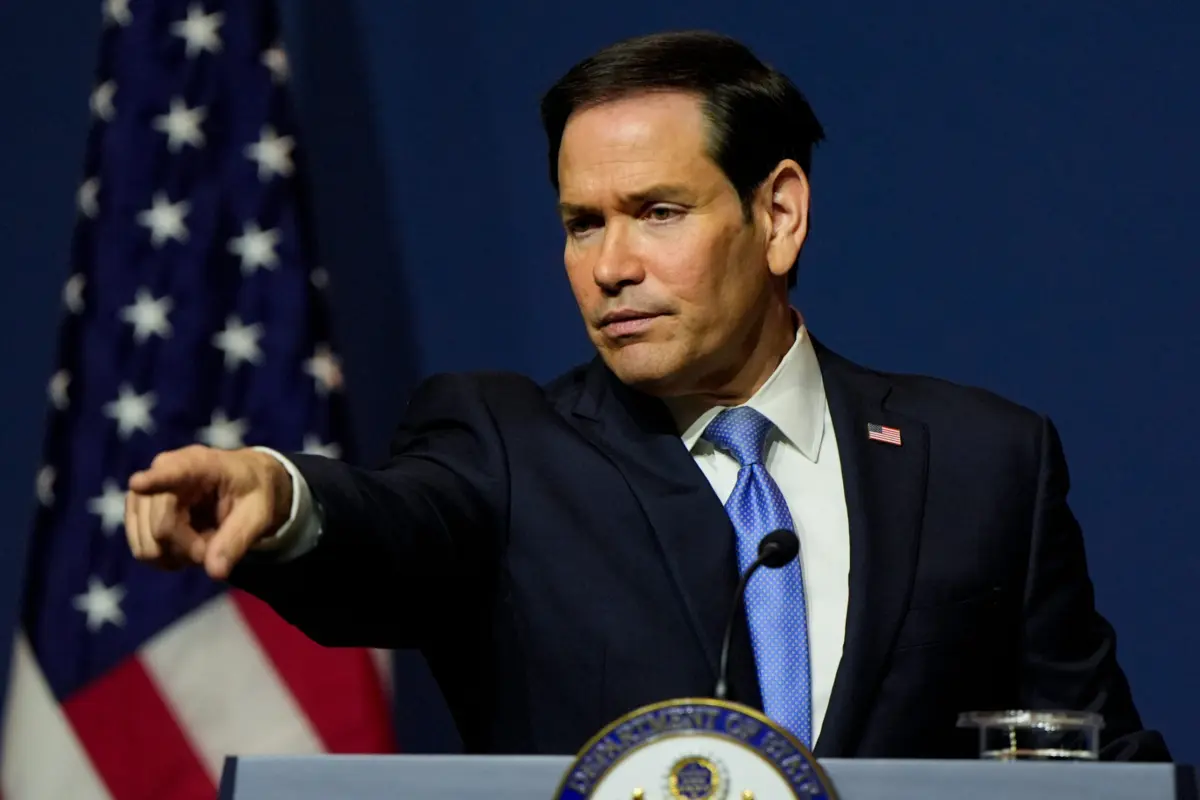
U.S. Secretary of State Marco Rubio, addressing reporters on Saturday in Atlanta, Georgia, where diplomats from the Group of 20 (G20) largest world economies were gathered, firmly distanced the administration from any active role in Bolsonaro’s flight. "We didn’t facilitate anything," Rubio stated, emphasizing the U.S. government was not "involved directly in any of the moves that were made." He clarified that Flavio Bolsonaro had previously held a valid U.S. visa, and the decision to allow his entry into the country was made by President Trump. This explanation suggests a passive acceptance rather than an active intervention in his departure from Brazil.
However, this official narrative was complicated by President Trump’s subsequent, more personal, remarks. Speaking from his Florida residence on the same Saturday, Trump voiced considerable sympathy for Flavio Bolsonaro. "I think he got treated very shabbily, very shabbily, so he can stay here as long as he wants," the president told reporters. This statement, delivered with a characteristic tone of personal grievance, went beyond a mere acknowledgment of visa validity, suggesting a broader, open-ended welcome that aligns with Trump’s long-standing support for Jair Bolsonaro and his political ideology.
The Reuters news agency later reported that Flavio Bolsonaro was admitted to the U.S. under humanitarian parole, a discretionary immigration status typically granted for urgent humanitarian reasons or significant public benefit, usually lasting for one year. While this status allows for temporary stay, Trump’s "as long as he wants" comment indicates a political commitment that potentially extends beyond the standard legal parameters of humanitarian parole, raising questions about the future of his residency and the potential for a more permanent arrangement, such as asylum.
Legal Challenges and Brazilian Reactions
Flavio Bolsonaro’s legal troubles in Brazil are substantial and predate his father’s presidency. He is reportedly under investigation for alleged corruption, including a scheme known as "rachadinha" (kickback scheme), where he is accused of illicitly retaining part of his former aides’ salaries. Other allegations include money laundering and tax evasion. These investigations, spearheaded by Brazilian federal prosecutors and the Federal Police, gained momentum during his father’s tenure, leading to increased scrutiny and ultimately the order for him to surrender his passport. Brazilian law enforcement authorities viewed him as a significant flight risk, a concern seemingly validated by his swift departure.
Since arriving in the U.S., Flavio Bolsonaro has continued to challenge the legitimacy of the Brazilian election results, echoing his father’s unsubstantiated claims of fraud. He has reportedly asserted himself as the "true leader" of Brazil and characterized his departure as a flight from "persecution." This narrative of political persecution is often a cornerstone for individuals seeking asylum or similar protective statuses in other countries, setting the stage for potential legal battles should Brazil seek his extradition.
Brazil’s foreign minister, Mauro Vieira, was present at the G20 meetings in Atlanta, where he reportedly met with Secretary Rubio. While no specific details of their discussions regarding Bolsonaro’s presence in the U.S. were immediately released, it is highly probable that the issue was raised. The new Lula administration, which officially takes power on January 1, 2027, is expected to adopt a much firmer stance on accountability for those accused of corruption and undermining democratic institutions. Brazil’s Ministry of Justice and Public Security, once fully constituted under Lula, could initiate formal extradition proceedings against Flavio Bolsonaro, transforming a diplomatic nuance into a significant legal and political confrontation. The summon of an Argentinian diplomat by Brazil over Bolsonaro’s alleged flight path via Argentina further underscores Brazil’s determination to trace his movements and understand any potential complicity in his evasion of legal orders.
Broader Implications for U.S.-Brazil Relations and Regional Politics
President Trump’s outspoken support for Flavio Bolsonaro and his open invitation for him to remain indefinitely in the U.S. carry significant implications for the relationship between the Western Hemisphere’s two largest democracies. Even though Trump’s term is nearing its end (assuming the article is set in late 2026 and a new U.S. president is incoming or recently inaugurated), his statements reflect a deep alignment with the Bolsonarista movement, potentially setting a difficult precedent for future diplomatic engagement.
Under the Trump administration, U.S.-Brazil relations flourished, primarily due to the ideological alignment between Trump and Jair Bolsonaro. Both leaders shared populist, nationalist, and often anti-establishment sentiments, fostering a unique rapport. However, the incoming Lula administration is expected to pivot Brazil’s foreign policy significantly, seeking to re-engage with traditional allies, strengthen multilateral institutions, and prioritize environmental protection – areas where the U.S. under a potentially different administration might find common ground.
However, the continued presence of Flavio Bolsonaro in the U.S. under the auspices of a U.S. presidential endorsement could become a persistent irritant. It risks being perceived by the Lula government as tacit support for those who sought to undermine Brazilian democratic processes and evade justice. This could strain diplomatic trust and complicate cooperation on critical issues ranging from trade and investment to climate change and regional security.
Moreover, the situation could empower the opposition within Brazil. With Flavio Bolsonaro operating from abroad, potentially continuing to spread disinformation about the election and rally support against the Lula government, it could prolong political instability and division. His claims of "persecution" could resonate with a segment of the Brazilian population, further solidifying the perception of a polarized political landscape where legal processes are viewed through a partisan lens.
Internationally, the case highlights the complexities of political asylum and extradition, particularly when high-profile figures are involved. It raises questions about the balance between national sovereignty, international legal obligations, and humanitarian considerations. The U.S. decision on Bolsonaro’s long-term status could set a precedent for how powerful nations handle requests from political figures facing legal scrutiny in their home countries, especially when those individuals are linked to controversial political movements. The principle of non-interference in the internal affairs of sovereign nations might also be tested if the U.S. is perceived as shielding an individual wanted for criminal investigations in Brazil.
As Brazil prepares for the transition of power, the shadow of Flavio Bolsonaro’s presence in the U.S. looms large, signaling that the political battles of 2026 may extend far beyond the ballot box, potentially shaping the diplomatic landscape between two key global players for years to come.
