

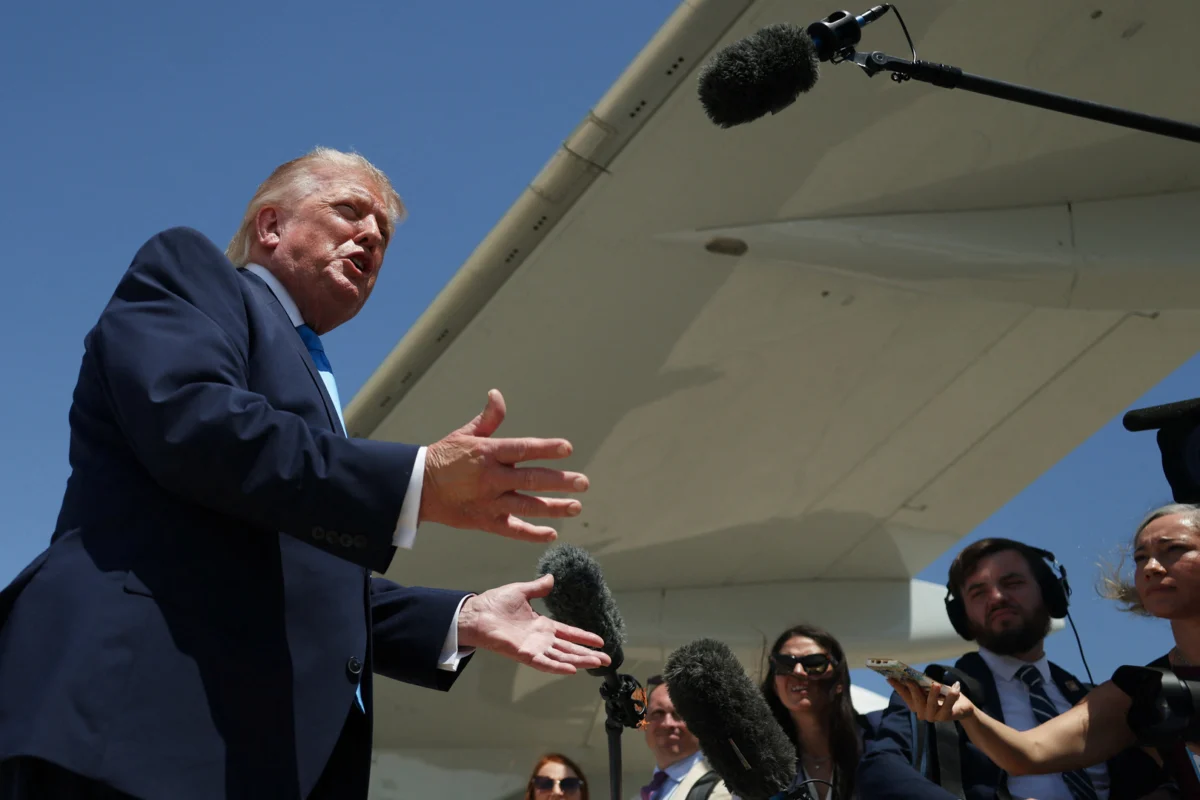
President Donald Trump addressed the nation following the historic unsealing of a federal indictment against former Cuban President Raúl Castro, stating that while the United States is committed to "freeing up Cuba," there is no immediate expectation of military or diplomatic escalation between the two nations. The indictment, filed in the U.S. District Court for the Southern District of Florida, charges the 94-year-old former leader with conspiracy to commit murder in connection with the 1996 downing of two civilian aircraft operated by the Miami-based exile group "Brothers to the Rescue."
Speaking to reporters, the President characterized the legal action as a long-overdue pursuit of justice for the families of the four men killed in the incident. Despite the gravity of the charges, the administration has signaled a desire to maintain the current status quo regarding regional stability, focusing on judicial and economic pressure rather than kinetic conflict. The move marks a significant turning point in U.S.-Cuba relations, which have remained fraught with tension since the mid-20th century.
The 1996 Brothers to the Rescue Incident
To understand the weight of the current indictment, one must look back to February 24, 1996. On that day, three Cessna 337 Skymaster aircraft, piloted by members of the "Brothers to the Rescue" (Hermanos al Rescate) organization, were flying over the Florida Straits. The group, founded by José Basulto, was known for patrolling the waters to locate and assist Cuban migrants attempting to reach the United States on makeshift rafts.
According to investigations conducted by the International Civil Aviation Organization (ICAO), two of the three planes were shot down by Cuban Air Force MiG-29 and MiG-23 fighter jets. The Cuban government claimed at the time that the aircraft had entered Cuban territorial airspace. However, the ICAO report later concluded that the planes were in international airspace when they were intercepted and destroyed. The attack resulted in the deaths of four men: Armando Alejandre Jr., Carlos Costa, Mario de la Peña, and Pablo Morales. Three of the victims were U.S. citizens, while the fourth was a legal U.S. resident.
The incident sparked international outrage and led directly to the passage of the Helms-Burton Act (Cuban Liberty and Democratic Solidarity Act) later that year, which codified the U.S. embargo against Cuba into law and strengthened sanctions against the island nation.
Details of the Miami Indictment
The indictment unsealed in Miami specifically names Raúl Castro, who served as Cuba’s Minister of the Revolutionary Armed Forces at the time of the 1996 shoot-down. Prosecutors argue that the order to use lethal force against the civilian aircraft could not have been executed without the direct authorization of the military high command, specifically pointing to Raúl Castro’s role in the chain of command.
The charges include conspiracy to murder United States nationals and destruction of aircraft. While the Cuban government has historically protected its leaders from foreign legal proceedings, the U.S. Department of Justice has moved forward with the indictment as a symbolic and legal assertion of accountability. Legal experts suggest that while an actual trial with Castro in the courtroom is highly unlikely—given that Cuba does not extradite its citizens—the indictment effectively restricts any remaining international mobility the former leader might have and serves as a formal condemnation of the 1996 actions.
Trump Administration’s Stance and "Freeing Up Cuba"
President Trump’s remarks emphasize a dual-track strategy: legal accountability for past actions and continued economic pressure to encourage political change. By stating that the U.S. is "freeing up Cuba," the administration refers to its ongoing "Maximum Pressure" campaign, which has seen the tightening of travel restrictions, the expansion of the "Cuba Restricted List," and the re-designation of Cuba as a State Sponsor of Terrorism in previous years.
"We are seeking justice for the victims of the 1996 massacre," the President stated. "But we are also looking toward a future where the Cuban people are no longer under the thumb of a regime that has spent decades suppressing their potential. We are freeing up the island by holding the old guard accountable."
The administration’s insistence that no escalation is expected suggests a desire to avoid a repeat of the Cold War-era crises that once defined the Caribbean. Officials from the State Department clarified that "escalation" in this context refers to direct military confrontation or a total severance of the limited diplomatic channels that currently exist for humanitarian and migration purposes.
Chronology of U.S.-Cuba Relations (1959–2026)
The relationship between Washington and Havana has been a pendulum of hostility and brief periods of rapprochement. The following timeline outlines the path to the current indictment:
- 1959: Fidel Castro takes power after the Cuban Revolution, eventually aligning the country with the Soviet Union.
- 1960–1962: The U.S. imposes a trade embargo; the Bay of Pigs invasion fails; the Cuban Missile Crisis brings the world to the brink of nuclear war.
- 1996: The "Brothers to the Rescue" shoot-down occurs. President Bill Clinton signs the Helms-Burton Act.
- 2008: Fidel Castro formally steps down as President, handing power to his brother, Raúl Castro.
- 2014: The "Obama Thaw" begins. Presidents Barack Obama and Raúl Castro announce the restoration of diplomatic relations.
- 2016: President Obama visits Havana, the first U.S. president to do so in 88 years.
- 2017–2021: The Trump administration reverses several "thaw" policies, citing human rights abuses and Cuba’s support for the Maduro regime in Venezuela.
- 2021: Cuba is added back to the U.S. State Sponsor of Terrorism list in the final days of the first Trump term.
- 2024–2026: Continued economic sanctions and the eventual unsealing of the indictment against Raúl Castro for the 1996 incident.
Official Responses and International Reaction
The reaction to the indictment has been swift and divided. In Havana, the Cuban Ministry of Foreign Affairs issued a scathing statement, describing the U.S. legal action as a "politically motivated farce" and an "act of judicial imperialism." The Cuban government maintains that the 1996 shoot-down was a necessary defense of national sovereignty against provocative flights.
"This is a desperate attempt by Washington to distract from its own failures in the region," a spokesperson for the Cuban government said during a televised broadcast. "Raúl Castro remains a hero of the Revolution, and no foreign court has the jurisdiction to judge our leaders."
Conversely, the Cuban-American community in Miami has largely celebrated the move. Representative Mario Díaz-Balart and other Florida lawmakers released statements praising the Department of Justice for its persistence. "For thirty years, the families of the four men murdered by the Castro regime have waited for this day," the statement read. "This indictment sends a clear message that time does not erase the stain of murder."
International bodies, including the European Union and the United Nations, have expressed caution. While many nations condemned the 1996 shoot-down at the time, there is concern that a legal battle against a former head of state could further complicate efforts to manage migration and humanitarian aid in the Caribbean basin.
Supporting Data: The Impact of Sanctions and Migration
The indictment comes at a time when Cuba is facing its worst economic crisis in decades. Data from the Cuban National Office of Statistics and Information (ONEI) and independent economists suggest that the island’s GDP has contracted significantly over the last three years, driven by a collapse in tourism, high inflation, and the continued impact of U.S. sanctions.
- Inflation: Estimates place Cuba’s annual inflation rate between 300% and 500% in the informal market.
- Migration: U.S. Customs and Border Protection reported record numbers of Cuban encounters at the southern border and off the coast of Florida in the 2023–2025 period, surpassing the numbers seen during the 1980 Mariel Boatlift.
- Remittances: Changes in U.S. policy regarding remittance providers have fluctuated, but the flow of capital from the Cuban diaspora remains a vital, albeit strained, lifeline for the island’s population.
The Trump administration argues that the indictment serves as a moral and legal catalyst that could weaken the internal cohesion of the Cuban Communist Party (PCC) by highlighting the "criminal legacy" of its founders.
Broader Impact and Geopolitical Implications
The decision to indict Raúl Castro carries implications that extend beyond the Florida Straits. For one, it sets a precedent for how the U.S. might handle other aging leaders of adversarial regimes. It also reinforces the role of Florida as a central hub for U.S. foreign policy toward Latin America.
Analysts suggest that by ruling out "escalation," the Trump administration is attempting to balance the demands of the Cuban-American electorate with the practical necessity of avoiding a regional refugee crisis. If the Cuban government were to respond to the indictment by cutting off migration cooperation, the U.S. could see a surge in maritime arrivals that would strain Coast Guard resources.
Furthermore, the indictment complicates the roles of Russia and China in the region. Both nations have increased their economic and military footprints in Cuba over the last decade. A heightened legal pursuit of the Castro family may force these allies to decide how much diplomatic capital they are willing to spend to defend a retired leader against U.S. criminal charges.
Conclusion: A Search for Accountability
As the legal proceedings in Miami move forward, the "Brothers to the Rescue" case remains a symbol of the deep-seated wounds between the U.S. and Cuba. While the indictment of Raúl Castro is unlikely to lead to an arrest, it represents a definitive closure of the "thaw" era and a return to a policy rooted in accountability for the Cold War’s lingering legacies.
President Trump’s assertion that no escalation is expected provides a temporary sigh of relief for those fearing a direct confrontation, but the underlying tensions remain. The "freeing up" of Cuba, as the administration calls it, continues to be a process defined by legal maneuvers, economic isolation, and the hope of a political transition that has remained elusive for over sixty years. For the families of Armando Alejandre Jr., Carlos Costa, Mario de la Peña, and Pablo Morales, however, the indictment is a long-awaited acknowledgment of their loss on the international stage.
