

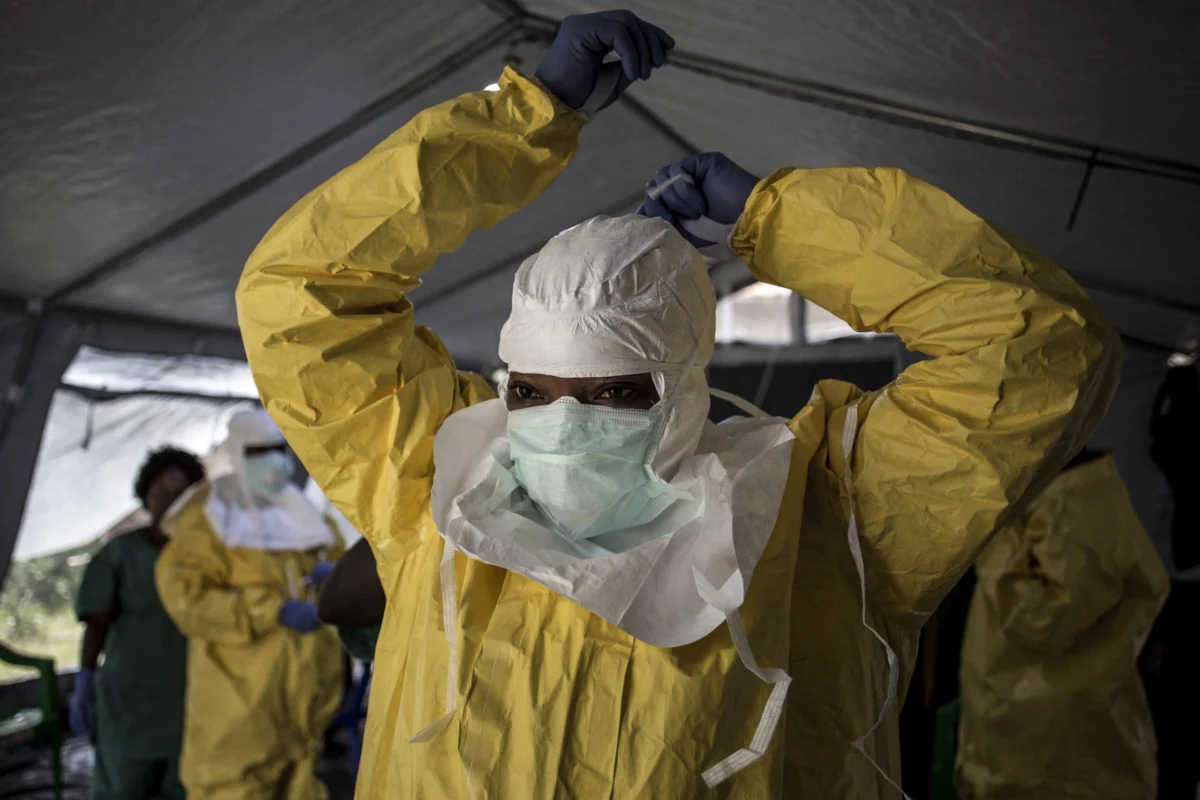
In the mining town of Mongbwalu, situated in the volatile eastern region of the Democratic Republic of the Congo (DRC), 40-year-old Sadiki Patrick is a man haunted by a preventable tragedy. His 15-year-old daughter, Judith, recently became one of the latest fatalities in what has been officially identified as the country’s seventeenth Ebola outbreak in just five decades. For Patrick, the loss is not merely a statistic in a public health report; it is the third time he has buried a child in the prime of their youth. His grief is compounded by a sense of betrayal, as he points to the systemic failures of local and national authorities to contain the virus before it claimed his daughter’s life.
Judith’s story is a microcosm of the broader crisis facing the DRC. Initially exhibiting symptoms common to malaria in April, she was treated at home because the family could not afford the high costs associated with clinical care. By the time her condition deteriorated and she was rushed to a hospital, the virus had already taken hold. She passed away two days after admission. This cycle of poverty, delayed diagnosis, and inadequate medical infrastructure is the primary engine driving the resurgence of one of the world’s most feared pathogens.
A History of Outbreaks: The DRC’s 50-Year Battle
The Democratic Republic of the Congo has become the global epicenter for Ebola Virus Disease (EVD) since the virus was first identified in 1976 near the Ebola River. Since then, the nation has grappled with an average of one outbreak every three years. The current seventeenth outbreak follows closely on the heels of the sixteenth, which was declared over in the Bulape region in December 2025. This rapid succession of epidemics suggests that the virus has become an endemic threat, lurking in the country’s vast ecological reservoirs.
The most devastating of these events remains the tenth outbreak, which ravaged the provinces of North Kivu and Ituri between 2018 and 2020. That epidemic, involving the Zaire strain of the virus, resulted in more than 2,300 deaths and was declared a Public Health Emergency of International Concern (PHEIC) by the World Health Organization (WHO). Despite the lessons learned during that period, the current situation in Mongbwalu indicates that the surveillance and response mechanisms remain fragile.
According to the latest figures from the Congolese Ministry of Health, more than 500 suspected cases have been recorded in the current wave, with at least 130 confirmed deaths. The concentration of cases in mining towns like Mongbwalu is particularly concerning to epidemiologists. These areas are characterized by highly mobile populations, dense living conditions, and limited sanitary infrastructure, all of which facilitate the rapid transmission of viral hemorrhagic fevers.
Structural and Environmental Drivers of Recurrence
The persistence of Ebola in the DRC is not a matter of biological chance but is rooted in a complex intersection of environmental, socioeconomic, and structural factors. Dr. Alphonsine Muhoza, a Congolese physician, notes that the DRC’s geography plays a fundamental role. As home to the world’s second-largest tropical rainforest, the country provides a natural habitat for viral reservoirs, including fruit bats, primates, and rodents.
Deforestation and the expansion of agricultural activities have pushed human settlements deeper into these primary forests. This increased proximity leads to frequent zoonotic "spillover" events, where the virus jumps from animals to humans. Dr. Muhoza emphasizes that hunting and the consumption of bushmeat are critical points of contact. Furthermore, Dr. Francine Mbona Pendeza, who served on the frontlines of the 2018-2020 outbreak, points to unsafe food preparation as a persistent cultural challenge. The consumption of raw or undercooked meat allows germs to thrive, sparking localized clusters that can quickly escalate into regional epidemics.
Beyond the biological origins, the DRC’s healthcare system is characterized by profound inequities. While the government and international partners often provide free care during the height of a declared emergency, routine healthcare remains prohibitively expensive for the average citizen. Dr. Mbona explains that when individuals fall ill and cannot afford treatment, they remain in their communities, often infecting family members and neighbors before they are ever identified by health officials.
The Intersection of Disease and Conflict
The security situation in eastern DRC adds a layer of complexity that distinguishes its Ebola outbreaks from those in other parts of the world. For decades, provinces like North Kivu and Ituri have been embroiled in armed conflict involving dozens of rebel groups. This instability has a direct impact on public health.
Gloire Koko, a geopolitical analyst, argues that the "war effort" often eclipses other vital sectors, including healthcare. In conflict zones, many communities rely almost entirely on international NGOs and UN agencies for medical services. However, when fighting intensifies, these organizations are often forced to suspend operations or withdraw staff, leaving a vacuum in disease surveillance.

The lack of security also breeds deep-seated mistrust among the population. During previous outbreaks, health workers were sometimes attacked by local residents who viewed them with suspicion or believed the virus was a political fabrication. This "crisis of confidence" makes contact tracing and vaccination campaigns nearly impossible to execute effectively. Greg Ramm, the DRC Country Director for Save the Children, warns that the current outbreak is a "crisis on top of a crisis," as hundreds of thousands of displaced persons living in crowded camps are now at risk.
Official Response and the Path to Containment
In response to the escalating situation in Ituri, the Africa Centres for Disease Control and Prevention (Africa CDC) recently deployed a team of experts to the provincial capital, Bunia. This task force includes field epidemiologists, data collection specialists, and experts in risk communication and community mobilization. Their goal is to strengthen the "ring fencing" strategy—identifying cases and vaccinating all potential contacts to break the chain of transmission.
Professor Jean Jacques Muyembe, a world-renowned virologist and one of the co-discoverers of Ebola in 1976, admitted that the surveillance system initially failed during the onset of this latest outbreak. However, he remains optimistic about the DRC’s internal expertise. "We have experience in this area, and we will get it under control," he stated, though he declined to comment on the broader structural weaknesses of the national health system.
Government officials have also emphasized the need for a "proactive" rather than "reactive" strategy. Dr. Rodriguez Kisando, a specialist in environmental health, argues that the DRC must invest in long-term preventive policies. This includes ongoing public education regarding hygiene, the decentralization of healthcare facilities to reach remote mining communities, and the implementation of health insurance schemes to ensure that poverty is no longer a barrier to seeking care.
Broader Implications and Global Health Security
The recurring Ebola outbreaks in the DRC serve as a stark reminder of the interconnectedness of global health. In an era of international travel and globalized trade, an uncontrolled outbreak in a remote Congolese village can potentially reach major urban centers and cross international borders within days. The failure to stabilize the DRC’s public health infrastructure is, therefore, not just a local tragedy but a global vulnerability.
The economic implications are also severe. Mining towns like Mongbwalu are vital to the Congolese economy, providing essential minerals for global supply chains. When these towns are paralyzed by disease and quarantine measures, the economic shockwaves are felt far beyond the local markets. For families like Sadiki Patrick’s, the economic toll is even more personal; the cost of a funeral and the loss of a future breadwinner can push a household into permanent destitution.
The conclusion of the mpox outbreak just 40 days prior to the current Ebola surge highlights the "syndemic" nature of the DRC’s health challenges—a situation where multiple epidemics interact and exacerbate one another. Health officials warn that "vigilance" must be the permanent state of the nation.
Conclusion: The Empty Seat at the Table
As the international community and Congolese authorities work to suppress this seventeenth outbreak, the human cost continues to mount. For the families in Mongbwalu and surrounding villages, the arrival of epidemiologists and the distribution of vaccines often come too late.
Sadiki Patrick, now left with a smaller family and a heart full of sorrow, reflects on the daughter he hoped would become a "valuable member of society." He describes an empty seat at his dining table that serves as a daily reminder of the cost of systemic neglect. "We miss her so much," he said. "I would love to see her again, in bliss."
The resolution of the DRC’s Ebola crisis will require more than just emergency medical interventions. It demands a fundamental restructuring of the relationship between the state and its citizens, the restoration of security in the east, and a global commitment to treating public health in the Congo Basin as a shared responsibility. Until then, the cycle of outbreak, grief, and temporary containment is likely to continue, leaving more families like Patrick’s to mourn in the shadows of the world’s most persistent epidemics.
