

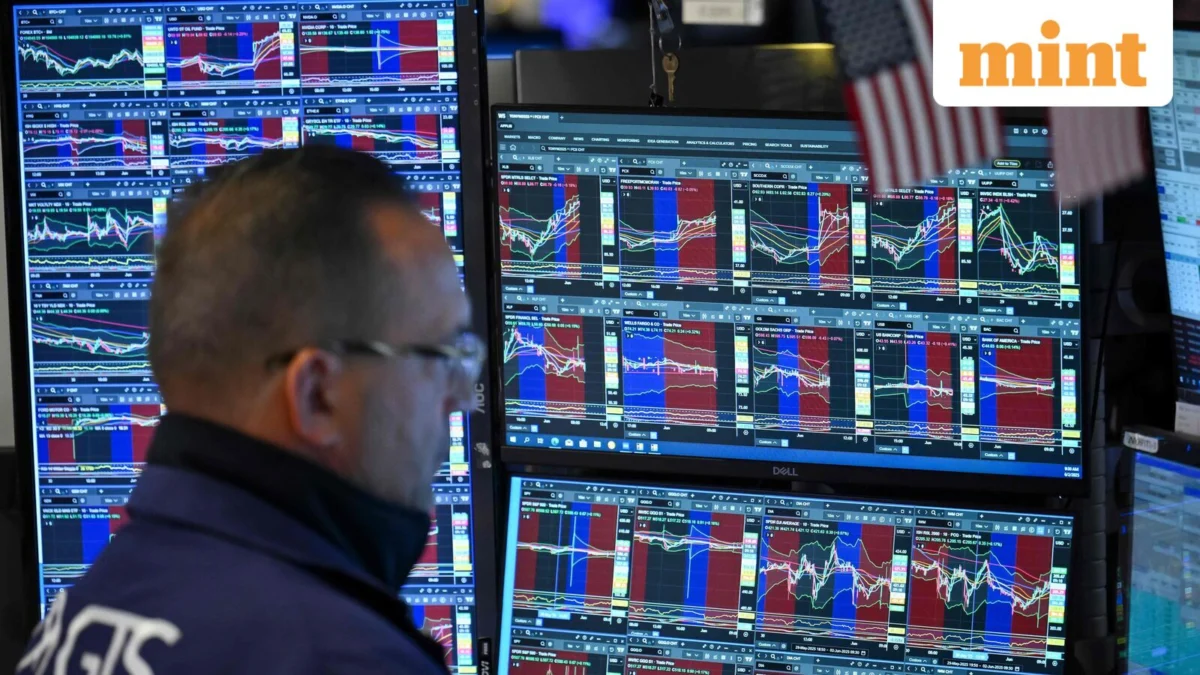
US equity futures signaled a return to selling pressure during early Thursday trade on May 21, as the momentum from a previous relief rally evaporated in the face of escalating geopolitical tensions and a resurgence in global energy prices. The renewed volatility in the commodities market has directly impacted the fixed-income landscape, triggering a fresh spike in Treasury yields that has once again dampened the appetite for risk-sensitive assets, particularly in the technology sector.
As the pre-market session progressed, futures tied to the tech-heavy Nasdaq 100 fell by 0.6%, reflecting a cooling of enthusiasm even as the industry’s bellwether, Nvidia, failed to provide a significant enough catalyst to sustain the artificial intelligence-driven rally. Similarly, S&P 500 futures declined by 0.4%, while the Dow Jones Industrial Average futures managed to buck the trend slightly, posting a marginal gain of 0.3%, as investors rotated into more defensive or value-oriented positions.
Geopolitical Friction and the Strait of Hormuz
The primary driver behind the shift in market sentiment remains the volatile situation in West Asia. After a brief period of optimism where market participants hoped for a diplomatic de-escalation, crude oil prices resumed their upward trajectory. This reversal followed reports from Reuters citing Iran’s Supreme Leader, who emphasized that the nation must retain its uranium reserves and continue its strategic nuclear development. These remarks effectively tempered expectations that a deal was imminent to ensure the reopening or safe passage through the Strait of Hormuz.
The Strait of Hormuz is widely regarded as the world’s most critical oil transit chokepoint. Approximately one-fifth of the world’s total oil consumption passes through this narrow waterway daily. Any prolonged disruption or threat of closure sends shockwaves through global energy markets, as evidenced by the immediate reaction in Brent and WTI crude futures.
Adding to the complexity, Iranian state media outlet Tasnim reported that Tehran is currently reviewing a new draft proposal from the United States. This draft serves as a response to a 14-point proposal previously submitted by Iran. However, the lack of an official response from Tehran and the conflicting rhetoric from its leadership have led investors to believe that a resolution to the three-month-long conflict may still be far off.
Just one session prior, US markets had enjoyed a robust recovery, with all three major indices gaining more than 1%. That rally was fueled by comments from US President Donald Trump, who suggested that negotiations with the Islamic Republic were in their "final stages." The subsequent reversal in sentiment underscores the fragility of the current market environment, where high-frequency geopolitical headlines often override fundamental economic data.
The Bond Market Reaction and Yield Spikes
The resurgence in oil prices has reignited fears of "sticky" inflation, which has a direct and immediate impact on the US Treasury market. As energy costs rise, the likelihood of the Federal Reserve maintaining higher interest rates for a longer duration increases. This expectation pushed the 10-year US Treasury yield—a global benchmark for borrowing costs—up by more than 3 basis points to 4.607%.
The 10-year yield had previously touched a 16-month high of 4.7% on May 19, and while it saw a brief pullback, the current trajectory suggests that bond vigilantes remain concerned about the long-term inflation outlook. Meanwhile, the 30-year Treasury bond yield, which is particularly sensitive to political risk and long-term fiscal projections, advanced by over 2 basis points to 5.1334%.
Higher yields are traditionally a headwind for equities because they increase the discount rate used to value future cash flows. This is particularly punishing for high-growth technology companies whose valuations are heavily dependent on earnings projected years into the future. Furthermore, rising yields increase the cost of corporate debt, potentially squeezing profit margins at a time when economic growth is already facing headwinds.
Federal Reserve Policy and Inflationary Pressures
The latest minutes from the Federal Reserve’s policy meeting have added another layer of caution to the market. The records revealed that a majority of Fed officials still believe a rate hike could be warranted before the end of the year if inflation does not show a convincing trend toward the central bank’s 2% target.
Investors are currently divided on the central bank’s next move. While some market participants anticipate a final rate hike in December to "finish the job" on inflation, others believe the Fed will opt for a prolonged pause, keeping borrowing costs at their current multi-decade highs well into the next year. This uncertainty has created a "wait-and-see" approach among institutional investors, leading to increased intraday volatility.
Brokerage firm Vested Finance noted that the market is currently navigating a "dual-force" environment. On one side, the transformative potential of artificial intelligence continues to drive massive capital expenditures and robust earnings for a select group of tech giants. On the other side, the macroeconomic reality of elevated energy prices and geopolitical instability poses a persistent threat to the broader market’s stability.
Energy Complex Performance
In the commodities space, Brent crude futures regained significant strength, rising $2.66 per barrel to reach a daily high of $107.66. West Texas Intermediate (WTI) crude futures also saw a substantial rebound, climbing $3 to trade at $101 per barrel. This recovery comes after a sharp 6% decline over the previous two sessions, suggesting that the "geopolitical risk premium" is being priced back into the market.
Domestic brokerage firm Kotak Securities highlighted that the near-term direction for oil will be dictated by shipping flows and US inventory data. They noted that any diplomatic breakthrough would likely cause a sharp correction in prices, but as long as the Strait of Hormuz remains a flashpoint, the floor for oil prices remains relatively high.
Corporate Highlights and Sector Movements
Despite the broader market malaise, several individual stocks and sectors moved on specific news catalysts:
The Tech Sector and Nvidia:
Nvidia shares remained largely stagnant in pre-market trading, hovering around the $223 mark. While the company’s earnings have been stellar, analysts suggest that much of the "AI optimism" has already been priced into the stock. Without a fresh, transformative announcement, the stock struggled to lead the Nasdaq higher as it has done in previous months.
The Quantum Computing Surge:
A significant bright spot in the market was the quantum computing sector. Reports from The Wall Street Journal indicated that the Trump administration is set to award $2 billion in grants to nine companies specialized in quantum technology. IBM is expected to be the primary beneficiary, receiving approximately $1 billion of the total pool.
This news sent shockwaves through the sector:
- IBM climbed 6.3% in early trade.
- GlobalFoundries rose 9.7%.
- D-Wave Quantum surged by 19.3%.
- Rigetti Computing gained 14.6%.
- Infleqtion advanced a staggering 26%.
Quantum computing is increasingly viewed as a matter of national security and economic competitiveness, and this federal injection of capital is seen as a major milestone for the industry’s commercialization efforts.
Automotive and Aerospace:
Tesla shares saw a 1% uptick following news that SpaceX, another venture led by Elon Musk, has officially filed for an initial public offering (IPO). While SpaceX and Tesla are separate entities, the news often creates a "halo effect" for Musk-related ventures, as investors speculate on the broader valuation of his ecosystem of companies.
Software and Labor Trends:
On the negative side, Intuit shares plummeted 13%. The financial software giant announced plans to reduce its global workforce by approximately 17%. While companies often cut costs to protect margins, the scale of the layoffs raised concerns about the company’s growth outlook and the broader health of the software-as-a-service (SaaS) sector.
Market Outlook and Implications
The current market environment is characterized by a tug-of-war between technological progress and macroeconomic reality. While the $2 billion grant for quantum computing and the ongoing AI revolution provide a long-term bullish narrative, the immediate concerns regarding inflation and war cannot be ignored.
As the trading day progresses, market participants will be closely watching for any further statements from the US State Department or the Iranian leadership regarding the draft proposal. Additionally, US inventory data and any commentary from Federal Reserve speakers will be scrutinized for clues regarding the trajectory of interest rates.
For now, the "higher for longer" interest rate narrative appears to be the dominant force, keeping a lid on equity valuations and ensuring that any rallies are met with skepticism. Investors are advised to maintain a diversified approach, as the volatility in the energy and bond markets suggests that the period of "easy gains" driven by liquidity may be transitioning into a more complex, data-dependent phase of the market cycle.
The fragility of the current rebound in oil and the sensitivity of the 10-year Treasury yield suggest that the path of least resistance for the major indices may remain skewed to the downside until a clear diplomatic or inflationary resolution is reached. As noted by analysts at Kotak Securities, the market is currently "trading the headlines," a trend that is likely to persist as long as the West Asia conflict remains unresolved.
