

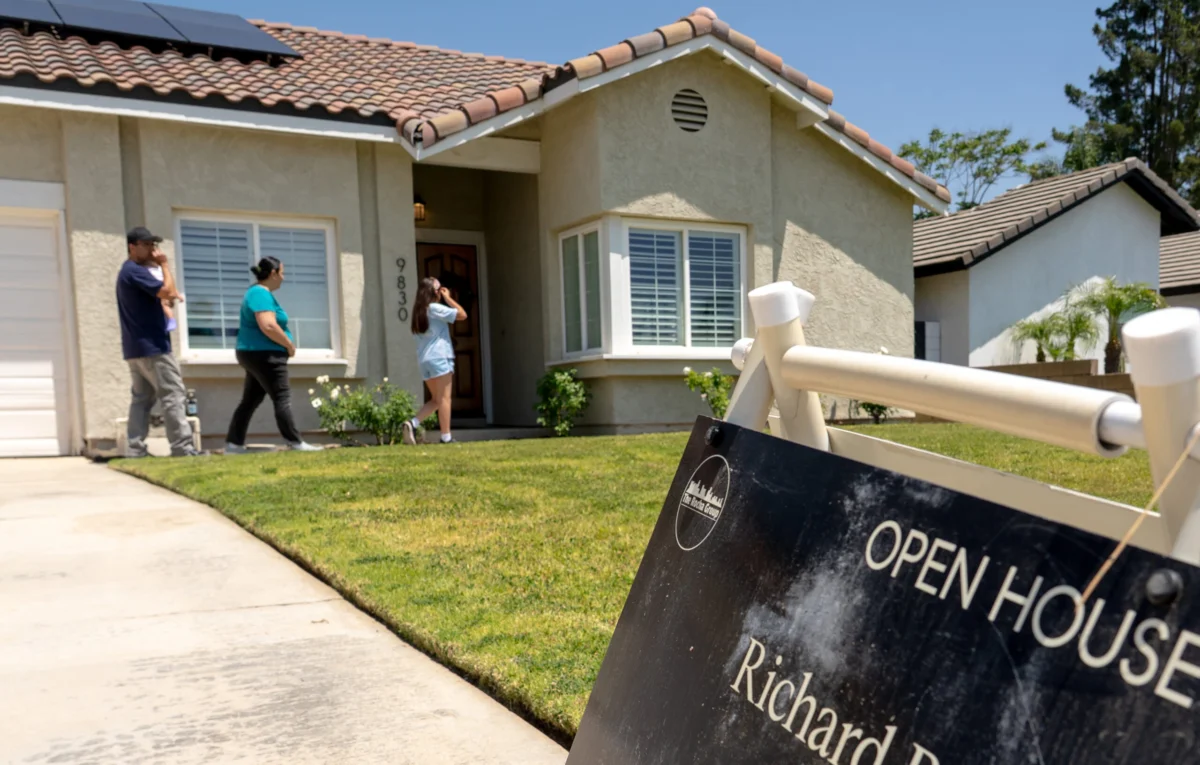
A Market Under Pressure: Sales Figures and Economic Context
The fractional increase in existing home sales, effectively a flat performance, reflects a housing market caught between robust demand and formidable supply-side constraints, exacerbated by a volatile interest rate environment. The reported sales figures are based on closings, meaning the underlying purchase contracts were likely signed in late February and March. During this period, the average rate on the 30-year fixed mortgage, a critical determinant of buyer affordability, concluded March in the high 5% range, as reported by Mortgage News Daily. However, these rates subsequently experienced a sharp ascent, influenced by a confluence of economic factors and heightened geopolitical tensions in the Middle East, particularly concerning Iran and its regional proxies. This period of increased global uncertainty contributed to market volatility and a rise in U.S. Treasury yields, which typically serve as a benchmark for mortgage rates, thereby pushing borrowing costs upward.
Lawrence Yun, NAR’s chief economist, offered a nuanced perspective on the market’s performance. In a recent release, Yun stated, "Despite mixed macroeconomic signals—including a record-high stock market and historically low consumer confidence—home sales were modestly boosted by the continued improvement in housing affordability." He further elaborated, "Mortgage rates are lower from a year ago, and average income growth is outpacing home price gains." This statement points to a complex interplay of factors where, while current rates may feel high, the relative improvement in affordability compared to a year prior, coupled with steady income growth, offers a marginal silver lining for some prospective buyers. However, the overall sales data suggests these positive factors are not yet strong enough to significantly invigorate the market.
The Intricate Dance of Mortgage Rates and Geopolitical Influence
The trajectory of mortgage rates has been a central narrative in the housing market over the past few years. Following historic lows during the COVID-19 pandemic, rates began their upward climb in late 2021 and throughout 2022, primarily in response to the Federal Reserve’s aggressive monetary tightening campaign aimed at taming surging inflation. The Fed’s decision to raise the federal funds rate pushed borrowing costs across the economy higher, directly impacting mortgage rates. By late 2022 and early 2023, the 30-year fixed mortgage rate had climbed into the 7% range, significantly dampening buyer demand and leading to a notable slowdown in sales activity.
The slight moderation in rates observed in late 2023 and early 2024 offered a brief window of opportunity for some buyers, contributing to the "lower from a year ago" sentiment expressed by Yun. However, this relief proved fragile. The resurgence of inflation concerns, coupled with a resilient U.S. economy that defied expectations of a recession, prompted bond markets to recalibrate their outlook on future Fed rate cuts. Furthermore, the geopolitical landscape played a pivotal role. The escalation of tensions in the Middle East often leads to a "flight to safety" among investors, who flock to U.S. Treasury bonds. While this typically pushes bond yields down, in instances where global uncertainty combines with domestic inflationary pressures, the effect can be more complex, sometimes leading to higher yields as investors demand greater compensation for holding long-term debt. The "shot up sharply" increase in mortgage rates referenced by NAR likely reflects this intricate dynamic, where global events added another layer of upward pressure on borrowing costs, making homeownership more expensive for those looking to finance. As of the current week, mortgage rates have remained elevated, starting at 6.42%, indicating that the cost of borrowing continues to be a significant hurdle for many.
Inventory: The Perennial Bottleneck
One of the most persistent challenges plaguing the housing market is the severe lack of available homes for sale. In April, inventory saw a modest increase of 5.8% from March, but only a marginal 1.4% rise compared to the previous April. This translated to a 4.4-month supply of homes at the current sales pace. While an improvement from earlier in the year, this figure remains considerably below the six-month supply generally considered indicative of a balanced market, where neither buyers nor sellers hold a distinct advantage.
Yun emphasized the urgency of the inventory crisis, stating, "We really need to see 30% growth in inventory, but we are not seeing that." This scarcity has profound implications. It fuels competition, even in a higher-rate environment, and contributes to the upward pressure on home prices. The reasons behind the tight inventory are multifaceted. Many existing homeowners are "rate locked-in," meaning they secured historically low mortgage rates (often below 4%) in recent years. The prospect of selling their current home and buying a new one at today’s elevated rates means a significantly higher monthly mortgage payment, even if the new home’s price is comparable. This disincentivizes them from moving, effectively removing potential listings from the market. Additionally, a decade of underbuilding following the 2008 financial crisis has left a structural deficit of housing units across the country, particularly in desirable urban and suburban areas. Construction, while picking up, still struggles with labor shortages, material costs, and regulatory hurdles, making it difficult to bridge the supply gap quickly.
Despite the prevailing market conditions, the tight inventory means that "multiple offers, though not as intense as a few years ago, are still occurring," according to Yun. This suggests that for well-priced homes in desirable locations, buyer competition remains a reality. However, a countervailing trend is also emerging: "At the same time, days on market are lengthening on average, implying that consumers are taking their time before making decisions." This indicates a shift from the frenzied bidding wars of 2021-2022, with buyers now exercising more caution and deliberation, likely due to the higher financial stakes involved and greater options than the absolute lows of inventory. The average days on market increased to 32 days in April, up from 29 days during the same month last year, further supporting this observation.

Prices Defy Gravity: A Persistent Upward Trend
Despite the flat sales and elevated mortgage rates, home prices continued their upward trajectory in April. The median price of an existing home sold reached $417,700, marking a 0.9% increase from the year before. This figure represents the highest median price NAR has ever recorded for the month of April, underscoring the remarkable resilience of home values in the face of affordability challenges.
This persistent price appreciation can largely be attributed to the fundamental imbalance between supply and demand. Even with fewer transactions, the limited number of homes available for sale ensures that those that do come to market command strong prices, especially in areas with robust local economies and population growth. For sellers, this environment means that while the market is less frenetic, they can still expect to realize substantial equity gains. However, for buyers, particularly first-time homebuyers, rising prices coupled with high mortgage rates create a formidable barrier to entry. The dream of homeownership becomes increasingly distant for many, necessitating larger down payments and higher income thresholds to qualify for mortgages.
Buyer Demographics and Market Dynamics
The composition of buyers in April offers further insights into the evolving market. First-time buyers represented a 33% share of sales during the month, a slight decrease from a year ago. This dip suggests that the combination of high prices and elevated mortgage rates is disproportionately impacting new entrants to the market, who often lack the accumulated equity from a previous home sale. Their diminished presence indicates the growing difficulty for younger generations and those without prior homeownership to enter the market.
Conversely, all-cash sales accounted for one-quarter of all transactions, a figure unchanged from the previous year. The consistent strength of all-cash buyers, typically investors or affluent individuals, highlights their significant advantage in a high-interest-rate environment. These buyers are immune to fluctuating mortgage rates, allowing them to close deals quickly and often with greater negotiating power. Their continued presence underscores the two-tiered nature of the current housing market, where cash-rich buyers face fewer hurdles than those reliant on financing. This dynamic also contributes to price stability and appreciation, as a substantial portion of demand remains unburdened by borrowing costs.
Broader Economic Implications and Future Outlook
The housing market’s performance is intrinsically linked to the broader economic health of the nation. While the stock market has reached record highs, indicating strong corporate performance and investor confidence, consumer confidence has remained historically low. This divergence reflects a public grappling with persistent inflation, even as wage growth continues. The Federal Reserve’s future monetary policy decisions, particularly regarding potential interest rate cuts, will be paramount in shaping the housing market’s trajectory. Should inflation show sustained signs of cooling, allowing the Fed to begin easing its policy, mortgage rates could see some relief, potentially unlocking more buyer demand.
However, the immediate outlook suggests continued challenges. Other reports indicate that while pending sales—contracts signed but not yet closed—have shown some increases in April and May, supply is tightening again. This renewed scarcity, if it persists, will continue to exert upward pressure on prices, even if sales volumes remain constrained. Real estate professionals across the country observe a market where buyers are more discerning, carefully evaluating properties and taking their time, but also one where competitive offers can still emerge due to limited choices. Sellers, while still benefiting from appreciating assets, are increasingly advised to price their homes realistically and ensure they are market-ready to attract attention in a less frenzied environment.
For potential homebuyers, the path forward remains challenging. Those with the flexibility to wait may hope for a softening of mortgage rates or an increase in inventory, though significant improvements in either area are not guaranteed in the short term. For sellers, the market continues to favor those with well-maintained properties in desirable locations, albeit with a longer sales cycle than in previous years. The interplay of geopolitical events, domestic economic policy, and fundamental supply-demand dynamics will continue to define the U.S. housing market, creating a complex and often frustrating landscape for all participants. The April data serves as a stark reminder that despite signs of resilience, the market is still far from achieving a widespread balance that would ease the affordability crunch and facilitate greater transaction volumes for the average American homebuyer.
