

Portable power has transitioned from a niche travel accessory to an essential utility in the digital age, driven by the increasing energy demands of high-performance smartphones, tablets, and laptops. As mobile devices integrate more sophisticated processors and larger displays, the market for portable chargers, or power banks, has expanded into a multi-billion-dollar industry characterized by rapid innovation in battery chemistry and charging protocols. Current consumer trends indicate a shift toward higher wattage outputs, modular designs, and specialized features tailored for everything from international air travel to rugged outdoor expeditions. This comprehensive analysis examines the current landscape of portable energy, categorizing the leading hardware by capacity and utility while providing critical context on safety and regulatory compliance.
The Shift Toward High-Performance Portable Energy
The chronology of portable charging has seen a dramatic shift over the last decade. Early power banks were often limited to 5-watt outputs via USB-A ports, barely sufficient to maintain a smartphone’s battery during use. By 2025, the industry standard has moved toward the USB-C Power Delivery (PD) protocol, with flagship chargers now capable of delivering up to 300 watts of power—enough to charge multiple high-end laptops simultaneously. This evolution is necessitated by the hardware requirements of modern devices like the iPhone 16, the Google Pixel 10 Pro XL, and the MacBook Pro, all of which support various forms of fast charging.
Supporting data suggests that while the total capacity of a power bank is measured in milliampere-hours (mAh), the "rated capacity" or actual energy delivered is often 20 to 40 percent lower due to heat loss and voltage conversion. Industry experts advise consumers to look for devices that provide transparency regarding these inefficiencies, especially as battery health becomes a primary concern for long-term device ownership.
Ultra-Portable Solutions: The 5,000-mAh Tier
For users prioritizing pocketability over raw capacity, the 5,000-mAh category offers "emergency" power intended to provide a modest top-up. These devices are designed to bridge the gap between a depleted battery and a wall outlet without adding significant bulk to a user’s everyday carry.
In this segment, the Clutch Pro has emerged as a design leader, featuring a svelte form factor roughly equivalent to a stack of credit cards. Similarly, the Anker Nano Power Bank has gained traction for its integrated, rotating USB-C or Lightning connectors, which eliminate the need for carrying external cables. In the gaming and aesthetic-focused market, the Nubia Redmagic Go Power Bank utilizes a modular, industrial look while doubling as a 65-watt charger. Safety-conscious consumers have also turned to the BMX SolidSafe Air Power Bank, which employs Qi2 magnetic attachment protocols to deliver 15-watt wireless charging while marketing reduced fire risks through advanced thermal management.
The Versatile Mid-Range: 10,000 to 20,000 mAh
The 10,000 to 20,000-mAh range is considered the "sweet spot" for the majority of consumers, providing enough energy for two to four full smartphone charges while remaining portable enough for backpacks and handbags.
Technological integration is a key theme in this category. The Anker Nano Power Bank with Instacord features a 2.3-foot retractable cable, supporting 45-watt charging—a specification that meets the needs of most modern tablets and fast-charging smartphones. Sustainability has also entered the conversation via brands like Gomi. Based in Brighton, UK, Gomi produces power banks from recycled plastic, claiming a 50 percent reduction in CO2 emissions compared to traditional manufacturing processes. Meanwhile, the Ugreen Nexode Power Bank has challenged size-to-power ratios by offering 100-watt output in a compact frame, a feat previously reserved for much larger "brick" style chargers.
High-Capacity Behemoths: 20,000 mAh and Beyond
For professional users, digital nomads, and those off the grid, high-capacity power banks exceeding 20,000 mAh are the standard. These devices are increasingly designed to replace traditional laptop chargers.
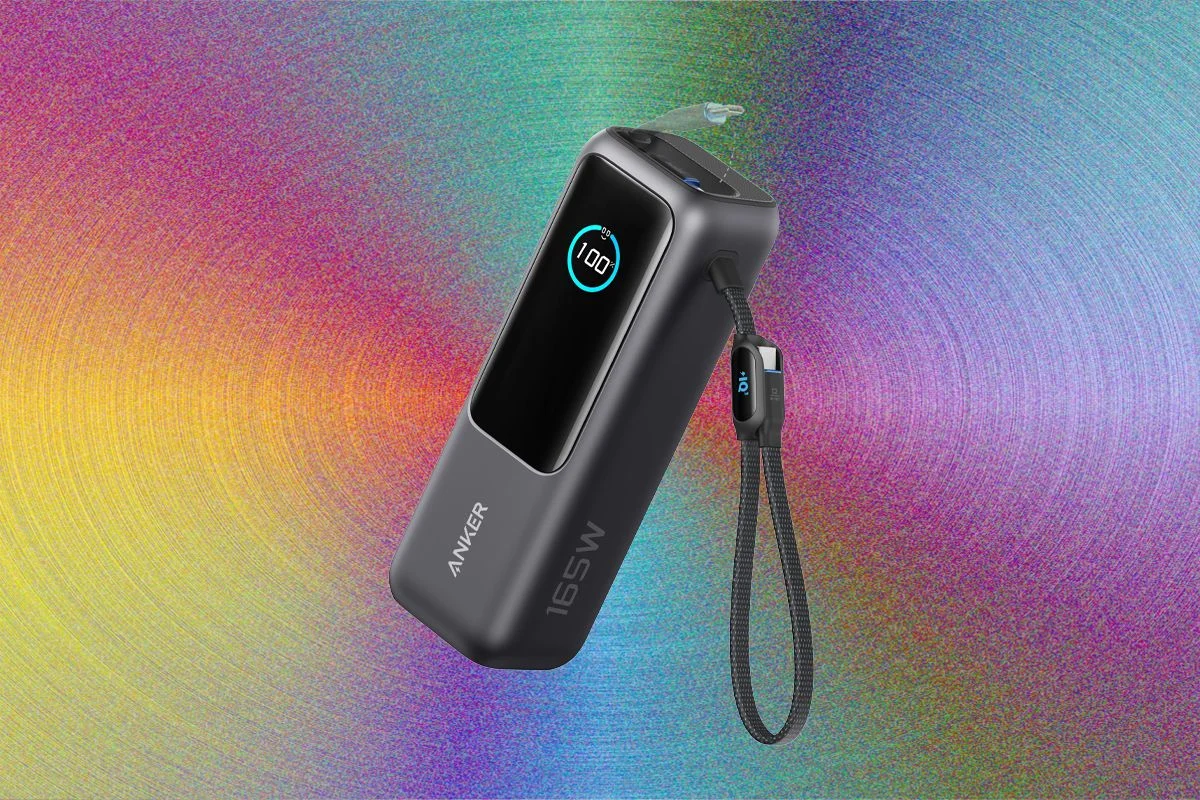
The EcoFlow Rapid Pro Power Bank represents the upper echelon of this tier, delivering 300 watts of total power across multiple ports, including a retractable 140-watt USB-C cable. Similarly, the Aohi Starship Power Bank has adopted a futuristic aesthetic to house its 240-watt delivery system, capable of charging two laptops at once. Anker’s Prime Power Bank remains a dominant force in this sector, integrating smart displays and app-based controls to allow users to monitor real-time discharge rates and battery health. Baseus has also found success with the EnerCore CR11, which prioritizes cable management with a 2.3-foot retractable USB-C system, delivering 67 watts of power.
Specialized Utility: Travel, Rugged, and Emergency Gear
Beyond standard charging, a sub-sector of the market focuses on specific environmental needs. Travel-centric models like the Infinacore P3 Pro and the Statik SmartCharge 5-in-1 integrate international plug adapters (Types C, I, and G) and magnetic wireless pads, serving as all-in-one power hubs for global commuters.

In the rugged and emergency space, the Elecom Nestout series features an IP67 rating, indicating it is dust-tight and capable of withstanding immersion in water. It incorporates shock absorbers and screw-on port caps for extreme durability. For automotive emergencies, the Noco Boost Plus GB40 functions as a 1,000-amp jump starter for dead car batteries, while still providing USB charging for mobile devices. At the furthest end of the portable spectrum lies the Anker Solix C300 DC, a 90,000-mAh portable power station that includes a pop-up lantern, designed for camping or extended power outages.
Consumer Safety and the Risks of Budget Hardware
As lithium-ion technology becomes more ubiquitous, safety remains a paramount concern for regulators and manufacturers. The chemical reaction within a lithium-ion cell—involving a lithium-carbon negative electrode and a cobalt oxide or iron phosphate positive electrode—is safe only when strictly controlled.
Industry analysts warn against the proliferation of "cheap" power banks often found on third-party marketplaces. These devices frequently skimp on essential components such as:
- Insulation: Poorly insulated cells are prone to short-circuiting.
- Power-Management Tools: High-quality chargers use integrated circuits to prevent overcharging and deep discharge.
- Thermal Regulation: Cheap units often lack the sensors required to throttle power when temperatures reach dangerous levels.
The "swollen battery" phenomenon is a primary indicator of internal failure, often caused by excess heat or physical damage. Consumers are urged to buy from reputable brands that offer warranties and have established customer service infrastructures.
Aviation Regulations and International Compliance
The relationship between portable power and aviation safety is governed by strict international standards. As of 2025, most airlines and regulatory bodies, including the FAA and TSA, enforce a 100-watt-hour (Wh) limit for lithium-ion batteries in carry-on luggage.
Calculated as (mAh × V) / 1000, this limit generally restricts passengers to power banks with a capacity of approximately 27,000 mAh or less. Devices exceeding this capacity typically require explicit airline approval and are strictly prohibited from checked baggage due to the risk of "thermal runaway" in the cargo hold. Travelers should be aware that some international carriers have introduced even stricter local rules, such as requiring power banks to be stored under the seat in front of them rather than in overhead bins to ensure immediate access in case of a fire.
Technical Analysis of Charging Protocols
Understanding charging speed requires a basic grasp of the relationship between Volts (V), Amps (A), and Watts (W). The formula—Watts = Volts × Amps—dictates how quickly a device refills. However, the actual speed is governed by the "handshake" between the charger and the device.
Modern smartphones utilize standards like Programmable Power Supply (PPS), a supplement to USB-C Power Delivery that allows for micro-adjustments in voltage and current to optimize charging speed while minimizing heat. Pass-through charging, which allows a power bank to charge itself and a connected device simultaneously, is a sought-after feature but comes with caveats. Some manufacturers, such as Anker, have occasionally limited pass-through support because the discrepancy between input and output can cause rapid power cycling, potentially shortening the battery’s lifespan.
Testing Methodologies and Market Reliability
To ensure the accuracy of performance claims, professional hardware reviewers employ multi-week testing cycles. This includes measuring the number of full charge cycles provided to "test-bench" devices like the iPhone 16 or Samsung Galaxy S24+, as well as monitoring recharge times for the power banks themselves.
Beyond lab metrics, long-term reliability is assessed through daily usage to determine how casings hold up to wear and how cables perform after thousands of retractions. User reviews and warranty claims provide a secondary layer of data, highlighting potential manufacturing defects that may not be apparent in short-term testing. As the market for portable power continues to mature, the focus is shifting from simple capacity to the intelligence and safety of the power delivery system, ensuring that as our devices become more capable, our ability to power them remains secure and efficient.
