

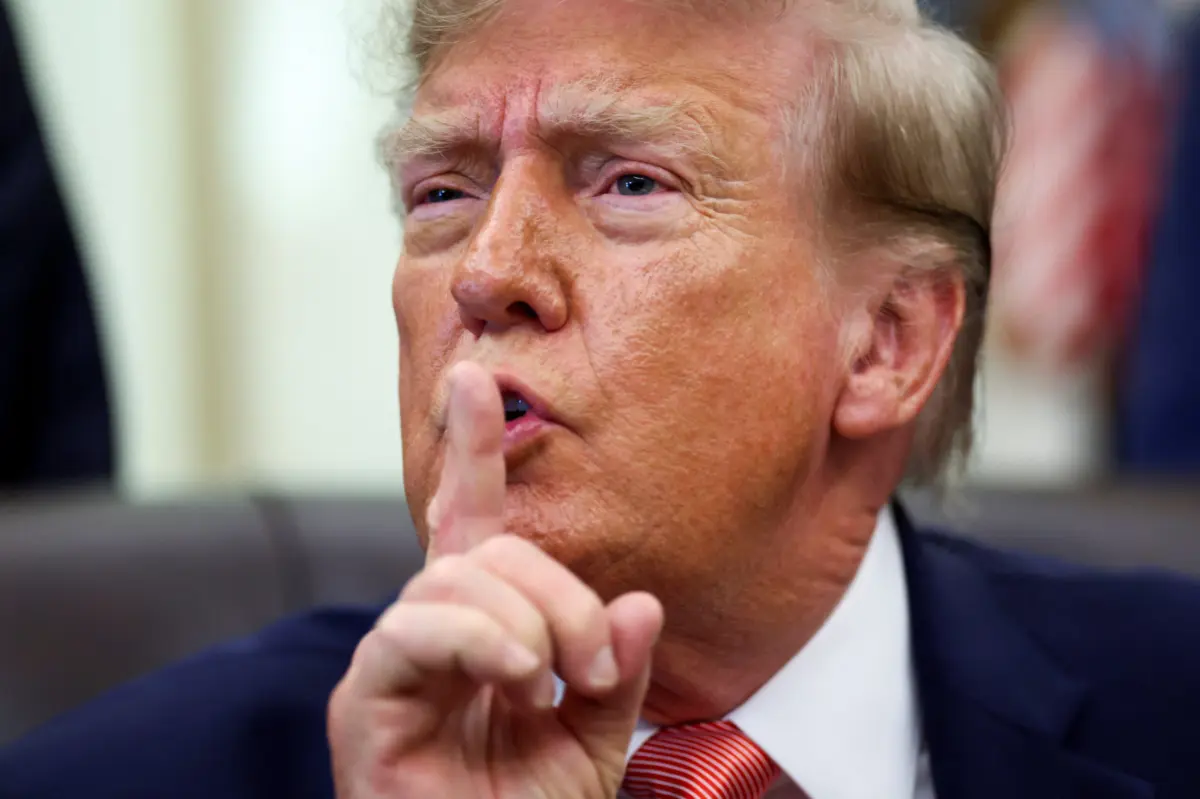
United States President Donald Trump has declared his intention to inject more than $400 million into Republican campaigns, a significant financial commitment aimed at bolstering his party’s efforts to retain control of both legislative chambers in the upcoming November 3 midterm elections. This substantial outlay comes at a pivotal moment for the Republican Party, which faces considerable headwinds, including declining public approval for the president and growing economic anxieties among voters.
A High-Stakes Financial Commitment
The announcement, made by President Trump on his Truth Social platform this past Tuesday, underscored the urgency and perceived importance of the impending vote. Trump stated that a substantial portion of the promised sum, specifically "More than 300 Million Dollars," had already been allocated and spent on various campaign activities. These include extensive advertising, direct and indirect voter contact initiatives, large-scale rallies and the associated arena costs, telerallies, robust "Get Out the Vote" programs, and crucial "Election Integrity" efforts. The president framed his involvement as a "Great Honor" on behalf of the Republican Party, which he asserted has been instrumental in "bring[ing] our Country back from the Edge of Oblivion." He further characterized the November vote as "the Most Important Midterm Elections in our Country’s History," signaling the high stakes he perceives for his political agenda and the nation’s future direction.
The Critical Midterm Landscape of 2026
Midterm elections in the United States, occurring halfway through a president’s four-year term, traditionally serve as a referendum on the sitting administration and its policies. Historically, the president’s party often experiences losses in Congress during these elections, a trend attributed to voter fatigue, shifts in political sentiment, or a desire for checks and balances. For the 2026 cycle, the Republican Party currently holds slim majorities in both the House of Representatives and the Senate. The stakes are profoundly high: should Democrats succeed in flipping either or both chambers, they would gain significant power to obstruct President Trump’s legislative agenda, influence judicial appointments, and launch investigations, effectively shaping the political discourse and policy landscape for the remainder of his presidency. This potential for legislative gridlock underscores why both parties are pouring unprecedented resources into these races, transforming them into a critical battleground for the nation’s political direction.
Unpacking the Spending: Allocation and Ambiguity
While President Trump announced a significant financial pledge and detailed broad categories of expenditure, he offered no specific breakdown of how the $400 million would be distributed among individual races, state parties, or specific initiatives. This lack of granular detail is characteristic of his approach to public financial disclosures and raises questions among political analysts and campaign finance watchdogs regarding transparency and accountability. In typical campaign cycles, major party committees and candidates are legally required to provide itemized reports of their spending, offering a clear picture of financial flows. The president’s aggregate figures, while impressive in scale, leave much to speculation about their precise impact on the ground in competitive districts and states. The stated focus on "Election Integrity" programs, for instance, could encompass a wide range of activities from poll watcher training to legal challenges, each with varying levels of financial intensity and political implications.
Navigating Economic Headwinds and Geopolitical Tensions
The Republican Party’s bid to maintain its congressional majorities is being challenged by several significant factors. Foremost among these are persistent economic concerns. Despite claims of national prosperity, many American households continue to grapple with inflationary pressures, which have eroded purchasing power and raised the cost of living. While the administration points to employment figures and GDP growth, consumer sentiment polls often reflect anxiety about the future, particularly regarding housing affordability, energy costs, and the stability of job markets. These economic headwinds historically make voters more inclined to support the opposition party in midterm elections.
Adding to the domestic challenges is the backdrop of the protracted US-Israeli war against Iran. This conflict, which has been ongoing for some time, has proven costly in terms of both financial resources and human lives, generating significant public debate and division. A recent poll indicated that a majority of Americans question the worth of fighting this war, suggesting potential voter fatigue and dissatisfaction with foreign policy engagements. Such geopolitical entanglements can divert national attention, strain public resources, and influence voter perceptions of leadership effectiveness, creating an additional layer of complexity for the incumbent party heading into the midterms.
A President’s Approval in Decline
Perhaps the most significant headwind for the Republican Party is President Trump’s plummeting approval ratings. A recent poll conducted by Reuters and Ipsos revealed that only 31 percent of Americans approve of the president’s job performance, a figure that marks a record low for his tenure. Such an approval rating typically serves as a strong indicator of a president’s party’s performance in midterm elections, with lower approval often correlating with greater losses for the incumbent party. This sharp decline in public favorability has created a difficult environment for Republican candidates across the country.
In response to these unfavorable numbers, a discernible rift has emerged within the Republican ranks. Some candidates, particularly those in swing districts or states, have reportedly sought to distance themselves from the president, attempting to carve out independent political identities to appeal to a broader electorate. This strategy aims to mitigate the negative impact of the president’s unpopularity on their own campaigns. Conversely, other Republican candidates, especially those in highly conservative areas or those facing tight races, have doubled down on their support for Trump, hoping to energize his loyal base and leverage his formidable influence within the party. This internal dynamic highlights the complex calculations Republican candidates are making as they navigate an challenging political landscape.
The Super PAC Conundrum: MAGA Inc. Under Scrutiny
A significant element of President Trump’s financial strategy involves leveraging the vast resources of MAGA Inc., a Super PAC named after his "Make America Great Again" movement. Super PACs, or Political Action Committees, operate under specific campaign finance regulations. They are permitted to raise unlimited sums of money from individuals, corporations, unions, and other groups to support or oppose federal candidates. However, a crucial legal stipulation is that their spending must remain strictly independent of the candidates’ campaigns. This independence is intended to prevent direct coordination and maintain a distinction between direct campaign contributions and independent expenditures.
MAGA Inc. entered September with an impressive $415.8 million in cash reserves, establishing it as one of the most powerful financial entities in the Republican campaign arsenal. However, its operations and the president’s involvement have attracted significant scrutiny. The Campaign Legal Center (CLC), a prominent campaign finance watchdog, formally accused President Trump last month of violating these independence rules by publicly claiming direct control over MAGA Inc.’s expenditures. The CLC cited several of the president’s public statements, most notably an exchange with reporters in the Oval Office on September 4. When asked when money would begin flowing to Republican candidates, Trump explicitly stated, "whatever amount of money necessary" to help his party, adding, "This is money from MAGA Inc. This is my money that I control."
These statements directly contradict the legal requirement for Super PAC independence. If proven, such claims of control could lead to severe legal repercussions, potentially including fines and other penalties, as they undermine the very foundation of campaign finance regulations designed to prevent undue influence and ensure transparency. The purpose of these laws is to regulate the flow of money in politics, limiting direct contributions to candidates and parties to prevent corruption or the appearance of corruption, while allowing for independent advocacy. Trump’s public assertion of control blurs these lines, raising serious questions about the integrity of the Super PAC’s operations and its compliance with federal election law. Adding to the intrigue, reports indicate that Trump himself has privately questioned why MAGA Inc.’s substantial outlays have not translated into improved Republican polling in critical races, such as those in Ohio, suggesting a potential disconnect between spending and electoral impact.
A Broader Network of Financial Backing
Beyond MAGA Inc., a wider network of Trump-aligned groups and wealthy benefactors has also intensified its financial contributions to Republican campaigns. Two newly formed organizations, the No Going Back PAC and the Safety and Affordability PAC, both reportedly linked to MAGA Inc., have significantly ramped up their political advertising efforts. The advertisement tracker AdImpact reported that the No Going Back PAC alone contributed a staggering $68.7 million to political ads in September. This coordinated and multi-faceted financial strategy aims to saturate key media markets with messages supporting Republican candidates and attacking their Democratic opponents.
Adding another layer of significant financial support, tech entrepreneur and prominent Trump ally Elon Musk has reportedly poured an astonishing $366 million into Republican campaigns since last year. This substantial sum has been channeled through his own group, America PAC, as well as various other Republican and conservative organizations. Musk’s considerable personal wealth and willingness to engage in political spending mark him as one of the most influential individual donors in the current election cycle. The combined efforts of these Super PACs, allied groups, and major individual donors highlight the immense financial resources being mobilized to influence the outcome of the midterms, underscoring the high stakes and the determination of Republican forces to maintain their grip on power.
The Campaign Trail Offensive
In the final, critical weeks leading up to the November 3 election, President Trump himself has taken to the campaign trail with characteristic vigor, launching a "32-day campaign blitz." This intensive schedule of rallies and appearances is a familiar tactic for the former president, designed to energize his loyal base, generate significant media coverage, and provide a direct platform for his message. Upcoming stops on this whirlwind tour include key states such as South Carolina and Iowa, both of which hold strategic importance for Republican electoral success, whether through competitive congressional races or their role in future presidential nominating contests.
Rallies serve multiple purposes in Trump’s political strategy. They are not merely opportunities to speak to supporters but are carefully orchestrated events that foster a sense of community, reinforce shared grievances, and mobilize voters for the polls. The rallies often become de facto campaign events for local Republican candidates, who frequently appear alongside the president, hoping to benefit from his enduring popularity among a segment of the electorate. This direct engagement with voters on the ground, coupled with the massive financial investment in advertising and voter contact, forms a comprehensive strategy to counter the negative polling trends and secure victory for the Republican Party.
The Looming Electoral Showdown: Implications for Governance
The implications of this year’s midterm elections are profound and far-reaching. The control of Congress, currently held by slim Republican majorities, hangs precariously in the balance. Should Democrats succeed in their stated goal of flipping the Senate or the House of Representatives, the remaining two years of President Trump’s presidency could be marked by significant legislative gridlock. A Democratic-controlled Congress would likely block much of the president’s agenda, scrutinize his administration through aggressive oversight hearings, and potentially even pursue impeachment proceedings, depending on political circumstances. This scenario would dramatically alter the balance of power in Washington, making it exceedingly difficult for the president to enact further policy changes or secure legislative victories.
Conversely, if Republicans manage to retain their majorities, President Trump would maintain a clearer path to pursue his policy objectives, including potential tax reforms, regulatory rollbacks, and appointments. The outcome will also have long-term implications for the Republican Party itself. Trump’s continued influence over the party, demonstrated by his fundraising prowess and campaign efforts, underscores his enduring grip on its direction. However, a poor midterm performance could spark internal debates about the party’s future strategy and leadership beyond Trump. The focus on "Election Integrity" as a spending area also suggests a continued emphasis on post-election legal challenges and a narrative of electoral vulnerability, potentially shaping public trust in democratic processes.
The unprecedented financial commitments from President Trump and his allies, coupled with the deeply polarized political environment and the significant challenges facing the nation, set the stage for one of the most consequential midterm elections in recent memory. The battle for Congress is not merely a contest for legislative control but a defining moment for the future trajectory of American governance and political power.
