

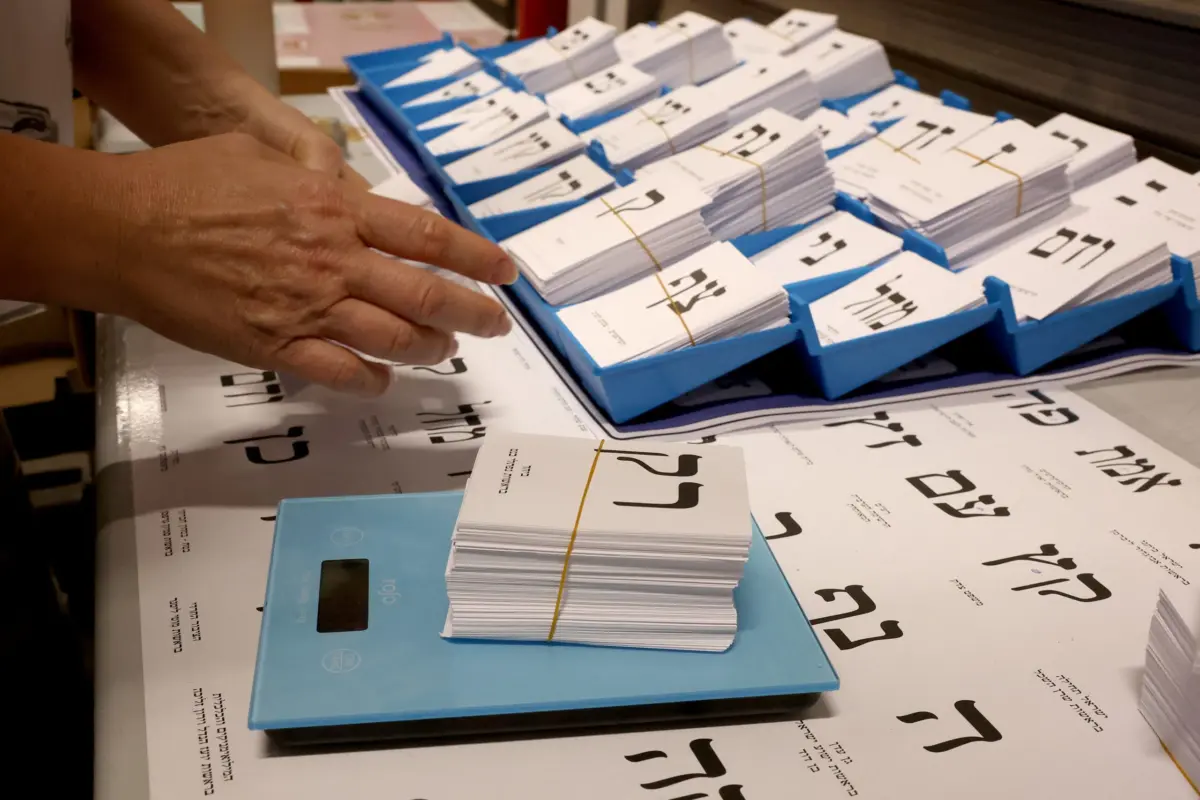
On October 27, Israel is set to conduct its general election for the 26th Knesset, marking a pivotal moment as citizens cast their votes for the first time since a period defined by intense regional conflicts, including what has been described as a genocide against Palestinians in Gaza and heightened tensions with Lebanon and Iran. This election arrives at a particularly charged juncture, with deep domestic divisions and an uncertain geopolitical landscape shaping the national discourse.
A Nation at a Crossroads: The Stakes of the 2026 Election
The upcoming election is more than just a routine democratic exercise; it is a critical referendum on Israel’s future direction, leadership, and its approach to security, governance, and its relations with its neighbours and the international community. The political climate is heavily influenced by the aftermath of recent hostilities, which have profoundly impacted public sentiment, economic stability, and national security perceptions.
Benjamin Netanyahu, Israel’s longest-serving prime minister with a cumulative 19 years in office across three separate stints (1996-1999, 2009-2021, and 2022-present), is once again seeking another term. His enduring political career has been marked by both significant achievements and persistent controversy, most notably his ongoing trial on corruption charges, which he vehemently denies. His Likud party, anchoring a far-right coalition, finds itself in a tight electoral contest against a Jewish-led opposition bloc. Current projections suggest neither side is on track to secure an outright majority in the 120-seat Knesset, Israel’s unicameral parliament, setting the stage for potentially protracted and complex coalition negotiations.

Approximately 7.3 million Israelis aged 18 and above are eligible to participate in this election, according to data from Israel’s Central Elections Committee. Polling stations across the country will generally operate from 7 AM to 10 PM. A key democratic principle observed is that anyone still queuing at the time of closing is entitled to cast their vote. Election day is observed as a national holiday, a measure intended to encourage maximum voter turnout.
The Intricacies of Israel’s Electoral System
Israel’s parliamentary democracy operates on a system of proportional representation, meaning citizens vote for a party list rather than individual candidates. This system, while ensuring broader representation, often leads to fragmented political landscapes and the necessity of coalition governments.
For a party to enter the Knesset, it must clear an electoral threshold of 3.25 percent of the national vote. Parties failing to meet this threshold have their votes discarded, a factor that frequently prompts smaller parties to merge before elections to enhance their chances of representation. Once in parliament, the term typically lasts four years, though political instability has often led to early elections, as evidenced by Israel’s recent history. There are no term limits for the prime minister, allowing individuals like Netanyahu to hold the office for extended periods.
Securing a majority in the Knesset requires 61 out of the 120 seats. However, no single party in Israel’s history has ever achieved this outright. Consequently, the period immediately following an election is typically dominated by intense coalition-building efforts. The President of Israel is tasked with mandating a party leader, usually from the largest party or the one most likely to form a government, to assemble a coalition. This leader is granted an initial 28 days to form a government, with a possible extension of up to 14 additional days. Should no party leader succeed in forming a viable government within this timeframe, the mandate can be passed to another leader, or, if all attempts fail, the country may be forced to hold another election. This mechanism underscores the critical importance of post-election negotiations and alliances in Israeli politics.

Seats are allocated proportionally based on each party’s share of the national vote. For instance, a party garnering 30 percent of the votes would roughly receive 30 percent of the Knesset seats. This system, while democratic, often empowers smaller parties, giving them significant leverage during coalition talks as their few seats can be crucial in reaching the 61-seat majority.
The Electorate: Inclusion, Exclusion, and Disenfranchisement
While approximately 7.3 million Israeli citizens are eligible to vote, a significant demographic of adults living under the Israeli government’s authority are excluded from participating in the elections. This disparity highlights a deeply contentious aspect of Israel’s political and demographic landscape.
Roughly three million adult Palestinians residing in Gaza, the occupied West Bank, and occupied East Jerusalem do not possess voting rights in the elections that determine the government controlling their borders, movement, and legal status. This disenfranchisement is a central point of criticism from international human rights organizations and a key factor in understanding the broader Israeli-Palestinian conflict.
In contrast, Jewish Israelis and the approximately 1.2 million Palestinian citizens of Israel are fully eligible to vote. This includes the more than 750,000 Israeli settlers living in the occupied West Bank and occupied East Jerusalem, who actively participate in electing the parliament that legislates over the land they inhabit. Most Palestinians in occupied East Jerusalem hold Israeli residency permits, not full citizenship. While they can vote in Jerusalem’s municipal council elections, they are barred from voting for the Knesset, creating a complex and often contradictory legal status.

The situation in the occupied West Bank presents a stark anomaly: an Israeli settler living in a settlement can vote in national elections, while a Palestinian family residing in a nearby village, subject to the same military authority and Israeli civil laws imposed in the settlements, cannot. This distinction underscores the dual legal systems operating in the territories and the profound implications for democratic representation.
Furthermore, most Israeli citizens living abroad are generally unable to vote, as Israel does not have a general absentee ballot system. Voters are required to be physically present in the country on election day. The only exceptions are diplomats and state emissaries, who are permitted to cast their ballots at Israeli missions abroad, often a week prior to the main election day (e.g., October 20 for this election). This policy, while aimed at maintaining electoral integrity, also limits the participation of a significant portion of the Israeli diaspora.
Campaign Battlegrounds: Key Issues Dominating the Discourse
The 2026 election cycle is shaped by a complex array of domestic and international issues that resonate deeply with the Israeli electorate. These issues often intersect, creating a challenging environment for all political parties seeking to gain an advantage.
- National Security and Regional Stability: Following the intense conflicts in Gaza, Lebanon, and the heightened tensions with Iran, national security remains the paramount concern for many Israelis. Debates revolve around military readiness, deterrence strategies, intelligence failures leading up to the conflicts, and the long-term approach to managing threats from Hamas, Hezbollah, and Iran’s nuclear program. Voters are scrutinizing leaders’ past performance and proposed solutions for ensuring the safety of Israeli citizens. The "genocide against Palestinians in Gaza" mentioned in the source material indicates a specific narrative and context surrounding the recent conflict, which will undoubtedly be a contentious point in the election, influencing how parties articulate their security policies and international relations.
- Economic Recovery and Cost of Living: The economic fallout from prolonged conflict, including disruptions to trade, tourism, and significant defense spending, has put pressure on the national budget and individual households. Inflation, housing prices, and the general cost of living are major concerns. Parties are presenting diverse economic platforms, ranging from fiscal austerity to social welfare expansions, aiming to alleviate financial burdens on citizens.
- Judicial Reform and Democratic Principles: The contentious issue of judicial reform, which deeply divided the nation in the preceding years, continues to loom large. Netanyahu’s previous government attempted to curb the power of the Supreme Court, sparking widespread protests and raising concerns about the separation of powers and Israel’s democratic foundations. The election is seen by some as a referendum on the future balance between the legislative, executive, and judicial branches.
- Relations with Palestinians and the Future of the Territories: While often overshadowed by immediate security concerns, the long-term status of relations with Palestinians and the future of the occupied territories remain critical. This includes debates over settlement expansion, the possibility of a two-state solution, and the management of Palestinian governance in the West Bank and Gaza. The recent conflicts have intensified these discussions, with some parties advocating for more assertive policies and others calling for diplomatic engagement.
- Socio-Religious Divides: Israel’s diverse society is characterized by deep socio-religious cleavages, particularly between secular and ultra-Orthodox communities. Issues such as mandatory military conscription for ultra-Orthodox men, funding for religious institutions, and the role of religious law in public life are perennial hot-button topics that influence coalition dynamics and voter alignment.
The Contenders: Personalities, Parties, and Alliances

The 2026 election is largely defined by the contrasting figures of Benjamin Netanyahu and the emerging leadership of the opposition.
Benjamin Netanyahu and the Right-Wing Bloc:
Netanyahu, facing trial on charges of bribery, fraud, and breach of trust, presents himself as the indispensable leader capable of navigating Israel through its complex security challenges. His Likud party, a conservative and nationalist force, leads a far-right coalition that includes deeply religious and ultranationalist factions. Key allies include:
- Religious Zionism: A national-religious party, often advocating for stronger Jewish identity in public life and expanded sovereignty over Judea and Samaria (the West Bank).
- Otzma Yehudit (Jewish Power): Led by Itamar Ben-Gvir, a highly controversial figure known for his extreme right-wing views and calls for aggressive action against Palestinians. His party’s influence has grown significantly in recent years.
- Shas and United Torah Judaism (UTJ): Ultra-Orthodox parties that typically align with the right-wing bloc in exchange for support on religious issues, such as funding for yeshivas and exemptions from military service. Shas notably left the government in July 2025 but remained in the broader coalition, indicating continued alignment. New Hope, a former right-wing faction, will merge into Likud for this election, consolidating some right-wing votes.
The Opposition Bloc and Gadi Eisenkot:
The opposition is largely coalescing around a bloc of four major Jewish-led parties, whose leaders have reportedly signed a declaration committing not to attack each other during the campaign and to join forces in forming a government post-election. This unity attempt aims to overcome the fragmentation that has plagued the opposition in previous cycles.
- Gadi Eisenkot (Yashar party): A former army chief, Eisenkot has emerged as the most likely candidate for prime minister from the opposition. His newly formed Yashar party is polling competitively with Likud, reflecting a desire among some voters for new leadership with a strong security background. His military experience and relatively moderate stance within the security establishment offer a distinct alternative to Netanyahu.
- The Together List: An alliance led by former Prime Ministers Naftali Bennett and Yair Lapid. Bennett, from the religious-nationalist right, and Lapid, from the centrist Yesh Atid, represent a broad ideological spectrum united by their opposition to Netanyahu.
- Yisrael Beiteinu: Led by Avigdor Liberman, a secular nationalist party that primarily draws support from Russian-speaking Israelis. Liberman has consistently opposed Netanyahu in recent years.
- Democrats: Led by Yair Golan, representing a more left-leaning, secular perspective.
The Arab-Majority Lists:
Palestinian citizens of Israel are represented by several parties, which face unique challenges and often find themselves in a precarious position within Israeli politics.
- Ra’am (United Arab List) and the Joint List (Hadash-Taal, Balad): These parties advocate for the rights of Palestinian citizens of Israel and often focus on social, economic, and political equality. Their participation in the election has historically been contentious. Last month, Israel’s Central Elections Committee voted to bar Ra’am and the Joint List from the election, alleging anti-Zionist platforms. However, the Supreme Court unanimously overturned these bans on October 2, ruling that the evidence did not meet the legal threshold for exclusion. This decision was a significant victory for Arab representation.
- Sami Abu Shehadeh (Balad): A Palestinian citizen of Israel who leads Balad, one of the parties in the Joint List, withdrew from the race after the court signalled that a majority of its judges would uphold his disqualification, highlighting the ongoing legal and political hurdles faced by these parties.
The Arab-led parties, despite facing exclusion attempts and often being marginalized by mainstream Jewish-led parties, could potentially hold the balance of power in a closely contested election. However, most leaders of the Jewish-led opposition bloc have historically ruled out forming a government with them, complicating paths to a stable majority.
A History of Instability: Israel’s Frequent Trips to the Polls

October 27 will mark Israel’s sixth national vote since 2019, a period of unprecedented political instability. However, this election is unique as it is the first in 38 years to arrive at the natural conclusion of a full Knesset term, indicating a fragile return to a semblance of electoral regularity after years of deadlocks and short-lived governments.
The cycle of instability began in April 2019, when Benjamin Netanyahu’s Likud party and Benny Gantz’s Blue and White party tied with 35 seats each. The inability to form a stable coalition led to a second election in September that year, which again resulted in a deadlock, with Blue and White securing 33 seats and Likud 32. Neither round yielded a government able to reach a majority.
A third election in March 2020 saw Likud win 36 seats to Blue and White’s 33, eventually leading to a short-lived Netanyahu-Gantz unity government. This fragile alliance, formed under the guise of national emergency during the COVID-19 pandemic, collapsed within a year due to deep ideological differences and disputes over the state budget and judicial appointments.
In March 2021, a fourth election resulted in Likud winning 30 seats to Yesh Atid’s 17. This time, an unprecedented eight-party coalition, led by Naftali Bennett and Yair Lapid, and notably including Ra’am, an Arab party, managed to form a government. This diverse coalition successfully ended Netanyahu’s 12-year continuous run as prime minister but proved inherently unstable, collapsing after just one year due to internal dissent and defections.
Netanyahu returned to power in November 2022, after a fifth election saw Likud secure 32 seats and Yesh Atid 24. He formed what has been widely described as Israel’s most right-wing government, comprising ultranationalist and ultra-Orthodox parties. This government’s attempts at radical judicial reform triggered mass protests and further deepened societal divisions.

The current polls indicate that neither the right-wing bloc nor the opposition bloc is clearly positioned to reach the crucial 61-seat majority, suggesting that the post-election period may once again be characterized by complex negotiations, potential deadlocks, and the looming possibility of yet another election if no stable government can be formed.
The Longest-Serving Leader: Benjamin Netanyahu’s Enduring Legacy
Since its foundation in 1948, the State of Israel has been led by 14 prime ministers. Among them, Benjamin Netanyahu stands out as by far the longest-serving, accumulating 19 years in office across three separate tenures: 1996 to 1999, 2009 to 2021, and from 2022 to the present. His closest rival in terms of longevity is David Ben-Gurion, Israel’s founding father, who led the country from 1948 to 1954 and again from 1955 to 1963.
Netanyahu’s long tenure is a testament to his political acumen, resilience, and ability to connect with a significant segment of the Israeli electorate. However, his legacy is also complicated by the ongoing corruption trial, which has cast a shadow over his leadership and fueled calls for his removal from office. The charges, including bribery, fraud, and breach of trust in cases known as Case 1000, 2000, and 4000, have been a constant backdrop to his recent political campaigns. Despite the legal challenges, Netanyahu has consistently maintained his innocence, portraying himself as a victim of a politically motivated witch hunt.
Regardless of the outcome on October 27, Netanyahu will remain as caretaker prime minister until a new government is officially sworn in, a process that could extend for weeks or even months if coalition negotiations prove difficult.

Potential Scenarios and Future Implications
The upcoming election holds profound implications for Israel’s domestic policy, regional standing, and the future of the Israeli-Palestinian conflict.
Coalition Possibilities:
- Right-Wing Government: A narrow victory for Netanyahu’s bloc would likely lead to a continuation of policies focused on national security, potentially accelerating judicial reform efforts and maintaining a hardline stance on Palestinian issues and settlement expansion. This could further deepen internal divides and strain relations with international allies.
- Center-Left/National Unity Government: An opposition victory, particularly if led by Gadi Eisenkot, could signal a shift towards more centrist policies, potentially seeking to mend societal rifts and re-evaluate relations with the international community. A broader national unity government, potentially including elements from both blocs, could be formed in a deadlock scenario, focusing on shared security and economic challenges, though such alliances have proven unstable in the past.
- Continued Deadlock: Given the tight polling, another hung parliament is a real possibility, leading to prolonged coalition talks or even a seventh election. This would perpetuate political instability, hinder long-term policy planning, and divert national attention from pressing issues.
Policy Shifts:
- Security Doctrine: The election outcome will influence Israel’s military and intelligence strategies, particularly concerning Gaza, Lebanon, and Iran. A right-wing government might favor more aggressive military action, while a more centrist government might explore a blend of deterrence and diplomatic engagement.
- Judicial Reform: The future of the judiciary is a major battleground. A strong right-wing government might reignite efforts to curtail judicial powers, while an opposition-led government would likely seek to protect judicial independence.
- Economy: Post-conflict economic recovery and addressing the cost of living will be central. Policies could range from market-oriented reforms to increased social spending, depending on the ideological makeup of the next government.
- Palestinian Relations: The election will significantly impact the trajectory of Israeli-Palestinian relations. A right-wing government might continue with settlement expansion and a more assertive stance on sovereignty, potentially closing doors to a two-state solution. A more moderate government might explore renewed diplomatic overtures, though significant breakthroughs would remain challenging.
Regional and International Impact:
The outcome will be closely watched by regional and international actors. A continuation of Netanyahu’s right-wing government could further complicate relations with Western allies, particularly regarding the Palestinian issue and judicial reforms. A new government might seek to rebuild bridges, re-emphasize diplomatic engagement, and potentially explore new regional alliances. The implications for the stability of the Middle East, especially in the wake of recent conflicts, are considerable.

Conclusion: Awaiting the Verdict
As Israelis prepare to cast their ballots, the nation stands at a critical juncture. The election is not merely about choosing a prime minister or a party; it is about determining the country’s future trajectory amidst unprecedented challenges. From the scars of recent conflicts to deep domestic divisions and an enduring struggle for political stability, the choices made on October 27 will reverberate across Israel and the broader Middle East for years to come. The outcome will shape not only who governs but also the very character and direction of the Israeli state.
