

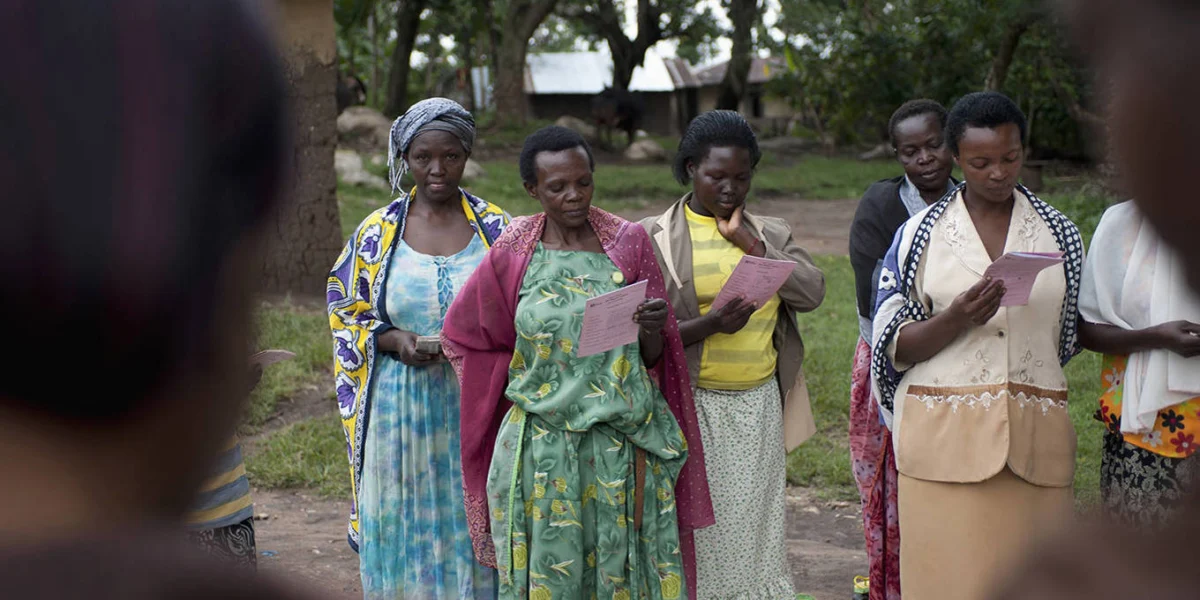
Facing a profound and expanding democracy deficit worldwide, millions of vulnerable individuals find themselves systematically excluded from avenues through which they can collectively articulate and advocate for their interests. This disempowerment, a critical impediment to equitable development and genuine self-determination, necessitates the creation of robust infrastructure for large-scale grassroots organizing. In this challenging landscape, faith-based institutions, grounded in principles of human dignity and pluralism, are uniquely positioned to play an instrumental role in building this essential framework, fostering a more inclusive and responsive global society.
A World of Disconnect: The Growing Crisis of Agency
The current global political and economic landscape is characterized by a significant divergence between the aspirations of citizens and the realities of governance. Pope Leo XIV, in his inaugural encyclical, Magnifica Humanitas, paints a stark dichotomy for humanity’s future: a top-down, technocratic model of rule, likened to the hubris of the Tower of Babel, versus a bottom-up, reconstructive approach reminiscent of Nehemiah’s efforts to rebuild Jerusalem amidst adversity. While the latter vision of collective action and empowerment holds immense promise, its practical implementation in an era increasingly dominated by concentrated wealth and influence appears, at first glance, to be an uphill battle.
However, history offers compelling evidence that such collective endeavors, even against formidable odds, are not only possible but essential. The critical challenge today lies in the pervasive lack of accessible and effective channels for ordinary people to translate this Nehemiah-like vision into tangible action. Data from the V-Dem Institute paints a sobering picture: in 2026, a staggering 74% of the global population resides under autocratic regimes. Even within ostensibly democratic nations, a growing disaffection is evident. Surveys indicate that while democracy remains a cherished ideal for the vast majority, substantial majorities express profound dissatisfaction with the functioning of their governments. This discontent stems from a widespread perception that elected officials are largely unresponsive to the concerns and views of their constituents. Factors such as rapid technological and cultural shifts, coupled with escalating economic insecurity, have demonstrably eroded public trust in liberal institutions and fueled a potent anti-elite sentiment that cuts across the political spectrum.
At the core of this widespread disillusionment lies a fundamental crisis of agency. Individuals feel increasingly powerless to influence the decisions that directly shape their lives and communities. As Pope Leo XIV observes in his encyclical, "most people are watching and waiting, observing from afar and merely hoping for the best." This passive stance, while understandable in the face of overwhelming systemic challenges, perpetuates a cycle of disempowerment.
The Perils of Top-Down Development: A Case Study from Haiti
This crisis of agency is acutely felt in the realm of global development. For decades, development projects have often been conceived and managed through a top-down approach, with blueprints drawn by international aid agencies and implementation delegated to foreign contractors and non-governmental organizations. This model, while sometimes well-intentioned, frequently fails to account for the lived realities and priorities of the very communities it aims to serve.
A poignant illustration of this disconnect emerged in 2023 when three prominent organizations – the People’s Ecumenical Organization for the Development of Haiti, Communities of Faith Organizing for Action in El Salvador, and Faith in Action International – made a compelling plea to the U.S. Agency for International Development (USAID). They requested a temporary six-week pause in USAID’s non-emergency work to allow agency staff to engage in direct listening sessions with affected populations, seeking to understand their actual needs and desired interventions. This initiative was prompted by the Haitian organization’s frustrating and ultimately fruitless efforts to influence USAID’s agricultural programming in their region. Despite the stated commitment of then-USAID Administrator Samantha Power to reforming the agency and embracing localization, the institutional inertia and inherent biases of a top-down system proved formidable. The agency’s response was, in essence, to offer a presentation on their existing work, delivered at the local organization’s office. The Haitian communities were left with little more than the hope for future improvements, a stark testament to the gap between stated intentions and on-the-ground impact.
This experience underscores a critical truth: democratic governments and international institutions bear a responsibility to establish meaningful and accessible channels through which the individuals most affected by their decisions can actively influence outcomes. While numerous reforms have been introduced in recent years – including participatory budgeting initiatives, civil society complaint mechanisms at international financial institutions, and efforts to redirect development funding towards local entities – their effectiveness often falls short of expectations.
The Unmet Demand: Building Infrastructure for Collective Power
The inherent limitations of even the most well-intentioned reforms, as exemplified by the USAID situation in Haiti, highlight a crucial gap in the global democracy deficit. Large, bureaucratic institutions, whether governmental or international, are often resistant to fundamental change and unlikely to achieve genuine accountability without sustained external pressure. This is the demand-side challenge: millions of people worldwide require organized structures and platforms through which they can collectively assert their interests and negotiate for their rights.
This is precisely where faith-based institutions, with their deep-seated commitment to human dignity, social justice, and pluralism, can emerge as indispensable catalysts. Their established networks, trusted community presence, and ethical grounding provide a fertile foundation for inspiring action and, crucially, for constructing the essential infrastructure needed for organizing at scale.
A Proven Model: The Catholic Campaign for Human Development
One compelling model for such infrastructure building is the Catholic Campaign for Human Development (CCHD) in the United States. Established in 1969 by U.S. Catholic bishops, the CCHD was directly inspired by Pope Paul VI’s 1967 encyclical, Populorum Progressio, which articulated a vision of integral human development. The fundamental aim of the CCHD is to empower low-income individuals and communities to address the root causes of poverty.
The CCHD operates on a unique funding model, raising capital through an annual collection and disbursing it in accordance with the Catholic principle of subsidiarity. This principle dictates that decisions should be made at the lowest practical level, closest to the people most directly affected. To be eligible for CCHD grants, organizations must not only demonstrate a commitment to systemic change in policies and structures that perpetuate poverty but also adhere to a strict governance requirement: at least half of their governing board members must be individuals who are involuntarily experiencing poverty.
For over five decades, the CCHD has been instrumental in fostering a vibrant anti-poverty ecosystem that has yielded concrete and measurable victories. These include advancements in minimum wage legislation, the establishment of paid family leave policies, the creation of more affordable housing units, and the expansion of health coverage for uninsured populations. Beyond these tangible policy wins, the CCHD has played a vital role in nurturing generations of grassroots leaders and organizations. Today, many of the most prominent local and state-level organizations, both secular and faith-based, that form the bedrock of democratic advocacy in the United States, trace their origins back to multi-year general support grants from the CCHD. These grants provided the foundational stability and capacity-building necessary for these organizations to grow and thrive.
Scaling Up: The Vision for an International Campaign for Integral Human Development
The success of the CCHD offers a powerful blueprint for addressing the global democracy deficit. The world urgently needs an analogous mechanism – perhaps an "International Campaign for Integral Human Development" – that can provide sustained, long-term funding to support the establishment and expansion of grassroots organizations. These organizations must be sufficiently empowered to exert meaningful influence on policy at both national and international levels.
Such an international initiative could draw upon the rich experience of the Catholic Church while actively incorporating diverse faith traditions and engaging secular funders who have already voiced strong support for shifting decision-making power to local communities. Leading global foundations, alongside bilateral donors, have increasingly recognized the imperative of locally-led development.
Mitigating Bureaucracy, Maximizing Impact
Acknowledging the inherent risk of any large-scale global fund becoming mired in bureaucracy and adopting a top-down approach, the CCHD model offers a crucial safeguard. Its success lies in the strategic combination of clear, principled criteria with a decentralized operational structure. By empowering local and regional bodies to make funding decisions, as the CCHD does, the challenges of operating a joint fund across vastly different cultural, political, and economic contexts can be significantly mitigated. The logistical complexities would be substantial, but the potential rewards are immense. Dedicating even a modest fraction, perhaps 1% of current private development financing, to robust grassroots organizing could prove to be a truly transformative investment.
Cultivating Justice Through Dialogue and Action
In Magnifica Humanitas, Pope Leo XIV identifies listening and dialogue as "the common ground upon which to cultivate justice and fraternity." It is crucial to understand that dialogue, in this context, is not the absence of conflict but rather the indispensable precursor to meaningful change. Without the friction of differing perspectives and the engagement of diverse voices, true transformation remains elusive. For millions of the world’s most vulnerable people, trapped in cycles of powerlessness, the ability to participate in such dialogue and translate its outcomes into action is paramount.
If a significant portion of development funding were strategically channeled to amplify the priorities of these marginalized communities, they would be empowered to actively engage in what Pope Leo XIV terms "the ‘construction site’ of our time." This site is not merely one of physical rebuilding but of constructing a more just, equitable, and humane future for their communities and for the global community as a whole. By investing in the infrastructure of grassroots organizing, the world can move beyond passive observation and towards active, collective participation in shaping a better tomorrow.
