

The global imperative to transition away from fossil fuels presents a complex challenge, particularly for regions historically reliant on extractive industries. Ensuring this transition is equitable, or "just," demands meticulously crafted strategies that empower local communities to develop alternative livelihoods tailored to their unique strengths and needs. A promising mechanism for achieving this lies in the establishment of regional endowment funds, designed to channel revenue from fossil fuel extraction into sustainable, community-driven economic diversification initiatives. This approach offers a crucial pathway to mitigate the adverse socio-economic impacts of decarbonization and foster long-term prosperity in affected areas.
The Indonesian Context: A "Ticking Time Bomb" in Coal Country
Indonesia, an archipelago nation with a significant reliance on fossil fuels, particularly coal, finds itself at a critical juncture. Recent economic assessments have characterized the nation’s financial outlook as a "ticking time bomb," underscoring the urgent need for economic restructuring. In numerous regencies and provinces across the country, coal mining has for decades served as the bedrock of the Gross Domestic Product (GDP) and the primary source of employment. The pursuit of a global energy transition, therefore, raises a particularly sensitive political question: how can Indonesia simultaneously advance its climate change mitigation goals and foster robust economic diversification and growth in these heavily coal-dependent regions?
The seemingly straightforward answer – broadening income sources to reduce vulnerability to economic shocks – proves far more intricate in practice. A truly just energy transition necessitates a profound societal and economic transformation. This includes not only the creation of meaningful and sustainable job opportunities but also the crucial task of closing human capital gaps and alleviating persistent poverty. Most importantly, these efforts must be deeply localized, recognizing that each region possesses distinct inherent strengths and that each community harbors specific needs and aspirations that must be addressed. A one-size-fits-all approach is destined to fail.
Pulau Panggung: A Microcosm of Vulnerability and Opportunity
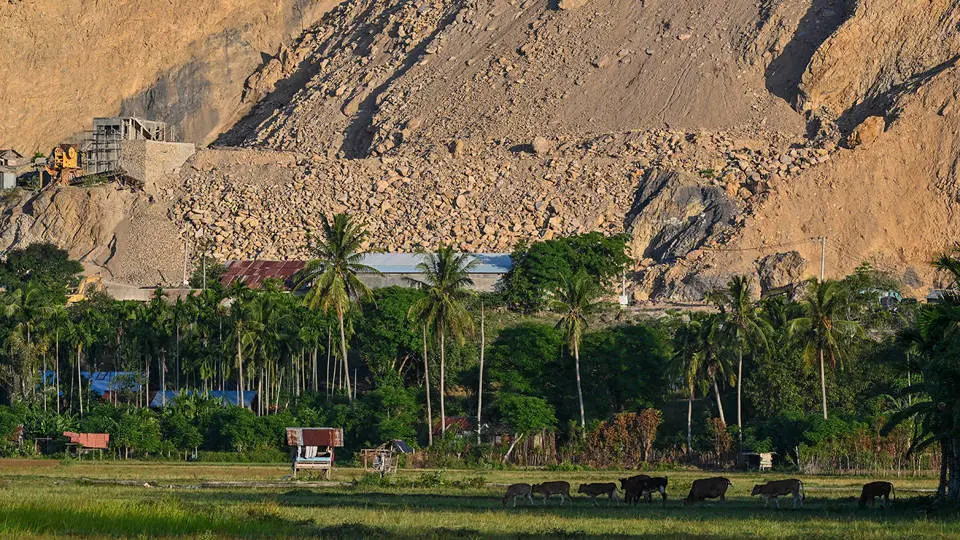
The village of Pulau Panggung, nestled within the Muara Enim regency of South Sumatra province, serves as a stark illustration of this vulnerability. Muara Enim is widely recognized as one of Indonesia’s most coal-dependent regions. Research conducted by WALHI Sumatera Selatan (Friends of the Earth South Sumatera) in collaboration with the Indonesian Center for Environmental Law reveals a startling dependency: an overwhelming 56.7% of Pulau Panggung’s residents are directly employed in the coal mining sector, a figure that encompasses both permanent workers and casual laborers.
The economic landscape of Pulau Panggung underwent a dramatic transformation in the early 1990s with the advent of coal mining. Prior to this, agriculture had been the community’s primary economic engine, sustaining its population for generations. However, the allure and perceived stability of mining jobs led to a widespread abandonment of farming practices. Now, as coal mining companies grapple with expiring contracts and implement efficiency measures, the livelihoods of Pulau Panggung’s villagers are increasingly precarious. The critical challenge is that, unlike in the past, there is no readily available or established substitute to absorb this displaced workforce.
Charting a New Economic Course: Agriculture, Tourism, and Skill Development
The post-coal economic future for Pulau Panggung could potentially pivot towards a revitalized agricultural sector and the burgeoning field of nature-based tourism. However, the realization of these prospects hinges on several critical factors. Firstly, a healthy and restored ecosystem is a prerequisite for both sustainable agriculture and attractive tourism. This necessitates a stringent enforcement of existing regulations that obligate mining companies to fulfill their environmental remediation obligations, including the restoration of mined lands.
Secondly, the community’s historical shift away from farming decades ago means that a significant skills gap exists. To successfully transition back to agriculture, residents would require comprehensive training in modern, sustainable farming techniques. Furthermore, opportunities must be created for them to develop new skills pertinent to alternative livelihoods, such as digital marketing, which could be instrumental in promoting local produce and tourism offerings to a wider audience. This highlights the need for a multifaceted approach that addresses both environmental restoration and human capital development.
Structural Barriers and the Hindrance of Top-Down Policy
The obstacles to establishing new livelihoods in places like Pulau Panggung are not solely economic; they are also deeply structural. A persistent and pervasive issue across Indonesia is the ambiguous legal status of land, which can complicate development initiatives and create uncertainty for investors and communities alike.
However, a more significant and pervasive challenge, affecting Pulau Panggung and countless other communities, is the absence of formal, effective channels for developing and implementing localized economic initiatives. The core principle of community-based economic transformation dictates that it must be built upon the foundation of each village’s unique strengths. Unfortunately, Indonesia’s prevailing top-down policymaking and regulatory framework, particularly within the energy sector, often inadvertently stifles efforts to harness and maximize these local capacities.
The Indonesian government does provide general directives for transition planning. These are theoretically meant to be elaborated upon by provincial and regency-level plans, which should then identify the specific unique attributes of each locale. However, a review of the 2025-2029 South Sumatra medium-term regional development plan, for instance, offers no concrete guidance on how economic transformation will be practically executed. It merely acknowledges that efforts to move away from a coal-based economy remain "suboptimal." While the plan recognizes the continued role of natural resources, it fails to articulate how these resources can be leveraged in a manner that is sensitive to the specific needs of each village and that rigorously avoids further environmental degradation.
A Global Phenomenon: Bridging the Policy Gap
This deficit in localized planning and implementation is not an issue confined to Indonesia. Many governments worldwide grapple with similar lacunae in their energy transition policies. The crucial insight for policymakers, therefore, lies in enabling a more robustly bottom-up approach by concentrating on two fundamental objectives.
Empowering Communities Through Direct Involvement
The first and perhaps most critical objective is the direct and meaningful involvement of affected communities in the transition planning process. Entrusting transition planning to local governments, while simultaneously granting communities a genuine and influential role in decision-making, is paramount. This collaborative approach will equip both officials and private sector actors with the insights necessary to design interventions that are not only effective but also tailored to expand employment opportunities for workers at risk of displacement.
The integration of community-driven initiatives into national and regional policies must commence with comprehensive local assessments. Before any transition plan is formally approved, governments should undertake participatory mapping exercises. These exercises should meticulously document existing livelihoods, land tenure arrangements, the current skill sets of the local workforce, and, crucially, the inherent strengths and potential of the community and its environment. In the case of Pulau Panggung, such detailed mapping would vividly highlight its latent potential in agriculture and eco-tourism, providing concrete data to inform future development strategies.
The Promise of Regional Endowment Funds
The second vital objective for policymakers is to actively explore and establish regional funds that can systematically redirect revenue generated from mining and fossil-fuel production towards supporting community-based transition initiatives. A compelling model for this approach is the Alaska Permanent Fund. Established in 1976, this pioneering sovereign wealth fund invests a portion of the state’s oil and mining revenues, with the long-term economic benefit of all current and future Alaskans in mind.
Managed by a state-owned corporation, the Alaska Permanent Fund plays a pivotal role in financing essential public services, including education, healthcare, and critical infrastructure. By adopting a similar model, policymakers in both developed and developing nations can create a sustainable economic transition. Such funds, when operated with transparency and accountability, empower local communities by allowing them to directly determine how these revenues are allocated to address their most pressing priorities. This direct control fosters a sense of ownership and ensures that investments are aligned with local needs and aspirations.
The Urgency of Action: Seizing the Moment
The window of opportunity to establish these vital regional endowment funds is rapidly narrowing. Policymakers in Indonesia and across the globe must act with a sense of urgency, before the flow of mining and fossil-fuel revenues inevitably diminishes. A strategic first step would involve initiating pilot programs in demonstrably affected regions, such as the Muara Enim regency. These pilot projects would serve as invaluable test cases, showcasing the tangible benefits and operational viability of the endowment fund model.
The implications of inaction are profound. Without timely intervention and the establishment of robust financial mechanisms, communities like those in Muara Enim risk being left with well-intentioned plans for economic transition but critically, without the necessary capital to implement them. This would not only undermine the goals of a just transition but could also exacerbate existing socio-economic inequalities and lead to significant hardship for those most directly impacted by the shift away from fossil fuels. The future prosperity and stability of these regions depend on proactive, localized, and financially sound strategies that empower communities to chart their own course towards a sustainable and equitable future. The time for decisive action is now.
