

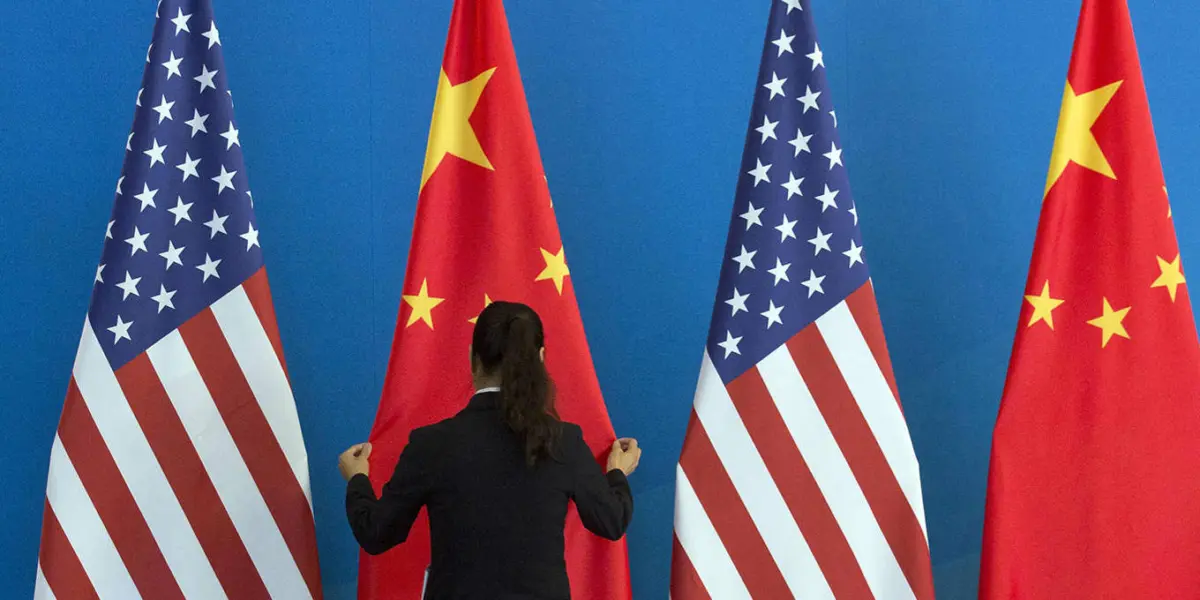
The European Central Bank’s annual research conference convened last month, a significant gathering of economists and policymakers to dissect the evolving landscape of global economic strategy. This year’s focus on "geoeconomics"—the intricate interplay of economic power and geopolitical maneuvering—proved particularly illuminating, drawing insights from prominent figures like Nobel laureate Paul Krugman. Krugman, in his address, posited that in the realm of "weaponized interdependence," the European Union possesses a distinct advantage over both the United States and China. However, his assertion, relying heavily on Purchasing Power Parity (PPP)-adjusted Gross Domestic Product (GDP) to neutralize currency fluctuations, has ignited debate regarding the robustness of this metric itself, particularly in light of its own inherent volatility.
Unpacking "Weaponized Interdependence"
The concept of "weaponized interdependence," as explored at the ECB conference, refers to a nation’s capacity to leverage its economic connections—be it through trade, investment, or access to critical resources—to achieve strategic geopolitical objectives. This can manifest in various forms, from imposing sanctions and trade restrictions to controlling the flow of essential goods or technologies. A prime example often cited is China’s past threats to restrict exports of rare-earth minerals, a vital component in many advanced technologies, to exert pressure on trading partners.
The inclusion of geoeconomics as a central theme at the ECB’s annual research conference underscores a growing recognition among central banks and international financial institutions of the profound impact that non-traditional economic tools are having on global stability and power dynamics. The conference, held in September 2026, brought together leading academics, central bank officials, and international economists to share cutting-edge research and foster dialogue on the economic challenges of the 21st century. The proceedings, typically a platform for presenting theoretical models and empirical findings, this year delved deeply into the practical application of economic policy in an increasingly complex geopolitical environment.
Krugman’s Argument and the PPP Quandary
Paul Krugman, a distinguished economist renowned for his work on international trade and economic geography, presented his findings during a keynote address. His central thesis argued that the EU’s unique position within the global economic system grants it superior leverage in situations where economic interdependence is strategically employed. He highlighted the EU’s extensive internal market, its stringent regulatory frameworks, and its significant role in global supply chains as key factors contributing to this power.
To quantify and compare the economic might of major global players, Krugman employed Purchasing Power Parity (PPP)-adjusted GDP. This metric aims to provide a more accurate comparison of economic output between countries by adjusting for differences in the cost of living and price levels. By using PPP, the influence of volatile nominal exchange rates, which can fluctuate significantly due to market forces, investor sentiment, and speculative trading, is mitigated. This approach is particularly relevant when analyzing long-term economic trends and structural economic power, as opposed to short-term financial market movements.
However, the very nature of PPP adjustment introduces its own set of complexities and potential for volatility. PPP calculations rely on extensive price surveys of a wide basket of goods and services in different countries. The composition of this basket, the methodologies used for data collection, and the inherent differences in consumption patterns across economies can lead to significant variations in PPP estimates. Furthermore, these estimates are not static; they are subject to revisions as new data becomes available and methodologies are refined. This inherent fluidity in PPP data can, in turn, introduce a different form of volatility, potentially obscuring the very stability Krugman sought to capture.
Supporting Data and Economic Indicators
To further understand the nuances of geoeconomic power, it is crucial to examine a range of economic indicators beyond a single GDP metric. The International Monetary Fund (IMF) and the World Bank consistently publish data that offers a broader perspective. As of the latest available projections for 2026, the nominal GDP figures place the United States and China as the two largest economies globally. However, when adjusted for PPP, China’s GDP often surpasses that of the United States, reflecting its vast population and lower average price levels.
The European Union, as a bloc, represents a significant economic entity, with a combined nominal GDP that rivals or exceeds that of the United States, depending on the specific year and the inclusion of all member states. The EU’s internal market, characterized by the free movement of goods, services, capital, and people, creates an unparalleled economic zone. This integration fosters substantial intra-EU trade, making the bloc highly resilient to external shocks and providing it with considerable bargaining power in international trade negotiations.
Data from Eurostat, the statistical office of the European Union, consistently shows a high degree of economic integration among member states. For instance, intra-EU trade accounts for a substantial portion of the total trade of individual member states, underscoring the internal strength and interdependence within the Union. This internal coherence, coupled with the EU’s commitment to multilateralism and its significant regulatory influence on global standards (e.g., GDPR, environmental regulations), positions it as a powerful actor in geoeconomic strategies.
In contrast, while China’s economic output is immense, its economic structure, though increasingly diversified, still relies heavily on exports and manufacturing. Its "weaponized interdependence" often stems from its control over critical supply chains and its ability to leverage its vast domestic market as a tool of influence. The US, with its technological innovation, deep financial markets, and global reserve currency status, possesses a different set of economic levers, often exercised through financial sanctions and its influence in international financial institutions.
Chronology of Geoeconomic Shifts
The concept of geoeconomics has gained prominence in recent decades, evolving alongside the globalization of economies and the rise of new economic powers.
- Late 20th Century: The post-Cold War era saw a surge in globalization, with a focus on trade liberalization and the establishment of international economic institutions like the World Trade Organization (WTO). Economic interdependence was largely viewed as a force for peace and prosperity.
- Early 21st Century: The rise of China as a global economic powerhouse began to shift the paradigm. Its rapid industrialization and integration into global supply chains, coupled with its assertive foreign policy, led to a greater awareness of the potential for economic leverage.
- 2010s: Events such as the Eurozone sovereign debt crisis and growing trade tensions, particularly between the US and China, highlighted the vulnerabilities inherent in global economic interconnectedness. The concept of "weaponized interdependence" started to gain traction in academic and policy circles.
- 2020s: The COVID-19 pandemic exposed supply chain fragilities and prompted a re-evaluation of economic dependencies. The ongoing geopolitical tensions, including the conflict in Eastern Europe and increased competition between major powers, have further amplified the focus on geoeconomics. The ECB’s annual research conference in September 2026, with its explicit theme, signifies the continued and heightened importance of this field.
Potential Reactions and Inferences
While direct reactions from the US and China to Krugman’s specific claims at the ECB conference may not be immediately available in the provided text, it is reasonable to infer potential responses based on their established economic and geopolitical stances.
The United States, while acknowledging the economic power of the EU, would likely emphasize its own unique strengths, such as its technological innovation, the global dominance of the US dollar, and its robust venture capital ecosystem. Officials might point to instances where US sanctions have proven effective in altering the behavior of other nations, or highlight the agility of its private sector in adapting to geopolitical shifts. They might also question the stability and future trajectory of the EU’s economic integration, particularly in light of internal political divergences among member states.
China, on the other hand, might focus on its sheer scale of production and its indispensable role in global manufacturing and supply chains. Beijing would likely underscore its long-term development strategies, such as the Belt and Road Initiative, as evidence of its growing global economic influence. Chinese officials might also critique the methodologies used in PPP calculations, or argue that the EU’s economic power is inherently constrained by its complex governance structures and reliance on consensus-building among member states. They could also highlight their own efforts to de-dollarize and increase the international use of the renminbi as a counterpoint to US financial dominance.
Broader Impact and Implications
Krugman’s assertion, even with its methodological caveats, carries significant implications for the future of global economic governance and international relations. If the EU indeed possesses a superior capacity for "weaponized interdependence," it could lead to a recalibration of global power dynamics.
- Regulatory Power: The EU’s ability to set global standards through its regulatory frameworks (e.g., in data privacy, environmental protection, and digital markets) could be further amplified. Companies worldwide may find themselves compelled to adhere to EU standards to access its vast market, effectively extending the EU’s economic influence beyond its borders.
- Trade Negotiations: In future trade negotiations, the EU could enter with a stronger hand, leveraging its integrated market and regulatory prowess to secure more favorable terms. This could lead to increased scrutiny of trade practices by other major economic blocs.
- Technological Sovereignty: The focus on geoeconomics highlights the strategic importance of technological self-sufficiency and control over critical industries. The EU may accelerate its efforts to bolster its own technological capabilities and reduce dependencies on external actors, particularly in sectors deemed strategically vital.
- Challenges to Multilateralism: A greater reliance on "weaponized interdependence" by any major bloc could pose challenges to the existing multilateral trading system, which is built on principles of non-discrimination and cooperation. It could lead to a more fragmented global economy, characterized by competing economic blocs and strategic decoupling.
The debate surrounding Krugman’s analysis, particularly the reliance on PPP-adjusted GDP, underscores the ongoing need for sophisticated and robust economic metrics to understand the complex realities of the 21st-century global economy. As geoeconomics continues to shape international affairs, the ability to accurately assess and compare economic leverage will be paramount for policymakers and analysts alike. The insights gleaned from the ECB’s annual research conference serve as a crucial reminder that economic power is not solely defined by sheer output, but by the strategic deployment of interconnectedness in an increasingly contested global landscape.
