

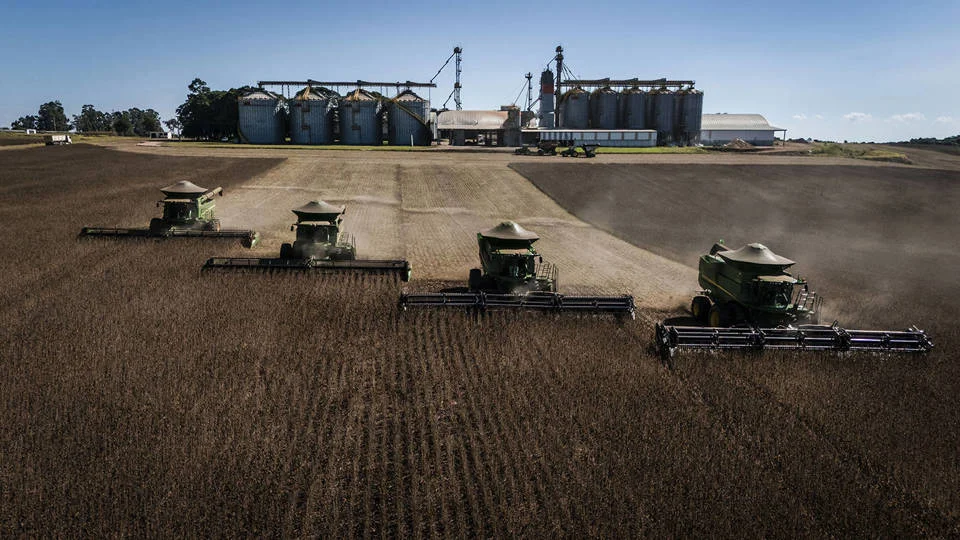
Latin America and the Caribbean (LAC) is a regional agricultural powerhouse. Although it accounts for just 8% of the global population, LAC contributes nearly 16% of agricultural exports, with Mexican avocados, Argentine beef, Colombian coffee, and Chilean salmon now considered staples in supermarkets and households around the world. However, the remarkable productivity growth that propelled this agricultural transformation across the region has significantly decelerated in recent years. Farmers are increasingly substituting efficiency gains with the costly application of inputs, a trend that, without a renewed commitment to sustained public investment, could jeopardize the region’s global competitiveness and potentially unravel decades of hard-won progress in food security and economic development.
A Shifting Agricultural Landscape
For decades, Latin America and the Caribbean have been lauded for their ability to achieve substantial gains in agricultural output. This success was largely driven by a combination of factors: the adoption of new technologies, improved farming practices, and a burgeoning global demand for agricultural commodities. Between the early 2000s and the late 2010s, many LAC countries witnessed impressive increases in yield per hectare and overall productivity. This allowed them to not only feed their growing populations but also to emerge as major players in international food markets. The economic benefits have been substantial, contributing significantly to GDP, export revenues, and rural employment in numerous nations.
However, recent analyses suggest a worrying trend. The era of rapid, efficiency-driven productivity growth appears to be waning. Instead of cultivating smarter and more resource-efficient methods, a growing number of farmers are turning to increased use of fertilizers, pesticides, and genetically modified seeds. While these inputs can boost yields in the short term, they come with significant economic and environmental costs. The reliance on external inputs can make agricultural production more vulnerable to price volatility in global markets and can lead to increased environmental degradation, including soil depletion and water contamination.
The Cost of Stagnation: Economic and Social Repercussions
The implications of this productivity slowdown are far-reaching. Economically, a loss of competitiveness could mean reduced export earnings, a decline in foreign investment in the agricultural sector, and a potential widening of trade deficits for countries heavily reliant on agricultural exports. For instance, a significant portion of the GDP of countries like Brazil and Argentina is directly or indirectly linked to agriculture. Any downturn in this sector would have ripple effects across their economies, impacting employment, income levels, and government revenues.
Socially, the repercussions could be equally severe. Rural communities, which often depend on agriculture for their livelihoods, could face increased hardship. If farming becomes less profitable due to rising input costs and stagnant yields, it could exacerbate rural-to-urban migration, potentially straining resources in already crowded cities and leading to greater social inequality. Furthermore, a decline in domestic agricultural productivity could threaten food security, making essential foodstuffs more expensive and less accessible for vulnerable populations.
Historical Context: A Legacy of Innovation and Investment
The current challenges are a stark contrast to the period of significant agricultural advancement that characterized much of the late 20th and early 21st centuries in LAC. This period saw the region embrace and adapt innovations that had a transformative impact. The Green Revolution, while originating elsewhere, had a profound influence, introducing high-yield crop varieties and improved irrigation techniques. Subsequent decades brought advancements in mechanization, soil science, and crop management.
Crucially, this progress was often underpinned by sustained public investment in agricultural research and development (R&D), extension services, and rural infrastructure. Governments and regional institutions played a vital role in funding research institutions, disseminating knowledge to farmers, and developing policies that supported agricultural growth. For example, the establishment of national agricultural research institutes in many LAC countries provided the scientific backbone for yield improvements. Similarly, investments in rural roads, storage facilities, and access to credit enabled farmers to bring their produce to market more efficiently and to adopt new technologies.
The Decline in Public Investment: A Critical Juncture
The current narrative suggests a significant erosion of this vital public investment. Many governments in the region have faced fiscal constraints, leading to budget cuts in agricultural research, education, and infrastructure development. This has created a vacuum that is being filled, albeit with less sustainable and more costly solutions, by increased reliance on purchased inputs.
This trend is not uniform across all countries, but the general pattern points to a systemic issue. The lack of consistent, long-term public funding for agricultural R&D means that the pipeline of new, innovative solutions – drought-resistant crops, more efficient water management techniques, pest-resistant varieties that reduce the need for chemical pesticides – is drying up. Without this innovation, the region is effectively running on past achievements, with diminishing returns.
The Input Dependency Trap: A Growing Concern
The shift from efficiency-driven growth to input-driven growth represents a dangerous dependency trap. Farmers who rely heavily on purchased inputs are exposed to global price fluctuations for fertilizers, fuel, and agrochemicals. A sudden spike in the price of a key fertilizer, for example, can drastically reduce profit margins and even lead to financial losses. This creates an inherent instability in the agricultural sector.
Moreover, the environmental consequences of excessive input use are a growing concern. Over-reliance on chemical fertilizers can lead to soil acidification and nutrient imbalances, reducing the long-term fertility of the land. Excessive pesticide use can harm beneficial insects, contaminate water sources, and pose risks to human health. These environmental costs, while often not immediately reflected in market prices, represent a significant long-term burden on both the environment and the economy.
Expert Perspectives and Inferred Reactions
Experts in agricultural economics and development have voiced concerns about this trajectory. Dr. Maria Elena Rodriguez, a senior agricultural economist at a prominent Latin American think tank, has stated, "The region is at a crossroads. The easy gains from input intensification are largely exhausted, and the environmental and economic costs are becoming too high. We need a return to a focus on sustainable intensification, which means producing more with less, through innovation and improved practices, not just more chemicals."
While official government statements may highlight ongoing efforts to support the agricultural sector, the data on public investment suggests a disconnect. Agricultural ministries often emphasize the importance of farmers and the sector’s contribution to national economies. However, without concrete increases in funding for research, extension, and infrastructure, these statements risk being seen as insufficient to address the systemic challenges. Private sector stakeholders, such as large agribusinesses, may be investing in proprietary technologies, but their focus might not always align with the broader needs of smallholder farmers or the long-term sustainability goals of the region.
The Path Forward: Reinvesting in Innovation and Sustainability
The authors of the report that highlighted this trend, Ana María Ibáñez, Lina Salazar, and Maja Schling, implicitly advocate for a renewed commitment to public investment. Their analysis suggests that simply hoping for the market to correct the situation is insufficient. A strategic and sustained approach is required.
Key Recommendations and Potential Interventions:
- Revitalizing Agricultural R&D: Significant increases in funding for national and regional agricultural research institutions are essential. This funding should be directed towards developing climate-resilient crop varieties, precision agriculture techniques, sustainable pest and disease management strategies, and water-efficient irrigation systems.
- Strengthening Extension Services: Modernizing and expanding agricultural extension services is crucial to ensure that research findings and best practices reach farmers, particularly smallholders. This could involve leveraging digital technologies, farmer-to-farmer learning networks, and tailored training programs.
- Investing in Rural Infrastructure: Improved infrastructure, including roads, storage facilities, and communication networks, can reduce post-harvest losses, improve market access, and lower transaction costs for farmers.
- Promoting Sustainable Practices: Policies and incentives should be designed to encourage the adoption of environmentally friendly farming practices, such as agroforestry, conservation tillage, and integrated pest management.
- Fostering Public-Private Partnerships: Collaborative efforts between governments, research institutions, and the private sector can accelerate the development and adoption of innovative technologies and sustainable solutions.
- Data-Driven Policy Making: Continued rigorous data collection and analysis are needed to monitor productivity trends, identify emerging challenges, and evaluate the effectiveness of policy interventions.
A Historic Opportunity for a Resilient Future
The agricultural sector of Latin America and the Caribbean stands at a critical juncture. The productivity gains of the past have laid a strong foundation, but the current reliance on costly inputs signals a need for a strategic pivot. Failure to address this slowdown risks undermining economic stability, exacerbating social inequalities, and jeopardizing food security.
By recommitting to robust public investment in innovation, research, and sustainable practices, the region can not only reverse the current trend but also position itself for a more resilient and prosperous agricultural future. This is not merely an economic imperative; it is a strategic necessity for ensuring the long-term well-being of its people and its continued role as a vital contributor to global food supply. The lessons of the past decades, which demonstrated the power of innovation and investment, offer a clear roadmap for navigating the challenges of the present and building a more sustainable agricultural landscape for generations to come. The window of opportunity to secure this future is now, requiring decisive action and a shared vision for agricultural excellence in Latin America and the Caribbean.
