

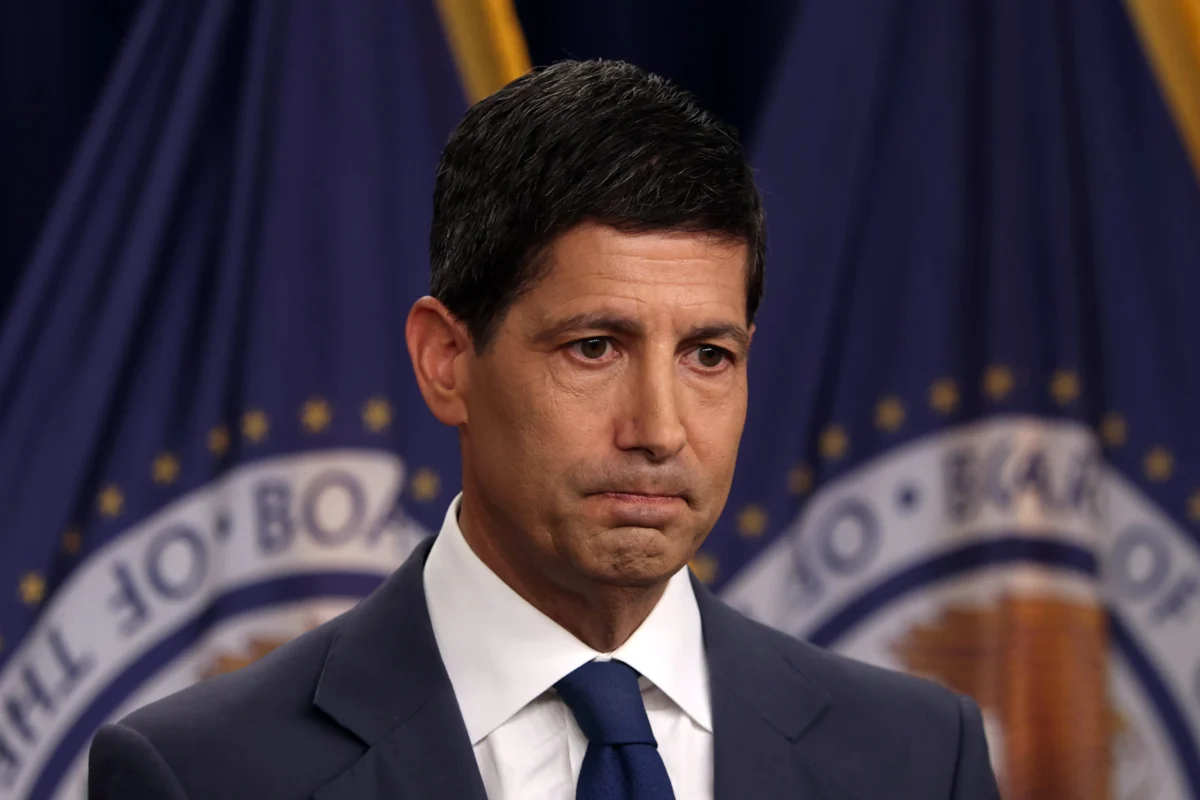
Financial markets opened Thursday with a complex array of signals as investors weighed contrasting earnings reports from Silicon Valley titans against a backdrop of escalating military tensions in the Middle East and domestic political friction in Washington. Stock futures trended higher during the pre-market session, attempting a recovery following a broad retreat on Wednesday. The sentiment remains fragile, however, as Federal Reserve Chair Kevin Warsh prepares to address the public following a series of high-stakes briefings at Federal Reserve Headquarters. The central bank’s stance on interest rates remains the primary pivot point for a market grappling with the dual pressures of high-tech infrastructure costs and volatile global energy prices.
Divergent Paths for Megacap Technology: Meta and Microsoft
The technology sector, which has served as the engine for market growth throughout the mid-2020s, provided a bifurcated outlook this morning. Meta Platforms, the parent company of Facebook and Instagram, saw its shares tumble by 10% in early trading. The decline followed a second-quarter earnings report that failed to meet Wall Street’s expectations on several critical fronts. Most notably, Meta’s free cash flow has begun to contract significantly, a result of the company’s aggressive and sustained investment in artificial intelligence (AI) infrastructure.
CEO Mark Zuckerberg has consistently signaled that the transition to an AI-first company would require massive capital expenditures, but the latest figures suggest that the "payoff" period for these investments may be further away than analysts initially modeled. Furthermore, Meta’s revenue forecast for the upcoming quarter was softer than anticipated, raising questions about the resilience of the digital advertising market in a period of shifting consumer behavior.
In sharp contrast, Microsoft Corporation demonstrated why it remains a favorite among institutional investors. Its shares rose by more than 9% after the company surpassed revenue expectations and provided an optimistic outlook for the remainder of the fiscal year. Microsoft executives emphasized that they are accelerating capital spending specifically to meet the insatiable demand for cloud-based AI services. Unlike Meta, Microsoft appears to be successfully translating its AI investments into immediate enterprise-level revenue, particularly through its Azure cloud platform and integrated Copilot services.
The market now turns its focus toward Apple and Amazon, both of which are scheduled to release their quarterly results after the closing bell. These reports will be critical in determining whether the tech sector’s recent volatility is a temporary correction or a sign of a more structural shift in how investors value high-growth companies.
Geopolitical Escalation: US-Iran Confrontation and the Strait of Hormuz
International security concerns reached a fever pitch this morning as Tehran issued fresh threats of retaliation against American interests. This follows a significant military operation on Wednesday night, in which the U.S. Central Command (CENTCOM) launched strikes against dozens of Iranian military targets. The Pentagon characterized the action as a "powerful response" to a thwarted Iranian attempt to strike American forces stationed in the Middle East.
The Iranian Revolutionary Guard has responded with bellicose rhetoric, warning that any nation providing logistical or territorial assistance to Washington will face a "harsh response." Of particular concern to global markets is Iran’s claim of "full control" over the Strait of Hormuz. The strait is the world’s most important oil transit chokepoint, through which approximately one-fifth of the world’s total oil consumption passes daily.
Reports from the region indicate that commercial tanker traffic has largely ground to a halt as shipping companies wait for security guarantees. While Brent crude futures surged nearly 8% during the height of the hostilities on Wednesday, prices saw a slight downward correction this morning. However, energy analysts warn that a prolonged closure of the Strait of Hormuz could send oil prices into triple digits, potentially reigniting inflationary pressures that the Federal Reserve has been working to extinguish.
The Consumer Sector: Food Safety Concerns and Earnings Resiliency
The fast-casual and quick-service restaurant industries are facing a unique challenge as a health crisis intersects with the quarterly reporting season. Chipotle Mexican Grill reported strong second-quarter results yesterday, beating analyst expectations on both the top and bottom lines and raising its full-year same-store sales forecast. Despite this, the stock’s 6% gain was tempered by a cautionary note from management regarding a recent drop in sales.
The downturn is attributed to consumer anxiety surrounding a cyclospora outbreak. Cyclospora is a microscopic parasite that causes intestinal illness and has recently been linked to contaminated fresh lettuce. While Chipotle executives were quick to clarify that their internal supply chain remains unaffected and that their lettuce is not part of the contaminated batches, the "halo effect" of the outbreak has nonetheless impacted foot traffic.
Simultaneously, Yum Brands—the parent company of Taco Bell, KFC, and Pizza Hut—released its earnings report this morning. While Taco Bell showed impressive resilience with a 7% increase in same-store sales for the quarter, the company remained notably silent on the cyclospora issue in its written materials. This silence has placed a heavy burden on the subsequent earnings conference call, where analysts are expected to press leadership on how the outbreak might affect current-quarter performance. Historically, food safety scares have had long-lasting impacts on consumer trust, and the industry is watching closely to see how these major players mitigate the reputational risk.
Political Standoff: The Battle for the Department of Justice
In Washington, the transition of power continues to face hurdles within the legislative branch. The Senate Judiciary Committee has officially postponed a scheduled vote on the nomination of Todd Blanche for the position of Attorney General. Blanche, who has been serving as the acting attorney general, has seen his path to confirmation blocked by two key Republican senators, John Cornyn of Texas and Thom Tillis of North Carolina.
The primary point of contention involves the Justice Department’s recent settlement of a lawsuit filed by President Donald Trump against the Internal Revenue Service (IRS). Senators Cornyn and Tillis have expressed deep reservations about the terms of the settlement and the lack of transparency regarding the Justice Department’s internal deliberations. Senator Cornyn went as far as to cancel a private meeting with Blanche, stating that the department had failed to address his concerns regarding the controversial deal.
This political friction comes just 24 hours after a successful confirmation for the administration. The Senate confirmed Jay Clayton as the new Director of National Intelligence (DNI). Clayton takes over from Bill Pulte, whose interim leadership was marked by significant restructuring and several rounds of high-level layoffs within the intelligence community. The standoff over Blanche’s nomination suggests that while some administrative roles are being filled, the path for the nation’s top law enforcement official remains fraught with partisan and procedural obstacles.
Artificial Intelligence: The Battle for the Coding Market
The internal dynamics of the artificial intelligence industry were also brought to light following an all-hands meeting at OpenAI. Board Chair Bret Taylor reportedly discussed the competitive landscape, specifically focusing on the company’s Codex tool. According to transcripts shared with reporters, Taylor highlighted a shift in the market as developers move away from rival platforms like Anthropic’s Claude Code.
Taylor noted that many users who initially adopted Claude Code have been "hit with very high bills," prompting a search for more cost-effective alternatives. This pricing war underscores the immense operational costs associated with running large language models (LLMs) and suggests that the next phase of the AI race will be defined by efficiency and "inference costs" rather than just raw computational power. As OpenAI seeks to maintain its dominant market position, its ability to offer a more economical tool for developers could be a decisive factor in the enterprise adoption of AI-assisted coding.
Consumer Trends: Starbucks and the "Spritzer" Experiment
Amidst the heavy news of geopolitics and high finance, the retail sector continues to innovate to capture a younger, more health-conscious demographic. Starbucks announced it will begin testing "spritzers"—carbonated versions of its popular Refreshers line—in select urban markets. This move is seen as an attempt to compete with the growing "functional beverage" and sparkling water categories, which have seen double-digit growth as consumers move away from traditional sugary sodas and heavy coffee drinks during the afternoon hours.
Analysis of Broader Implications
The events of this Thursday morning highlight a global economy at a crossroads. The divergence in tech earnings suggests that the "AI hype" is transitioning into a "results" phase, where companies will be judged not by their vision, but by their ability to generate cash flow from their massive investments.
On the geopolitical front, the tension in the Middle East serves as a stark reminder of the world’s continued dependence on the Strait of Hormuz. Any miscalculation in the region could lead to a "black swan" event for the global energy market, complicating the Federal Reserve’s mission to stabilize the economy.
Finally, the domestic issues—from food safety outbreaks to Senate confirmation battles—illustrate the operational and political risks that can disrupt even the most optimistic economic forecasts. As the trading day progresses, investors will be looking for stability, but with Apple and Amazon earnings on the horizon and the situation in the Middle East evolving by the hour, volatility remains the only certainty.
