

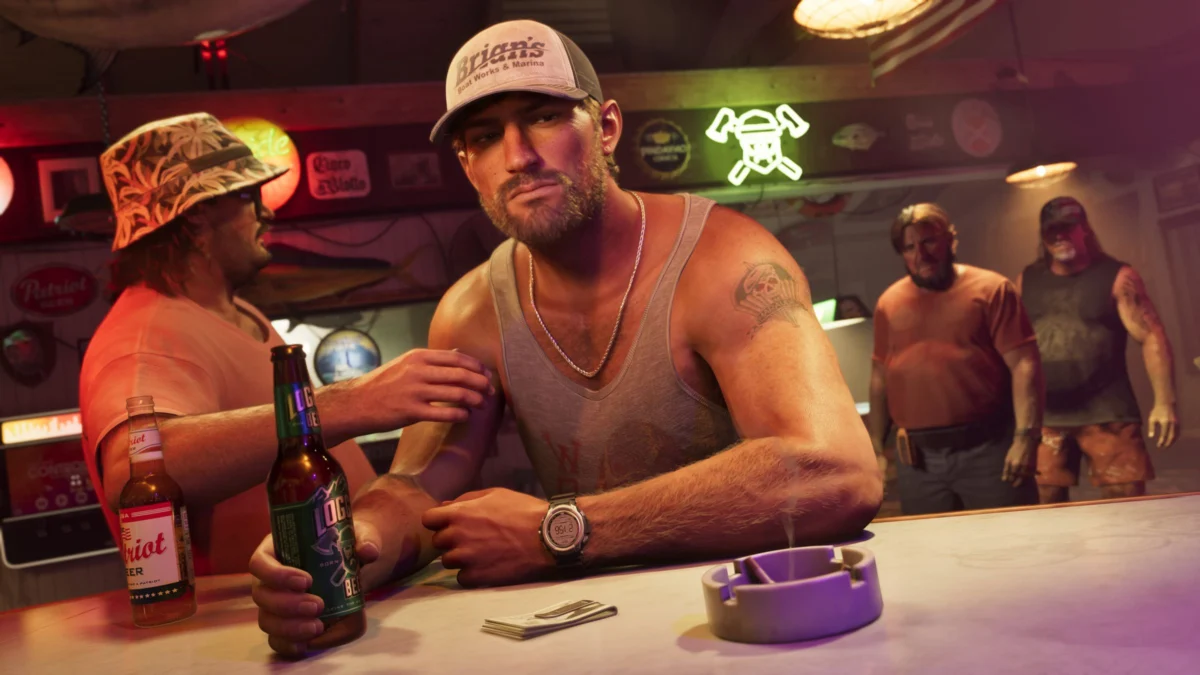
Rockstar Games’ Grand Theft Auto (GTA) franchise has long served as a lightning rod for cultural and political discourse, though the nature of that discourse has undergone a radical transformation over the past three decades. From its inception in the late 1990s through the release of Grand Theft Auto V in 2013, the series was primarily the target of traditional conservative moral panics centered on graphic violence, sexual content, and the perceived glorification of criminal lifestyles. However, as the world prepares for the November 19 release of Grand Theft Auto VI, the focus of opposition has shifted. The franchise, once denounced for its "corrupting" influence on youth through lawlessness, is now being scrutinized by a different faction of critics who allege the game has fallen prey to "woke" ideology and political correctness.
This shift in sentiment highlights a broader evolution in the American cultural landscape. For years, activists like attorney Jack Thompson and various parental advocacy groups sought to ban or restrict the games, citing concerns that players would mimic the on-screen violence. Even contemporary figures like Elon Musk have recently weighed in, with the tech mogul stating he found it difficult to engage with GTA V due to its requirement that players commit violence against law enforcement officers. Yet, the modern "anti-woke" movement represents a departure from these concerns. Instead of fearing the game’s immorality, this subset of critics fears its inclusivity, targeting the game’s diverse cast, its first mandatory female protagonist, and its perceived abandonment of "edgy" humor.
A Legacy of Controversy: From Violence to Representation
To understand the current backlash against GTA VI, one must examine the historical context of the series. Since Grand Theft Auto III revolutionized the open-world genre in 2001, Rockstar Games has built its brand on satire that "punches in every direction." The games were designed to be a distorted mirror of American society, often utilizing crude humor and stereotypical characterizations to critique consumerism, politics, and celebrity culture.
During the 2000s, the controversy was largely bipartisan but leaned toward the religious right and protective parenting groups. The "Hot Coffee" scandal of 2005, which involved a hidden sex minigame in GTA: San Andreas, led to an ESRB rating change and congressional inquiries. At that time, the "enemy" of the franchise was the moral guardian who wanted to sanitize media.
By 2014, however, the gaming industry experienced a seismic shift known as Gamergate. This movement saw a vocal subset of male gamers organize against what they perceived as the "forced" inclusion of progressive themes, feminism, and LGBTQ+ representation in video games. While the mainstream success of the industry continued to grow, this ideological divide deepened. As Rockstar Games began to modernize its internal culture and its approach to satire, it inadvertently placed itself in the crosshairs of the very demographic that once championed its "politically incorrect" roots.
The Lucia Factor and the Gender Debate
The primary catalyst for the current GTA VI backlash is the introduction of Lucia, the series’ first mandatory female protagonist. While previous titles allowed for female characters in multiplayer modes, the core narrative of every mainline GTA game has focused exclusively on male leads. The announcement that players would inhabit the role of a woman—and specifically a woman of color—sparked an immediate reaction on social media platforms.
Critics on X (formerly Twitter) and YouTube have characterized Lucia’s inclusion as a "humiliation ritual" for male gamers. These arguments often rely on traditional gender tropes, suggesting that a female lead diminishes the "masculine" fantasy of the franchise. In one widely circulated clip, Lucia is seen interacting with the game’s second protagonist, Jason, in a domestic setting. The dialogue, which involves Lucia asking for an opinion on her outfit, was decried by some as "feminist propaganda" designed to emasculate the male lead.
Further complicating the discourse are baseless claims regarding the characters’ identities. Despite no evidence from Rockstar, some online agitators have floated theories that Lucia is a transgender woman or that Jason has been written with a "gay vibe." These claims often point to superficial details, such as Jason’s use of the word "cocktails" or his choice of attire, as evidence that the game’s writers—allegedly influenced by a more diverse staff—no longer understand "traditional" masculinity.
Internal Shifts at Rockstar Games
The skepticism surrounding GTA VI is not entirely without basis in corporate reality, as Rockstar Games has undergone significant internal changes since the release of Red Dead Redemption 2 in 2018. Following reports of extreme "crunch" culture and a "frat-house" work environment, the studio made a concerted effort to overhaul its workplace dynamics.
In 2022, it was reported that Rockstar had "cleaned up" its image, aiming to be more sensitive toward marginalized groups. This was evidenced by the removal of transphobic jokes and certain non-playable characters (NPCs) from the remastered versions of GTA V. For the "anti-woke" critics, these moves were seen as a betrayal. They argued that by "punching down" less, Rockstar was losing the satirical edge that made the franchise a global phenomenon.
A 2019 photograph of female employees at Rockstar North has recently been recirculated by critics as "proof" that the game’s creative direction has been compromised by diversity, equity, and inclusion (DEI) initiatives. This narrative suggests that the presence of women in development roles inherently leads to a "sanitized" product, despite the fact that Rockstar’s games have always been collaborative efforts involving thousands of professionals.
Chronology of the GTA VI Development and Leaks
The road to GTA VI has been one of the longest and most scrutinized in entertainment history. The timeline of its development reflects both the technical ambition of the project and the volatile nature of modern fan engagement:
- September 2013: Grand Theft Auto V is released to record-breaking sales.
- 2018-2020: Major leadership changes occur at Rockstar, including the departure of co-founder and lead writer Dan Houser.
- February 2022: Rockstar officially confirms that the next installment in the GTA series is in active development.
- September 2022: One of the largest leaks in gaming history occurs when a hacker releases over 90 videos of early GTA VI footage. This confirms the Miami-inspired setting (Leonida/Vice City) and the dual protagonists, Jason and Lucia.
- December 2023: The first official trailer is released, garnering over 90 million views in 24 hours. The trailer showcases a vibrant, diverse world heavily influenced by social media culture.
- May 2024: Parent company Take-Two Interactive narrows the release window to Fall 2025 (later solidified for a November 19 debut).
- Late 2024: Pre-order data begins to surface, showing unprecedented demand despite ongoing online controversies.
Economic Realities and Market Dominance
While the "culture war" surrounding GTA VI generates significant noise online, the economic data suggests it will have little to no impact on the game’s commercial success. Grand Theft Auto V remains the most profitable entertainment product in history, having sold over 200 million copies and generating billions in recurring revenue through its online component.
Current estimates for GTA VI are equally staggering:
- Pre-order Performance: Third-party analytics firms estimate that the game has already secured over 5.28 million pre-orders, translating to roughly $500 million in upfront revenue.
- Production Budget: Reports suggest the development and marketing budget for GTA VI exceeds $1 billion, making it the most expensive video game ever produced.
- Recoupment Forecast: Industry analysts at Forbes and other financial outlets predict that Rockstar will recoup its entire billion-dollar investment within 24 hours of the game’s release.
This financial juggernaut status creates a "too big to fail" scenario that renders most boycotts ineffective. Unlike smaller titles that might be swayed by niche audience backlash, GTA is a mainstream cultural event. The "silent majority" of gamers, who typically do not participate in online ideological debates, appear poised to purchase the game regardless of the protagonist’s gender or the presence of "bisexual lighting."
Industry Implications and Conclusion
The preemptive backlash against GTA VI serves as a case study in the modern "outrage economy." For content creators and social media influencers, manufacturing controversy around a high-profile title is a proven method for generating engagement. However, the disconnect between online vitriol and consumer behavior is becoming increasingly apparent.
Prominent industry figures, such as streamer Zack "Asmongold" Hoyt, have urged caution, suggesting that gamers wait to see the final product before dismissing it. Even figures within the far-right sphere, such as Nick Fuentes, have mocked the hyper-fixation on the game’s perceived "wokeness," suggesting that critics "touch grass" and recognize the game’s likely quality.
As Rockstar Games nears the finish line for GTA VI, the studio finds itself in a unique position. It must navigate a fractured cultural landscape where its traditional satire is scrutinized by both the left (for its history of excess) and the right (for its modern inclusivity). Ultimately, the success of GTA VI will not be determined by tweets or YouTube rants, but by its ability to deliver the immersive, high-fidelity gameplay that has defined the series for decades. If the game breaks records as expected, it may signal a turning point where the "anti-woke" crusade in gaming loses its perceived leverage over the industry’s largest titans. For now, the world waits for November 19 to see if Vice City can once again capture the chaotic essence of the American dream—no matter who is behind the wheel.
