

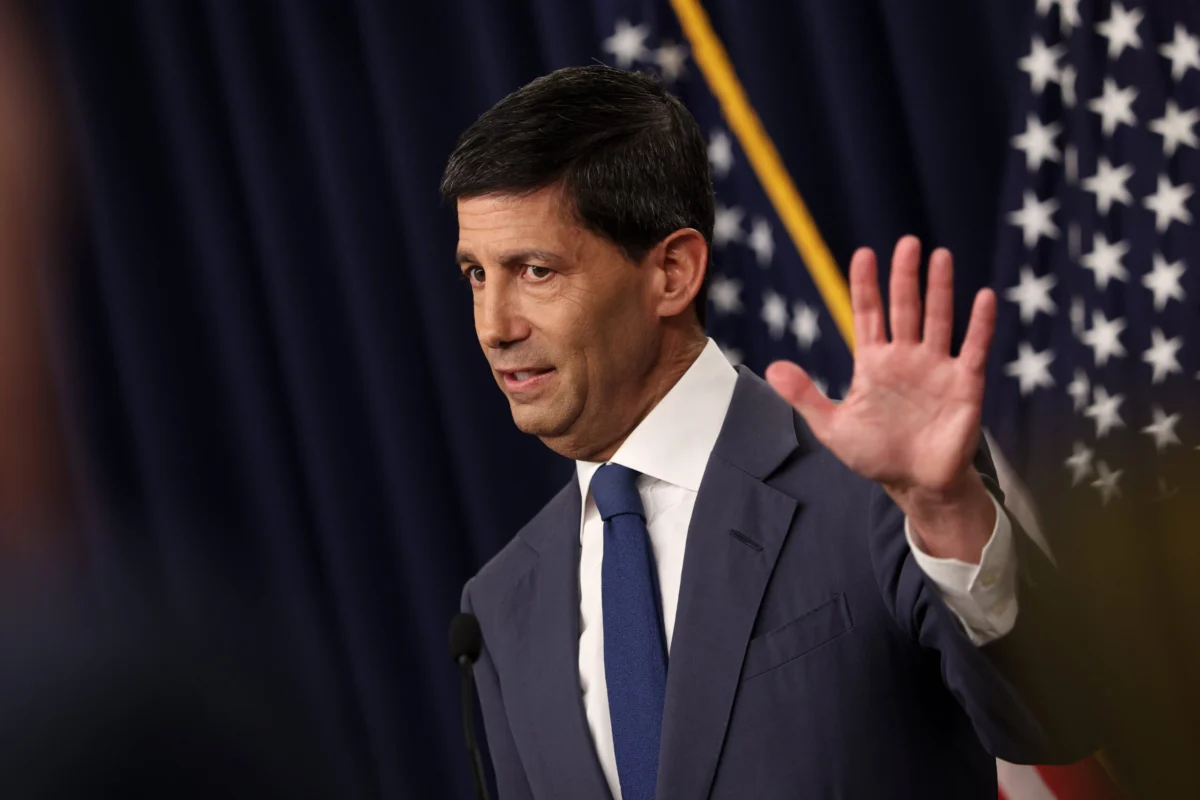
Wall Street has interpreted the Federal Reserve’s latest decision as a strong indicator that an interest rate hike is on the horizon, with inflation remaining the central bank’s paramount concern. In a move widely anticipated by financial markets, the Federal Open Market Committee (FOMC) opted to maintain its benchmark interest rate at its current level during the second meeting chaired by Federal Reserve Governor Kevin Warsh. However, the commentary from Chairman Warsh regarding inflation, coupled with a notable dissent from a coalition of policymakers, has amplified investor confidence that the Fed’s next action will be an increase in borrowing costs.
The decision to hold rates steady was largely priced into market expectations. Yet, the meeting was marked by a significant divergence of opinion within the committee, with three policymakers advocating for a rate increase at this juncture. This dissent represented the largest bloc pushing for higher rates since September 2016. While that historical precedent saw the Fed maintain its stance at the subsequent November meeting with two dissenters, the committee ultimately unified to implement a 25-basis-point hike in December of that same year.
Ian Lygen, head of U.S. rates strategy at BMO Capital Markets, summarized the sentiment, stating, "We’re reading this as a Committee with vocal hawks but the majority is siding with Warsh." This suggests a cautious approach by the FOMC, prioritizing a data-dependent strategy while acknowledging the persistent inflationary pressures.
The impact of this divided sentiment is already being reflected in market pricing. Fed funds futures trading indicates a greater than 57% probability of a quarter-point increase at the September meeting, according to CME’s FedWatch tool. Similarly, data from Kalshi traders shows approximately 53% predicting a rate hike, contrasting with 43% who anticipate another hold.
Ellen Zentner, chief economic strategist for Morgan Stanley Wealth Management, commented, "For now, it’s likely that market pricing for a hike has simply been pushed forward. September remains a live meeting." This indicates that while the immediate decision was a pause, the expectation of future tightening has merely been deferred, not dismissed.
Stephen Douglass, chief economist at NISA Investment Advisors, interpreted the dissent as a signal of a "hawkish hold." Despite this, Douglass maintained his forecast for the Fed’s next move to be a rate cut, though he anticipates this occurring in March of the following year. This highlights the ongoing debate among economists regarding the optimal timing and direction of monetary policy adjustments.
Background and Context: The Inflationary Challenge
The Federal Reserve has been grappling with elevated inflation for an extended period. Following years of historically low interest rates and substantial quantitative easing, the U.S. economy experienced a surge in consumer prices. This inflationary pressure has been exacerbated by a confluence of factors, including persistent supply chain disruptions, robust consumer demand fueled by fiscal stimulus, and more recently, an energy price shock.
The Fed’s mandate includes maintaining price stability and achieving maximum employment. In recent years, inflation has significantly exceeded the Fed’s 2% target. This divergence has placed considerable pressure on the central bank to adopt a more restrictive monetary policy stance to cool down the economy and bring inflation back under control.
Chairman Warsh, in his public remarks, has consistently emphasized the Fed’s commitment to combating inflation. He stated on Wednesday, "You’ve heard this before, but we will deliver price stability." This commitment underscores the central bank’s resolve to utilize its policy tools to achieve its inflation objectives, even if it means navigating a potentially challenging economic landscape.
The challenge lies in the fact that achieving the 2% inflation target is likely to necessitate policy tightening, as articulated by Jeffrey Gundlach, CEO of DoubleLine Capital. Gundlach, a prominent figure in the fixed-income market, believes that the bond market is signaling the Fed’s imperative to act decisively on inflation. He stated on CNBC’s "Closing Bell" on Wednesday, "If you really want to get to 2%, I think you have to raise interest rates." This perspective reflects a common view among market participants that sustained high inflation requires a more aggressive monetary policy response.
Chronology of the Decision and Market Reactions
The Federal Reserve’s FOMC convened for its scheduled monetary policy meeting, concluding on Wednesday, July 29, 2026. Throughout the preceding weeks, market analysts and economists had been closely scrutinizing economic data, including inflation reports, employment figures, and consumer sentiment, to gauge the likely outcome of the meeting.
Leading up to the announcement, there was a broad consensus that the Fed would hold interest rates steady. This expectation was based on the fact that the committee had recently transitioned leadership and was likely to adopt a cautious, data-driven approach in its initial meetings. The primary focus was on understanding the Fed’s future trajectory and its response to the ongoing inflationary pressures.
Upon the release of the FOMC statement and Chairman Warsh’s subsequent press conference, the market’s reaction was immediate and pronounced. While the hold decision itself did not trigger significant market upheaval, the indications of a potential future hike, coupled with the dissenting voices, injected a degree of uncertainty and risk aversion into the financial landscape.
Market Response: Volatility and Risk-Off Sentiment
The unease surrounding the prospect of tighter monetary policy contributed to a "risk-off" mood among investors on Wednesday. This sentiment manifested in a broad-based decline across major U.S. equity indices.
The S&P 500 tumbled 1.5% during Wednesday’s trading session, marking its worst performance on a "Fed day" for a new chief in recent history, according to Bespoke Investment Group. This significant drop suggests that investors are becoming increasingly sensitive to any signals that could lead to a slowdown in economic growth.
The blue-chip Dow Jones Industrial Average experienced an even steeper decline, dropping more than 2% on Wednesday. This represented its largest daily percentage decrease since April 2025, a period when President Donald Trump’s tariff policies had a palpable impact on market sentiment. The Dow’s sharp fall underscores the broader market’s sensitivity to policy shifts and potential economic headwinds.
The Nasdaq Composite also succumbed to the prevailing bearish sentiment, with its Wednesday slide pushing the index more than 10% below its all-time high. Furthermore, the technology-heavy index recorded its sixth consecutive losing session, a streak not seen since 2024, indicating a broader trend of investor caution in growth-oriented sectors.
Josh Jamner, senior investment strategy analyst at ClearBridge Investments, observed that "Financial markets are still wrestling with the shift in Fed leadership." He characterized the increased price volatility under a Warsh-led Fed as "more of a feature than a bug," implying that a period of adjustment and increased market responsiveness to Fed actions is to be expected.
Treasury Market Dynamics
The fixed-income markets also reflected the evolving monetary policy outlook. The 30-year Treasury yield climbed more than 10 basis points on Wednesday, reaching its highest level since July 2007. This surge in longer-dated Treasury yields indicates that investors are demanding higher compensation for holding these securities, anticipating a future of higher interest rates and potentially higher inflation.
The benchmark 10-year Treasury yield rose above the significant 4.6% threshold. Meanwhile, shorter-dated yields experienced a pullback. This divergence in yields suggests that while the market anticipates higher rates in the near to medium term, there is some uncertainty about the long-term inflation outlook or the Fed’s ability to engineer a soft landing.
Broader Impact and Implications
The Federal Reserve’s communication and policy decisions have profound implications for the broader economy and financial markets. The current situation highlights a delicate balancing act for the Fed: taming inflation without triggering a recession.
The "hawkish hold" scenario, characterized by a pause in rate hikes but with a clear inclination towards future tightening, creates a complex environment for businesses and consumers. Higher borrowing costs can dampen investment and consumer spending, potentially slowing economic growth. However, failure to address inflation could lead to a more severe economic downturn in the long run.
Jeffrey Gundlach’s assertion that the bond market vigilantes are urging the Fed to act underscores the pressure on the central bank to demonstrate credibility. The "long bond yield went up significantly after the press conference," he noted, implying that fixed-income investors are signaling their belief that the Fed must translate its rhetoric into concrete policy actions to restore price stability.
The current market volatility suggests that investors are actively recalibrating their portfolios and expectations in light of the Fed’s stance. The increased focus on inflation and the potential for higher interest rates may lead to a reevaluation of asset allocations, with a potential shift towards more defensive investments.
Looking ahead, the Federal Reserve will be closely monitoring incoming economic data, particularly inflation reports. The persistence of elevated energy prices and other inflationary pressures will be crucial in determining the timing and magnitude of any future rate adjustments. The FOMC’s commitment to price stability, as reiterated by Chairman Warsh, suggests that it is prepared to take the necessary steps to achieve its 2% inflation target, even if it entails navigating a challenging economic path. The market’s interpretation of the Fed’s resolve, coupled with the ongoing economic data, will continue to shape investment strategies and market sentiment in the months to come.
