

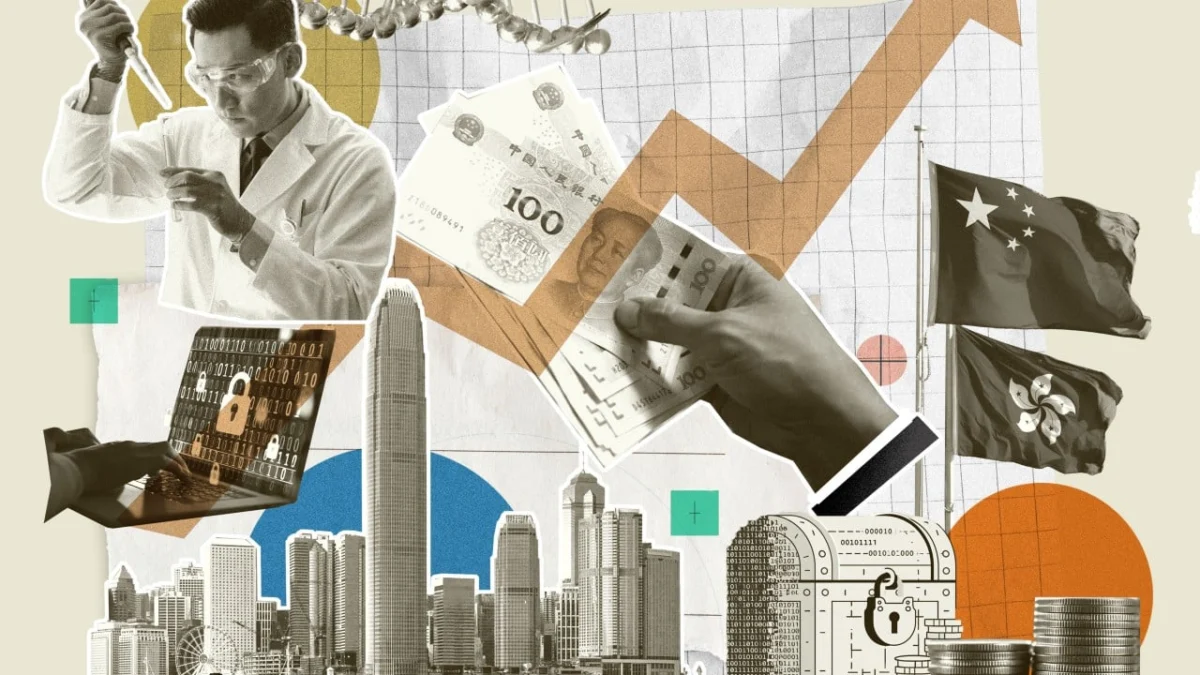
Chief Executive John Lee Ka-chiu is set to unveil a comprehensive five-year development blueprint on Wednesday, September 16, marking a significant paradigm shift in how the Hong Kong Special Administrative Region (HKSAR) integrates national security into its core economic pillars. In a move that signals a departure from traditional law-enforcement-centric security measures, the upcoming Policy Address will feature a dedicated chapter detailing institutional safeguards for the city’s financial and technological sectors. This strategic pivot aims to align Hong Kong more closely with Beijing’s "Holistic View of National Security," positioning the city not just as a global marketplace, but as a fortified gateway that protects China’s economic interests against increasing geopolitical volatility.
The announcement comes at a critical juncture for Hong Kong. Following the recent sentencing of former leaders of the Tiananmen Square vigil, which concluded a high-profile subversion case, many observers suggested that the city’s security agenda had reached its conclusion. However, government insiders and policy experts indicate that the administration views the stabilization of social order as merely the first phase. The second phase, to be articulated in the five-year plan, involves embedding security protocols into the very infrastructure of the city’s most vital industries: finance and technology.
A New Definition of Security in a Geopolitical Era
For decades, Hong Kong’s identity was defined almost exclusively by its laissez-faire economic model and its role as a bridge between the East and the West. However, the 2019 social unrest and the subsequent implementation of the National Security Law (NSL) in 2020 have fundamentally altered the governance landscape. The Lee administration’s forthcoming plan argues that economic development and national security are not mutually exclusive, but rather interdependent.
According to sources familiar with the drafting of the Policy Address, the dedicated security chapter will address 11 critical domains identified by the central government, with a specific emphasis on financial and technological sovereignty. This approach is intended to rebut critics who argue that a continued focus on security will deter foreign investment. Instead, the government will frame these safeguards as "risk management" essential for long-term stability. By securing these sectors, Hong Kong aims to demonstrate to Beijing that it can be trusted to handle sensitive data and massive capital flows without becoming a "weak link" in China’s national defense.
Chronology of Hong Kong’s Security Evolution
To understand the weight of the upcoming Policy Address, it is necessary to examine the timeline of Hong Kong’s legislative and social transformation over the last five years:
- June 2019: Mass protests erupt over a proposed extradition bill, leading to months of social unrest and challenges to the city’s governance.
- June 30, 2020: The Standing Committee of the National People’s Congress enacts the National Security Law for Hong Kong, targeting secession, subversion, terrorism, and collusion with foreign forces.
- March 2021: Beijing overhauls Hong Kong’s electoral system to ensure only "patriots" govern the city.
- July 2022: John Lee Ka-chiu is inaugurated as Chief Executive, pledging to complete the city’s constitutional duty under Article 23 of the Basic Law.
- March 2024: The Safeguarding National Security Ordinance (Article 23) is fast-tracked and passed unanimously by the Legislative Council, covering treason, insurrection, and theft of state secrets.
- September 2024: The first comprehensive Five-Year Plan is set for release, moving the focus from "stopping violence" to "preventative systemic security."
Strengthening the Financial Fortress
Finance remains the lifeblood of Hong Kong, contributing approximately 23% to the city’s GDP. However, the sector is increasingly caught in the crosshairs of US-China tensions. The upcoming plan is expected to outline measures to protect the city’s financial system from external shocks, such as potential foreign sanctions or disruptions to the US dollar peg system.
Data from the Hong Kong Monetary Authority (HKMA) shows that while the city remains a premier offshore renminbi (RMB) hub—handling about 75% of global offshore RMB payments—the reliance on the SWIFT messaging system and the US dollar remains a point of strategic vulnerability. The Five-Year Plan is expected to encourage the adoption of the Cross-Border Interbank Payment System (CIPS) and the development of the e-HKD (Central Bank Digital Currency) to create alternative financial rails.
Furthermore, the government is expected to introduce stricter "know your customer" (KYC) and anti-money laundering (AML) regulations that specifically target "economic subversion"—a term used to describe activities that intentionally destabilize the city’s markets or currency.
Technological Sovereignty and the Northern Metropolis
The second pillar of the new security framework is technology. As the global "tech war" intensifies, Hong Kong is being repositioned as a high-tech hub through the "Northern Metropolis" project. This 30,000-hectare development near the border with mainland China is designed to be the "Silicon Valley" of the East, but it also serves a strategic security purpose.
The Five-Year Plan will likely detail how Hong Kong intends to close the gap in the Artificial Intelligence (AI) race while maintaining strict data security. In recent months, the city has faced challenges in accessing high-end semiconductors due to US export controls. To counter this, the administration is expected to announce increased funding for homegrown research and development (R&D) and incentives for mainland Chinese tech giants to relocate their international data centers to Hong Kong.
A key component of the technology chapter will be the protection of critical infrastructure. This includes the security of undersea cables, 5G networks, and the "Internet of Things" (IoT) systems that manage the city’s utilities. By establishing Hong Kong as a "secure tech zone," the government hopes to attract companies from the Middle East and Southeast Asia that are looking for a neutral but highly secure digital environment.
Perspectives from the Business Community and Academia
The government’s shift has met with a mix of cautious optimism and lingering concern from the international business community. The American Chamber of Commerce (AmCham) in Hong Kong has previously noted that while stability is welcomed, the ambiguity of certain security definitions can lead to "compliance fatigue."
"Investors look for predictability," says Dr. Lawrence Li, a senior economic analyst. "If the government can clearly define the ‘red lines’ within the financial and tech sectors in this five-year plan, it could actually boost confidence. The uncertainty of not knowing where the boundaries are is often worse than having strict but clear regulations."
Conversely, pro-Beijing lawmakers argue that these measures are long overdue. "For too long, Hong Kong was an open door for foreign interference," says Regina Ip Lau Suk-yee, convener of the Executive Council. "Securing our financial markets and our data is not about closing off the city; it is about ensuring that our growth cannot be weaponized against the nation."
Impact and Implications for the Future
The implications of this policy shift are profound. By dedicating a full chapter to national security in an economic blueprint, John Lee is signaling that the era of "pure" economics in Hong Kong is over. In its place is a model of "Secured Development."
For the international community, this means that doing business in Hong Kong will require a more sophisticated understanding of both local and national Chinese security laws. Compliance departments will likely become as large as trading desks. For Beijing, the successful implementation of this plan would prove that Hong Kong has evolved from a "problem child" into a reliable, "fortified" financial outpost.
The upcoming Policy Address will also address social issues, such as the aging population and the housing crisis, but these will be framed within the context of social stability. The logic is clear: a society that is housed and employed is a society that is less prone to the "soft resistance" that the government remains vigilant against.
As Hong Kong prepares for the September 16 announcement, the message from the Chief Executive’s office is unequivocal: national security is no longer a reactive measure to be deployed during times of crisis. It is the very foundation upon which the city’s future prosperity—and its relationship with the mainland—will be built. The Five-Year Plan represents the final step in Hong Kong’s integration into China’s national development strategy, ensuring that the "Pearl of the Orient" shines within a framework of absolute stability.
