

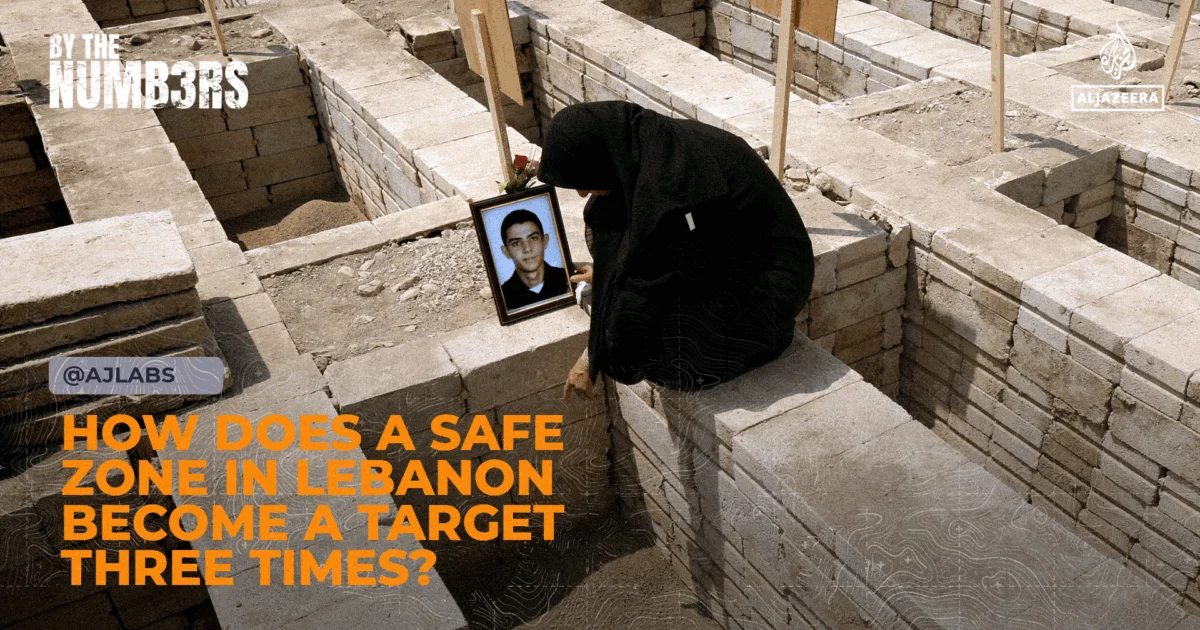
The village of Qana in Southern Lebanon has once again found itself at the center of international scrutiny following a series of military engagements that have raised profound questions regarding the sanctity of designated safe zones and the efficacy of international humanitarian law. On July 30, 2026, the village, which has historically served as a refuge for internally displaced persons (IDPs) during times of regional volatility, was struck for the third time in three decades. This latest incident has ignited a global debate over the definitions of military necessity, the proximity of combatants to civilian infrastructure, and the recurring failure of the international community to protect non-combatants in one of the world’s most contested border regions.
Qana’s geographical position, situated approximately 12 kilometers southeast of the port city of Tyre, places it within a strategic corridor that has been a focal point of conflict between the Israeli Defense Forces (IDF) and various Lebanese-based armed groups, most notably Hezbollah, for over forty years. Despite its historical and religious significance—often cited as the site of the biblical miracle at Cana—the village’s modern legacy is inextricably linked to three distinct tragedies: 1996, 2006, and now, 2026. Each event has followed a strikingly similar pattern: a surge in regional hostilities, a mass movement of civilians toward perceived safety in the village, and a subsequent military strike resulting in significant loss of life.
A Chronology of Conflict: 1996, 2006, and 2026
To understand the gravity of the 2026 incident, it is essential to examine the historical precedents that have shaped the village’s reputation as a recurring target. The chronology of these events illustrates a persistent failure to establish a durable mechanism for civilian protection in Southern Lebanon.
The 1996 Massacre (Operation Grapes of Wrath)
On April 18, 1996, during a 17-day military campaign known as Operation Grapes of Wrath, approximately 800 Lebanese civilians sought shelter in a United Nations Interim Force in Lebanon (UNIFIL) compound in Qana. The IDF, responding to mortar fire from the vicinity of the compound, launched an artillery barrage that struck the UN facility directly. The attack resulted in the deaths of 106 civilians and injured more than 110 others. An internal UN investigation subsequently concluded that while the IDF claimed the shelling was a technical error, the pattern of the strikes suggested it was unlikely to have been a result of simple miscalculation. This event marked the first time Qana became a symbol of the fragility of international safe zones.
The 2006 Airstrike (The July War)
Ten years later, on July 30, 2006, during the 34-day conflict between Israel and Hezbollah, an Israeli airstrike hit a three-story residential building in Qana where dozens of civilians were taking cover. Initial reports suggested over 50 deaths, though the official count was later revised to 28, including 16 children. The IDF stated that the building was located near sites used for launching rockets into northern Israel. The international outcry following the strike led to a temporary 48-hour suspension of Israeli aerial activity and accelerated the diplomatic efforts that eventually resulted in UN Security Council Resolution 1701.
The 2026 Engagement
The incident on July 30, 2026, mirrors its predecessors with haunting precision. Following a week of escalating cross-border skirmishes, several hundred residents from surrounding border villages fled north to Qana, seeking the relative safety of its larger residential complexes and schools. According to local health officials and UNIFIL observers, a precision-guided munition struck a designated humanitarian distribution center in the heart of the village. Preliminary data indicates that at least 42 individuals were killed, with over 90 injured. The strike occurred despite the village being listed on deconfliction maps shared between international mediators and the belligerent parties.
Supporting Data and Strategic Context
The recurring nature of these strikes is not merely a matter of coincidence but is deeply rooted in the complexities of modern asymmetric warfare. Data from the last three decades indicates a high density of military-civilian overlap in Southern Lebanon.
According to military analysts, the terrain around Qana offers significant tactical advantages, including high-ground vantage points and subterranean networks that have been expanded over decades. Statistics from the 2006 conflict showed that approximately 25% of all rockets fired into Israel during the first two weeks originated from the general vicinity of the Tyre-Qana-Tibnin triangle.
In the 2026 context, satellite imagery and drone surveillance data released by regional intelligence agencies suggest that the proliferation of mobile launch platforms has made it increasingly difficult to distinguish between civilian transport and military assets. However, human rights organizations counter this by highlighting that the "safe zone" status of Qana is well-known and that the margin for error in high-precision warfare should, in theory, prevent such catastrophic "collateral damage."
The Mechanics of a Safe Zone Under Fire
A "safe zone" or "de-conflicted area" is a humanitarian concept governed by the Geneva Conventions. It requires that all parties to a conflict agree to treat a specific geographic area as neutral ground where no military activity may occur. However, the reality in Lebanon has proven that these zones are often safe only in name.
There are three primary reasons why Qana has repeatedly become a target:
- The "Human Shield" Allegation: The IDF has consistently maintained that armed groups deliberately operate from within or adjacent to civilian centers to deter attacks or to exploit the resulting civilian casualties for propaganda purposes. Evidence presented in 1996 and 2006 included footage of rocket launchers positioned within hundreds of meters of civilian shelters.
- Intelligence Gaps: Despite advancements in Artificial Intelligence and real-time surveillance, the "fog of war" remains a significant factor. In the 2026 strike, early reports suggest that a misidentified target—possibly a logistics vehicle perceived to be carrying high-level military personnel—led to the decision to strike the village center.
- The Erosion of Deconfliction Protocols: For a safe zone to function, there must be a constant, reliable line of communication between combatants and humanitarian agencies. In the 2026 escalation, these channels were reportedly hampered by electronic warfare and the rapid pace of the conflict, leading to a breakdown in the "no-strike" lists.
Official Responses and Global Reactions
The reaction to the 2026 Qana strike has been swift and divided, reflecting the deep-seated political rifts that characterize the Middle Eastern landscape.
The Lebanese Government:
In an emergency address, the Lebanese Prime Minister condemned the strike as a "war crime" and a "blatant violation of international law." The government has called for an immediate session of the UN Security Council, demanding a permanent ceasefire and an independent international commission to investigate the recurring targeting of the village.
The Israeli Defense Forces (IDF):
A spokesperson for the IDF stated that the military is conducting a "thorough review" of the incident. Initial findings, according to the IDF, suggest that the strike targeted a command-and-control cell that was actively directing drone swarms against Israeli civilian centers. The statement emphasized that the IDF "takes all possible precautions to minimize civilian harm" and blamed the presence of military infrastructure in civilian areas for the tragedy.
United Nations and UNIFIL:
The UN Secretary-General expressed "profound shock" at the loss of life, noting that the strike occurred on the 20th anniversary of the 2006 Qana incident. UNIFIL, which maintains a presence in the region, has confirmed that the hit area was a known refuge for displaced families and contained no visible military hardware at the time of the attack.
Human Rights Watch and Amnesty International:
Both organizations have released preliminary statements calling for an embargo on precision munitions used in the strike. They argue that the "triple targeting" of Qana suggests a systemic failure in the rules of engagement and a disregard for the principle of proportionality.
Broader Implications and Analysis
The third tragedy in Qana represents more than just a localized failure; it signifies a broader crisis in international humanitarian law. If a village with such a high profile and a tragic history cannot be protected, it raises the question of whether "safe zones" are a viable concept in 21st-century warfare.
The Failure of Deterrence
The international outrage that followed the 1996 and 2006 incidents was expected to serve as a deterrent against future strikes on Qana. However, the 2026 event proves that political and humanitarian costs are often weighed against immediate military objectives. In the calculus of high-intensity conflict, the perceived necessity of neutralizing a threat often overrides the long-term diplomatic fallout.
Technological Paradox
We live in an era of "smart" bombs and surgical strikes. Theoretically, these technologies should make civilian casualties a rarity. Yet, in Qana, the opposite appears to be true. The reliance on remote intelligence and algorithmic targeting can sometimes lead to a "dehumanization" of the battlefield, where data points replace human judgment, leading to catastrophic errors when the data is flawed or manipulated.
Displacement and the Refugee Crisis
Each time Qana is struck, it triggers a new wave of displacement. Civilians who once viewed the village as a sanctuary are now fleeing further north toward Beirut or across the border into Syria. This creates a cascading humanitarian crisis, straining the resources of an already fragile Lebanese state and increasing the burden on international aid agencies.
Conclusion
As the dust settles on the ruins of Qana for the third time in thirty years, the international community is left to grapple with a grim reality. The village has become a laboratory for the failures of modern diplomacy and military restraint. Without a fundamental shift in how safe zones are established, monitored, and respected, the cycle of violence in Southern Lebanon is likely to continue.
The question "How does a safe zone in Lebanon become a target three times?" does not have a simple answer. It is a confluence of geography, failed policy, and the brutal logic of war. Until the sanctity of civilian life is prioritized over tactical gains, the name Qana will remain a somber reminder of the limitations of the global promise to "never again" allow such tragedies to occur. The events of July 30, 2026, serve as a final, urgent call for a reimagining of humanitarian protection in conflict zones worldwide.
