

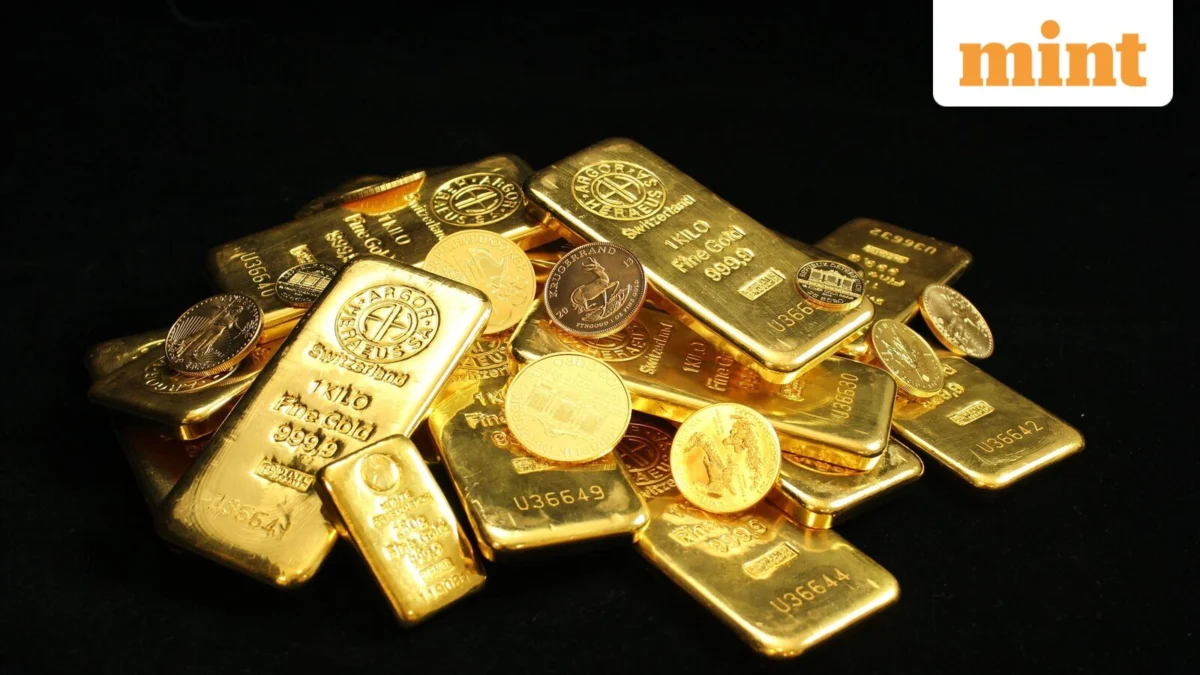
The global commodities market witnessed a significant rally on July 30, 2026, as precious metals surged in response to a cooling US inflation report and a deteriorating geopolitical landscape in the Middle East. Gold and silver, traditionally viewed as safe-haven assets during periods of economic uncertainty and military conflict, saw their prices climb sharply as the US dollar weakened against major currencies. The rally comes at a critical juncture for the Federal Reserve, which has been attempting to balance the twin pressures of stubborn inflation and the need to maintain economic stability.
In the international market, COMEX gold futures experienced a remarkable jump of $144 per troy ounce, reaching an intraday high of $4,180. Simultaneously, silver futures gained $1 to trade at $59.17 per troy ounce. This upward momentum provided a much-needed reprieve for bullion investors, as both metals extended their winning streaks for a second consecutive session. The surge was largely attributed to a reassessment of the Federal Reserve’s monetary policy trajectory following the release of the latest Personal Consumption Expenditures (PCE) Price Index.
The Macroeconomic Catalyst: Easing Inflation and the Dollar’s Decline
The primary driver behind the sudden appetite for precious metals was the release of the PCE Price Index, which serves as the Federal Reserve’s preferred metric for measuring inflation. According to the latest data, the index fell by 0.1% on a seasonally adjusted basis in June, bringing the annual inflation rate to 3.7%. While still above the Fed’s long-term 2% target, the reading was broadly in line with market expectations and signaled a cooling trend that many analysts believe could deter the central bank from further aggressive interest rate hikes.
The immediate reaction in the currency markets was a sharp sell-off of the US dollar. The US Dollar Index (DXY), which tracks the greenback against a basket of six major currencies, plummeted to 100.3 on Thursday, marking its lowest level in nearly six weeks. A weaker dollar typically acts as a tailwind for gold and silver, as it makes these dollar-denominated commodities cheaper for holders of other currencies, thereby stimulating international demand.
The Federal Open Market Committee (FOMC) recently maintained its benchmark interest rate within the 3.50% to 3.75% range. While the central bank’s official statement remained cautious, the cooling inflation data has led market participants to recalibrate their expectations. According to the CME Group’s FedWatch Tool, the probability of a rate hike at the upcoming September 15-16 meeting has dropped to 57%, a significant decline from the 77% probability recorded prior to the inflation report. Because gold is a non-yielding asset, its opportunity cost decreases when interest rates are expected to stay low or decline, making it a more attractive investment.
Geopolitical Instability and the Safe-Haven Premium
Beyond the macroeconomic data, a sharp escalation in Middle East tensions has injected a "risk premium" into the price of gold. On Thursday, reports emerged that United States forces had conducted fresh strikes against targets in Iran. These military actions were described as a direct response to a series of attacks on American personnel stationed across the region, including a high-profile strike on a military base in Jordan.
The rhetoric from both Washington and Tehran has intensified. US President Donald Trump issued a stern warning, vowing to hit Iranian interests "very hard" if provocations continued. In response, the Islamic Revolutionary Guard Corps (IRGC) issued a statement claiming "full control" of the Strait of Hormuz, a vital maritime chokepoint for global energy supplies. The IRGC warned that foreign powers would not be allowed to interfere in regional affairs, raising fears of a potential blockade or further naval skirmishes.
Geopolitical experts note that gold often thrives in such environments. When the risk of conventional warfare increases, investors flee from equities and volatile currencies toward the perceived stability of gold. The potential for disruption in the Strait of Hormuz also carries implications for global oil prices, which can indirectly influence gold by stoking fears of cost-push inflation.

Domestic Market Performance: MCX Gold and Silver Rebound
The rally in international prices was mirrored in the Indian domestic market. On the Multi Commodity Exchange (MCX), the near-month gold futures contract surged by ₹1,620 per 10 grams, hitting an intraday high of ₹1,43,400. This followed a more subdued performance in the previous session, where the metal gained only ₹158.
Silver followed a similar trajectory on the MCX, with futures contracts advancing by nearly ₹3,000 per kg to reach a level of ₹2,20,400. Despite these substantial daily gains, both gold and silver remain on track for a negative performance for the month of July. As of July 30, gold is down approximately 0.5% for the month, while silver has seen a more pronounced decline of 3.75%.
Market analysts point out that if these metals close the month in the red, it would mark a significant historical trend. For gold, it would be the first time in nearly three years that the metal has posted two consecutive monthly declines. For silver, it would represent the first back-to-back monthly loss in nearly two years. This broader monthly weakness suggests that while the daily spikes are significant, the market is still grappling with the long-term effects of high interest rates and a previously dominant US dollar.
Chronology of Key Events Leading to the July 30 Surge
To understand the current market volatility, it is essential to look at the sequence of events over the past month:
- Early July 2026: Gold and silver prices face pressure as the US Federal Reserve maintains a hawkish tone, suggesting that "higher for longer" interest rates are necessary to combat sticky service-sector inflation.
- Mid-July 2026: Tensions in the Middle East begin to simmer following a drone attack on a US outpost in Jordan. Safe-haven buying provides a floor for gold prices, preventing a deeper collapse.
- July 28-29, 2026: The Federal Reserve holds its policy meeting, keeping rates steady at 3.50%-3.75%. The market interprets the lack of a rate hike as a sign that the tightening cycle may be nearing its end.
- July 30, 2026 (Morning): The PCE Price Index is released, showing a 0.1% monthly decline. The US Dollar Index begins its descent, falling below the 101 mark.
- July 30, 2026 (Afternoon): News of US strikes on Iran breaks. COMEX gold futures jump over $100 in a matter of hours as algorithmic trading and manual hedging drive prices higher.
- July 30, 2026 (Evening): The IRGC issues its warning regarding the Strait of Hormuz. Silver prices on the MCX touch the ₹2,20,000 mark as industrial and speculative demand converge.
Analysis of Implications and Market Outlook
The current surge in precious metals highlights the fragile state of global financial markets. Investors are currently caught between two conflicting narratives: a cooling US economy that may require lower interest rates, and a geopolitical environment that is increasingly hostile.
From a technical perspective, the jump to $4,180 in COMEX gold suggests that the metal has cleared significant resistance levels. However, the sustainability of this rally depends heavily on the next set of US labor market data. If unemployment begins to rise alongside cooling inflation, the Fed may be forced to pivot toward rate cuts sooner than anticipated, which would likely provide a long-term bullish catalyst for gold.
Conversely, the situation in the Middle East remains the ultimate "wild card." A full-scale conflict involving Iran could send gold prices to unprecedented heights, but it would also likely cause massive volatility in energy markets, potentially leading to a global economic slowdown. For silver, the outlook is slightly more complex. While it benefits from safe-haven demand, it is also an industrial metal used heavily in electronics and renewable energy. A global recession triggered by war could dampen industrial demand for silver, potentially causing it to underperform relative to gold.
Furthermore, the domestic Indian market will be closely watching the Rupee’s performance against the Dollar. While international gold prices are rising, the final price for Indian consumers is also influenced by import duties and the USD/INR exchange rate. Any intervention by the Reserve Bank of India (RBI) to stabilize the Rupee could affect the intraday volatility seen on the MCX.
As the month of July draws to a close, the commodity markets remain on high alert. The dual impact of a softening dollar and a hardening geopolitical stance has redefined the trading range for precious metals. While the immediate trend is bullish, the underlying monthly declines serve as a reminder that the path to a sustained bull market remains fraught with macroeconomic hurdles. Investors are advised to maintain a diversified portfolio and keep a close watch on both the FOMC’s communications and the developments in the Persian Gulf.
