

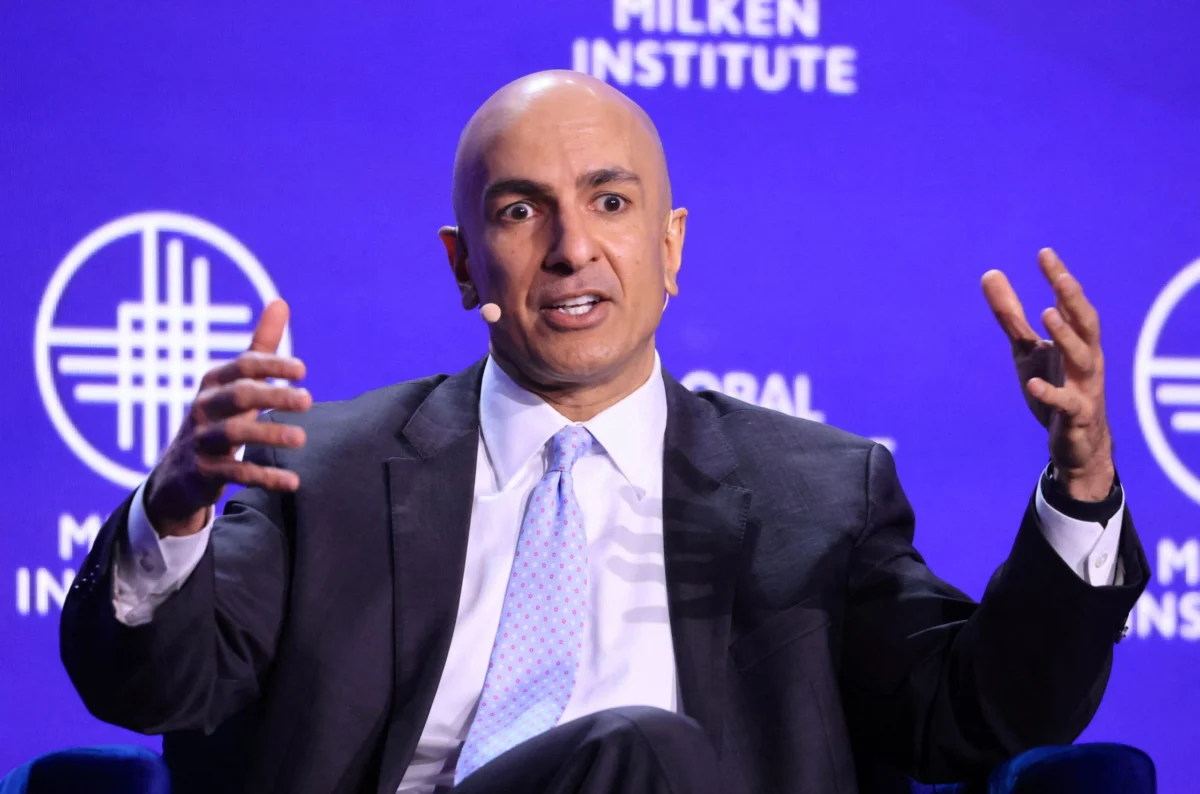
Minneapolis Federal Reserve President Neel Kashkari reiterated on Thursday that combating inflation remains the paramount objective for the U.S. central bank, emphasizing that consumer prices are still "much too high" and pose a persistent challenge to economic stability. Speaking at the Bank of Japan-IMES Conference, Kashkari outlined the Federal Reserve’s commitment to a "balanced approach" in fulfilling its dual mandate of maintaining price stability and achieving maximum employment.
Kashkari’s remarks come at a critical juncture for monetary policy, as the nation grapples with persistent inflationary pressures that have outlasted initial expectations for a swift return to the Federal Reserve’s 2% target. The central banker highlighted that inflation has remained stubbornly above this benchmark for an extended period, exceeding five years. In contrast, he characterized the current labor market as being in "decent shape," suggesting a greater capacity for the economy to absorb the necessary policy measures to curb price increases without triggering a significant downturn.
"I am focusing heavily on inflation," Kashkari stated during his discussion with CNBC’s Kaori Enjoji. "I’m not ignoring at all the labor market. We need to pay attention to both sides, but the labor market is in decent shape right now, while inflation is simply much too high." This dual focus underscores the delicate balancing act the Federal Reserve must perform, navigating the complexities of supporting employment while simultaneously reining in escalating costs for consumers.
A key concern articulated by Kashkari is the risk associated with prolonged elevated inflation: the potential for inflation expectations to become unanchored. If consumers and businesses begin to anticipate consistently higher prices, this can become a self-fulfilling prophecy, leading to wage-price spirals and making inflation even more intractable. "If that were to happen, then we’d have to respond even more aggressively, so we’re much better off doing what we need to do to keep inflation expectations anchored," Kashkari warned. Anchoring inflation expectations is a cornerstone of modern central banking, as it provides a crucial signal of credibility and stability.
The Inflationary Landscape: A Multifaceted Challenge
The most recent data on U.S. inflation paints a picture of a persistent, though potentially moderating, challenge. In April, the headline Consumer Price Index (CPI) registered at 3.8%. While this figure represents a slight deceleration from previous months, it remains significantly above the Federal Reserve’s target. Digging deeper, the core CPI, which excludes the more volatile components of food and energy, also indicated ongoing price pressures. Excluding food and energy, core CPI increased by 0.4% in April, contributing to an annual rate of 2.8%. This sustained core inflation suggests that underlying price pressures are more deeply embedded in the economy.
Kashkari’s analysis extended to the global factors contributing to this inflationary environment. He identified a confluence of events that have fueled these pressures, including the lingering effects of the COVID-19 pandemic, the imposition of tariffs, the ongoing war in Ukraine, and more recently, the conflict in Iran. These geopolitical and economic disruptions have created a complex web of supply chain vulnerabilities and commodity price shocks, which are now feeding into broader inflation.
When asked about the primary drivers of the recent inflation surge, Kashkari acknowledged that some of the impetus stemmed from factors predating the current period. However, he specifically pointed to energy and fertilizer prices as significant current contributors. "Those inputs do affect other categories as well," he explained, "and so one of the things I’m going to be looking for is, when do we see energy prices affecting the broader economy and inflation in the broader economy." This highlights the interconnectedness of commodity prices and their ripple effects throughout various sectors of the economy, from transportation and manufacturing to agriculture and food production.
Background: The Federal Reserve’s Dual Mandate and the Inflation Fight
The Federal Reserve operates under a dual mandate established by Congress: to promote maximum employment and stable prices. Achieving these objectives often involves a delicate balancing act, particularly when inflation is elevated and the labor market is robust. For much of the period following the 2008 financial crisis, the primary concern was stimulating economic growth and bringing down unemployment, with inflation remaining persistently low.
However, the economic landscape shifted dramatically in the wake of the COVID-19 pandemic. Unprecedented fiscal stimulus, coupled with supply chain disruptions and a surge in consumer demand, ignited a period of rapidly rising inflation. The Federal Reserve’s initial response was to characterize inflation as "transitory," a view that proved to be inaccurate as price pressures persisted and broadened.

This miscalculation led to a period of aggressive monetary policy tightening, beginning in early 2022. The Federal Reserve embarked on a series of interest rate hikes, aiming to cool demand and bring inflation back under control. These rate hikes have had a significant impact on borrowing costs for consumers and businesses, influencing everything from mortgage rates to business investment.
The Milken Conference, where Kashkari was photographed speaking earlier in May, is a prominent annual gathering that brings together global leaders in finance, technology, and philanthropy. It serves as a platform for discussions on pressing economic and societal issues, offering insights into the perspectives of influential figures like Kashkari. His participation in such forums underscores the global nature of economic challenges and the importance of coordinated responses.
The Impact of Global Events on U.S. Inflation
The interconnectedness of the global economy means that events far beyond U.S. borders can have a tangible impact on domestic prices. The COVID-19 pandemic, for instance, exposed the fragility of global supply chains. Lockdowns in manufacturing hubs, port congestion, and a shortage of shipping containers led to delays and increased costs for a wide range of goods.
The war in Ukraine has had a profound effect on global energy and food markets. Russia is a major exporter of oil and natural gas, and disruptions to these supplies, coupled with sanctions, led to a surge in energy prices. Ukraine is also a significant producer of grains and fertilizers, and the conflict disrupted its ability to export these essential commodities, contributing to rising food prices globally.
More recently, escalating tensions in the Middle East, particularly related to the conflict in Iran, have added another layer of uncertainty to global energy markets. Any significant disruption to oil production or transportation in the region could lead to renewed upward pressure on energy prices, a key component of the CPI.
Kashkari’s emphasis on energy and fertilizer prices as current drivers of inflation is well-founded. These are fundamental inputs for many industries. Higher energy costs translate into increased transportation expenses for businesses, higher utility bills for households, and increased production costs for manufacturers. Similarly, rising fertilizer prices directly impact the cost of producing food, contributing to higher grocery bills. The challenge for the Federal Reserve is to differentiate between temporary price shocks and more persistent inflationary trends, and to calibrate its policy response accordingly.
Looking Ahead: The Path to Price Stability
The Federal Reserve faces a complex decision-making process as it navigates the path to price stability. The recent inflation data suggests that while progress has been made, the job is not yet complete. The persistence of core inflation, in particular, indicates that underlying price pressures may be more entrenched than initially anticipated.
The Federal Reserve’s policy decisions are closely watched by financial markets and the public alike. Any indication of a shift in the Fed’s stance on inflation or interest rates can have significant repercussions for asset prices, borrowing costs, and overall economic activity. Kashkari’s clear articulation of his priorities provides valuable insight into the thinking at the Minneapolis Fed and, by extension, the broader Federal Reserve System.
The coming months will be crucial in determining the trajectory of inflation and the Federal Reserve’s policy response. Key economic indicators, including future inflation reports, labor market data, and consumer spending patterns, will be closely scrutinized. The central bank’s ability to effectively manage inflation expectations and guide the economy back to price stability without triggering a severe recession will be a testament to its policymaking acumen in this challenging economic environment. The commitment to a "balanced approach" suggests a data-dependent strategy, where policy adjustments will be made in response to evolving economic conditions, rather than adhering to a predetermined path.
