

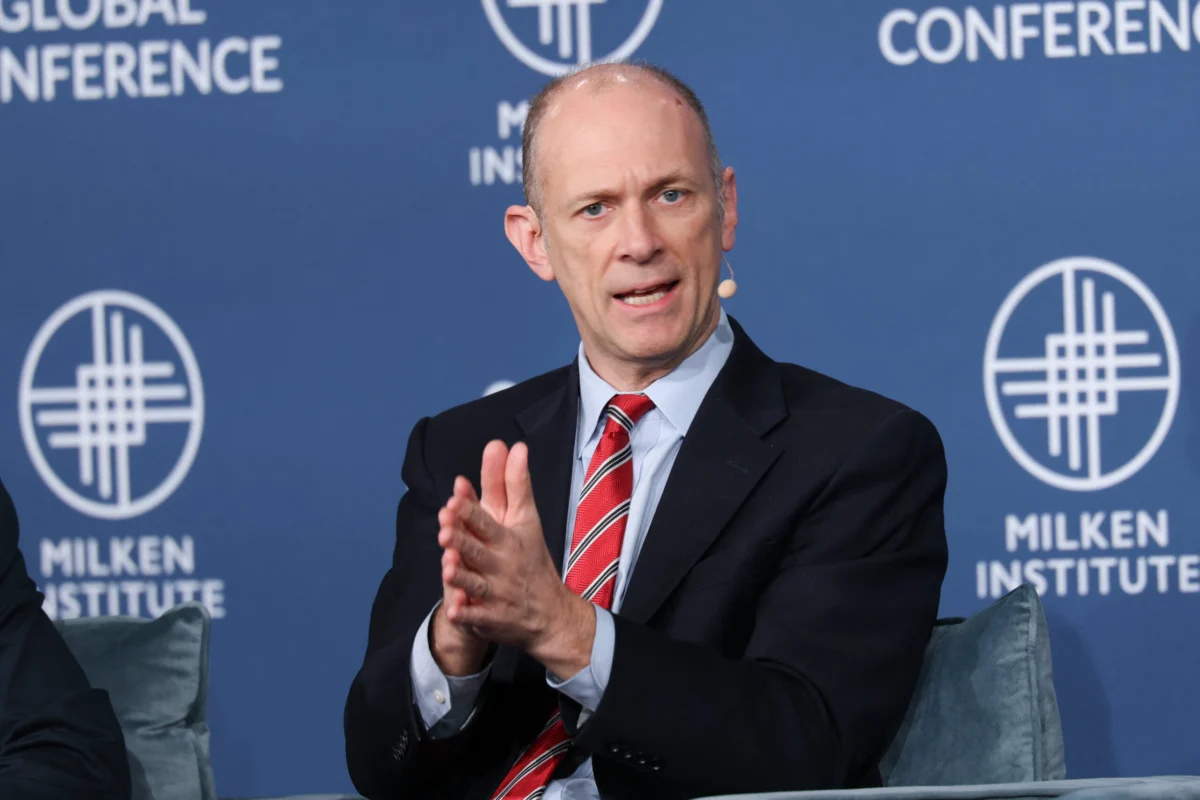
Chicago Federal Reserve President Austan Goolsbee has sounded a note of caution regarding the persistent impact of energy inflation, directly linked to the protracted conflict in Iran, on Asian economies. He described this situation as a "stagflationary shock of the old-fashioned variety," highlighting that current energy price expectations in futures markets have significantly diverged from the actual elevated levels. Speaking at the Bank of Japan-IMES Conference, Goolsbee elaborated on the challenges posed by this prolonged inflationary pressure, drawing parallels to his past dissent on a Federal Reserve rate cut, where he sought more concrete evidence of inflation’s transience.
The Lingering Shadow of Energy Inflation
Goolsbee’s remarks underscore a critical challenge for global economic stability: the unexpected longevity of energy price surges stemming from the conflict in Iran. While recent diplomatic efforts, specifically U.S.-Iran peace talks, have offered some respite and a slight easing in oil prices, these levels remain considerably higher than those preceding the hostilities. As of Thursday, Brent crude futures, the international benchmark, saw a notable increase, climbing over 1.81% to trade at $96 per barrel. Similarly, West Texas Intermediate (WTI) futures gained 1.71%, reaching $90.21 per barrel. This stands in stark contrast to the pre-conflict figures, where Brent crude hovered around $72 per barrel and WTI at $67.02.
This sustained high cost of energy presents a significant hurdle for Asian economies, which are largely net energy importers. Goolsbee’s assessment points to a direct "stagflationary shock" for these regions, a phenomenon characterized by a combination of stagnant economic growth and rising inflation. This is particularly concerning for countries heavily reliant on imported energy to fuel their industries and power their economies. The economic impact is multifaceted: higher energy costs translate into increased production expenses for businesses, potentially leading to reduced output and investment. Simultaneously, consumers face higher prices for fuel, transportation, and a wide range of goods and services, dampening purchasing power and consumer confidence.
Dissent on Past Rate Decisions and the Inflationary Narrative
Goolsbee’s current concerns about persistent inflation echo his stance at the Federal Reserve’s final rate cut decision in 2025. He revealed that he had dissented on that occasion, advocating for a more cautious approach and a stronger emphasis on concrete evidence that inflation would not prove to be a persistent problem. His reasoning at the time was rooted in a desire for more robust data demonstrating that inflationary pressures were indeed temporary. Reflecting on that decision, Goolsbee stated, "I don’t regret dissenting at that meeting, because the inflation has not proved as temporary as was advertised at the beginning." This retrospective justification highlights a prevailing concern within some central banking circles that initial assessments of inflation’s trajectory may have been overly optimistic.
Despite these concerns, Goolsbee offered a glimmer of hope regarding the long-term outlook for interest rates. He indicated that should inflation show a sustained move back towards the Federal Reserve’s target of 2%, interest rates would likely "ultimately settle at some place well below where they are today." This suggests a potential for normalization of monetary policy in the future, contingent on the successful taming of inflationary forces. However, the immediate future remains dictated by the prevailing inflationary environment and the geopolitical uncertainties that continue to influence energy markets.

The Double-Edged Sword of Artificial Intelligence
Beyond the immediate challenges of energy inflation, Goolsbee turned his attention to the burgeoning influence of artificial intelligence (AI) on the global economy. While acknowledging the potential for AI to drive significant productivity gains, he expressed a degree of concern that financial markets might be prematurely celebrating these future benefits, potentially leading to an overheated economy in the short term.
"My concern is that future increases in productivity that make us rich may fuel high equity prices that they are a increase in your wealth today, to know that you’re going to be rich sometime in the future," Goolsbee articulated. This sentiment points to a potential disconnect between the speculative valuations in the stock market, driven by anticipation of AI’s impact, and the actual realization of these productivity gains. He elaborated on the risk: "That can encourage people to spend out of this wealth in the stock market or others, and before the AI has actually increased the productivity, you can overheat the economy in the near term."
This dynamic could manifest as increased consumer spending fueled by perceived wealth gains in the stock market, even before the underlying economic fundamentals have caught up. Furthermore, Goolsbee highlighted the potential for significant investment in data centers and related infrastructure to support AI development, which could, in turn, drive up the costs of electricity and construction labor, contributing to short-term inflationary pressures within the U.S. economy.
Broader Implications for Global Economies
Goolsbee’s analysis extends to the global arena, suggesting that the economic impacts of AI, both positive and negative, are unlikely to remain localized. He posited that as AI technologies mature and their productivity-enhancing capabilities become more evident, these benefits will eventually disseminate to other regions, including Asian economies. This implies that the potential for AI-driven economic transformation, as well as the risks of short-term overheating, will be a shared global concern.
The implications of Goolsbee’s statements are far-reaching. For policymakers, they underscore the need for a delicate balancing act: managing persistent inflation while simultaneously preparing for the transformative potential of AI. The interconnectedness of global energy markets means that geopolitical events far from home can have profound domestic and regional economic consequences. The conflict in Iran serves as a stark reminder of this vulnerability.
For Asian economies, the dual challenges of sustained energy inflation and the potential for AI-induced economic shifts present a complex landscape. Prudent fiscal and monetary policies will be crucial to navigate these headwinds. Governments will need to explore strategies to diversify energy sources, enhance energy efficiency, and foster an environment conducive to both the adoption of new technologies and the containment of inflationary pressures. The coming months and years will likely see a heightened focus on these critical economic issues as the world grapples with the aftermath of geopolitical conflicts and the dawn of a new technological era. The insights provided by figures like Austan Goolsbee are invaluable in shaping the understanding and response to these evolving economic realities.
