

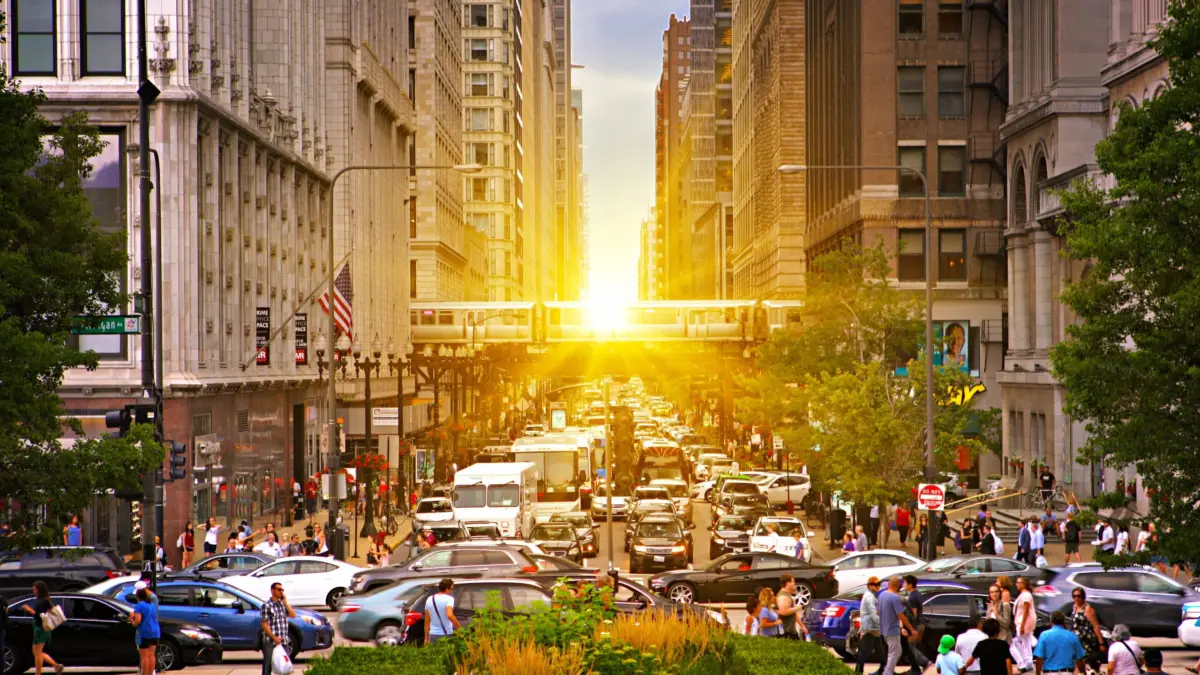
The concept of walkability has transitioned from a niche urban planning preference to a primary driver of real estate value, public health outcomes, and environmental sustainability in American metropolitan areas. As fuel prices fluctuate and the national discourse shifts toward reducing carbon footprints, the ability to navigate a city without a vehicle has become a coveted luxury. Daryl Fairweather, chief economist at Redfin, notes that walkability offers multifaceted benefits ranging from household financial stability to enhanced quality of life. According to Fairweather, the desirability of walkable neighborhoods directly translates into higher home values, as residents increasingly prioritize the convenience of local access and the social connectivity fostered by public spaces.
The metrics used to define these urban centers often rely on tools like Redfin’s Walk Score, which analyzes hundreds of walking routes to nearby amenities. Points are awarded based on the distance to amenities in each category; if those amenities are within a five-minute walk (0.25 miles), they receive maximum points. This data, combined with insights from travel platforms like Only In Your State and GuruWalk, as well as qualitative reports from real estate experts and local residents, provides a clear picture of the shifting landscape of American urbanism.

The Evolution of the Walkable American City
Historically, the United States underwent a significant transformation in the mid-20th century, shifting from dense, rail-oriented urban cores to sprawling, car-dependent suburbs. This era of "The Great Car Culture" saw the implementation of zoning laws that separated residential areas from commercial hubs, necessitating the use of automobiles for even the simplest errands. However, the 21st century has seen a reversal of this trend, often referred to as "New Urbanism."
Modern urban planning now emphasizes mixed-use developments where housing, retail, and office spaces coexist. This shift is not merely aesthetic; it is a response to the economic and health crises associated with sedentary, car-reliant lifestyles. Recent studies indicate that residents in walkable neighborhoods weigh less, have lower rates of cardiovascular disease, and report higher levels of community engagement.
Hoboken, New Jersey: The Gold Standard of Pedestrian Density
At the top of the list is Hoboken, New Jersey. Situated on the banks of the Hudson River directly across from Manhattan, this one-square-mile city has achieved a nearly perfect Walk Score of 97. The city’s success is attributed to its dense street grid, which was largely established before the advent of the automobile. This historic layout, combined with modern policies favoring public transit and mixed-use buildings, makes it the most walkable city in the United States according to the latest analysis by Only In Your State.

Hoboken’s walkability is bolstered by its connectivity. It serves as a major transportation hub, linking the PATH train, NY Waterway ferries, and NJ Transit buses. This infrastructure allows residents to live entirely car-free while maintaining easy access to the broader tri-state area. Furthermore, the Garden State’s commitment to urban density is evident as Union City, West New York, and Jersey City also frequently rank in the top ten most walkable locations nationally.
West Hollywood, California: An Oasis in a Car-Centric County
While Los Angeles County is often criticized for its traffic congestion and lack of comprehensive public transit, West Hollywood stands as a significant exception. Earning a Walk Score of 91, this city manages to pack more than 300 restaurants, bars, and coffee shops into a footprint of less than two square miles.
The walkability of West Hollywood is particularly vital for its identity as a premier nightlife and entertainment district. The world-famous Sunset Strip benefits from high pedestrian traffic, which supports local businesses and enhances public safety by reducing the number of vehicles on the road during peak evening hours. For residents, the high density of amenities means that daily errands—from grocery shopping to professional appointments—can be completed on foot, a rarity in Southern California.

Boston, Massachusetts: History and Connectivity
Boston is frequently cited as "The Walking City," a moniker it earned due to its compact size and the preservation of its colonial-era layout. George Sarkis, CEO and cofounder of the Sarkis Team at Douglas Elliman, highlights that Boston’s unique charm lies in the distinct personality of its neighborhoods. Pedestrians can seamlessly transition from the historic brownstones of Beacon Hill to the high-end boutiques of Back Bay, passing through the Public Garden and into the South End without the need for vehicular transport.
The city’s walkability is intrinsic to its tourism industry. Historic sites, centuries-old architecture, and cobblestone streets are best experienced at a walking pace. The Freedom Trail, a 2.5-mile path through downtown Boston that passes 16 locations significant to the history of the United States, serves as a prime example of how walkability can be integrated into a city’s cultural and educational framework.
San Francisco, California: High Transit and Scenic Inclines
San Francisco offers a unique pedestrian experience characterized by its iconic hilly landscape and mild climate. The city boasts one of the highest transit scores in the country, but for locals, walking is the preferred method of engagement with the community. Wendy Newman, a veteran realtor and resident since 1987, observes that a single stroll through a neighborhood like Chinatown or North Beach allows for a level of social interaction and discovery that is impossible in a car.

The walkability of San Francisco also contributes to the physical health of its residents. The steep inclines of many city streets turn casual errands into a natural workout. Moreover, the city’s commitment to "slow streets"—a policy expanded during the COVID-19 pandemic—has permanently reclaimed several thoroughfares for pedestrians and cyclists, further enhancing the urban experience.
New York City: The Lifespan Benefits of Urban Mobility
New York City remains the quintessential walkable metropolis. Built largely on a grid system, the city is designed for navigation on foot. Beyond the convenience of saving on transportation costs, the walkability of New York has measurable impacts on longevity. Kate Wollman-Mahan of Christie’s International Real Estate New York points to data from the city-run Health Dashboard suggesting that life expectancy in New York City is 82.3 years, five years longer than the national average of 77.3 years.
Economists and health experts attribute this gap partly to the "active transport" lifestyle of New Yorkers. Walking to the subway, running errands at local bodegas, and utilizing expansive public spaces like Central Park and Brooklyn Bridge Park integrate physical activity into the daily routine of millions. This built-in exercise regimen mitigates the risks associated with the sedentary lifestyles prevalent in more car-dependent regions.

Washington, DC: Walking Through History and Espionage
The nation’s capital holds a Walk Score of 98, making it one of the most pedestrian-friendly environments in the world. The city’s design, featuring wide boulevards and numerous parks, encourages foot traffic. This environment is so conducive to walking that even cultural institutions like the Spy Museum have developed free walking tours. Aliza Bran, the museum’s director of media relations, explains that these tours allow tourists and residents to experience espionage history in the exact locations where it occurred.
Neighborhoods such as Dupont Circle, Capitol Hill, and Georgetown are defined by their walkable nature, offering a mix of residential charm and commercial vitality. The proximity of national monuments to residential zones allows for a unique urban experience where history is a backdrop to everyday life.
Chicago, Illinois: The Windy City’s High-Speed Pedestrianism
Chicago has been ranked as the most walkable city in the U.S. by Preply, a language learning marketplace that conducts global walkability studies. The city’s downtown core is remarkably efficient; the five most-visited attractions, including the Art Institute and Millennium Park, can be visited in a 28-minute walk covering approximately 2,500 steps.

The social fabric of Chicago is also reinforced by its walkability. Sheldon Bishop, founder of BrewAtlas, argues that the presence of high-quality independent coffee shops is a primary indicator of a healthy, walkable neighborhood. With 95 specialty cafes across 41 neighborhoods, Chicago residents are encouraged to spend money locally and interact with their neighbors, strengthening the local economy and community bonds.
Miami and Philadelphia: Pockets of Pedestrian Progress
Miami is often viewed as a car-centric city, yet neighborhoods like Coconut Grove and the newer Brickell district are proving that walkability can be engineered into the Florida landscape. Sandra Masis, director of sales at Arbor Coconut Grove, emphasizes that these "pockets" of walkability create a sense of community that is highly attractive to modern homebuyers who value greenery and waterfront access.
Similarly, Philadelphia has gained international recognition for its walkability. According to GuruWalk, Philly ranks just behind New York City in terms of tourist satisfaction for walking tours. The city’s historic district allows visitors to walk from Independence Hall to the Liberty Bell in a matter of minutes. The 4.99 average rating from GuruWalk users highlights the high quality of the pedestrian experience in the "City of Brotherly Love."

Implications and Future Outlook
The data suggests a clear correlation between walkability and a variety of positive outcomes. Economically, walkable cities tend to have higher property values and more resilient local businesses. Environmentally, they produce fewer carbon emissions per capita due to reduced reliance on internal combustion engines. Socially, they foster a sense of belonging and reduce the isolation often associated with suburban living.
As urban populations continue to grow, the demand for walkable infrastructure is expected to rise. City planners are increasingly looking toward "15-minute city" models—where all basic needs can be met within a 15-minute walk or bike ride from home. The success of cities like Hoboken and Boston serves as a blueprint for other American municipalities seeking to revitalize their urban cores and improve the well-being of their citizens. In an era where quality of life is increasingly measured by convenience and health, the most walkable cities in the U.S. are leading the way toward a more sustainable and connected future.
