

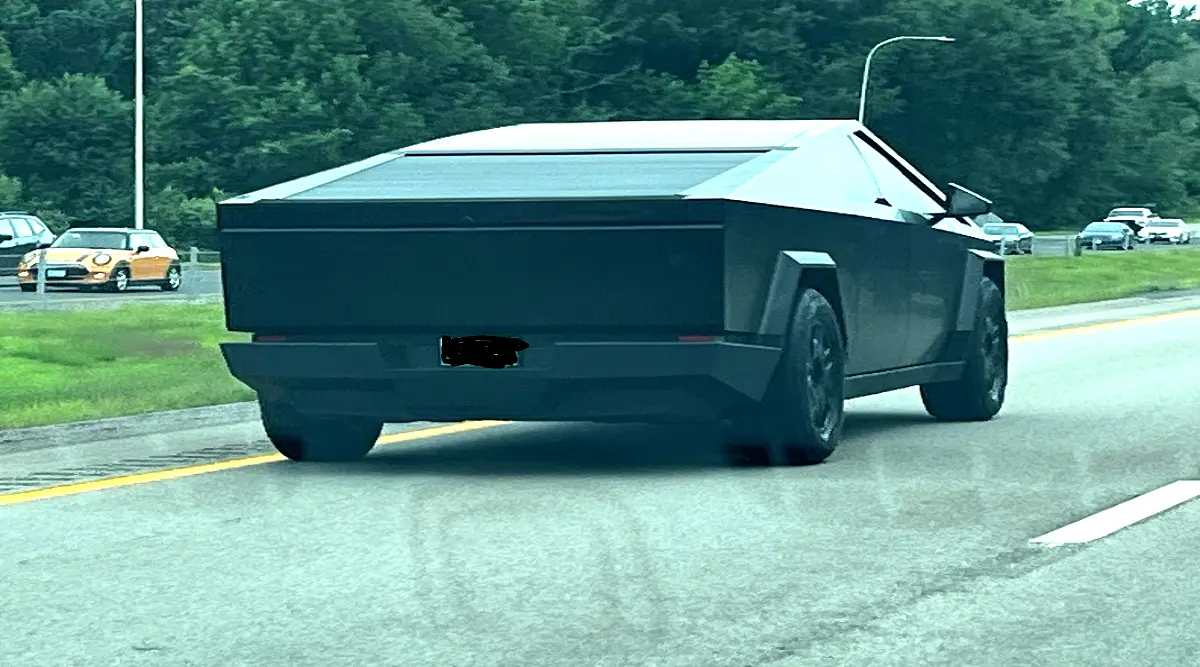
Tesla Inc. has officially announced plans to wind down production of its controversial Cybertruck at Gigafactory Texas by the middle of next year, marking a significant strategic pivot for the electric vehicle manufacturer. The decision comes as the company seeks to reallocate its manufacturing capacity and resources toward the "Cybercab," a dedicated robotaxi that Chief Executive Officer Elon Musk envisions as the cornerstone of Tesla’s future. The move follows a period of underwhelming sales performance for the Cybertruck, which struggled to meet its ambitious delivery targets, and coincides with a tightening regulatory environment following the most recent United States midterm elections.
The Cybertruck, first unveiled in November 2019 with a futuristic, stainless-steel exoskeleton, was originally intended to disrupt the lucrative North American pickup truck market. However, after years of production delays and technical challenges, the vehicle has failed to achieve the mass-market penetration Musk initially predicted. While the CEO had frequently cited a goal of 250,000 units per year, internal data and industry analyses suggest the vehicle never came close to that trajectory. The transition to the Cybercab represents a fundamental shift in Tesla’s business model, moving away from consumer-grade utility vehicles toward autonomous transport services.
A Chronology of the Cybertruck: From Concept to Sunset
The lifecycle of the Cybertruck has been defined by high-profile spectacles and persistent manufacturing hurdles. When the vehicle was first introduced five years ago, it was presented as a "tougher-than-tough" electric alternative to the Ford F-150 and Chevrolet Silverado. The launch event famously included a demonstration of the truck’s "armor glass," which shattered during a live test, a moment that became emblematic of the vehicle’s polarizing nature.
Mass production at the Gigafactory in Austin, Texas, did not begin in earnest until late 2023. Throughout 2024 and 2025, the vehicle faced several recalls and criticisms regarding its utility as a traditional work truck. Despite its zero-emission powertrain and unique aesthetic, critics argued that its towing range, bed configuration, and price point failed to resonate with the core demographic of pickup truck buyers.
In early 2026, market analysts noted that Tesla’s delivery figures for the Cybertruck were significantly lower than anticipated. While the company does not typically break down sales by individual model in its quarterly reports, estimates indicated that the vehicle barely surpassed 17,000 units in 2025. By late 2026, the announcement of the production wind-down confirmed that the Cybertruck would join the ranks of short-lived automotive experiments.
Financial Analysis: The Cost of Innovation
The financial performance of the Cybertruck project has become a point of contention for investors. According to data circulating among industry analysts and shared via social media platforms, the Cybertruck project represents a substantial net loss for the company.
The research and development (R&D) costs for the Cybertruck are estimated at approximately $2 billion. This figure accounts for the development of the proprietary "Ultra-Hard 30X Cold-Rolled stainless-steel" alloy, the specialized manufacturing processes required to bend it, and the engineering of the 48-volt electrical architecture.
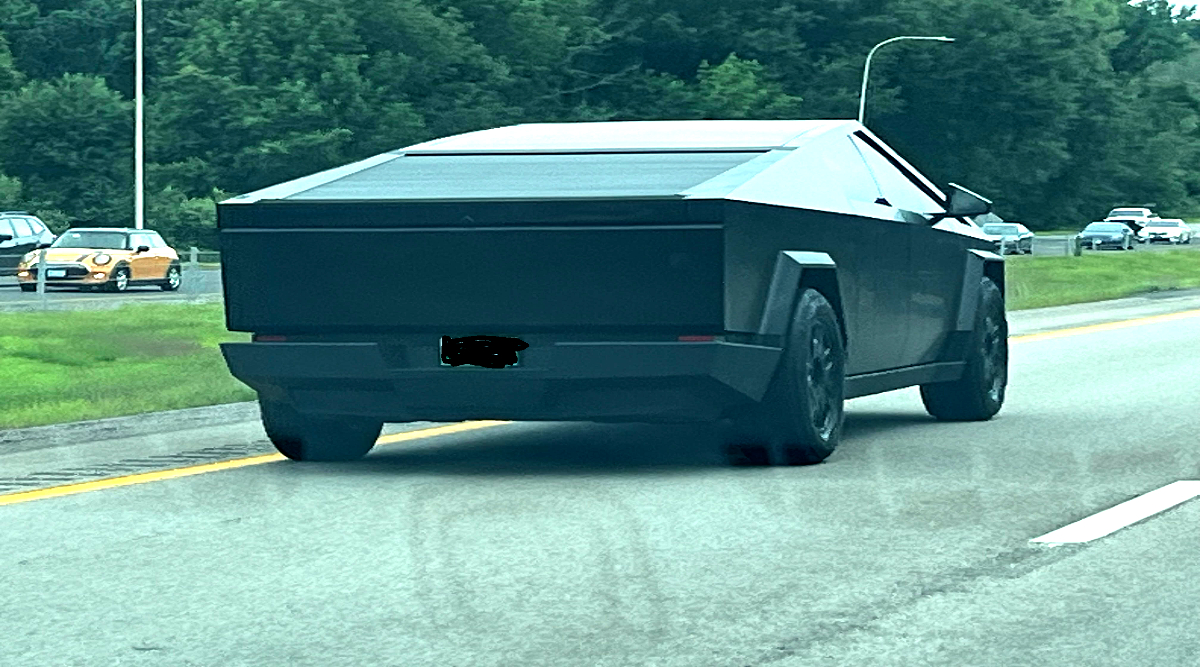
Over its three-year production span, Tesla reportedly sold approximately 70,000 units. With gross profits from these sales estimated at only $100 million, the project faces a net loss of roughly $1.9 billion. For comparison, the Ford F-150 Lightning and the Rivian R1T have seen steadier growth in the electric pickup segment, despite their own respective challenges. The vacuum left by the Cybertruck’s departure is expected to be filled by the upcoming Ford Fathom and new offerings from emerging players like Slate Auto.
The Pivot to Cybercab and Robotaxi Integration
Elon Musk’s announcement on the social media platform X (formerly Twitter) emphasized that the end of Cybertruck production is a necessary step to accommodate "increased Cybercab production." The Cybercab is designed as a fully autonomous vehicle without a steering wheel or pedals, intended to operate within a Tesla-managed ride-hailing network.
"Tesla will be winding down production of the Cybertruck at Gigafactory Texas around the middle of next year to make room for increased Cybercab production," Musk stated.
This shift is part of a broader corporate strategy to transition Tesla from a hardware-centric automotive company into an AI and robotics powerhouse. However, the Cybercab faces its own set of significant obstacles. A long-anticipated launch event for the vehicle saw Musk fail to appear, leading to immediate market volatility. Furthermore, the technology underpinning the Cybercab—Tesla’s Full Self-Driving (FSD) software—remains under intense scrutiny from safety advocates and government agencies.
Regulatory Challenges and NHTSA Investigations
The regulatory landscape for Tesla has become increasingly complex. The National Highway Traffic Safety Administration (NHTSA) has opened an Audit Query (AQ) into Tesla’s self-certification of the Cybercab. Under the National Traffic and Motor Vehicle Safety Act, manufacturers are permitted to self-certify that their vehicles meet Federal Motor Vehicle Safety Standards (FMVSS). However, the NHTSA has the authority to investigate these certifications to ensure they are backed by rigorous testing and data.
On September 4, 2026, the NHTSA announced its investigation into whether the Cybercab truly meets all applicable safety standards, particularly given its lack of traditional manual controls. Tesla’s response to the agency has been guarded. In a public filing, the company declared the entirety of its submission to be "confidential business information," shielding its technical data from public view.
This lack of transparency has drawn the ire of lawmakers, particularly following the recent midterm elections. With a shift in power in both the U.S. Congress and the Texas state legislature, Tesla is facing the prospect of more stringent oversight. Incoming legislators have signaled a desire to tighten regulations on autonomous vehicle testing and to re-examine the environmental impact of Tesla’s large-scale manufacturing operations in the Austin area.
The "Flying" Roadster and FAA Classification
In addition to the Cybercab, Tesla has recently teased a "Rocket" variant of the Tesla Roadster, which Musk claims will feature SpaceX-designed cold gas thrusters. The vehicle allegedly demonstrated a brief "flight" or thruster-enhanced jump during a private showcase. This has prompted questions regarding which federal agency holds jurisdiction over such a vehicle.

The Federal Aviation Administration (FAA) has stated that the Roadster does not meet the legal definition of an aircraft, as it is not intended for sustained flight in navigable airspace. Conversely, the vehicle’s status for public road use is uncertain. Tesla has reportedly indicated that the thruster-equipped version is intended for use on private tracks rather than public highways. This "off-road" designation may allow the vehicle to bypass certain FMVSS requirements, though the NHTSA could still implement new frameworks to address vehicles equipped with auxiliary propulsion systems.
Market Reaction and Political Context
Tesla’s stock performance has mirrored the company’s tumultuous news cycle. Following the midterm election results on November 3, 2026, Tesla’s market capitalization saw a significant decline, losing an estimated $420 billion in value over a three-day period. The downturn was attributed to investor fears that a more regulated environment would slow the rollout of autonomous features and reduce federal subsidies for electric vehicles.
However, the stock saw a partial recovery following the Cybercab production announcement. Some investors view the abandonment of the low-margin Cybertruck as a pragmatic move to focus on the potentially high-margin software-as-a-service (SaaS) model associated with a robotaxi fleet.
Adding to the company’s public profile is the release of a new documentary titled "Musk," which chronicles the CEO’s rise to power and his increasing involvement in political spheres. The film, which features the Cybertruck’s development as a central narrative arc, began streaming on major platforms like Amazon Prime Video and YouTube on November 6, 2026. The documentary highlights the "Streisand Effect" surrounding Musk’s attempts to control his public narrative, often resulting in increased scrutiny of the very issues he seeks to downplay.
Broader Implications for the Automotive Industry
The end of the Cybertruck marks a pivotal moment for the EV industry. It serves as a case study in the risks of prioritizing "first-principles" radical design over market utility. While the vehicle pushed the boundaries of automotive engineering, its failure to capture the truck-buying public suggests that even in the transition to electric power, consumers still value traditional functionality and reliability.
As Tesla prepares to vacate the pickup segment, its competitors are scaling up. The Ford Fathom, expected to launch in late 2026, aims to provide the bidirectional charging and utility that Cybertruck owners found lacking. Meanwhile, Tesla’s future is now inextricably linked to the success of the Cybercab. If the company can navigate the regulatory minefield of the NHTSA and prove the safety of its autonomous systems, it may yet redefine urban mobility. If not, the multi-billion dollar pivot away from the Cybertruck may be remembered as one of the most expensive strategic gambles in industrial history.
For now, the Cybertruck is destined for the "dustbin of automotive history," a term used by some critics to describe vehicles like the Edsel or the Pontiac Aztek—products that were heavily marketed but ultimately failed to find a sustainable audience. As Gigafactory Texas retools for the Cybercab, the automotive world will be watching to see if Tesla’s next chapter is one of true innovation or further regulatory and financial complication.
