

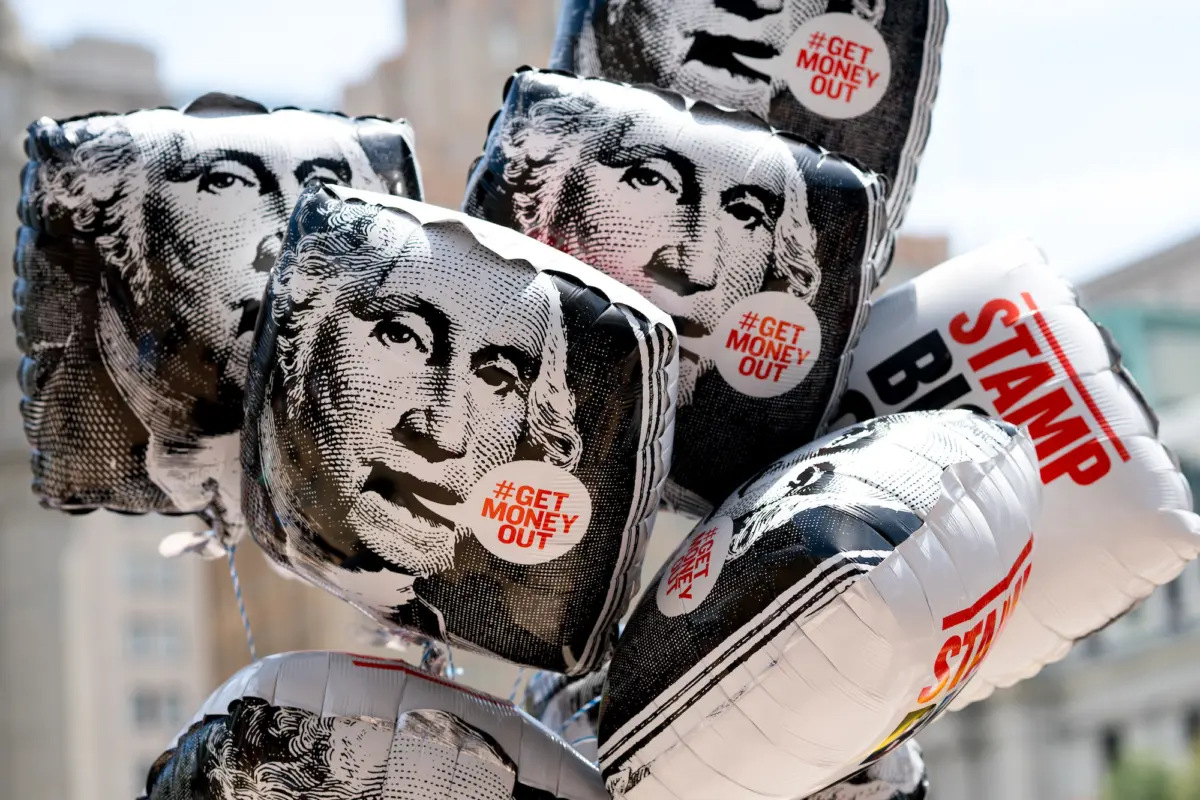
As the 2026 midterm elections concluded with a shift in power within the U.S. Senate and House of Representatives, a parallel movement emerged from the ballot boxes of several states, signaling a robust public challenge to the influence of corporate interests in the American electoral process. While candidates battled for control of the 120th Congress, voters in Montana, Michigan, Alaska, and California were tasked with deciding the future of campaign finance in their respective jurisdictions. The results, particularly in the Intermountain West and the Great Lakes region, represent a significant rebuke of the 2010 Supreme Court decision in Citizens United v. Federal Election Commission, which catalyzed a decade and a half of unprecedented political spending by non-human entities.
The 2026 election cycle has been solidified as the most expensive in United States history, with total expenditures reaching an estimated $12 billion. This figure surpasses even the 2024 presidential election, driven largely by a deluge of television, digital, and radio advertisements funded by Super PACs and "dark money" organizations. Despite this massive influx of capital, the outcomes of the midterms suggest a growing disconnect between financial dominance and electoral success, as several high-spending campaigns failed to secure victories and a record number of winning candidates campaigned on platforms rejecting corporate PAC contributions.
The Montana Plan: Redefining "Artificial Persons"
In Montana, a state with a long history of resisting corporate interference dating back to the "Copper King" era of the early 20th century, voters approved Initiative-194 (I-194) by a landslide margin of nearly 2 to 1. Known colloquially as "The Montana Plan," the initiative introduces a novel legal strategy designed to circumvent the broad protections afforded to corporations under the First Amendment without directly challenging the Supreme Court’s federal precedents.
I-194 seeks to bar "artificial persons"—a category that includes for-profit corporations, labor unions, trade associations, and nonprofit "dark money" groups—from contributing to political campaigns, donating to parties, or funding advertisements related to ballot measures. The legal architecture of the initiative rests on the distinction between "natural persons" (human beings) and "artificial persons" (entities created by law). Under I-194, the state asserts that the powers of artificial persons are limited to those "necessary or convenient" for their business or organizational purposes, explicitly excluding the power to influence elections.
Proponents of the measure, led by the Transparent Election Initiative, argue that the law restores the "sanctity" of the individual vote. Jeff Mangan, the group’s president and former Montana Commissioner of Political Practices, stated that the overwhelming support for I-194 reflects a bipartisan desire to return political power to actual constituents. However, the law faced immediate legal opposition. The Montana Republican State Central Committee, represented by the Institute for Free Speech, filed a lawsuit before the final tallies were even certified, alleging that the initiative violates the constitutional right to free expression and utilizes "vague terms" that create a chilling effect on political speech.
Michigan’s Proposition 2 and the Utility Crackdown
In Michigan, the push for campaign finance reform saw even more dramatic consensus. Approximately 82 percent of voters approved Proposition 2, also referred to as the "Money out of Politics" proposal. This measure specifically targets the nexus between government contracting and political influence. Prop 2 prohibits utility companies and any entity receiving more than $25,000 in government contracts from making campaign contributions within the state.
The inclusion of utility companies in the ban is particularly significant in Michigan, where major energy providers have historically been among the largest donors to state legislative races. Critics of the previous system argued that such contributions created a conflict of interest, where regulated monopolies could effectively "buy" favorable oversight from the officials they helped elect. Like the Montana initiative, Prop 2 was met with a prompt legal challenge from the Mackinac Center for Public Policy, which argues that the measure unfairly discriminates against specific classes of entities and infringes upon their right to participate in the democratic process.
The Historical Context of Corporate Personhood
To understand the 2026 state-level pushback, it is necessary to examine the legal trajectory that led to the current environment. The modern era of campaign finance was defined by two landmark 2010 rulings: Citizens United v. FEC and SpeechNow.org v. FEC. In the former, the Supreme Court held 5-4 that the government could not restrict independent expenditures by corporations and unions for political communications, asserting that such entities possess First Amendment rights similar to individuals.
The SpeechNow.org decision by the D.C. Circuit Court of Appeals subsequently paved the way for the creation of Super PACs—committees that can raise unlimited sums from individuals and corporations to spend on elections, provided they do not coordinate directly with a candidate’s campaign. These rulings effectively dismantled the regulatory framework established by the Bipartisan Campaign Reform Act of 2002 (McCain-Feingold).

The result has been a steady escalation in election costs. According to data from OpenSecrets, a nonpartisan group that tracks money in politics, the cost of federal elections has more than doubled since 2010. The 2026 midterms represented the culmination of this trend, with "dark money" groups—501(c)(4) nonprofits that are not required to disclose their donors—contributing a significant portion of the $12 billion total.
Alaska and California: Transparency vs. Public Financing
While Montana and Michigan focused on prohibitions, Alaska and California addressed the issues of transparency and funding mechanisms. In Alaska, voters were presented with a ballot measure to repeal a 2020 law that required any organization spending over $2,000 in an election to disclose its donor lists. The 2020 law was aimed at unmasking dark money, but opponents argued it burdened small organizations and infringed on donor privacy. As of the latest counts, the effort to repeal these disclosure requirements was narrowly failing, with 52 percent of Alaskans voting to keep the transparency rules in place.
In California, the focus was on Proposition 4, which proposed a shift toward public campaign financing for state and local elections. Public financing models typically involve the government providing matching funds for small-dollar donations, theoretically reducing a candidate’s reliance on wealthy donors. However, Proposition 4 struggled to gain a majority, trailing 49 to 51 percent in late counting. Analysts suggest that concerns over the fiscal impact on the state budget and the complexity of the proposed system may have dampened voter enthusiasm despite general support for the concept of reform.
The Rise of the "No Corporate PAC" Candidate
The 2026 midterms also highlighted a shifting strategy among political candidates. The nonprofit organization End Citizens United reported that at least 100 members of the incoming 120th Congress have pledged to reject all corporate PAC money. This cohort represents the largest such coalition in U.S. history. Notably, more than half of the Democratic candidates who successfully flipped Republican-held seats in the House of Representatives adhered to this "no-PAC" pledge.
This trend suggests that "rejecting corporate money" has evolved from a progressive talking point into a viable and effective campaign brand. Data indicates that voters increasingly view candidates who refuse PAC money as more trustworthy and independent. Furthermore, a post-election analysis by NPR suggested that despite the record spending in 2026, the effectiveness of saturated political advertising may be reaching a point of diminishing returns. In several high-profile races, candidates backed by tens of millions of dollars in Super PAC spending were defeated by opponents with significantly smaller, grassroots-funded budgets.
Hawaii’s Precedent and the Road to the Supreme Court
While Montana and Michigan are currently in the spotlight, Hawaii was the first state to successfully implement the "artificial persons" legal strategy. In June 2026, Hawaii Governor Josh Green signed a law similar to Montana’s I-194, which was the result of a bipartisan effort in the state legislature. Hawaii State Representative Garner Shimizu, a Republican, noted that the law was intended to "bring back some sanity and sanctity" to the voting process by eliminating unlimited money sources.
The Hawaii law is currently being challenged by the U.S. Chamber of Commerce and the Grassroot Institute of Hawaii. Legal experts believe that these state-level battles are part of a coordinated effort to bring the issue of campaign finance back before the U.S. Supreme Court. Since the composition of the Court has changed since 2010, and because these new state laws utilize different legal theories (such as the limitation of corporate charters rather than the direct restriction of speech), proponents of reform hope for a different outcome.
Broader Implications for American Democracy
The success of these initiatives in the 2026 midterms underscores a profound public anxiety regarding the health of American democracy. The perception that elections are "bought and sold" by a small cadre of wealthy megadonors has become a rare point of agreement across the political spectrum. By utilizing ballot initiatives, voters are bypassing legislative gridlock to enact reforms that directly impact the mechanics of power.
The immediate future of these laws rests with the judiciary. If the courts allow the "artificial persons" classification to stand, it could provide a roadmap for dozens of other states to implement similar restrictions, potentially creating a patchwork of campaign finance laws that would fundamentally alter how national corporations engage in state politics. Conversely, if the Supreme Court strikes down these measures, it would reaffirm the central holding of Citizens United, likely leading to even higher levels of spending in the 2028 presidential cycle.
For now, the 2026 midterms serve as a landmark moment where the sheer volume of political spending met a significant wall of voter resistance. Whether through the rejection of PAC money by candidates or the passage of stringent state-level bans, the American electorate has signaled that the era of unchecked corporate influence in elections is facing its most serious challenge in nearly two decades.
