

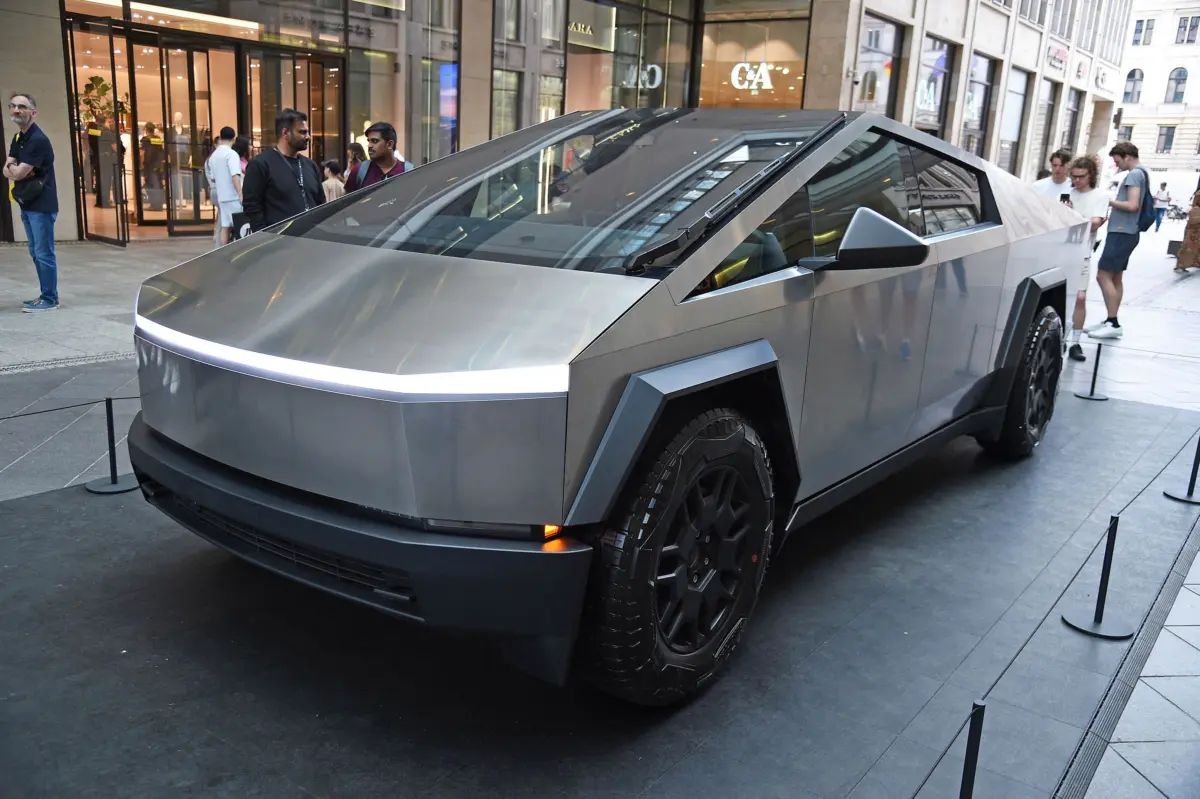
Tesla has officially announced the conclusion of Cybertruck production at its Texas Gigafactory, scheduled for next year, marking a definitive end to one of the most polarizing chapters in the history of the automotive industry. The decision to sunset the stainless-steel pickup comes amid a cooling market for oversized electric vehicles and a strategic shift by the world’s leading EV manufacturer toward more compact, mass-market designs. While the Cybertruck was once touted as a revolutionary leap in utility and aesthetics, its short lifecycle reflects broader economic, political, and logistical challenges that have fundamentally reshaped the electric vehicle landscape.
The discontinuation of the Cybertruck follows a tumultuous period for the model, characterized by production bottlenecks, high-profile safety recalls, and a brand image increasingly entangled with the controversial public persona of Tesla CEO Elon Musk. Despite an initial surge in preorders exceeding one million units, the conversion of those reservations into sustained sales failed to materialize as the vehicle’s "toxic" reputation and unconventional design alienated traditional truck buyers and eco-conscious early adopters alike.
The Rise and Fall of the Electric Behemoth
The Cybertruck was first unveiled in late 2019, promising to disrupt the lucrative American pickup truck market dominated by Ford, Chevrolet, and Ram. However, the journey from concept to consumer was fraught with delays. When deliveries finally began in late 2023, the vehicle was met with a mixture of awe and skepticism. Its 123 kilowatt-hour battery pack, weighing approximately 1,600 pounds—nearly a quarter of the vehicle’s total mass—represented the pinnacle of the "bigger is better" philosophy that dominated early EV development.
This philosophy, however, has proven unsustainable. Tesla’s decision mirrors a similar retreat by the Ford Motor Company, which canceled its electric F-150 Lightning late last year and shelved plans for a three-row electric SUV in 2024. The F-150 Lightning, which utilized battery packs ranging from 98 to 131 kilowatt-hours, faced similar hurdles in terms of manufacturing costs and weight-related inefficiencies. While the Lightning maintains a robust resale market, the appetite for new, massive electric trucks has demonstrably waned.
Industry analysts point to a confluence of factors for this decline. The sheer weight of these vehicles poses significant risks to road infrastructure and pedestrian safety. Furthermore, the massive batteries required to propel these "behemoths" consume a disproportionate share of the global lithium and cobalt supply, making it difficult for manufacturers to scale production of more affordable models.
A Chronology of the Cybertruck’s Lifecycle
To understand the sudden end of the Cybertruck, it is necessary to examine the timeline of its development and market performance:
- November 2019: Tesla unveils the Cybertruck in Los Angeles. The event becomes infamous for the "shatterproof" glass windows breaking during a live demonstration.
- 2020–2022: Production is delayed multiple times as Tesla focuses on the Model Y and navigates global supply chain disruptions.
- November 2023: The first Cybertrucks are delivered to customers. Pricing is significantly higher than the $39,900 originally promised in 2019.
- Early 2024: Tesla issues a series of recalls, including a critical fix for accelerator pedals that could become stuck, leading to unintended acceleration.
- Mid-2024: Sales data indicates that the Cybertruck is failing to break into the top tier of EV sales, overshadowed by more traditional crossovers and sedans.
- Late 2024: Reports emerge of a "toxic" brand perception, with the vehicle becoming a lightning rod for political and social debate.
- Early 2025: Tesla confirms that production at the Texas Gigafactory will cease by the end of the year to make room for the "Cybercab" and other compact platforms.
The Economic Reality of the $55,000 EV
The transition away from large EVs is driven largely by the bottom line. According to data from Cox Automotive, the average transaction price for a new electric vehicle currently stands at $55,800. This price point remains out of reach for a significant portion of the American middle class, particularly as inflation and high interest rates squeeze household budgets.
Batteries are the most expensive component of any EV. By reducing the size of the vehicle and its battery pack, automakers can significantly lower the entry price for consumers. For instance, the Cybertruck’s 123 kWh battery is more than double the size of the 48 kWh battery planned for Tesla’s upcoming Cybercab. This reduction in battery size not only lowers the cost of materials but also improves charging efficiency and reduces the strain on the national power grid.
The pivot toward smaller vehicles is also a response to the "efficiency gap." Data shows that the majority of Cybertruck owners utilize their vehicles for routine tasks—commuting, grocery shopping, and school runs—that could be performed just as effectively by a vehicle with a battery half the size, such as the Hyundai Ioniq 5.
Emerging Competitors and the Shift to Compact Utility
As Tesla and Ford retreat from the large electric truck segment, a new generation of smaller, more affordable EVs is poised to take their place. This shift is characterized by a focus on "right-sized" utility and extended-range technology.
The Ford Fathom: Scheduled for launch next year, the Fathom is a sub-$30,000 electric pickup roughly the size of Ford’s popular Maverick. Unlike the Lightning, the Fathom is designed for urban maneuverability and efficiency, signaling Ford’s new strategy of prioritizing volume over sheer power.
The Slate Pickup: Startup manufacturer Slate has seen a surge in interest for its "tiny" electric pickup, which starts at under $25,000. The vehicle features a modular design that allows it to be converted into an SUV, catering to a younger, more budget-conscious demographic that values versatility over status.
Rivian’s Strategic Slim-Down: While Rivian’s flagship R1S remains a top seller, the company is shifting its focus to the R2 and R3 platforms. The R2 SUV, launched this year, features an 88 kWh battery—significantly smaller than the packs found in its predecessor. The upcoming R3 is expected to be even more compact, targeting the crossover market that currently dominates US sales.
Political and Geopolitical Headwinds
The EV market has also been buffeted by shifting political tides. Following the removal of federal EV incentives by the Trump administration last year, domestic sales saw a sharp decline. The administration’s focus on deregulation and support for internal combustion engines has created an environment where automakers must rely on market demand rather than government subsidies.
Furthermore, geopolitical instability, specifically the ongoing conflict in the Middle East and the "Iran War," has led to volatility in global oil prices. While high gas prices typically drive interest in electric vehicles, the lack of affordable EV options and the removal of tax credits have tempered this transition. In response, many consumers have turned to the used market, where hybrid vehicle sales have hit record highs.
Looking toward the 2028 election, political analysts suggest that a potential Democratic victory could lead to a "Woke 2.0" era, characterized by a return of aggressive climate policies and consumer incentives. Automakers who are currently pivoting to smaller, more affordable EVs will be best positioned to capitalize on such a shift in the regulatory environment.
Safety and Environmental Implications
Beyond the balance sheet, the death of the gigantic EV is being hailed as a victory for public safety. High-hooded, heavy vehicles like the Cybertruck have been criticized by safety advocates for their poor visibility and the increased lethality they pose to pedestrians and cyclists in collisions. A move toward smaller vehicles with lower profiles is expected to reduce traffic fatalities in urban areas.
Environmentally, the shift is equally significant. Smaller batteries require fewer rare-earth minerals, reducing the environmental footprint of the mining industry. Moreover, smaller EVs require less energy per mile, making them more compatible with a green energy grid that is still in the process of scaling up to meet demand.
Tesla’s Future: The Cybercab and Beyond
Elon Musk has defended the decision to end Cybertruck production by framing it as a necessary step to accelerate the company’s next phase: autonomous transport. The Texas Gigafactory will reportedly be retooled to focus on the Cybercab, a dedicated robotaxi designed for high-frequency urban use.
The Cybercab’s 48 kWh battery reflects Tesla’s realization that the future of transport lies in efficiency and autonomy rather than heavy-duty personal ownership. By focusing on a smaller platform, Tesla aims to achieve the elusive $25,000 price point that Musk has promised for years.
While the Cybertruck will remain a fixture of pop culture and a collector’s item for those who managed to secure one, its departure from the production line marks the end of an era. The automotive industry has learned a costly lesson: the electric revolution will not be won with stainless steel and three-ton trucks, but with affordability, efficiency, and a return to the compact car.
