

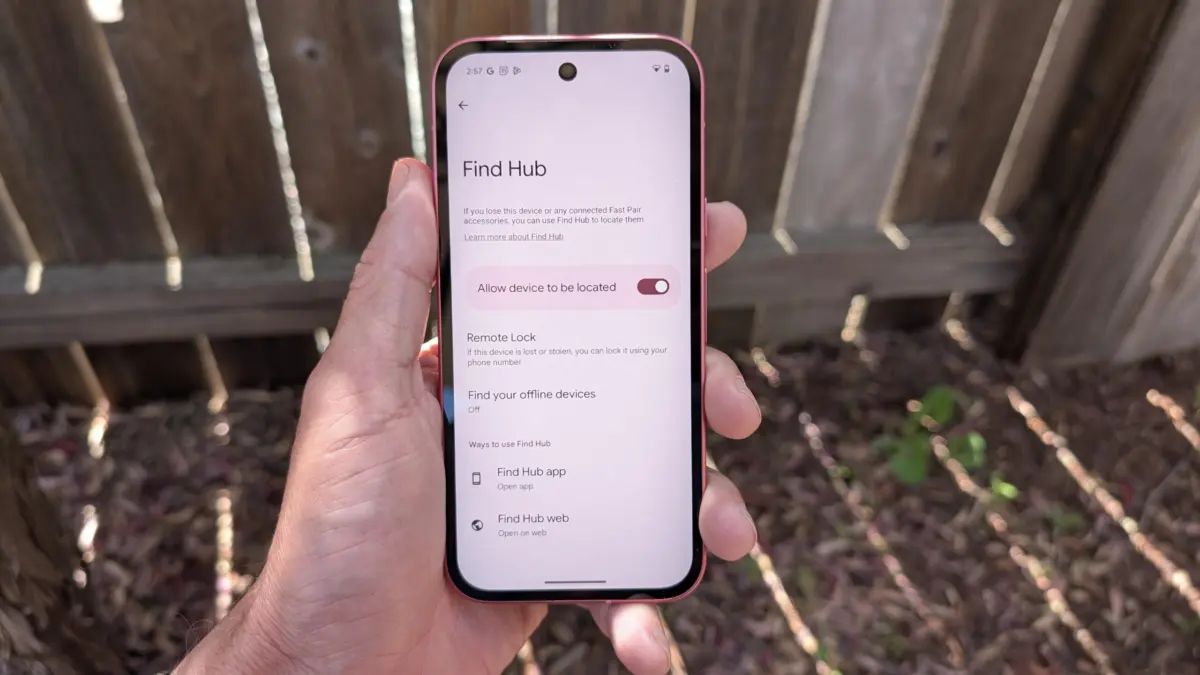
The global landscape of device recovery and asset tracking has undergone a significant transformation as Google officially begins the rollout of its "Notify when left behind" feature for the Find My Device ecosystem. This critical update addresses a long-standing functional disparity between Android and iOS, providing users with proactive alerts the moment a registered Bluetooth tracker or compatible device is separated from their primary smartphone. While Google’s Find My Device network was revamped earlier this year to utilize a crowdsourced network of over a billion Android devices, the addition of separation alerts represents a shift from reactive searching to proactive loss prevention. This feature is currently manifesting in the Google Find My Device app for specific third-party hardware, including the Chipolo ONE Point and CARD Point trackers, as well as Motorola’s Moto Tag, signaling the beginning of a broader integration strategy across the Android hardware landscape.
The Chronology of Google’s Tracking Evolution
The journey toward a comprehensive tracking network for Android has been marked by strategic delays and industry-wide collaborations. Google first announced the overhaul of its Find My Device network at the I/O 2023 developer conference. However, the actual deployment was delayed for nearly a year as Google and Apple collaborated on a joint industry standard for unwanted tracking alerts. This partnership was intended to ensure that both iOS and Android users would be notified if an unknown tracker—regardless of the brand—was traveling with them, thereby mitigating the risk of digital stalking.
Once the "Detecting Unwanted Location Trackers" specification was finalized and implemented in iOS 17.5 and Android 6.0+, Google officially launched its crowdsourced network in April 2024. The initial launch focused on the fundamental ability to locate offline devices using the massive install base of Android hardware. Following the launch, tech enthusiasts and beta testers began spotting references to "separation alerts" in Google Play Services code strings throughout the summer of 2024. By October, preview versions of the feature were seen in limited testing environments, and as of November 2024, the feature is moving into general availability for users of flagship third-party trackers.
Technical Specifications and Functional Mechanics
The "Notify when left behind" feature operates on the principle of a persistent Bluetooth "handshake" between a smartphone and a registered peripheral. When the signal strength drops below a specific threshold or the connection is severed entirely, the Android system triggers a high-priority notification. This alert informs the user that a specific item, such as a wallet or a set of keys, is no longer in their immediate vicinity.
A critical component of this feature is the "Safe Zones" or "Trusted Places" logic. To prevent "notification fatigue"—where a user is bombarded with alerts every time they walk to another room in their house—Google has integrated a geofencing exclusion. Currently, the system is designed to suppress alerts when the device is left at the user’s registered home address. This is determined via the home location saved in the user’s Google Account settings. While this provides a baseline level of convenience, it currently lacks the granular customization found in Apple’s iOS, which allows users to designate multiple "Safe Locations" such as offices, gyms, or relatives’ homes.
The hardware requirements for this feature are currently specific. While the Find My Device network theoretically supports a vast array of devices, the separation alerts require firmware compatibility that allows for constant background monitoring without excessive battery drain. The Chipolo and Motorola tags were the first to receive this capability due to their close development partnership with Google during the network’s nascent stages.
Comparative Market Analysis: Android vs. Apple Find My
The introduction of separation alerts is a direct move to achieve parity with Apple’s Find My network, which has offered "Notify When Left Behind" since the release of iOS 15 in 2021. For years, the absence of this feature was cited by market analysts as a primary reason for "ecosystem stickiness" within the Apple camp. Users who frequently misplaced items found the AirTag ecosystem superior not just for its recovery capabilities, but for its preventative alerts.
However, Google’s implementation offers a distinct advantage: hardware diversity. Apple’s Find My network is largely a closed loop, primarily favoring AirTags and a limited selection of third-party partners like VanMoof or Belkin. In contrast, Google’s Find My Device hub is designed as an open-platform aggregator. The network is built to eventually support a massive spectrum of hardware, ranging from high-end Sony and Bose headphones to smartwatches from Samsung and Pixel, and even specialized professional equipment.

Data from market research firms suggests that the global Bluetooth tracker market is expected to grow at a compound annual growth rate (CAGR) of over 12% through 2030. By integrating separation alerts into the core Android OS, Google is positioning itself to capture a larger share of this market, particularly in regions where Android dominance exceeds 80%, such as parts of Europe, Asia, and Latin America.
Privacy Infrastructure and User Security
In an era of heightened digital surveillance concerns, Google has emphasized the privacy-first architecture of these alerts. The location data used to trigger a "left behind" notification is encrypted end-to-end. When a device is reported lost and the crowdsourced network is engaged, the location of the lost item is visible only to the owner. Google cannot access this location data, nor can the owners of the "crowdsourced" devices that helped locate the item.
Furthermore, the separation alerts are designed to be "user-initiated." This means that the feature is not forced upon every connected device but is instead a toggleable option within the Find My Device app settings. This gives users control over which items they deem "critical" enough to warrant active monitoring. For instance, a user might enable alerts for a laptop bag but disable them for a pair of secondary gym headphones.
Impact on the Third-Party Hardware Ecosystem
The rollout of this feature is expected to spark a new wave of hardware development among Android-focused accessory makers. Until now, many third-party trackers for Android relied on proprietary apps to provide separation alerts. These apps often suffered from aggressive Android battery optimization settings, which would "kill" the background process, leading to unreliable notifications.
By moving the "Notify when left behind" logic into the Google Play Services layer, Google is providing a standardized, system-level API that third-party manufacturers can tap into. This ensures that the alerts are reliable, battery-efficient, and integrated directly into the system notification shade. Industry experts anticipate that major players like Pebblebee, Eufy, and Samsung (via their SmartTag line) will move toward deeper integration with Google’s unified hub to take advantage of these system-level features.
Future Implications and Technical Outlook
Looking ahead, the next frontier for Google’s Find My Device network involves the integration of Ultra-Wideband (UWB) technology and "Channel Sounding" via Bluetooth 6.0. While the current separation alerts rely on Bluetooth signal strength (RSSI), which can be inconsistent due to physical obstructions, UWB offers centimeter-level accuracy. Google’s upcoming "Pixel Tag" and future iterations of the Moto Tag are expected to leverage UWB to provide "Precision Finding" alongside separation alerts, guiding users to their left-behind items with directional arrows on their phone screen.
Moreover, the expansion of this feature to "Fast Pair" compatible devices is a significant goal. If Google can successfully implement separation alerts for all Fast Pair-enabled headphones and wearables, it will create the world’s largest proactive loss-prevention network. This would mean that any pair of modern Bluetooth headphones, regardless of the manufacturer, could theoretically alert a user if they are left behind at a coffee shop or on a train.
Conclusion
The activation of "Notify when left behind" on the Google Find My Device network is more than a simple software update; it is a strategic maturation of the Android ecosystem. By providing a reliable, system-level solution for loss prevention, Google is addressing a critical user pain point and narrowing the functional gap with its primary competitor. As the rollout continues to encompass more devices and adds features like customizable "Safe Zones," the Android Find My Device hub is poised to become an indispensable tool for the modern, multi-device consumer. For now, users of Chipolo and Motorola tags represent the vanguard of a new era in Android device security, where the smartphone serves as a vigilant guardian of one’s entire digital and physical armory.
