

In the wake of the most recent gubernatorial elections across the United States, a cohort of 19 newly elected leaders is preparing for a transition that involves far more than just policy briefings and staff appointments. For these officials, the victory marks the beginning of a logistical relocation into some of the nation’s most storied and architecturally significant properties. While the inauguration ceremonies serve as the public face of this transition, the private reality involves moving into executive residences that often double as working offices, historic museums, and symbols of state sovereignty. Across the country, 45 states provide an official governor’s mansion, leaving only Arizona, Idaho, Massachusetts, Rhode Island, and Vermont as the exceptions where leaders must secure their own housing. These executive residences are rarely mere houses; they are grand estates possessing deep historical roots, and in some instances, reputations for being haunted, reflecting the complex heritage of the American states they represent.

The transition of power in the executive branch of state government is a ritual steeped in tradition, yet it is also a moment of practical evaluation regarding the state’s architectural assets. While most governors embrace the opportunity to reside in these historic landmarks, the choice is not always universal. Historical data indicates a growing trend of governors opting for privately owned residences due to personal preference, family needs, or the deteriorating condition of official state property. For example, California’s outgoing leadership often favored private dwellings over the official Victorian mansion in Sacramento, with Gavin Newsom recently listing a $7.5 million Fair Oaks estate that served as his primary residence. Similarly, the executive residences in Montana and Nebraska have faced challenges; the former currently sits empty and in a state of disrepair, while the latter has not been inhabited by a sitting governor in over a decade. Conversely, Virginia maintains the distinction of the oldest continuously inhabited executive residence in the United States, with every governor since 1813 calling the property home.

As the incoming class of governors prepares for January, the architectural diversity of their future homes offers a window into the regional identities of the states they will lead. In Alabama, Republican Tommy Tuberville will take stewardship of a 119-year-old neoclassical masterpiece in Montgomery. Designed in 1907 by architect T. Weatherly Carter, the 17-room residence is defined by its four massive Corinthian columns and a grand foyer featuring a bifurcated staircase. This structure represents the early 20th-century American obsession with Greek and Roman symmetry, a theme that resonates through many Southern executive residences.

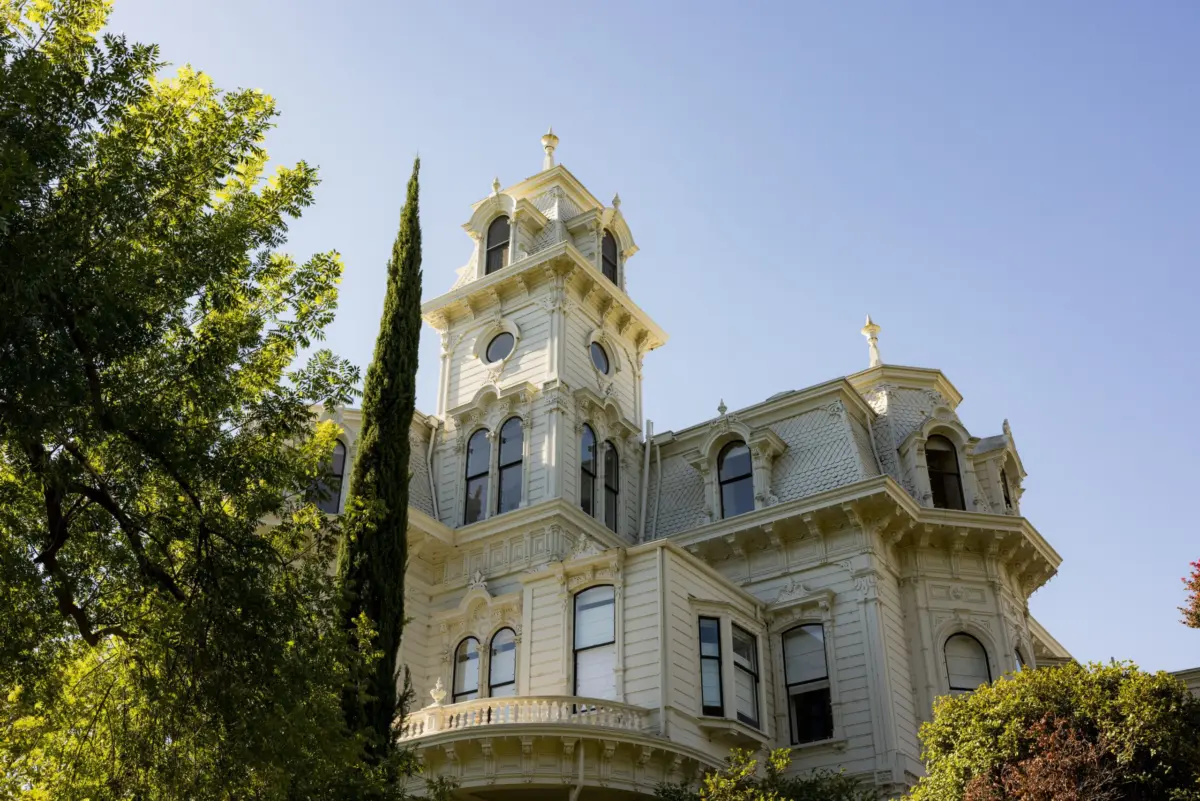
In California, Democrat Xavier Becerra will inherit a three-story Victorian in Sacramento that spans approximately 20,000 square feet. This residence has a storied political history, having been famously rejected by Ronald and Nancy Reagan in 1967, who deemed it "uninhabitable" and fire-prone. After decades of serving as a museum, the house underwent an extensive $4.1 million renovation in 2015 to modernize its infrastructure while preserving its 30 rooms, Italian marble fireplaces, and original wood floors. The property remains a symbol of the Gilded Age in the West, complete with a kidney-shaped swimming pool that highlights the state’s mid-century cultural shifts.

The Rocky Mountain region offers a different aesthetic in Colorado, where Democrat Phil Weiser will move into the red-brick residence known as "Colorado’s Home." Built in 1908 and utilized as the official residence since 1960, this Colonial Revival-style mansion sits on a one-acre plot featuring a historic gazebo and a greenhouse. A unique feature of this residence is its commitment to promoting state industry; thanks to a tradition started by former Governor John Hickenlooper, the home features a rotating selection of local Colorado beers on tap, serving as a functional venue for state-sponsored hospitality.

The Southern states continue to lean heavily into the Greek Revival style, as seen in Florida and Georgia. Republican Byron Donalds, who made history as Florida’s first Black governor, will reside in a Tallahassee mansion completed in 1956. This structure was built to replace an original 1907 residence that had succumbed to age and structural failure. The current site includes a screened swimming pool and extensive rose gardens. In Georgia, Democrat Keisha Lance Bottoms, the nation’s first Black woman governor-elect, will move into a 30,000-square-foot Greek Revival mansion in Atlanta. Designed by A. Thomas Bradbury in 1967, the home features 30 rooms across three levels, representing the mid-20th-century effort to maintain classical aesthetics on a massive scale.

The Midwest provides a variety of architectural styles, from the Second Empire to the Tudor Revival. In Iowa, Democrat Rob Sand will occupy "Terrace Hill," an 18,000-square-foot Second Empire mansion in Des Moines. Built in 1869, the first two floors of the property are open to the public as a museum, reflecting the "People’s House" philosophy where the governor’s private life is integrated into the public’s heritage. Michigan’s Jocelyn Benson will manage a unique dual-residence arrangement. While the primary executive residence is a 1957 ranch-style home in Lansing, the governor also has access to an Arts-and-Crafts-style summer residence on Mackinac Island, a property that underscores the state’s historic ties to the Great Lakes.

In Minnesota, Democrat Amy Klobuchar will take over a 16,000-square-foot stone-and-brick dwelling in St. Paul. Built in 1912, the residence is a hybrid of English Tudor and Beaux-Arts styles, featuring seven bedrooms and nine fireplaces. Similarly, Ohio’s Amy Acton will move into a 1925 Tudor-style mansion in Bexley. The Ohio property is particularly noted for its three acres of gardens, which include a "Storybook Trail" inspired by the works of Beatrix Potter, illustrating how these residences often serve as educational and community spaces for the surrounding neighborhood.

The Western and Southwestern transitions also highlight historical firsts and architectural shifts. Nevada’s Aaron Ford, the state’s first Black governor, will move into a 1909 Classical Revival mansion in Carson City, featuring a formal governor’s study and dedicated luncheon rooms. In New Mexico, Democrat Deb Haaland makes history as the first Native American woman governor-elect. She will reside in a mid-century modern structure completed in 1955, a departure from the more common colonial styles found in the East. This Santa Fe property, referred to as "The People’s House," reflects the regional modernism that took hold in the Southwest during the post-war era.

In the Southern plains, Oklahoma’s Mike Mazzei will oversee a 1928 Dutch Colonial residence in Tulsa. The 14,000-square-foot home is architecturally linked to the State Capitol through its limestone façade. One of its most famous features is a swimming pool shaped like the state of Oklahoma, a piece of political kitsch that has become a beloved part of the state’s lore. Tennessee’s Marsha Blackburn will move to "Far Hills," a 1931 Georgian-style mansion in Nashville’s Oak Hill suburb, which has served as the executive residence since 1949.

Texas and South Carolina offer some of the oldest residences in the nation. In Texas, Gina Hinojosa will be the first Latina to occupy the 1856 Greek Revival mansion in Austin, a property that has survived the Civil War and the reconstruction era. South Carolina’s Alan Wilson will inhabit an 1855 Federal-style mansion in Columbia, which originally served as officers’ quarters for a military academy before becoming the governor’s residence in 1868.

While most governors-elect are preparing for these historic moves, others face different circumstances. In Rhode Island, Helena Buonanno Foulkes will not have a state-provided mansion, as the state is one of the five without such a provision. Instead, she will continue to utilize her private real estate portfolio, which includes multi-million dollar properties in Narragansett and Providence. This lack of a formal residence often sparks debate regarding the accessibility of the governor to the public and the security requirements of modern executive office.

The maintenance of these properties is a significant fiscal and political responsibility. As seen in Wyoming, where Eric Barlow will move into a residence near Frontier Park, there is often a push for modernization. Wyoming is currently considering an upgraded version of its executive residence to address security and functionality concerns, a trend seen in many states where 19th-century charm often clashes with 21st-century technological and safety needs.

Ultimately, the move into a governor’s mansion is more than a change of address; it is an immersion into the history of the state. These buildings act as the "People’s House," serving as the backdrop for legislative negotiations, diplomatic receptions, and historical preservation. As the 19 new governors take their oaths of office in January, the walls of these neoclassical, Victorian, and Georgian estates will begin a new chapter in the ongoing narrative of American state governance. The preservation of these sites ensures that while political leadership changes with the seasons, the architectural legacy of the executive branch remains a permanent fixture of the American landscape.
