

The skyline of Edmonton, Canada, now serves as the backdrop for a revolutionary fusion of clean energy and cultural storytelling, anchored by the world’s largest solar panel mural. Stretching across more than 4,000 square feet of a 12-story residential tower known as the SunRise, the installation represents a pivotal shift in how urban environments integrate renewable technology. Designed by celebrated Indigenous artist Lance Cardinal, the mural—titled "The Land We Share"—is not merely a decorative facade but a functional power plant that challenges the long-standing architectural criticism that solar arrays are eyesores. By utilizing specialized film technology to transform traditional photovoltaic cells into a vibrant tapestry of Cree and Chinese cultural symbols, the project provides a blueprint for overcoming aesthetic resistance to green energy in historic and densely populated urban centers.

The SunRise Tower: A Case Study in Functional Art
The SunRise Tower, originally constructed in 1970, recently underwent a massive deep-energy retrofit designed to bring the aging structure into the modern era of sustainability. The centerpiece of this transformation is the south-facing mural, which earned a Guinness World Record for its scale and complexity. The artwork depicts a harmonious blend of figures, including the 12 animals of the Chinese zodiac and the seven sacred teaching animals of the Cree totem—the bear, beaver, eagle, buffalo, wolf, turtle, and Sabe (Sasquatch).
This selection of imagery was intentional, reflecting the demographics of the surrounding neighborhood and the history of the land. According to project stakeholders, the goal was to create a "visual land acknowledgment" that serves the community while generating electricity. The installation was managed by Chandos Construction, which utilized a sophisticated layering process to ensure the art remained durable against the harsh Canadian elements. The project was made possible through a strategic partnership with the Canada Infrastructure Bank, which provided the necessary capital to meet stringent renewable energy targets. Without the mural, the building might have struggled to gain the same level of community enthusiasm and regulatory support required for such a high-profile renovation.

The Evolution of Solar Technology: From Stealth to Statement
For decades, the solar industry focused almost exclusively on maximizing efficiency, which led to the ubiquity of the standard black or dark blue silicon panel. While effective at absorbing photons, these panels often faced stiff opposition from homeowners’ associations (HOAs), historic preservation boards, and local planning committees. In cities like Amsterdam and Houston, "aesthetic-focused bans" have historically prevented the installation of solar arrays on buildings deemed culturally or architecturally significant.
Solar art represents the next phase of this evolution. It moves away from "stealth solar"—technologies like Tesla’s Solar Roof that attempt to mimic traditional shingles—and toward "statement solar." This approach treats the energy-generating surface as a canvas. The technology relies on a thin, decorative, and highly porous film applied over standard panels. These films often use a pixelated or "dot-matrix" pattern, which allows a high percentage of sunlight to pass through the gaps in the printed image to reach the photovoltaic cells beneath. While this creates a minor barrier to light absorption, it opens up millions of square feet of vertical building space that was previously off-limits due to zoning or aesthetic restrictions.

Technical Trade-offs and the Efficiency Gap
While solar murals offer significant social and architectural advantages, they are not without technical and economic challenges. The primary hurdle is the "efficiency penalty." Because the decorative film reflects or blocks a portion of the incoming solar spectrum to create visible colors, the panels behind the art are inherently less productive than their unadorned counterparts.
In the case of the Edmonton SunRise mural, project manager Dustin Tonsi noted that the artistic panels are approximately 30 percent less efficient than regular photovoltaics. This reduction occurs because the pigments and materials used to create the image inevitably interfere with the flow of photons. However, the developers mitigated this loss by covering the remaining sides of the 12-story building with standard, high-efficiency panels. By balancing "artistic panels" with "industrial panels," the building was still able to meet its net-zero energy goals.

Furthermore, the cost of these installations remains higher than traditional arrays. Experts estimate that custom solar films like "SolarSkin," developed by the MIT-born startup Sistine Solar, can add roughly 10 percent to the total cost of a solar project. Because these designs are often bespoke and require artist commissions, they do not yet benefit from the economies of scale that have driven down the price of standard silicon panels by nearly 90 percent over the last decade.
Chronology of the Solar Art Movement
The transition of solar panels from industrial equipment to public art has followed a distinct timeline:

- 2008-2010: The founding of the Land Art Generator Initiative (LAGI). This organization began hosting international design competitions, inviting architects and artists to conceptualize large-scale public artworks that also function as clean energy power plants.
- 2014-2016: Early pilot projects emerge in the United States and Europe. Researchers at MIT begin developing the "SolarSkin" technology, aiming to bridge the gap between efficiency and aesthetics.
- 2017-2020: Corporate adoption begins. Major entities like Disney and Universal Studios start experimenting with branded solar arrays, such as the 20-megawatt Mickey Mouse-shaped solar farm in Florida and the Comcast/NBCUniversal peacock logo array at Universal Orlando Resort.
- 2021-2024: Community-centric murals gain traction. Projects in San Antonio, Texas, and Seattle, Washington, use solar murals to tell local stories while powering schools and urban farms.
- 2025-2026: The completion of the Edmonton SunRise Tower marks the transition of solar art into the realm of "mega-projects," proving that the technology can be scaled to cover high-rise urban architecture.
Global Case Studies: Community Impact and Branding
Beyond Edmonton, solar art is making inroads in diverse environments, each serving a unique social or commercial purpose.
In Seattle, the Cherry Street Farm—an urban hydroponic vegetable facility—features two prominent solar murals titled "The Green Age of Hip Hop" and "The Flow of Life." These installations, supported by the Land Art Generator Initiative, capture early morning and late afternoon sunlight. More importantly, they act as a "visual lighthouse" for the neighborhood, signaling the farm’s commitment to sustainability and providing an educational tool for local youth.

In San Antonio, Texas, the "Ella" mural by artist Kat Cadena provides five megawatt-hours of electricity annually to Booker T. Washington Elementary School. The mural, which depicts a woman holding a child surrounded by butterflies, serves as a source of pride for the Westside community. Similarly, the "En Aquellos Tiempos" mural at J.T. Brackenridge Elementary combines historic photographs with solar technology, preserving the community’s heritage while offsetting the school’s energy costs.
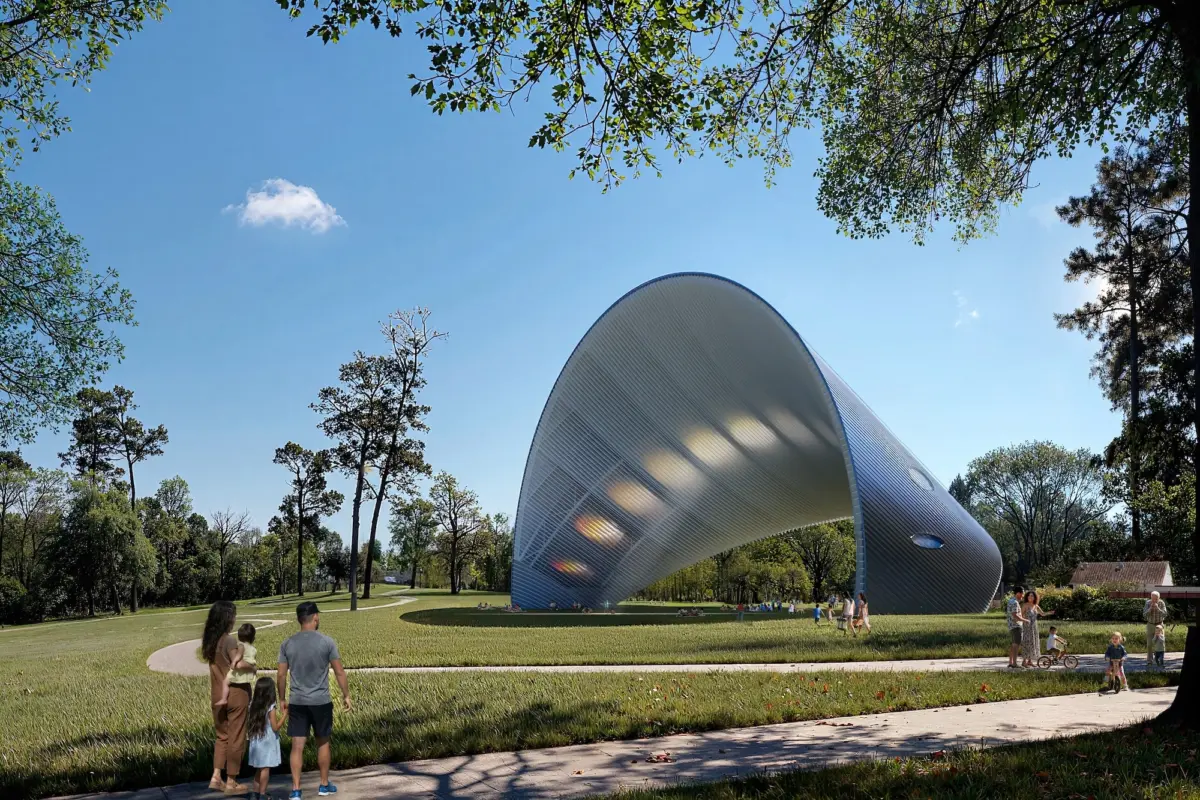
In Houston, the "Arch of Time" by Riccardo Mariano is currently in development. This massive solar sculpture is designed to function as a giant sundial, casting shadows that mark the passing hours while generating enough electricity to power the entirety of Mason Park. These projects demonstrate that when solar energy is presented as art, it ceases to be a point of contention and becomes a point of destination.

Academic Research and Public Perception
A 2026 study conducted in Singapore (currently in preprint) provides empirical data to support the "aesthetic boost" theory. Researchers found that participants were significantly more likely to support the installation of solar panels on historic or culturally sensitive buildings when the panels featured artistic or geometric patterns. The study revealed that ordinary black panels were often perceived as "intrusive" or "disrespectful" to heritage architecture, whereas solar murals were seen as a "modern tribute" to the building’s history.
This shift in perception is critical for the "NIMBY" (Not In My Backyard) phenomenon that has slowed the rollout of renewable energy in many regions. If developers can present solar arrays as neighborhood assets rather than industrial necessities, the timeline for project approval could be shortened significantly.

Future Implications and Policy Considerations
The success of projects like the SunRise Tower suggests that solar art could become a standard requirement for urban redevelopment. As municipal governments set more aggressive carbon-neutral targets, they will likely face pressure to ensure that the transition to green energy does not come at the expense of urban beauty.
However, for solar murals to move from "one-off" boutique projects to mainstream adoption, several things must happen:

- Subsidy Reform: Current renewable energy subsidies often focus strictly on kilowatt-hour production. To encourage solar art, governments may need to introduce "aesthetic grants" or "public art credits" that offset the higher cost and lower efficiency of decorative panels.
- Standardization: Companies like Sistine Solar are working to create "preset" designs that can be mass-produced, lowering the cost for homeowners and small businesses.
- Architectural Integration: Modern architects are increasingly incorporating "Building-Integrated Photovoltaics" (BIPV) into their initial designs, rather than treating solar as an afterthought to be bolted onto a roof.
The solar mural in Edmonton is more than a record-breaker; it is a proof of concept. It proves that the transition to renewable energy does not have to be a choice between function and form. By embracing the "Land We Share," the SunRise Tower demonstrates that the future of the power grid can be as diverse, colorful, and culturally rich as the communities it serves. As the technology matures and costs decrease, the "ugly solar panel" may soon become a relic of the past, replaced by a new era of infrastructure that is as inspiring to look at as it is vital to the planet’s survival.
