

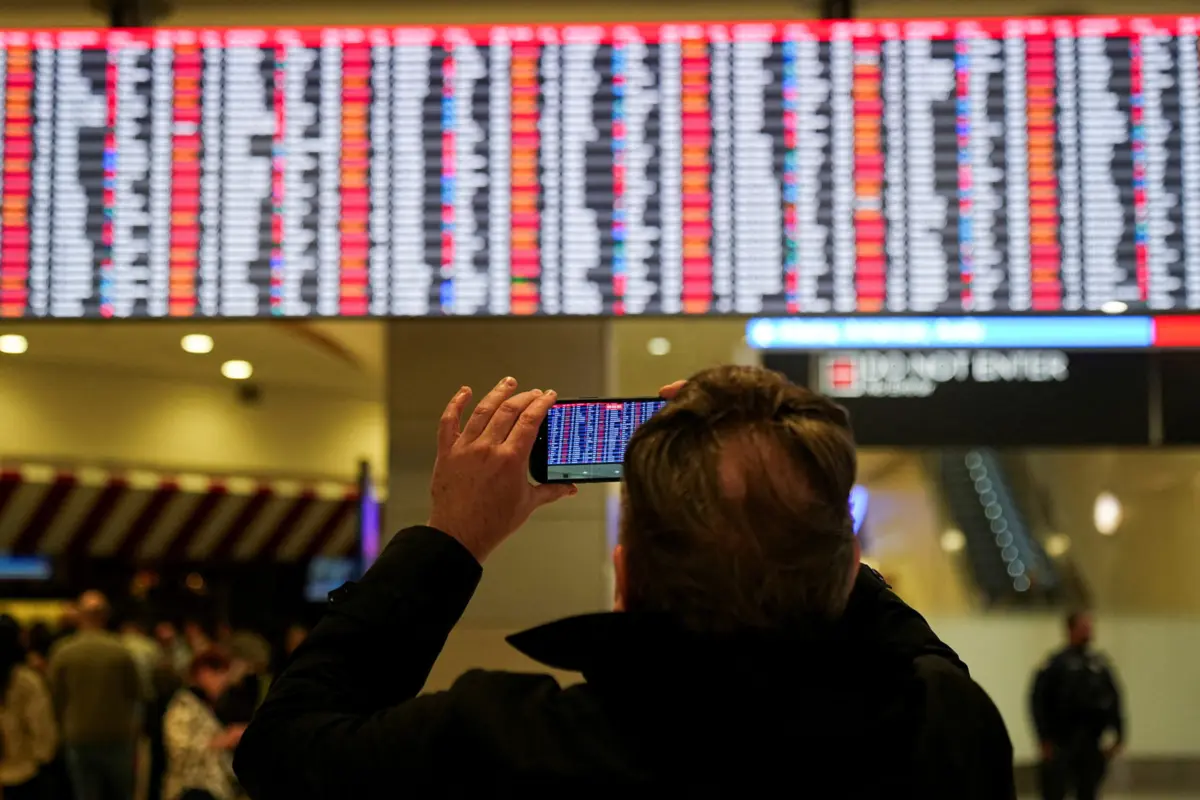
A group of 13 Democratic senators, led by Senate Commerce Committee Chair Maria Cantwell, has formally requested that the Federal Aviation Administration (FAA) suspend its ongoing telecommunications infrastructure upgrades following a massive technical failure that grounded thousands of flights across the United States. The demand comes in the wake of a catastrophic system instability that forced the agency to issue a rare nationwide ground stop, the longest since the terrorist attacks of September 11, 2001. Lawmakers are now calling for a comprehensive investigation into the agency’s modernization efforts, specifically the replacement of thousands of network routers, which are believed to be the catalyst for the recent disruption.
The senators expressed grave concerns regarding the reliability and safety of the current transition plan. In a letter addressed to the FAA on Tuesday, the lawmakers argued that the agency must address outstanding technical vulnerabilities before proceeding with the installation of over 3,000 additional devices. The request highlights a growing tension between the urgent need to modernize the nation’s aging aviation infrastructure and the immediate necessity of maintaining a stable, operational airspace.
The Genesis of the Crisis: A Technical Failure in the Heartland
The disruption began on a Friday morning when the FAA’s primary communications network became unstable, leading to a cascading failure that affected both radar feeds and radio communications between pilots and air traffic controllers. The agency was forced to order a nationwide ground stop that lasted approximately four hours. While four hours may seem brief in a vacuum, the ripple effects were monumental, resulting in more than 10,000 flight cancellations and tens of thousands of delays that plagued the American aviation sector for several days.
Initial investigations conducted by the FAA and its primary network service provider, L3Harris, identified the root cause in two specific locations: a radar site in Amarillo, Texas, and a radio communications facility in El Dorado, Arkansas. At these sites, technicians were engaged in a multi-year project to replace legacy copper-wire infrastructure with modern fiber-optic lines. As part of this transition, older networking hardware was being replaced with new routers manufactured by Juniper Networks.
According to the FAA’s preliminary findings, the upgrade process triggered an unforeseen "data flood." When the new equipment was integrated, the network became unstable, causing data packets to overwhelm other critical systems. This congestion effectively "blinded" sections of the air traffic control network, making it impossible to guarantee the safe separation of aircraft and necessitating the immediate halt of all departures.
Legislative Intervention and the Call for a Pause
The letter sent by the group of Democratic senators emphasizes that the scale of the remaining work poses a significant risk to the national airspace. Data provided by L3Harris indicates that the copper-to-fiber transition involves the replacement of 3,648 routers with Juniper devices. To date, approximately 400 of these devices have been installed, but only 69 are currently operational. The senators argue that if a failure at just two sites could paralyze the entire nation’s air travel, the prospect of 3,000 more installations without a proven safeguard is unacceptable.
"With thousands of conversions remaining, the FAA must address outstanding safety and reliability concerns before expanding installation," the senators wrote. The group is demanding a full accounting of why the "fail-safe" mechanisms intended to isolate local technical issues failed to prevent a national systemic collapse.
The involvement of the Senate Commerce Committee adds significant weight to the demand, as the committee oversees the FAA’s budget and regulatory authority. The lawmakers are seeking a detailed timeline of the remaining upgrades and an assurance that the agency has implemented rigorous testing protocols to prevent a recurrence of the data flooding issue.
A Chronology of Aviation Infrastructure Challenges
To understand the gravity of the recent ground stop, it is essential to view it within the context of the FAA’s recent history of technical difficulties. The American aviation system is currently grappling with the consequences of decades of underinvestment and the reliance on "legacy" systems—technology that is often older than the pilots flying the planes.
- January 2023: The FAA suffered a major outage of the Notice to Air Missions (NOTAM) system, which provides pilots with essential safety information. This led to the first nationwide ground stop since 9/11 and was attributed to a corrupted database file during routine maintenance.
- Mid-2024: Various regional delays were reported as the FAA began the transition from the legacy "Time Division Multiplexing" (TDM) systems to modern Internet Protocol (IP) based networks.
- Last Friday: The Amarillo and El Dorado upgrades triggered the most significant network instability in the agency’s modern history, leading to the four-hour total ground stop.
- Last Sunday: Transportation Secretary Sean Duffy and the FAA issued statements confirming the link between the L3Harris upgrades and the system failure.
- Tuesday: The FBI confirmed its involvement in the investigation, alongside the Department of Transportation (DOT) and the FAA, though officials have clarified there is currently no evidence of a cyberattack or malicious intent.
Technical Analysis: Why the Upgrade Failed
The transition from copper to fiber is not merely a physical change of cables; it represents a fundamental shift in how data is routed through the National Airspace System (NAS). Copper lines using TDM technology are inherently "point-to-point," meaning a failure in one circuit is usually isolated. Modern fiber-optic networks using IP routing are far more efficient but are also more interconnected.
In the case of the recent outage, the Juniper routers and the fiber network were reportedly configured in a way that allowed a localized error to propagate. When the network became unstable, it began "looping" data or sending redundant packets at a rate the system could not process. This is known in networking terms as a "broadcast storm" or a "packet flood." Because the FAA’s systems for radar and radio are now increasingly integrated into this unified network, the flood at the Texas and Arkansas sites effectively choked the bandwidth required for critical flight safety data across the country.
L3Harris, a major defense and aerospace contractor, has been the FAA’s partner in this "Managed Network Services" (MNS) contract. The goal of the program is to provide a more resilient, high-speed backbone for NextGen aviation technologies. However, the complexity of migrating live, mission-critical systems without downtime is one of the most difficult challenges in modern engineering.
The Financial and Political Tug-of-War
The technical failure has reignited a fierce debate in Washington over FAA funding and modernization. The White House has recently requested $50 billion from Congress to facilitate a complete overhaul of the FAA’s technical infrastructure. This funding is intended to accelerate the decommissioning of 1970s-era hardware and replace it with a robust, cloud-based architecture.
However, Democratic lawmakers have pointed out a discrepancy in the agency’s spending. Last year, the administration was authorized to use $12.5 billion for various improvements, but reports suggest that only a fraction of that capital has been deployed. Critics argue that the issue is not just a lack of money, but a lack of effective management and technical oversight within the FAA.
Transportation Secretary Sean Duffy has defended the agency’s cautious approach to safety, stating that the decision to ground flights, while disruptive, was the only way to ensure passenger safety when communication lines became unreliable. "My number one job is to keep the American people safe," Duffy told reporters. "If we see these inconsistencies in the network… we’re going to keep you safe [by grounding flights]."
Broader Implications for the Aviation Industry
The economic impact of a four-hour nationwide ground stop is staggering. Industry analysts estimate that the 10,000 cancellations and subsequent delays cost airlines, passengers, and the broader economy hundreds of millions of dollars. Beyond the immediate financial loss, the incident has further eroded public confidence in the reliability of air travel.
Furthermore, the "pause" requested by the senators creates a strategic dilemma. If the FAA stops the upgrades, it remains tethered to obsolete copper infrastructure that is increasingly difficult to maintain and prone to its own set of failures. Telecommunications providers are actively phasing out copper support, meaning the FAA is in a race against time to modernize before the old lines become completely unsupported.
If the FAA continues the upgrades without addressing the flaws revealed last week, it risks another catastrophic outage. The agency is now tasked with performing a "high-wire act": fixing a broken system while it is in constant use, with the eyes of the Senate and the American public watching every move.
Looking Ahead: The Investigation and Next Steps
The FBI’s involvement, while standard for incidents of this magnitude, underscores the national security implications of the US aviation network. While the focus remains on technical error, investigators are looking into the "stress testing" protocols L3Harris used before implementing the Amarillo and El Dorado upgrades.
The FAA is expected to respond to the Senate Commerce Committee’s letter by the end of the week. Industry experts anticipate that the agency may agree to a temporary "phased pause," during which it will conduct a "hot-wash" analysis of the failed installations. This would involve replicating the failure in a laboratory environment to ensure that the Juniper routers are configured with better "throttle" controls to prevent data flooding.
For now, the 3,248 routers remaining in the queue sit in warehouses, their installation dates uncertain. The incident serves as a stark reminder that in the world of modern aviation, the "invisible" infrastructure of routers and fiber-optic cables is just as critical to flight safety as the engines on the planes. As the investigation continues, the primary challenge for the FAA will be proving that it can modernize the skies without bringing the nation to a standstill.
