

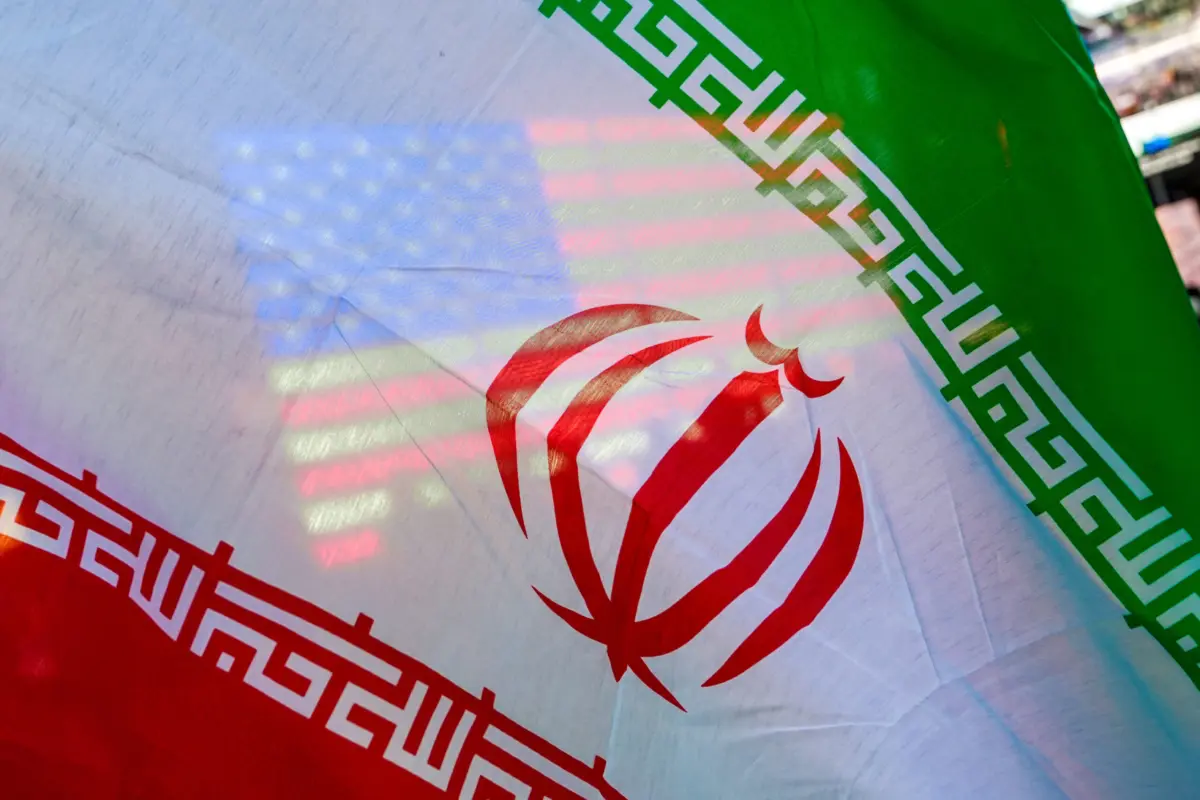
A CNN report, citing seven unnamed United States officials, has revealed that U.S. intelligence agencies indicate Iran is formulating plans to target senior officials within President Donald Trump’s administration. These alleged plans reportedly involve the use of a "dirty bomb" or a chemical weapon in Washington, D.C. However, the report explicitly notes a significant lack of concrete evidence to substantiate these claims, raising questions about their veracity and the motivations behind their public dissemination.
Mounting Tensions and Escalation in the Middle East
The allegations emerge against a backdrop of severely strained relations between the United States and Iran, marked by a protracted conflict and escalating tensions involving the United States, Israel, and Iran, where peace talks have stalled. This fragile diplomatic landscape has been further complicated by President Trump’s recent assertion that Washington does not "need" a deal with Tehran, signaling a potential hardening of the U.S. stance. The military presence in the region has also seen a significant uptick, with the aircraft carrier USS Theodore Roosevelt recently arriving, bringing the total number of U.S. carriers in the area to three. This substantial military deployment has fueled fears of a renewed escalation in the already volatile Middle East.
The historical trajectory of US-Iran relations is replete with periods of intense hostility, particularly since the 1979 Iranian Revolution. Decades of economic sanctions, the controversial withdrawal of the U.S. from the Joint Comprehensive Plan of Action (JCPOA) – often referred to as the Iran nuclear deal – by the Trump administration, and proxy conflicts across the region have contributed to a deep-seated distrust. The current state of affairs reflects a complex interplay of diplomatic deadlock, economic pressure, and military posturing, where even unverified intelligence reports can significantly impact regional stability and international policy.
Details of the Alleged Plot
According to CNN’s sources, the reported planning is characterized as an effort by Tehran to develop various options, rather than signifying an imminent attack. One unnamed U.S. official claimed that intelligence had intercepted Iranian "chatter" suggesting that bomb-making materials had been secretly stored within the United States. This specific assertion, like the broader claims, has not been independently verified, adding to the layers of uncertainty surrounding the intelligence assessment.
The alleged targeting of senior Trump administration officials in the U.S. capital represents a significant escalation in the type of threats attributed to Iran. Previous U.S. intelligence assessments and public charges against Iranian operatives have often focused on plots against American personnel or interests abroad. For instance, in 2024, U.S. prosecutors charged an Islamic Revolutionary Guard Corps (IRGC) operative in connection with an alleged murder-for-hire plot against President Trump, though this plot was reportedly focused on opportunities to target officials during their overseas travel. More recently, in October, reports from Axios and The New York Times, citing a memo from the Director of National Intelligence, warned that Iranian plots against U.S. personnel abroad had reached "advanced stages," with some Iranian operatives possibly already active within the U.S. However, these earlier warnings did not specify targets or methods, nor did they mention "dirty bombs" or chemical weapons, making the latest CNN report particularly alarming, despite its caveats.
Deconstructing the "Dirty Bomb" Threat
The nature of the alleged weapon—a "dirty bomb" or radiological dispersal device (RDD)—warrants a detailed examination. Unlike a nuclear weapon, which relies on a nuclear chain reaction and highly enriched fissile material to create a massive explosion, an RDD combines conventional explosives, such as dynamite, with radioactive material. When the conventional explosive detonates, it scatters the radioactive material over a wide area, causing contamination.
A key distinction is that a dirty bomb does not require enriched uranium or the complex technology associated with nuclear weapons. The radioactive material can be sourced from readily available commercial, medical, or industrial equipment, such as machines used in hospitals for cancer treatment, or in research facilities and industrial radiography. This makes a dirty bomb considerably cheaper and easier to construct than a nuclear device, requiring less advanced technical knowledge and infrastructure. However, it is also far less destructive in terms of immediate blast effects and widespread fatalities.
The primary health risk from a dirty bomb comes from inhaling or ingesting contaminated dust and particles in the immediate vicinity of the blast. As the radioactive material disperses further from the explosion site, its concentration diminishes, and consequently, its harmful effects lessen. The extent of the damage and contamination depends on several variables: the size and power of the conventional explosive charge, the type and quantity of radioactive material used, and environmental factors such as wind speed and direction, which can significantly influence the spread of particles.
According to the U.S. National Academy of Sciences, most dirty bombs would immediately contaminate an area spanning one or two city blocks. However, strong winds could potentially carry radioactive particles over several square miles, necessitating extensive cleanup efforts and potentially long-term restrictions on access to affected areas.
Experts generally agree that dirty bombs are unlikely to cause mass casualties in the hundreds or thousands. Richard Meserve, then-chairman of the U.S. Nuclear Regulatory Commission, testified to the U.S. Senate in 2002 that in most scenarios, fatalities would likely be in the tens, not hundreds or thousands. Talha Abdulrazaq, a researcher at the University of Exeter’s Strategy and Security Institute, further clarified this point to Al Jazeera: "It’s important to understand that a dirty bomb isn’t an off-the-shelf nuclear bomb. There aren’t any mushroom clouds and massive shockwaves tearing down buildings and killing hundreds of thousands of people in the blink of an eye." Instead, Abdulrazaq emphasized, "its primary effect would be psychological panic and hysteria in the target state alongside radioactive contamination, turning the area hit into a no-go zone." This psychological impact, combined with the economic disruption and extensive decontamination required, is why experts often categorize dirty bombs as "weapons of mass disruption" rather than conventional "weapons of mass destruction."
Iran’s Capacity and Strategic Calculus
In theory, Iran, like many other states and even some armed groups, possesses the theoretical capability to construct a dirty bomb. Scott Roecker, vice president for nuclear materials security at the Nuclear Threat Initiative, noted in 2022 that a dirty bomb is "really easy to make," given the widespread availability of radioactive sources used in medicine and industry, and the relatively low technical expertise required for a crude device.
Iran has a substantial civilian nuclear program, which includes facilities that handle radioactive materials. The International Atomic Energy Agency (IAEA)’s last assessment indicated that as of June 2025, Iran held approximately 440 kilograms (970 pounds) of uranium enriched to 60 percent. While this stockpile falls short of the highly enriched uranium needed for a nuclear weapon, its existence raises concerns. Jacek Siewiera, a senior fellow at the Atlantic Council, stated in an April analysis for the European Council on Foreign Relations that such a stockpile "could be extraordinarily dangerous from a radiological and sabotage perspective." He also warned of the potential for a dirty bomb to be "either a deliberate element of escalation or an unintended consequence of weakened central control," especially if international institutions lose track of who controls Iran’s nuclear storage sites.
However, many analysts argue that even 60 percent enriched uranium is only weakly radioactive and therefore a poor choice for an effective dirty bomb. Furthermore, it is considered unlikely that Tehran would "waste" material it has spent decades producing and enriching for such a device. Chris Kremidas-Courtney, in a June 2025 analysis for the Euro-Atlantic Resilience Centre, echoed this, suggesting that while Iran "is widely believed to have access to sufficient radioactive material for use in dirty bombs, particularly from civilian nuclear and industrial sources," such as caesium-137 (used in cancer treatment) and cobalt-60 (used in industrial radiography), a dirty bomb would likely be a "tool of last resort under extreme circumstances." Kremidas-Courtney also judged that the U.S. "poses a high bar for direct infiltration," making ports and maritime chokepoints like the Strait of Hormuz more plausible targets for such a device.
Abdulrazaq reiterated that building a dirty bomb "is actually far easier than a conventional nuclear weapon" and does not necessitate highly enriched uranium. He added that even after U.S. strikes on Iranian nuclear facilities like Fordow and Natanz, "a degraded capability doesn’t mean a destroyed capability." He asserted that "Iran certainly has access to all the components and expertise required to construct something as rudimentary as a dirty bomb."
Regarding delivery, Abdulrazaq pointed out that Iran "doesn’t have the missile or drone capability to strike US targets 10,000km [6,200 miles] and more away." Therefore, any attack on Washington, D.C., would almost certainly rely on clandestine smuggling networks or links to organized crime, posing significant logistical challenges and risks of detection.
Crucially, experts like Abdulrazaq also question Iran’s strategic motivation for using such a weapon. He argued that employing a radiological weapon "would instantly destroy Iran’s remaining diplomatic credit" and would almost certainly provoke a devastating response, potentially including a full-scale invasion and the collapse of its government. "I highly doubt Iranian strategists are unaware of this reality, so the likelihood of a dirty bomb remains infinitesimally remote," he concluded, suggesting that the strategic cost far outweighs any potential benefit for Tehran.
Official Responses and Skepticism
The White House, in response to the CNN report, issued a cautious statement, indicating that it was "monitoring any and all potential threats, but at this time, there are no credible threats to the homeland." This nuanced response suggests that while U.S. intelligence may be analyzing Iranian planning, the threat is not considered immediate or fully substantiated by the highest levels of government.
Iran’s mission to the United Nations swiftly and unequivocally denied the allegations, stating that Tehran "categorically rejects and unequivocally refutes the false and fabricated allegations." This strong denial is consistent with Iran’s long-standing position against accusations of hostile actions targeting the U.S. homeland.
Internally, U.S. officials appear divided on the seriousness of the threat. CNN’s sources indicated that some officials were debating whether Iran even possessed the necessary personnel and logistical capabilities within the U.S. to execute such an attack. The report also stressed that there is no intelligence indicating that Tehran has made a definitive decision to proceed with any such plans.
Skepticism also emanates from external analysts. Esmaeil Baghaei, spokesperson for the Iranian Ministry of Foreign Affairs, dismissed the CNN report as baseless in a post on X, suggesting that the claims were intended to frighten the public and generate support for further hostile actions against Iran. Abdulrazaq further cautioned against uncritically accepting such intelligence assessments, particularly in a "wartime information environment," drawing parallels to the lead-up to the 2003 Iraq War. "The Iraq war in 2003 and the lies surrounding Iraqi WMDs [weapons of mass destruction] is sufficient enough to doubt publicly communicated intelligence assessments," he stated. He added that a dirty bomb attack would "hand-deliver the political rationale" for a major U.S. war on Iran, including a ground invasion, potentially garnering bipartisan support even after Democrats take control of Congress in January. "Iranian strategists aren’t stupid, and if I’m telling you this, they surely have made similar assessments, so I highly doubt the veracity of these intelligence reports," Abdulrazaq concluded. Critics of U.S. foreign policy frequently argue that such reports, often relying on anonymous sources, risk manipulating public opinion to build support for military escalation, especially when the current conflict is deeply unpopular, as indicated by an October Chicago Council on Global Affairs survey where nearly 70 percent of respondents believed the war was not worth fighting.
Historical Parallels: The Perils of Unverified Intelligence
The history of U.S. foreign policy is punctuated by instances where intelligence assessments, later proven faulty or exaggerated, have served as catalysts for significant military interventions. The most prominent example remains the 2003 invasion of Iraq. Prior to the invasion, President George W. Bush’s administration asserted that Iraqi leader Saddam Hussein possessed weapons of mass destruction (WMDs) and maintained links to al-Qaeda. In February 2003, then-Secretary of State Colin Powell presented the U.S. government’s case to the United Nations Security Council, including claims about Iraq’s alleged mobile biological weapons laboratories.
However, no stockpiles of WMDs were ever found following the U.S.-led invasion. A 2005 presidential commission subsequently concluded that U.S. intelligence on Iraq’s weapons programs had been "dead wrong." Much of the intelligence was later revealed to have rested on unreliable sources, including an Iraqi defector codenamed "Curveball," whose sensational claims about mobile labs were eventually exposed as fabrications. The media also faced intense scrutiny for its role; The New York Times, for instance, published an editors’ note in 2004 acknowledging that some of its pre-war coverage, heavily reliant on unnamed officials and Iraqi exiles, had not been as rigorous as it should have been.
Another historical parallel can be drawn to the Gulf of Tonkin incident four decades earlier. Two reported attacks on U.S. destroyers in the Gulf of Tonkin were presented by the U.S. government as unprovoked acts, which then justified a major U.S. escalation in Vietnam. While North Vietnam did carry out a first attack in August 1964 following U.S. raids on its coast, later evidence strongly suggested that the second reported North Vietnamese attack two days later most likely never occurred, yet it served as a pivotal casus belli. These historical precedents underscore the critical importance of independent verification and transparency when evaluating intelligence claims, especially those with potentially far-reaching consequences.
The Unprecedented Nature of Dirty Bomb Use
Despite numerous threats and scares, no successful dirty bomb attack has ever been officially recorded. This fact offers some reassurance but does not negate the potential for future attempts. There have been several notable incidents: In 1995, Chechen fighters planted a container of radioactive caesium in Moscow’s Izmailovsky Park, but it failed to detonate. Three years later, in 1998, another container of radioactive material rigged with explosives was discovered and defused near a railway line in Chechnya.
Other high-profile incidents have involved individuals accused of plotting such attacks or the loss of radioactive materials. In 2002, U.S. authorities arrested Jose Padilla, an American accused of plotting a dirty bomb attack, although he was never charged specifically with that crime. In 2013, a truck carrying radioactive cobalt-60 from a hospital was stolen in Mexico, prompting urgent warnings from the United Nations that the material could be used to construct a dirty bomb. More recently, in 2022, Russia accused Ukraine of preparing to detonate a dirty bomb and blame Moscow, a claim that was widely dismissed by Western governments as "transparently false." These incidents highlight the persistent threat perception surrounding dirty bombs and the ongoing global efforts to secure radioactive materials and prevent their illicit acquisition.
Broader Implications and Outlook
The CNN report, irrespective of its verification status, immediately injects a new layer of complexity and apprehension into the already fraught U.S.-Iran relationship. Such allegations, even if unproven, can have profound geopolitical implications. They can solidify hawkish narratives, further erode any remaining trust between Washington and Tehran, and make diplomatic breakthroughs even more challenging. The continued deployment of significant U.S. naval assets in the region, coupled with these intelligence reports, creates a highly combustible environment where miscalculation or an unintended incident could rapidly spiral into a wider conflict.
The broader impact extends to regional stability, as allies and adversaries alike closely watch the unfolding dynamics. For Israel, a key U.S. ally, perceived threats from Iran, whether nuclear or radiological, are taken with utmost seriousness and could influence its own security postures and potential preemptive actions. For the international community, the allegations raise concerns about nuclear proliferation and the security of radioactive materials worldwide.
Ultimately, the veracity of the claims regarding Iran’s alleged dirty bomb plans remains uncertain. However, the mere public reporting of such intelligence, even with caveats, serves to heighten tensions and underscore the urgent need for transparent, verifiable information in an era of complex geopolitical rivalries and the constant risk of information warfare. The challenge for policymakers and the public alike is to navigate this landscape with caution, demanding evidence and critically evaluating claims that could have monumental consequences for global peace and security.
