

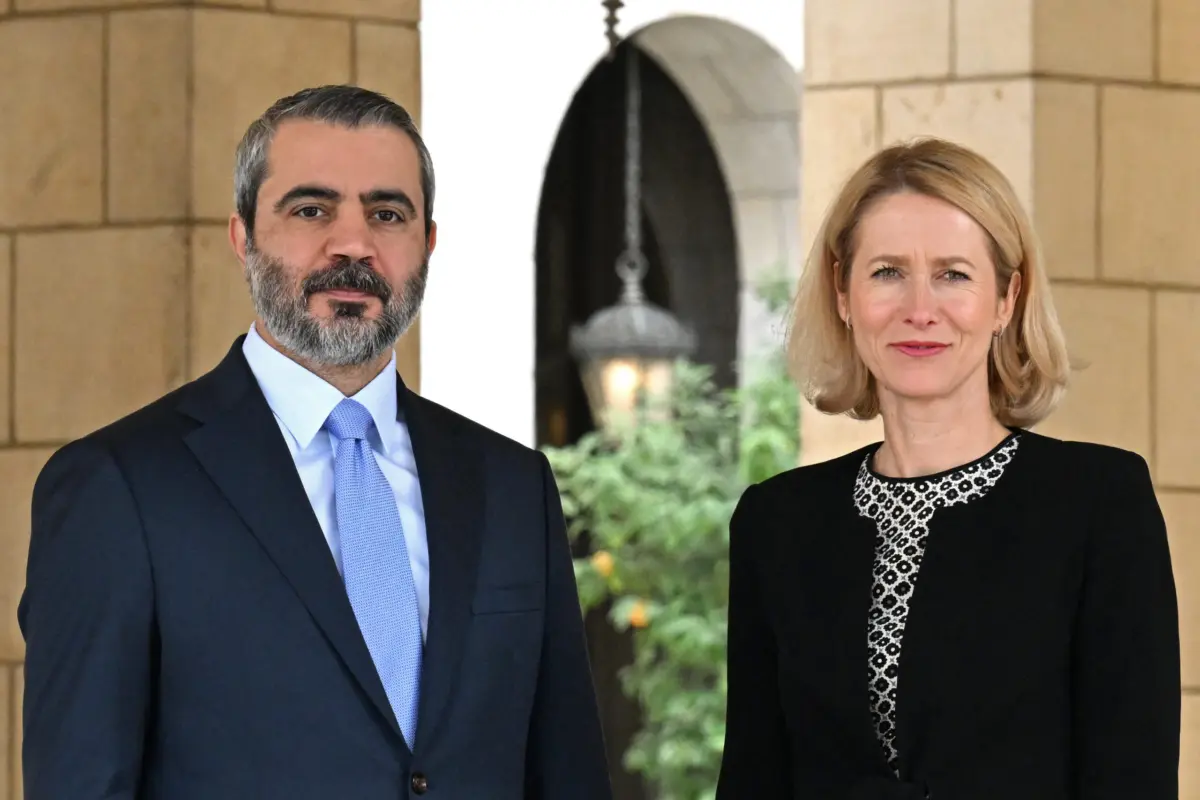
European Union foreign ministers have formally agreed to reactivate a nearly two-decade-old cooperation agreement with Syria, a pivotal move signaling the bloc’s ambitious push to strengthen ties with the war-scarred nation following the collapse of the Bashar al-Assad government in December 2024. This decision marks a significant departure from years of isolation and sanctions, underscoring a strategic re-engagement aimed at fostering stability and supporting the country’s nascent transition.
The agreement, originally known as the EU-Syria Association Agreement, was first drafted in 2008 during the Assad presidency. However, it was never fully ratified by either side, primarily due to profound concerns within the European Union regarding the Assad government’s deteriorating human rights record and its repressive policies. For years, the agreement remained a dormant framework, a testament to the strained relationship between Brussels and Damascus. EU foreign policy chief Kaja Kallas articulated the bloc’s renewed rationale on Monday, stating, "Syria needs investment and a successful transition. The aim is to give Europe and Syria a framework for trade, political dialogue and closer cooperation as soon as possible." Her remarks highlighted the urgency and strategic importance attributed to re-establishing formal channels of engagement.
Historical Context: The Unfulfilled Promise of 2008
The original EU-Syria Association Agreement was conceived as a comprehensive framework under the Barcelona Process (Euro-Mediterranean Partnership), designed to deepen economic, political, social, and cultural ties between the EU and its Mediterranean partners. For Syria, it offered the prospect of enhanced trade, technical assistance, and political dialogue with Europe. However, the initial optimism quickly waned. The Assad regime’s consistent failure to meet democratic governance and human rights benchmarks, coupled with its regional policies, led to a stalemate. The EU’s consistent condemnation of human rights abuses, including the suppression of political dissent and the lack of judicial independence, proved an insurmountable barrier to ratification.
As the Syrian civil war erupted in 2011, the EU’s stance hardened considerably. Brussels imposed a wide array of sanctions targeting the Assad regime, its financial institutions, and key figures, effectively isolating Syria from the European economic system. These measures included an oil embargo, asset freezes, travel bans, and restrictions on trade and investment, all designed to exert pressure on the regime and curtail its ability to finance the conflict. For over a decade, the prospect of any cooperation deal seemed utterly remote, with EU policy firmly centered on humanitarian aid, support for the Syrian opposition, and calls for a political transition away from Assad.
The Decisive Shift: Assad’s Fall and a New Era
The geopolitical landscape of Syria underwent a monumental transformation on December 8, 2024, when the 53-year-long rule of the Assad family definitively ended. This historic event, triggered by an 11-day offensive that took both Syria and the international community by surprise, brought an abrupt halt to the protracted civil war. The conflict, which had raged for nearly 14 years, left an indelible scar on the country, claiming hundreds of thousands of lives and displacing approximately 6.8 million Syrians—roughly one-third of the pre-war population—who sought refuge abroad. Millions more were internally displaced, their lives shattered by the brutal conflict.
The collapse of the Assad regime immediately prompted a reassessment of international policy towards Syria. The EU, recognizing the profound implications of this seismic shift, began to recalibrate its approach from isolation to cautious re-engagement. The arrival of a new government led by President Ahmed al-Sharaa opened a critical window for dialogue and cooperation, presenting an opportunity to support Syria’s recovery and reintegration into the international community.
A Phased Normalisation: EU’s Re-engagement Timeline
The current decision to revive the cooperation agreement is the culmination of a phased normalisation strategy by the EU:
- December 2024: The fall of Bashar al-Assad marks the end of a long civil war and the beginning of a new political landscape in Syria. This event fundamentally altered the basis for EU engagement.
- 2025: In a significant policy pivot, the European Union moved to dismantle its comprehensive sanctions regime against Syria’s economy. This strategic decision was explicitly aimed at facilitating the country’s recovery from nearly 14 years of devastating conflict. The removal of sanctions, which had severely crippled Syrian trade, finance, and investment, was seen as a crucial first step towards enabling economic reconstruction and attracting international aid.
- Early 2026: Brussels announced a substantial two-year funding package for Syria, totaling 620 million euros (approximately $680 million). This financial commitment was earmarked for critical humanitarian assistance, early recovery initiatives, and foundational support for governance and stability in the post-Assad era. The package underscored the EU’s commitment to alleviating suffering and laying the groundwork for sustainable development.
- April 24, 2026: A landmark meeting occurred in Nicosia, Cyprus, between European Commission President Ursula von der Leyen and the newly installed Syrian President Ahmed Al-Sharaa. This high-level engagement signaled a definitive move towards diplomatic recognition and enhanced bilateral relations, providing a visible platform for discussing future cooperation and Syria’s path forward.
- Current Decision (Late 2026): EU foreign ministers formally endorse moving ahead with the 2008 association agreement and initiating talks for an updated version. This decision follows discussions in Brussels, where a paper prepared by the bloc’s diplomatic service outlined one of Brussels’s most ambitious efforts yet to normalise ties with Syria.
Rationale for Re-engagement: Preventing a Vacuum and Promoting Stability
The EU’s shift from isolation to engagement is driven by a complex interplay of strategic imperatives. Kaja Kallas succinctly captured a core concern, stating, "Everybody said that we need to engage with Syria because if we don’t engage, then this vacuum will be filled by other players." This statement underscores a significant geopolitical consideration: the potential for other global and regional powers, whose interests may not align with those of the EU, to exert disproportionate influence over Syria’s future. Russia, a staunch ally of the Assad regime throughout the civil war, and China, with its burgeoning economic presence in the Middle East, are prominent among these "other players." Regional actors such as Iran, Turkey, and various Gulf states also have vested interests and long-standing relationships within Syria.
By re-engaging, the EU aims to assert its own strategic influence in a critical region, promoting its values of democratic governance, human rights, and rule of law. The bloc also seeks to address the root causes of instability, which have direct implications for European security, including terrorism and irregular migration flows. A stable, prosperous, and well-governed Syria is seen as essential for regional security and for mitigating future humanitarian crises that could impact Europe. Furthermore, the EU has a vested interest in facilitating the safe, voluntary, and dignified return of Syrian refugees, a process that requires a stable and economically viable homeland.
Conditions for Cooperation: Human Rights and International Law

While the EU’s embrace of Syria marks a new chapter, it is not without stringent conditions. Kaja Kallas emphasized that any updated deal would be contingent on clear commitments from the new Syrian government. "We should have clear conditionality regarding human rights," she asserted, signaling that despite the change in leadership, the EU’s fundamental values remain paramount. This conditionality implies that the EU will expect tangible progress on issues such as political freedoms, judicial reform, accountability for past atrocities, and protections for civil society.
Beyond human rights, Kallas highlighted another critical stipulation: "We should have also the nonrecognition of occupied Ukrainian, Georgian territories that they have recognised under Assad’s regime." This condition directly addresses the previous Syrian government’s alignment with Russia’s foreign policy, particularly its recognition of the self-proclaimed republics of Abkhazia and South Ossetia (parts of Georgia) and, more recently, the Russian-annexed territories in Ukraine. By insisting on the reversal of these recognitions, the EU aims to bring Syria into alignment with international law and the principles of territorial integrity, reflecting its own unwavering foreign policy positions. The EU’s diplomatic services will now work to define the technical and legal details of these conditions, ensuring that they are measurable and enforceable.
The Scope of the Agreement: Trade, Dialogue, and Broader Ties
The revived EU-Syria Association Agreement, once finalized and updated, is designed to be a comprehensive framework for multifaceted cooperation. At its core, it aims to establish a free trade area between the EU and Syria, gradually reducing tariffs and non-tariff barriers to facilitate the exchange of goods and services. This economic component is crucial for Syria’s reconstruction, offering access to the vast European single market and attracting much-needed foreign direct investment. For European businesses, it opens up new markets and opportunities in a country embarking on a path to recovery.
Beyond trade, the agreement will foster enhanced political dialogue, creating formal channels for regular consultations on regional and international issues, security cooperation, and democratic governance. It is expected to cover a broad range of other cooperation areas, including:
- Economic Cooperation: Investment promotion, customs cooperation, competition policy, industrial cooperation.
- Social Cooperation: Employment, social protection, education, vocational training.
- Environmental Cooperation: Sustainable development, climate change, water management.
- Scientific and Technological Cooperation: Research and development, innovation.
- Justice and Home Affairs: Rule of law, combating organized crime, migration management.
This comprehensive framework is intended to support Syria’s institutional development, strengthen its governance structures, and help it align with international norms and standards.
Syria’s Road to Recovery: Challenges and Opportunities
Syria faces an arduous journey to recovery, even with renewed international support. The civil war inflicted catastrophic damage on its infrastructure, economy, and social fabric. Pre-war GDP plummeted, with estimates suggesting losses in the hundreds of billions of dollars. Key industries, from oil to agriculture and manufacturing, were decimated.
However, the fall of Assad has unlocked new opportunities. The return of stability has already encouraged over one million Syrian refugees to return home, with millions more among the diaspora weighing the decision to rebuild their lives in their homeland. These returning populations represent a vital human capital resource for reconstruction, but they also require housing, employment, and access to essential services in a country still grappling with immense challenges.
The scale of reconstruction needed is staggering. Various international organizations have estimated the cost of rebuilding Syria’s infrastructure, housing, and public services to be in the range of $250 billion to $400 billion. While the EU’s €620 million funding package is a crucial initial injection, it represents only a fraction of what is required. The renewed cooperation agreement, by attracting broader investment and technical expertise, is expected to play a significant role in mobilizing the resources necessary for this monumental task. It offers a pathway for Syria to integrate into the global economy, diversify its exports, and create sustainable employment opportunities for its war-weary population.
Geopolitical Implications and Future Outlook
The EU’s re-engagement with Syria carries significant geopolitical implications. It signifies a renewed European assertion of influence in a region where its role had been diminished during the Assad era. This move could encourage other international actors, including the United States and regional powers, to review their own approaches to Syria, potentially fostering a more coordinated international effort towards stabilization and reconstruction.
Regionally, the new Syrian government under President Ahmed al-Sharaa is expected to foster different dynamics. Turkey, which has significant military presence in northern Syria and hosts millions of Syrian refugees, may find new avenues for cooperation on border security and repatriation. Gulf states, some of whom previously opposed Assad, may also increase investment and diplomatic engagement, seeing an opportunity for stability and economic partnerships.
However, challenges remain. Ensuring genuine human rights improvements in Syria, navigating the complexities of refugee repatriation, addressing the legacy of conflict, and ensuring accountability for past atrocities will require sustained effort and vigilance from the EU. The delicate balance between conditionality and engagement will be crucial to the success of this renewed partnership.
The EU’s decision to revive the cooperation deal with Syria is a momentous step, marking a strategic bet on a stable, prosperous, and reformed Syria. It underscores the bloc’s commitment to actively shape the post-Assad future of the country, moving beyond the era of conflict and isolation towards a new chapter of cooperation and mutual benefit. As diplomats work through the technical and legal details, the world watches to see if this ambitious diplomatic initiative can truly pave the way for Syria’s comprehensive recovery and its full reintegration into the international community.
