

In an era of shifting economic landscapes and fluctuating interest rates, Canada is witnessing a significant transformation in how local communities finance their most pressing needs, moving from informal collective action to a sophisticated, regulated market for community bonds. This evolution, which has its modern roots in the economic desperation of the 1980s, has grown into a vital mechanism for funding affordable housing, renewable energy, and local infrastructure, with an estimated $170 million already invested by citizens across the country. As traditional financial institutions often overlook small-scale or socially driven enterprises, community bonds have emerged as a bridge between individual capital and local impact, offering a model of "patient capital" that prioritizes long-term social dividends over short-term speculative gains.
The Saskatchewan Innovation: Responding to Economic Crisis
The modern framework for community bonds began as a desperate measure in response to the severe recession that gripped the Canadian Prairies during the 1980s. In Saskatchewan, the agricultural sector—the backbone of the provincial economy—faced a "perfect storm" of economic stressors. Global commodity prices had plummeted, while interest rates climbed to historic highs, often exceeding 20%. Compounding these financial pressures was a multi-year drought that decimated crop yields and pushed thousands of family farms to the brink of insolvency.
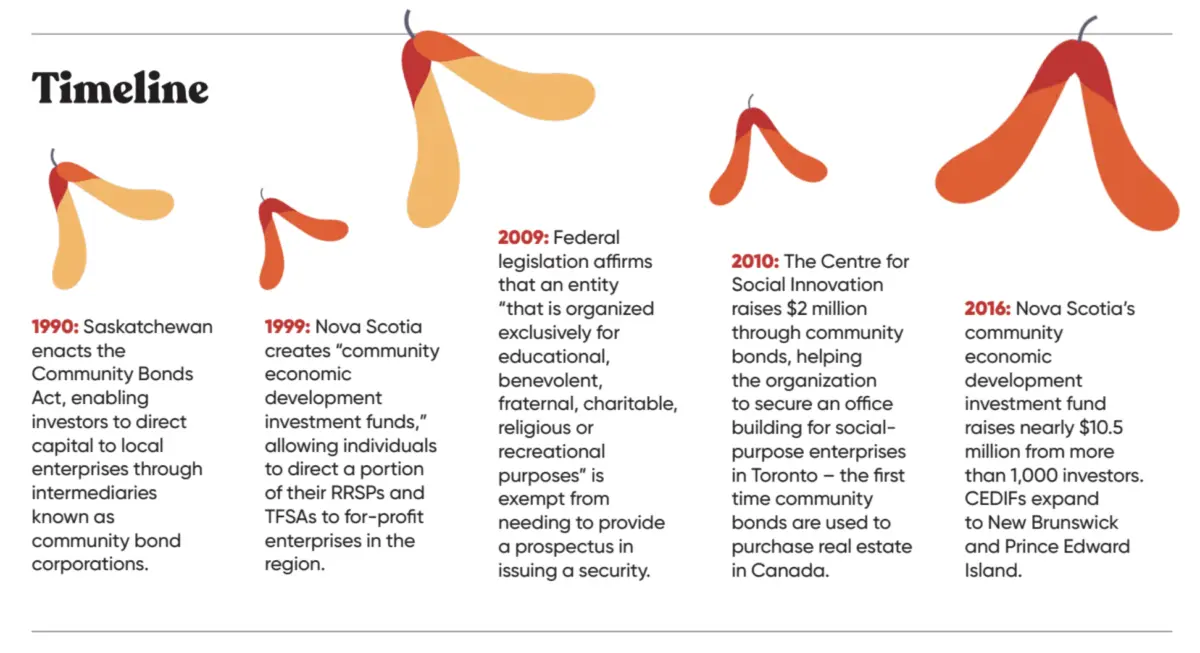
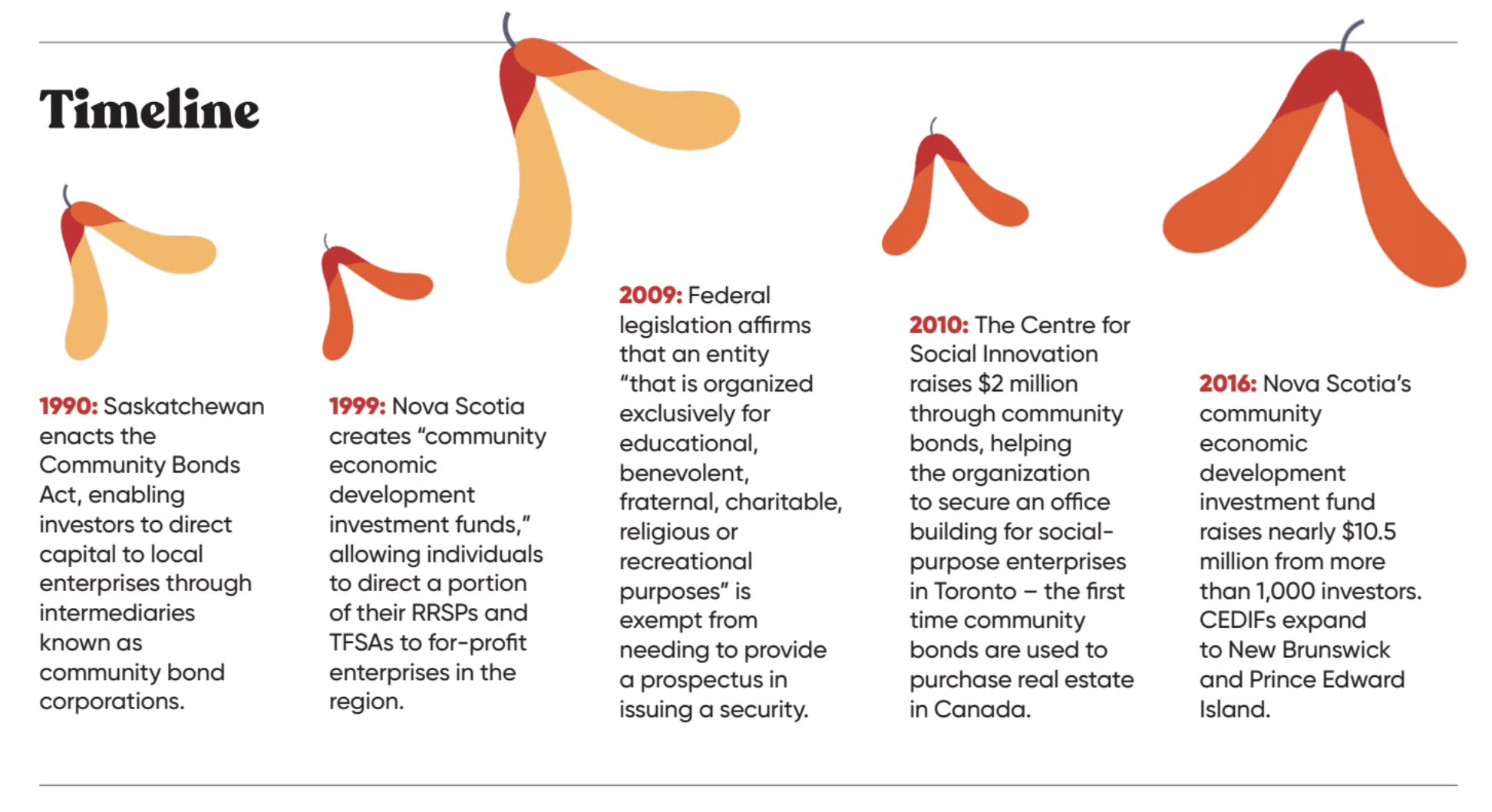
In response to this systemic instability, the provincial government sought a way to mobilize local wealth that was otherwise sitting idle or flowing out of the province toward larger financial centers. This led to the formalization of the 1990 Community Bonds Act. Unlike the direct securities familiar to investors today, this early iteration established "community bond corporations." These were locally owned and operated entities authorized to issue bonds to individual citizens. The capital raised was then used to make equity investments in local businesses and industrial projects.
To mitigate the risk for everyday citizens, the Saskatchewan government provided a guarantee on the principal investment. This safety net proved highly effective; by 1993, more than 5,000 individual investors had participated, raising nearly $13 million. These funds were directed into tangible local assets, including metal fabrication facilities and farm equipment manufacturing plants, effectively keeping capital within the rural communities that generated it. This period proved that local citizens were willing to invest in their neighbors if provided with a structured and secure vehicle to do so.
Historical Context: A Century of Collective Wealth Building
While the 1990s saw the legislative formalization of community investment, the impulse behind it is deeply woven into the Canadian social fabric. Long before modern securities regulations, marginalized communities used informal "pooling" methods to overcome systemic barriers to capital.

In the early 20th century, the "Antigonish Movement" in Nova Scotia saw poor miners and fishermen banding together to form cooperatives. These groups were born out of necessity; traditional banks rarely extended credit to seasonal laborers or those in high-risk industries. By pooling their meager resources, these workers secured better housing, negotiated fairer prices for their catch, and established their own credit lines, laying the groundwork for what would become a robust cooperative sector in Atlantic Canada.
Similarly, following the Second World War, Dutch immigrants arriving in Canada found themselves excluded from the traditional banking system due to a lack of Canadian credit history and collateral. In response, they established their own credit unions. These institutions were built on mutual trust and shared cultural bonds, allowing newcomers to access the capital needed to purchase farms and start businesses. These historical precedents demonstrate that community bonds are not a new invention but rather the modern, formalized evolution of a long-standing Canadian tradition of mutual aid and economic self-determination.
The Nova Scotia Model and the Fight Against Capital Flight
In the late 1990s, Nova Scotia faced a different but equally pressing economic challenge: capital flight. Policymakers discovered a startling statistic: only 2% of the equity investments made by Nova Scotians through their Registered Retirement Savings Plans (RRSPs) were being reinvested back into local businesses. Hundreds of millions of dollars were flowing out of the province every year to fund large corporations in Central Canada or international markets, while local entrepreneurs struggled to find start-up capital.
To address this, the provincial government launched Community Economic Development Investment Funds (CEDIFs) in 1999. The CEDIF model was designed to incentivize local investment by offering provincial income tax credits to citizens who invested in local enterprises or cooperatives. Although the program had a slow start as the public familiarized itself with the concept, it eventually became a cornerstone of the province’s economic development strategy. Over the subsequent decades, CEDIFs raised millions of dollars annually and supported the creation and expansion of more than 100 local businesses, ranging from renewable energy co-ops to craft breweries and manufacturing firms.
Regulatory Evolution and the Prospectus Exemption
The most significant catalyst for the recent surge in community bonds has been a shift in Canadian securities regulations. Historically, issuing bonds or shares was an incredibly expensive and legally complex process, requiring a "prospectus"—a massive legal document detailing every aspect of an organization’s finances and operations. For a small non-profit or a local housing co-op, the cost of producing a prospectus could easily outweigh the amount of capital they hoped to raise.
In recent years, securities regulators across every Canadian province and territory have recognized the unique nature of social-purpose organizations. They have introduced a "prospectus exemption" specifically for non-profits and charities. This allows these organizations to issue community bonds directly to the public without the onerous reporting requirements of a publicly traded corporation, provided they meet certain criteria.

This regulatory shift has democratized the investment landscape. It allows a local community land trust or a renewable energy cooperative to deal directly with its supporters. Investors in these bonds often accept a lower rate of return—typically between 3% and 5%—in exchange for the "social return" of seeing a new affordable housing complex built in their neighborhood or a community-owned solar farm installed on a local arena.
The Current Landscape: $170 Million in "Patient Capital"
Today, the Coalition for Community Capital estimates that Canadians have invested approximately $170 million into community bonds. This capital is often described by experts like Tessa Hebb, a distinguished research fellow at Carleton University, as "patient capital." Unlike venture capital, which seeks rapid exits and high returns, patient capital is invested with a long-term horizon and a focus on community stability.
Current projects funded by community bonds include:
- Affordable Housing: Non-profits use bonds to bridge the "funding gap" between government grants and traditional bank mortgages, allowing them to purchase apartment buildings and keep rents below market rates.
- Renewable Energy: Cooperatives raise funds from local residents to build wind turbines or solar arrays, with the revenue from electricity sales used to pay back bondholders with interest.
- Community Hubs: Former industrial buildings or churches are being converted into co-working spaces, artist studios, and community centers through the collective investment of local residents.
According to Suzanne Faiza, policy manager at Tapestry Community Capital, these bonds serve as a "formalized version" of age-old community support systems. They allow people who may not even know one another to act as a collective "angel investor" for their own town or city.
Future Outlook and Policy Recommendations
Despite the success of the current model, advocates argue that several policy hurdles remain that prevent community bonds from reaching their full potential. Experts suggest that the next phase of growth will require integrating community bonds more deeply into the mainstream financial system.
One primary recommendation is the establishment of a third-party rating agency specifically for community bonds. In the traditional bond market, agencies like Moody’s or S&P provide risk assessments that help investors understand the safety of their investment. A similar, specialized agency for community bonds would provide a level of professional oversight that could attract larger-scale "impact investors" and institutional funds.
Furthermore, there is a push to make community bonds more accessible within tax-advantaged accounts like Tax-Free Savings Accounts (TFSAs) and RRSPs. Currently, holding a community bond within these accounts requires a complicated and often expensive administrative "workaround" that deters many middle-class investors. The Coalition for Community Capital has proposed a $20,000 cap for unsecured debt within these accounts, which would maintain account integrity while unlocking billions of dollars in potential community investment.
Additional recommendations include:
- Tax Credits: Implementing federal or provincial tax credits similar to the Nova Scotia CEDIF model to incentivize investment in high-impact social projects.
- Loss Deductions: Allowing investors to deduct any potential losses from community bonds against their income, reducing the personal financial risk of supporting local initiatives.
- Government Backstopping: Revisiting the Saskatchewan model of government-guaranteed principals for specific sectors, such as indigenous-led enterprises or deep-green energy retrofits.
Conclusion: Building Resilience in Uncertain Times
The trajectory of community bonds in Canada reflects a broader global shift toward economic localization and social responsibility. As communities face the dual challenges of a housing crisis and the necessary transition to a low-carbon economy, traditional top-down funding models are often proving insufficient.
By formalizing the "informal impulse" to support one’s neighbors, community bonds provide a pathway for citizens to take an active role in shaping their local environment. They represent a move away from being passive consumers of financial products toward becoming active participants in a more resilient and self-reliant economy. As these financial tools continue to mature and regulatory barriers fall, the community bond is poised to move from a niche alternative to a fundamental pillar of Canadian economic development. In the words of industry advocates, it is about more than just money; it is about building the capacity of communities to withstand forces beyond their control and thrive on their own terms.
