

As the burgeoning sector of prediction markets experiences a relentless surge in trading volumes, these innovative platforms find themselves embroiled in a fierce regulatory conflict, facing challenges from states nationwide. This escalating dispute has compelled the federal government, primarily through the Commodity Futures Trading Commission (CFTC), to launch a multi-front legal offensive aimed at halting state-level interventions and firmly asserting its exclusive regulatory authority over these novel financial instruments. The confrontation highlights a fundamental tension between state consumer protection laws, often rooted in anti-gambling statutes, and the federal government’s mandate to oversee commodity derivatives markets.
The Rapid Ascent of Prediction Markets and Their Contested Nature
Prediction markets, online platforms where users can trade contracts based on the outcome of future events, have seen their popularity and transaction volumes explode in recent years. These events can range from political elections and economic indicators to sports outcomes and even pop culture events. Participants buy and sell contracts whose value fluctuates with the perceived probability of the event occurring. If a contract is priced at $0.70, it implies a 70% chance of the event happening. Upon resolution, contracts tied to the correct outcome typically settle at $1, while those tied to the incorrect outcome settle at $0.
The allure of prediction markets lies in their potential to aggregate information and provide real-time probabilistic forecasts, often cited as more accurate than traditional polling or expert opinions. For retail investors and speculators, they offer a new avenue for engaging with current events and economic trends. Platforms like Kalshi, Polymarket, and PredictIt have attracted a significant user base, with some reporting transaction volumes in the hundreds of millions of dollars annually, demonstrating a "ruthless pace" of growth that has caught the attention of both market participants and regulators.
However, this rapid growth has not been without controversy. States across the country view many of these event contracts as thinly veiled forms of illegal gambling, particularly when they involve outcomes traditionally associated with sports betting or other games of chance. State gambling laws, which vary significantly, often prohibit or strictly regulate activities where participants wager money on uncertain future events. This fundamental disagreement over the classification of prediction market contracts – as legitimate financial derivatives or illicit gambling – lies at the heart of the current regulatory maelstrom.
The CFTC’s Assertion of Exclusive Jurisdiction: A Federal Mandate
At the forefront of the federal government’s counter-offensive is the Commodity Futures Trading Commission. The CFTC, established by Congress to regulate the U.S. derivatives markets, including futures, options, and swaps, argues vehemently that prediction market contracts, particularly "event contracts" which drive the majority of platform volume, fall squarely within its purview under the Commodity Exchange Act (CEA). The agency contends that these contracts function as swaps or other forms of derivatives, making them subject to federal oversight and exempt from state gambling laws through the principle of federal preemption.
The agency’s position is clear: it is the "only entity" legally empowered to regulate these platforms. To defend what it describes as its "exclusive jurisdiction," the CFTC has initiated legal proceedings against no fewer than six states, a tactic that legal experts describe as highly unusual and aggressive for a federal agency. Jeff Le Riche, a former chief trial attorney at the CFTC and now a partner at Husch Blackwell, remarked on the atypical nature of this strategy, stating, "The suing of states is unusual. That’s definitely a different tactic." This aggressive posture underscores the CFTC’s determination to establish a clear, nationwide regulatory framework for prediction markets, preventing a fragmented and potentially contradictory patchwork of state-level rules.
A Deep Dive into the Legal Battle: States vs. Federal Authority
The scale of the state-level challenge is substantial. Sixteen states are currently involved in various legal proceedings against prediction market platform companies, indicating a widespread concern among state attorneys general and regulators. While many states have sought to impose regulations or issue cease-and-desist orders, one state has taken the unprecedented step of moving to ban prediction markets entirely from operating within its borders.
Minnesota became the latest focal point in this federal-state conflict. On a Tuesday, the CFTC added Minnesota to its list of states under legal challenge after Governor Tim Walz signed into law a provision, part of a broader online safety package, that explicitly bans prediction markets. This legislative action marks a significant escalation, representing the first outright ban of such platforms by a U.S. state, and immediately drew the ire of the federal regulator.
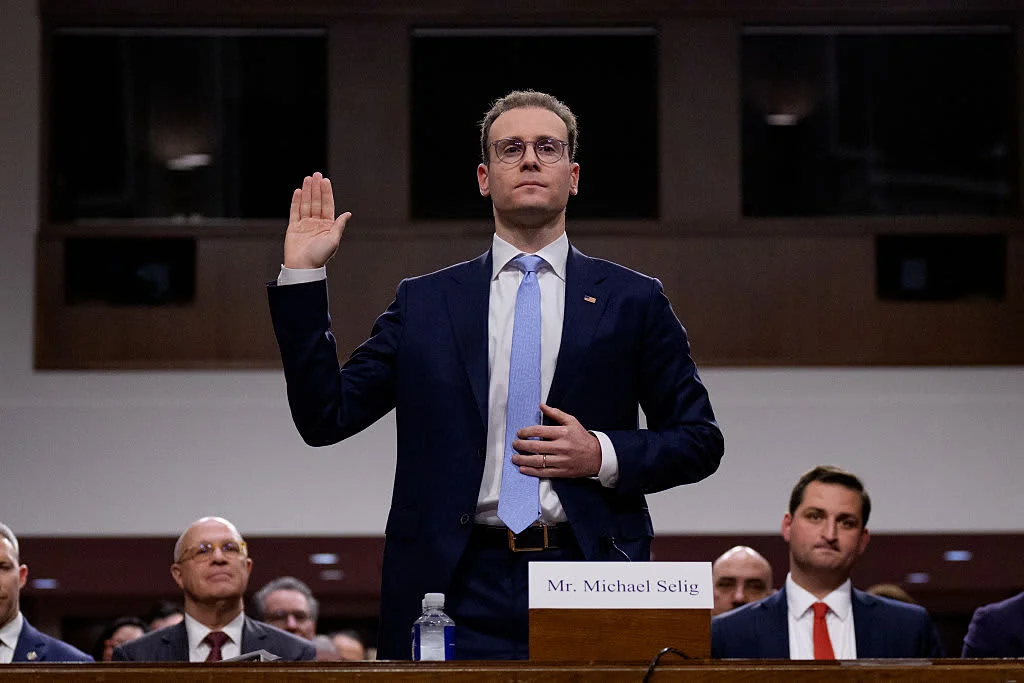
CFTC Chair Michael Selig, whose confirmation by the U.S. Senate in December set the stage for this assertive stance, has been unequivocal about his agency’s oversight of prediction markets. Selig, notably the sole member of the typically five-person commission since his confirmation, has repeatedly articulated his commitment to defending the CFTC’s jurisdiction. In an April press release announcing a lawsuit against Wisconsin, he declared, "States cannot circumvent the clear directive of Congress. Our message to Wisconsin is the same as to New York, Arizona, and others: if you interfere with the operation of federal law in regulating financial markets, we will sue you." This statement leaves little doubt about the CFTC’s intent to pursue legal action against any state it perceives as infringing upon its regulatory domain.
Scrambling Partisan Divides: An Unconventional Regulatory Alignment
Intriguingly, the battle for oversight of prediction markets has defied traditional partisan alignments, creating an unusual political landscape. Of the sixteen states engaged in legal proceedings against prediction markets, eleven are led by Democratic attorneys general, while five have Republican attorneys general. This bipartisan concern among states suggests that the issue transcends typical ideological divides, focusing instead on states’ rights and perceived consumer protection responsibilities.
In Minnesota, where the outright ban was enacted, the legislation passed with wide majorities in both the state House and Senate, despite these chambers being narrowly divided by party. This cross-party consensus further illustrates the widespread apprehension states hold regarding these platforms. Jon Ammons, a partner at law firm Reed Smith specializing in commodities, derivatives, and digital assets, commented on this phenomenon, stating, "I wouldn’t say that it’s that surprising just because of the state versus federal issues. I think that states have this idea that they are the ones who regulate gaming and things that look like gaming."
However, while states show bipartisan unity in their concern, the CFTC’s legal targets have presented a more distinct pattern. All six states that the CFTC has sued so far – Wisconsin, New York, Connecticut, Illinois, Arizona, and Minnesota – have Democratic attorneys general. This observation has not gone unnoticed by state officials. Connecticut Attorney General William Tong, a Democrat, expressed his inability to account for the perceived selectivity: "I cannot answer for the Trump Administration as to why they would have chosen to sue only certain states with Democratic leadership, bypassing others who have taken similar enforcement postures." The CFTC, for its part, has denied any partisan motivation, stating that its actions are based "solely on the CFTC’s responsibility to ensure that states do not interfere with the trading of event contracts regulated under federal law." The only instance of the CFTC taking action against a state with a Republican attorney general is in Ohio, where it filed an amicus brief defending its sole jurisdiction rationale, a less aggressive measure than a direct lawsuit.
Richie Taylor, a spokesperson for Arizona Attorney General Kris Mayes, while limited in his ability to comment due to ongoing litigation, echoed the sentiment of bipartisan state action: "Like red states and blue states alike, AG Mayes believes the CFTC is improperly encroaching on the right of states to enforce their gambling laws."
Key Legal Milestones and the Path to the Supreme Court
The legal skirmishes are still in their nascent stages, but some initial rulings provide a glimpse into the potential trajectory of this complex litigation. In Arizona, the CFTC achieved a significant early victory, securing a preliminary injunction that halted the state from pursuing criminal charges against Kalshi, currently the largest domestic prediction market platform. This injunction prevented state-level enforcement action against a major industry player while the broader jurisdictional dispute plays out. In the other five states where the CFTC has filed lawsuits, cases remain ongoing, and no initial rulings have been made.
Further complicating the landscape, the U.S. Court of Appeals for the Third Circuit issued a ruling that New Jersey cannot enforce its gambling laws on prediction markets. This decision, while specific to New Jersey and its interpretation of the Commodity Exchange Act, offers a federal appellate court’s perspective that aligns with the CFTC’s preemption arguments. It signals a potential judicial inclination to side with federal oversight in this domain, at least in some circuits.
Despite these early indicators, legal experts widely anticipate that the ultimate resolution of this federal-state conflict will likely be determined by the nation’s highest court. Ammons noted, "It has the makings of a real circuit split, which does seem to indicate a high likelihood that this would go to the Supreme Court." A "circuit split" occurs when different U.S. Courts of Appeals issue conflicting rulings on the same legal question, often prompting the Supreme Court to intervene to establish a uniform interpretation of federal law. Given the fundamental questions of federalism, regulatory preemption, and the classification of novel financial instruments at stake, a Supreme Court showdown appears increasingly inevitable.
Broader Implications: Federalism, Innovation, and Consumer Protection
The outcome of this regulatory battle holds profound implications not only for the burgeoning prediction market industry but also for the broader landscape of financial technology (fintech) innovation, federal-state relations, and consumer protection.
For prediction market platforms, the current uncertainty creates a challenging operating environment. A clear and consistent regulatory framework, whether federal or state-driven, is essential for long-term growth and investment. A victory for the CFTC would likely mean a unified federal approach, potentially streamlining compliance for platforms operating nationwide, but it might also entail stricter oversight regarding market integrity and participant eligibility. Conversely, a victory for states could lead to a fragmented regulatory environment, making it difficult for platforms to operate across state lines and potentially stifling innovation due to varying legal interpretations.
Beyond prediction markets, this conflict sets a precedent for how other innovative fintech products, which may blur the lines between traditional financial instruments and other activities, will be regulated. As blockchain, AI, and other technologies continue to disrupt established industries, similar jurisdictional disputes between federal agencies and state authorities are likely to emerge. The resolution of this particular case could provide a template for addressing future regulatory ambiguities.
Consumer protection remains a central concern for both federal and state regulators. States often argue that classifying prediction markets as gambling activities allows them to protect consumers from potential harms associated with addictive behavior, fraud, and unregulated financial risks. The CFTC, on the other hand, emphasizes its robust framework for market surveillance, enforcement, and ensuring fair and transparent trading practices within its regulated markets. The ultimate decision will determine which regulatory philosophy and protective measures prevail for participants in these markets.
The ongoing legal battles represent a critical juncture in the evolution of prediction markets and the broader regulatory environment for innovative financial products. As the CFTC continues its aggressive defense of federal jurisdiction and states persist in their efforts to assert local control, the stage is set for a landmark legal confrontation that will undoubtedly shape the future of this unique segment of the financial landscape.
Disclosure: CNBC and Kalshi have a commercial relationship that includes customer acquisition and a minority investment.
